Kirjojen hintavertailu – 12 859 829 kirjaa ja 27 kauppaa

Kirjailija

Charles Kostelnick

Kirjat ja teokset yhdessä paikassa: 5 kirjaa, julkaisuja vuosilta 2003–2026, suosituimpiin kuuluu Visual Vestiges. Vertaile teosten hintoja ja tarkista saatavuus suomalaisista kirjakaupoista.

5 kirjaa

Kirjojen julkaisuvuodet: 2003–2026.

Visual Vestiges

Visual Vestiges

Charles Kostelnick

STATE UNIVERSITY OF NEW YORK PRESS
2026
sidottu
Visual Vestiges explains how information design evolved over the centuries to make practical information clear, credible, and emotionally engaging. In Visual Vestiges Charles Kostelnick analyzes the role of the past in understanding, studying, deploying, and teaching visual language in business, technical, and professional communication. He explores how information designs—text, pictures, icons, charts, and graphs—evolved to develop their rhetorical power and the many ways in which their vestigial forms permeate contemporary design. To explain these temporal dynamics, he examines the forces that underpin them: cultural shifts in aesthetics, taste, and values; social changes that redefine how we relate to one another rhetorically; and innovations in technology that transform the tools and channels we use to visualize and interpret information. Drawing on rhetorical theory, design studies, art history, and historical and contemporary examples, Kostelnick explores the rhetorical role of time in bridging past and present design forms—by constantly regenerating them through visual conventions, by heightening pathos appeals through sentiment and nostalgia, and by bolstering ethos, amplifying epideictic displays, and narrating stories with text, pictures, and charts.

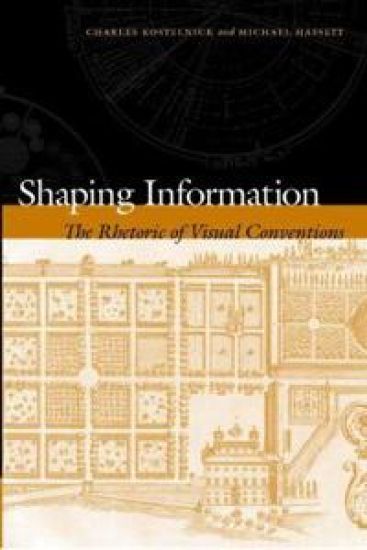
Shaping Information

Shaping Information

Charles Kostelnick; Michael Hassett

SOUTHERN ILLINOIS UNIVERSITY PRESS
2022
nidottu
From charts, texts, and graphs to illustrations, icons, and screens, we live in an information age saturated with visual language. Yet the underlying principles that provide structure for visual language have long eluded scholars of rhetoric, design, and engineering. To function as a language that reliably conveys meaning, visual language must embody codes that normalize its practices among both the designers who employ it and the readers who interpret it. In this wide-ranging analysis, Charles Kostelnick and Michael Hassett demonstrate how visual language in professional communication—text design, data displays, illustrations—is shaped by conventional practices that are invented, codified, and modified by users in visual discourse communities. Drawing on rhetorical theory, design studies, and a broad array of historical and contemporary examples, Shaping Information: The Rhetoric of Visual Conventions explores the processes by which conventions evolve and proliferate and shows how conventions serve as the medium that designers use to shape, stabilize, and streamline visual information. Kostelnick and Hassett extend contemporary theories that define rhetoric as a social act, arguing that visual conventions also thrive within discourse communities and are fragile forms that vary widely in their longevity and scope. Shaping Information: The Rhetoric of Visual Conventions is a thorough guide for scholars, teachers and practitioners of rhetoric and business and technical communication and for professionals in engineering, science, design, and business.
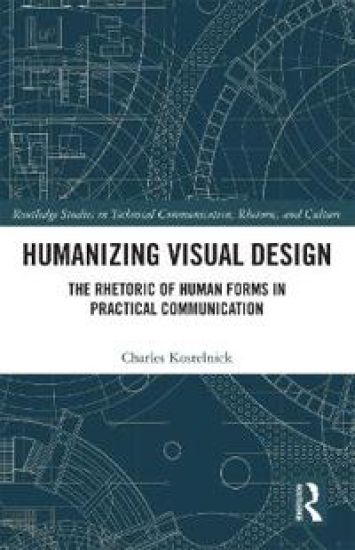
Humanizing Visual Design

Humanizing Visual Design

Charles Kostelnick

Routledge
2020
nidottu
This book analyzes the role that human forms play in visualizing practical information and in making that information understandable, accessible, inviting, and meaningful to readers—in short, "humanizing" it. Although human figures have long been deployed in practical communication, their uses in this context have received little systematic analysis. Drawing on rhetorical theory, art history, design studies, and historical and contemporary examples, the book explores the many rhetorical purposes that human forms play in functional pictures, including empowering readers, narrating processes, invoking social and cultural identities, fostering pathos appeals, and visualizing data. The book is aimed at scholars, teachers, and practitioners in business, technical, and professional communication as well as an interdisciplinary audience in rhetoric, art and design, journalism, engineering, marketing, science, and history.
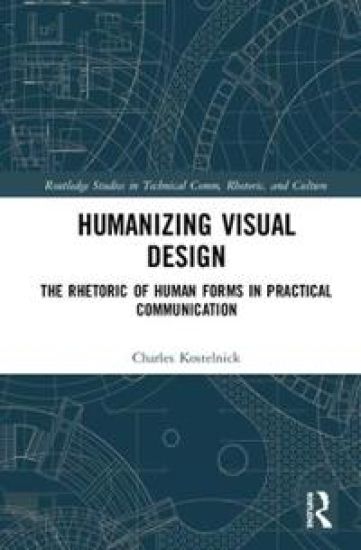
Humanizing Visual Design

Humanizing Visual Design

Charles Kostelnick

Routledge
2019
sidottu
This book analyzes the role that human forms play in visualizing practical information and in making that information understandable, accessible, inviting, and meaningful to readers—in short, "humanizing" it. Although human figures have long been deployed in practical communication, their uses in this context have received little systematic analysis. Drawing on rhetorical theory, art history, design studies, and historical and contemporary examples, the book explores the many rhetorical purposes that human forms play in functional pictures, including empowering readers, narrating processes, invoking social and cultural identities, fostering pathos appeals, and visualizing data. The book is aimed at scholars, teachers, and practitioners in business, technical, and professional communication as well as an interdisciplinary audience in rhetoric, art and design, journalism, engineering, marketing, science, and history.
Shaping Information

Shaping Information

Charles Kostelnick; Michael Hassett

Southern Illinois University Press
2003
sidottu
In this wide-ranging analysis, the authors demonstrate how visual language in professional communication - text design, data displays, illustrations - is shaped by conventional practices that are invented, codified and modified by users in visual discourse communities.