Kirjojen hintavertailu – 12 903 725 kirjaa ja 27 kauppaa

Kirjailija

Charles Laurie

Kirjat ja teokset yhdessä paikassa: 5 kirjaa, julkaisuja vuosilta 2008–2017, suosituimpiin kuuluu The Land Reform Deception. Vertaile teosten hintoja ja tarkista saatavuus suomalaisista kirjakaupoista.

5 kirjaa

Kirjojen julkaisuvuodet: 2008–2017.

The Land Reform Deception

The Land Reform Deception

Charles Laurie

Oxford University Press Inc
2017
nidottu

Halvin toimitettuna 55,20 €

The Land Reform Deception looks at a particularly contentious period in Zimbabwe's recent history, from 2000-2008, when the government seized commercial farms using illegal and violent methods against a largely unarmed population of farmers and farm workers. Robert Mugabe's government began the seizures on a small, targeted scale in an effort to suppress political opposition groups, but they soon escalated into an out-of-control frenzy targeting all farms in the country. The state claimed that the seizures occurred in response to a public cry for land redistribution and to rectify colonial-era injustices, and were part of a structured land reallocation program. Yet, land was often distributed ad hoc to those with little or no farming experience. As a result, agricultural output contracted and inflation and unemployment rose dramatically in what became a social and economic disaster for the country. In The Land Reform Deception, Charles Laurie asks why the state would target its own agricultural industry using such violent methods and risk such dire consequences. He also seeks to uncover the major actors and their motivations and strategies. Laurie argues that the seizure of the most valuable farms was largely carried out by politically influential individuals for financial and political gain, rather than to address historical injustices. In fact, he finds that the scale on which the farm invasions were carried out and the violent methods used were never part of a planned government land policy. Indeed, Laurie shows that Mugabe initially opposed the seizures, knowing that they would wreck the economy, only to later support them in order to appease his supporters and retain political power. Incorporating unprecedented empirical evidence gathered from in-depth interviews with senior politicians, members of the secretive Central Intelligence Organization, the military and police, along with farmers and farm workers who were targeted during the invasions, The Land Reform Deception strips away official explanations and delves into the political and economic drivers that triggered the seizure of commercial farms in Zimbabwe.
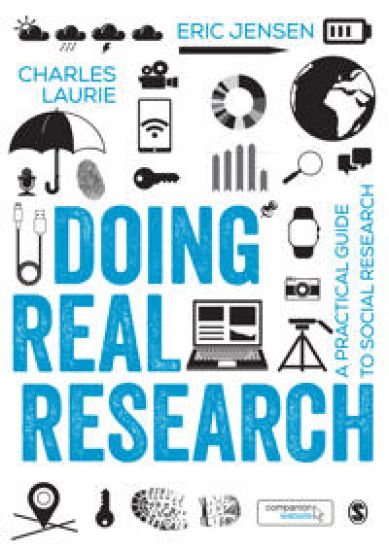
Doing Real Research

Doing Real Research

Eric Jensen; Charles Laurie

SAGE Publications Ltd
2016
sidottu
Challenging the formality and idealized settings of conventional methods teaching and opting instead for a real world approach to social research, this book offers frank, practical advice designed to empower students and researchers alike. Theoretically robust and with an exhaustive coverage of key methodologies and methods the title establishes the cornerstones of social research. Examples reflect research conducted inside and outside formal university settings and range from the extremes of war torn countries to the complexities of school classrooms. Supported by a wealth of learning features and tools the textbook and website include: Video top tipsPodcastsFull text journal articlesInterviews with researchers conducting field researchLinks to external websites and blogsStudent exercisesReal world case studies
Doing Real Research

Doing Real Research

Eric Jensen; Charles Laurie

SAGE Publications Ltd
2016
nidottu
Challenging the formality and idealized settings of conventional methods teaching and opting instead for a real world approach to social research, this book offers frank, practical advice designed to empower students and researchers alike. Theoretically robust and with an exhaustive coverage of key methodologies and methods the title establishes the cornerstones of social research. Examples reflect research conducted inside and outside formal university settings and range from the extremes of war torn countries to the complexities of school classrooms. Supported by a wealth of learning features and tools the textbook and website include: Video top tipsPodcastsFull text journal articlesInterviews with researchers conducting field researchLinks to external websites and blogsStudent exercisesReal world case studies
The Land Reform Deception

The Land Reform Deception

Charles Laurie

Oxford University Press Inc
2016
sidottu
The Land Reform Deception looks at a particularly contentious period in Zimbabwe's recent history, from 2000-2008, when the government seized commercial farms using illegal and violent methods against an unarmed population of farmers and workers. Robert Mugabe's government began the seizures on a small, targeted scale in an effort to suppress opposition groups, but they soon escalated into an out-of-control frenzy targeting all farms in the country. The state claimed that the seizures were carried out in response to a public cry for land redistribution and to rectify colonial-era injustices, but the move was economically and socially disastrous for the country. Land was distributed to those with little or no farming experience, and, as a result, agricultural output contracted and inflation and unemployment rose dramatically. The basic question Charles Laurie raises is why the state would target its own dominant agricultural industry using such violent and illegal methods. He also seeks to uncover the major actors and their motivations and strategies. Laurie argues that the land seizures were carried out by high-ranking officials, mostly veterans of the national war for independence, for financial and political gain. But he argues that the scale on which they were carried out and the violent methods used were never part of a planned government policy. He also argues that Mugabe initially opposed the seizures, knowing that they would wreck the economy, only to later support them to retain his political power. Incorporating unprecedented empirical evidence gathered from in-depth interviews with senior politicians, members of the secretive Central Intelligence Organization, the military and police, along with farmers and workers who were targeted during the invasions, The Land Reform Deception strips away official explanations and delves into the political and economic drivers that triggered the seizure of commercial farms.
Every Man Has His Price

Every Man Has His Price

Charles Laurie

University Press of America
2008
nidottu
This book sheds light on the early colonial period of Zimbabwe when many of the current land disputes originated. In particular, the book examines the Rudd Concession, the seminal southern African land and mineral agreement signed in 1888 by Cecil Rhodes and Lobengula, King of the Matabele. The Concession was not merely a land agreement, but also legal transfer of all political and economic control of the entire Matabele kingdom to Cecil Rhodes and the British. Why would Lobengula sign such a seemingly disastrous agreement? The question is fundamental to an examination of the Rudd Concession and to understand Zimbabwe's fierce conflicts today. Moreover, this question underscores the historical nature of many post-colonial dilemmas throughout Africa. This book looks to understand from a late nineteenth century perspective why Rhodes sought the agreement, and more interestingly why Lobengula ever signed it. It also discusses the essential similarities between 19th century colonialism and African capitalism today, illustrating significant implications for contemporary relations between the developed and developing world.