Kirjojen hintavertailu – 12 903 725 kirjaa ja 27 kauppaa

Kirjailija

Charles Lyall

Kirjat ja teokset yhdessä paikassa: 7 kirjaa, julkaisuja vuosilta 1980–2020, suosituimpiin kuuluu The Diwans of 'Abid ibn al-Abras of Asad and 'Amir ibn at-Tufail of 'Amir ibn Sa'sa'ah. Vertaile teosten hintoja ja tarkista saatavuus suomalaisista kirjakaupoista.

7 kirjaa

Kirjojen julkaisuvuodet: 1980–2020.

The Diwans of 'Abid ibn al-Abras of Asad and 'Amir ibn at-Tufail of 'Amir ibn Sa'sa'ah
Poems of 'Abid and 'Amir are found in other works but the 11th-century MS in the British Library on which this edition is based is unique. Both are tribal poets of the Jahiliyyah, the period before Islam. 'Abd ibn al-Abras, regarded as one of the best pre-Islamic poets, was contemporary with the greatest of them all, Imru' al-Qais of Kindah, and his poems reflect the events of the first half of the 6th century, such as the attempt and ultimate failure of the Princes of Kindah to impose their hegemony on the nomads of northern Arabia, among them 'Abid's tribe, the Bani Asad, who slew Imru' al-Qais's father, Hujr. 'Amir's tribe, on the other hand, dwelt in Central Arabia, some distance to the West of Mecca and he was a contemporary of the Prophet Muhammad. 'Amir remained pagan but, though he is credited by some accounts with bitter hostility to Islam, his poems are mainly concerned with war and rivalry with neighbouring tribes.
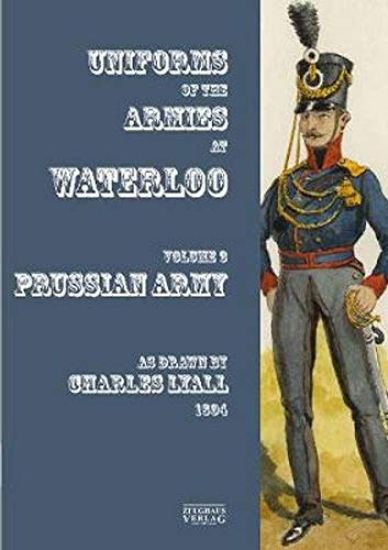
Uniforms of the Armies at Waterloo

Uniforms of the Armies at Waterloo

Charles Lyall

Zeughausverlag GmbH
2020
nidottu
Drawn from authentic sources by the artist Charles James Lyall, one of the classic English uniform artists at the beginning of the 20thcentury. In 1894 Lyall launched a series of uniform plates on the armies at Waterloo in 1815. Lyall compiled series of numerous uniform prints of British, Indian and various European armies and epochs. His works can be found in the large uniform collections such as the Anne S. K. Brown Collection, USA. This volume contains a description of the 16 June 1815 Battle of Ligny that was fought at the same time as the Battle of Quatre Bras (see Volume 2 of the series). At Ligny, the Prussian forces met French units under the direct command Napoleon, who wanted to exploit the strategic advantage of the separation of the Prussians from Wellington’s forces. Two maps from William Siborne’s rare atlas facilitate understanding of the course of the Battle of Ligny. Like in the two previous volumes, the plates by the 19th century artist Charles Lyall are critiqued based on current knowledge of the uniforms, equipment and weapons. A detailed description of the Prussian forces‘ organization and uniforms supplements Lyall’s illustrations.
Uniforms of the Armies at Waterloo

Uniforms of the Armies at Waterloo

Charles Lyall

Zeughausverlag GmbH
2019
nidottu
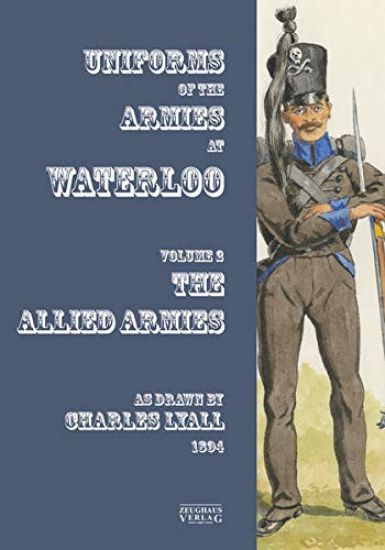
Drawn from authentic sources by the artist Charles James Lyall, one of the classic English uniform artists at the beginning of the 20thcentury. In 1894 Lyall launched a series of uniform plates on the armies at Waterloo in 1815. Lyall compiled series of numerous uniform prints of British, Indian and various European armies and epochs. His works can be found in the large uniform collections such as the Anne S. K. Brown Collection, USA. This volume presents the Allied armies of 1815 with Dutch-Belgian, Hanoverian (including the King's German Legion - KGL), Nassau and Brunswick units. The volume addresses the foreign units that took part in the 1815 campaign in the Netherlands with the Duke of Wellington, whose British Army was presented in the first volume. Along with the Hanoverian units, either as the KGL or as new formations that were created in the Kingdom of Hanover starting in 1813, these were primarily troops from the Kingdom of the Netherlands. They consisted not only of the original Dutch but also Belgian units plus a small Nassau contingent. The smallest body of troops was the contingent provided by the Duke of Brunswick.
Uniforms of the Armies at Waterloo

Uniforms of the Armies at Waterloo

Charles Lyall

Zeughausverlag GmbH
2018
nidottu
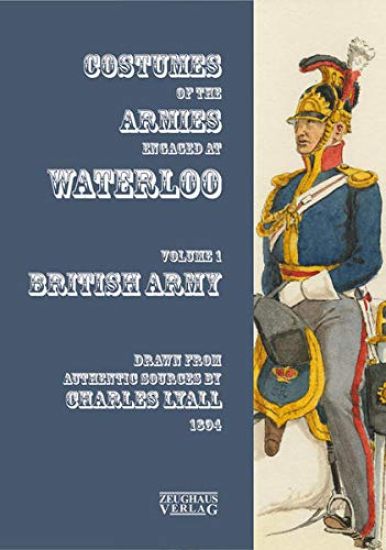
Drawn from authentic sources by Charles Lyall, 1894 Launch of a series of uniforms on the armies at Waterloo 1815, drawn by Charles James Lyall, one of the classic English uniform artists at the beginning of the 20th century. Lyall compiled numerous series of British, Indian and various European armies and epochs. His works can be found in the large collections of uniforms such as the Anne S. K. Brown Collection, USA. In this work, created in 1894, the appearance of the British Army with all the arms and important regiments who participated in this famous Battle of Waterloo in 1815 are displayed on 75 panels. Each unit is treated on one or more panels and with the various degrees of service. The staff and the special groups are also not missing. The panels are annotated by the two editors, Markus Gärtner and Markus Stein, according to current research in this field of the uniforms. An introduction on the uniforming of the various units, a detailed and detailed compilation of the literature supplement this volume. There are further volumes to the Dutch-Belgian constellations, to the Royal German Legion and the Brunswick Corps, as well as to the French and Prussian army.
Who Wrote Shakespeare?

Who Wrote Shakespeare?

William Henderson; Charles Lyall

Hansebooks
2017
pokkari
Who Wrote Shakespeare? - Aye, there's the rub is an unchanged, high-quality reprint of the original edition of 1887. Hansebooks is editor of the literature on different topic areas such as research and science, travel and expeditions, cooking and nutrition, medicine, and other genres. As a publisher we focus on the preservation of historical literature. Many works of historical writers and scientists are available today as antiques only. Hansebooks newly publishes these books and contributes to the preservation of literature which has become rare and historical knowledge for the future.