
Kirjailija
Charles Lyell
Kirjat ja teokset yhdessä paikassa: 150 kirjaa, julkaisuja vuosilta 1833–2026, suosituimpiin kuuluu Travels in North America 2 Volume Set. Vertaile teosten hintoja ja tarkista saatavuus suomalaisista kirjakaupoista.
150 kirjaa
Kirjojen julkaisuvuodet: 1833–2026.

Charles Lyell's argument in this classic volume is that the processes of nature are slow and uniform, and that the Earth is in consequence hundreds of millions of years old. This work includes his prediction that if our nearest relatives are great apes, then the places to look for human fossils will be central Africa and Indonesia.
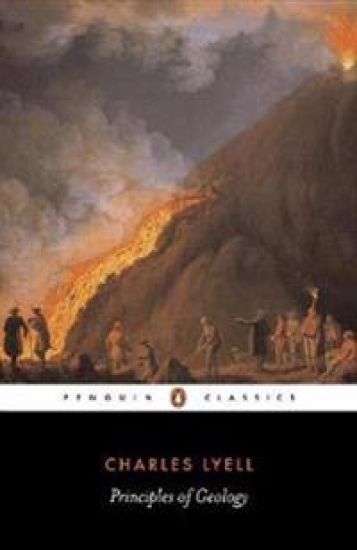
One of the key works in the nineteenth-century battle between science and Scripture, Charles Lyell's Principles of Geology (1830-33) sought to explain the geological state of the modern Earth by considering the long-term effects of observable natural phenomena. Written with clarity and a dazzling intellectual passion, it is both a seminal work of modern geology and a compelling precursor to Darwinism, exploring the evidence for radical changes in climate and geography across the ages and speculating on the progressive development of life. A profound influence on Darwin, Principles of Geology also captured the imagination of contemporaries such as Melville, Emerson, Tennyson and George Eliot, transforming science with its depiction of the powerful forces that shape the natural world.
As important to modern world views as any work of Darwin, Marx, or Freud, Lyell's Principles of Geology has never before been available in paperback. In this third and final volume, Charles Lyell (1797-1875) devotes much attention to the "syntax of geology," that is, to a way of reconstructing the geological past on the basis of the "grammar" of the present processes he has described in the earlier volumes. He defines four periods of the Tertiary—Newer Pliocene, Older Pliocene, Miocene, and Eocene—and argues that the deposits dating from each period demonstrate the uniformity of processes and environments throughout the Tertiary, and indeed in earlier periods of earth history. Martin J. S. Rudwick has compiled a bibliography giving full references for the sources Lyell cites in all three volumes of the Principles.
As important to modern world views as any work of Darwin, Marx, or Freud, Lyell's Principles of Geology has never before been available in paperback. In the second of three volumes, Lyell (1797-1875) continues his uniformitarian argument of Volume I—the physical features of the earth are endlessly fluctuating around a stable mean—but focuses on organic rather than inorganic processes. Volume II is widely known because of its influence on Darwin, who took the book on his famous Beagle voyage and was stimulated by Lyell's extensive treatment of biological history and diversity.
As important to modern world views as any work of Darwin, Marx, or Freud, Principles of Geology is a landmark in the history of science. In this first of three volumes, Charles Lyell (1797-1875) sets forth his powerful uniformitarian argument: processes now visibly acting in the natural world are essentially the same as those that have acted throughout the history of the earth, and are sufficient to account for all geological phenomena. Martin J. S. Rudwick's new Introduction, summarizing the origins of the Principles, guides the reader through the structure of the entire three-volume first edition and considers the legacy of Lyell's great work.
Charles Lyell introduces geology, explaining the characteristics of the Earth and its minerals, and how time affects change over the course of time. This edition unites the three books, and appends over 100 diagrams, drawings and charts. Written in the mid-19th century, many of Lyell's points and observations have since been refined or superseded by improvements in the science. However, his examination of geologic phenomena, his astute evaluations of the natural world, and reasoned explanations of events such as volcanic eruptions and earthquakes, made Lyell one of the most respected geologists of his era. Much of Lyell's work was based upon the groundbreaking ideas of his forerunner James Hutton. However he also was a pioneer in several respects; his work on volcanoes included a correct hypothesis that their buildup is gradual, and he introduced a more accurate system of geologic eras. He also possessed expertise on biological elements of geology - namely how fossilized creatures offer glimpses into the ancient Earth as well as the evolution of life. Many of the author's subjects are made clearer by accompanying diagrams, while expeditions are accompanied by maps that clarify the land. Frequently, the author will narrate these images which are labelled with letters and numbers. Thus the reader receives excellent and easy-to-follow analyses of a given phenomena, be it an erupting volcano or an ancient fossil. Principles of Geology was among the first texts in the field to benefit from the ability of scientists to travel widely. Investigations of the Mississippi river, of the volcanic regions of Naples, and even a fledgling examination of coral reefs, populate this book. For the first time, the discoveries of geology were compared and validated with others, vast distances away. This ability led to further development and validation of models and theories proposed by Lyell and others, as this book evidences.
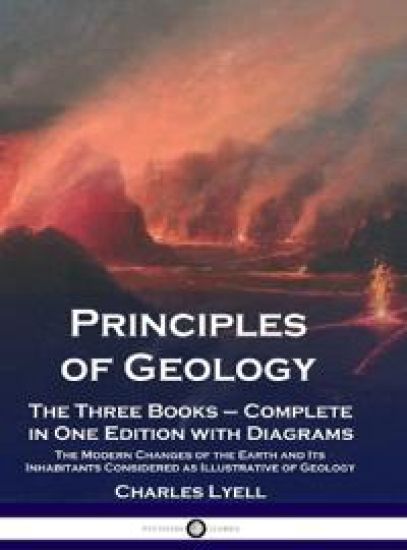
Charles Lyell introduces geology, explaining the characteristics of the Earth and its minerals, and how time affects change over the ages. This edition unites the three books, and appends over 100 diagrams, drawings and charts. Written in the mid-19th century, many of Lyell's points and observations have since been refined or superseded by improvements in the science. However, his examination of geologic phenomena, his astute evaluations of the natural world, and reasoned explanations of events such as volcanic eruptions and earthquakes, made Lyell one of the most respected geologists of his era. Much of Lyell's work was based upon the groundbreaking ideas of his forerunner James Hutton. However he also was a pioneer in several respects; his work on volcanoes included a correct hypothesis that their buildup is gradual, and he introduced a more accurate system of geologic eras. He also possessed expertise on biological elements of geology - namely how fossilized creatures offer glimpses into the ancient Earth as well as the evolution of life. Many of the author's subjects are made clearer by accompanying diagrams, while expeditions are accompanied by maps that clarify the land. Frequently, the author will narrate these images which are labelled with letters and numbers. Thus the reader receives excellent and easy-to-follow analyses of a given phenomena, be it an erupting volcano or an ancient fossil. Principles of Geology was among the first texts in the field to benefit from the ability of scientists to travel widely. Investigations of the Mississippi river, of the volcanic regions of Naples, and even a fledgling examination of coral reefs, populate this book. For the first time, the discoveries of geology were compared and validated with others, vast distances away. This ability led to further development and validation of models and theories proposed by Lyell and others, as this book evidences.