Kirjojen hintavertailu – 12 859 828 kirjaa ja 27 kauppaa

Kirjailija

Charles M. Newman

Kirjat ja teokset yhdessä paikassa: 3 kirjaa, julkaisuja vuosilta 1997–2013, suosituimpiin kuuluu Community Food Webs. Vertaile teosten hintoja ja tarkista saatavuus suomalaisista kirjakaupoista.

3 kirjaa

Kirjojen julkaisuvuodet: 1997–2013.

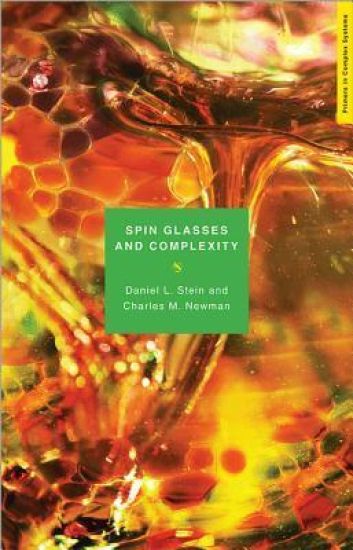
Spin Glasses and Complexity

Spin Glasses and Complexity

Daniel L. Stein; Charles M. Newman

Princeton University Press
2013
pokkari
Spin glasses are disordered magnetic systems that have led to the development of mathematical tools with an array of real-world applications, from airline scheduling to neural networks. Spin Glasses and Complexity offers the most concise, engaging, and accessible introduction to the subject, fully explaining what spin glasses are, why they are important, and how they are opening up new ways of thinking about complexity. This one-of-a-kind guide to spin glasses begins by explaining the fundamentals of order and symmetry in condensed matter physics and how spin glasses fit into--and modify--this framework. It then explores how spin-glass concepts and ideas have found applications in areas as diverse as computational complexity, biological and artificial neural networks, protein folding, immune response maturation, combinatorial optimization, and social network modeling. Providing an essential overview of the history, science, and growing significance of this exciting field, Spin Glasses and Complexity also features a forward-looking discussion of what spin glasses may teach us in the future about complex systems. This is a must-have book for students and practitioners in the natural and social sciences, with new material even for the experts.
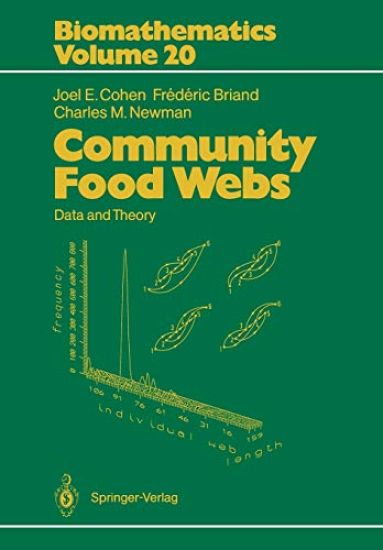
Community Food Webs

Community Food Webs

Joel E. Cohen; Frédéric Briand; Charles M. Newman

Springer-Verlag Berlin and Heidelberg GmbH Co. K
2011
nidottu
Food webs hold a central place in ecology. They describe which organisms feed on which others in natural habitats. This book describes recently discovered empirical regularities in real food webs: it proposes a novel theory unifying many of these regularities, as well as extensive empirical data. After a general introduction, reviewing the empirical and theoretical discoveries about food webs, the second portion of the book shows that community food webs obey several striking phenomenological regularities. Some of these unify, regardless of habitat. Others differentiate, showing that habitat significantly influences structure. The third portion of the book presents a theoretical analysis of some of the unifying empirical regularities. The fourth portion of the book presents 113 community food webs. Collected from scattered sources and carefully edited, they are the empirical basis for the results in the volume. The largest available set of data on community food webs provides a valuable foundation for future studies of community food webs. The book is intended for graduate students, teachers and researchers primarily in ecology. The theoretical portions of the book provide materials useful to teachers of applied combinatorics, in particular, random graphs. Researchers in random graphs will find here unsolved mathematical problems.
Topics in Disordered Systems

Topics in Disordered Systems

Charles M. Newman

Birkhauser Verlag AG
1997
nidottu
Disordered systems are statistical mechanics models in random environments. This lecture notes volume concerns the equilibrium properties of a few carefully chosen examples of disordered Ising models. The approach is that of probability theory and mathematical physics, but the subject matter is of interest also to condensed matter physicists, material scientists, applied mathematicians and theoretical computer scientists. (The two main types of systems considered are disordered ferromagnets and spin glasses. The emphasis is on questions concerning the number of ground states (at zero temperature) or the number of pure Gibbs states (at nonzero temperature). A recurring theme is that these questions are connected to interesting issues concerning percolation and related models of geometric/combinatorial probability. One question treated at length concerns the low temperature behavior of short-range spin glasses: whether and in what sense Parisi's analysis of the meanfield (or "infinite-range") model is relevant. Closely related is the more general conceptual issue of how to approach the thermodynamic (i.e., infinite volume) limit in systems which may have many complex competing states. This issue has been addressed in recent joint work by the author and Dan Stein and the book provides a mathematically coherent presentation of their approach.)