Kirjojen hintavertailu – 12 903 724 kirjaa ja 27 kauppaa

Kirjailija

Charles M. Robinson

Kirjat ja teokset yhdessä paikassa: 16 kirjaa, julkaisuja vuosilta 1995–2022, suosituimpiin kuuluu The Buffalo Hunters. Vertaile teosten hintoja ja tarkista saatavuus suomalaisista kirjakaupoista.

Nimi esiintyy myös muodoissa: Charles M Robinson

16 kirjaa

Kirjojen julkaisuvuodet: 1995–2022.

The Fall of a Black Army Officer

The Fall of a Black Army Officer

Charles M. Robinson

UNIVERSITY OF OKLAHOMA PRESS
2022
nidottu
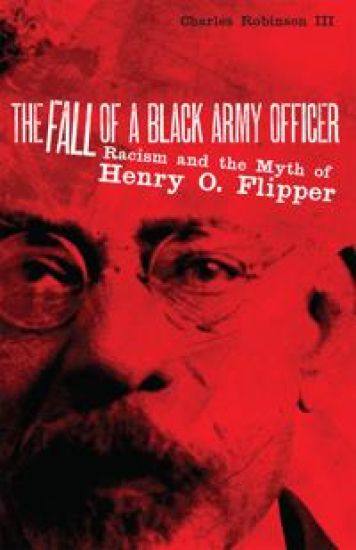
Lieutenant Henry O. Flipper was a former slave who rose to become the first African American graduate of West Point. While serving as commissary officer at Fort Davis, Texas, in 1881, he was charged with embezzlement and conduct unbecoming an officer and a gentleman. A court-martial board acquitted Flipper of the embezzlement charge but convicted him of conduct unbecoming. He was then dismissed from the service of the United States. The Flipper case became known as something of an American Dreyfus Affair, emblematic of racism in the frontier army. Because of Flipper’s efforts to clear his name, many assumed that he had been railroaded because he was black. In The Fall of a Black Army Officer, Charles M. Robinson III challenges that assumption. In this complete revision of his earlier work, The Court-Martial of Lieutenant Henry Flipper, Robinson finds that Flipper was the author of his own problems. The taint of racism on the Flipper affair became so widely accepted that in 1999 President Bill Clinton issued a posthumous pardon for Flipper. The Fall of a Black Army Officer boldly moves the arguments regarding racism--in both Lt. Flipper’s case and the frontier army in general--beyond political correctness. Solidly grounded in archival research, it is a thorough and provocative reassessment of the Flipper affair, at last revealing the truth.
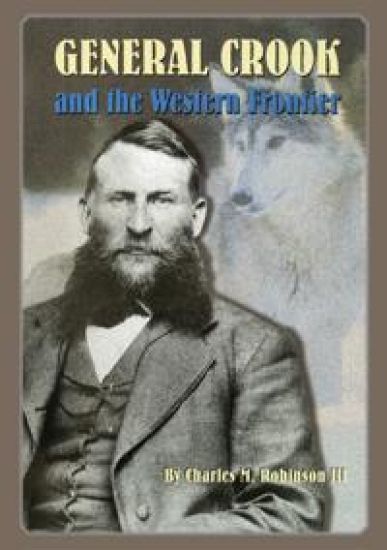
General Crook and the Western Frontier

General Crook and the Western Frontier

Charles M. Robinson

UNIVERSITY OF OKLAHOMA PRESS
2022
nidottu
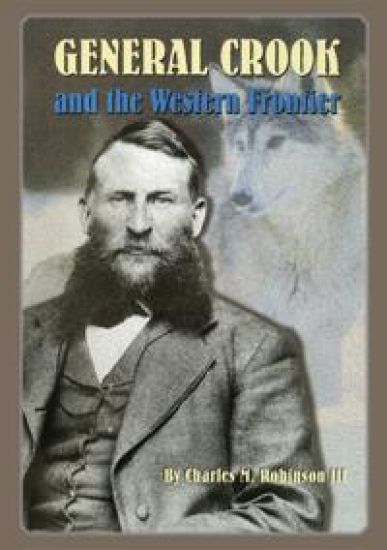
General George Crook was one of the most prominent soldiers in the frontier West. General William T. Sherman called him the greatest Indian fighter and manager the army ever had. And yet, on hearing of Crook's death, the Sioux chief Red Cloud lamented, "He, at least, never lied to us." As a young officer in the Pacific Northwest, Crook emphasized training and marksmanship--innovative ideas in the antebellum army. Crook's career in the West began with successful campaigns against the Apaches that resulted in his promotion to brigadier general. His campaign against the Lakota and Cheyennes was less successful, however, as he alternately displayed deep insight, egotism, indecision, and fear. Charles M. Robinson pieces together the contradictions of Crook's career to reveal that although the general sometimes micromanaged his campaigns to the point that his officers had virtually no flexibility, he gave his officers so much freedom on other occasions that they did not fully understand his expectations or objectives. Crook resented any criticism and was quick to blame both subordinates and superiors, yet Robinson shows that much of Crook's success in the Indian wars can be attributed to the efforts of subordinate officers. He also details Crook's later efforts to provide equal rights and opportunities for American Indians. General Crook and the Western Frontier, the first full-scale biography of Crook, uses contemporary manuscripts and primary sources to illuminate the general's personal life and military career.
The Frontier World of Fort Griffin

The Frontier World of Fort Griffin

Charles M. Robinson

University of Oklahoma Press
2016
nidottu
Fort Griffin, Texas, is rarely used in the same sentence with Dodge City, Deadwood, or Tombstone, yet this frontier town was every bit as tough as the places that went down in the history of brutality. Vigilantes, lynchings, ladies of easy virtue, buffalo hunting, gambling, posses, more lynchings, and lawmen as bad as the outlaws they jailed - Fort Griffin had it all, bustling with a raw life not for the faint-of-heart. Commonly known as the Flat, Fort Griffin grew from a military post rife with Indian trouble to a spirited, rough-hewn frontier community, only to burn out in a matter of decades. Within that time it helped mold characters equal to any of legend. John Larn, the Flat's second sheriff, was not only considered one of the best lawmen in the county but was also a cattle thief and killer, and died as violently as he had lived. Colonel Ranald MacKenzie, commanding officer of the Fourth Cavalry, was the man whose savvy and knowledge would eventually put an end to the savage Indian attacks that had plagued Fort Griffin and surrounding territories. Lottie Deno was the celebrity of Fort Griffin's floating world. With a mysterious past and uncommon elegance for women in her trade, her time in the Flat was to end with the tragic murder of her lover. Fort Griffin had all the makings of the legendary western town, and was an archetype for the untamed frontier life. Its story is one of passion, anger, lawlessness, and occasional justice, and will further establish the Flat as a truly original pioneer town.
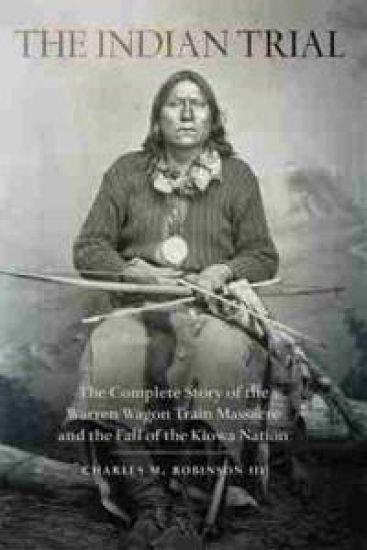
The Indian Trial

The Indian Trial

Charles M Robinson

University of Oklahoma Press
2016
nidottu
Kiowa and Comanche raids on the Southern Plains in 1870-71 terrorized settlers. The raids culminated in the Warren Wagon Train Massacre and the arrest of Satank, Santanta, and Big Tree by General William Tecumseh Sherman. The Jacksboro Indian Trial led to a confrontation between the state of Texas, the federal government, the Kiowa Nation, Comanches, and Cheyennes. This narrative history explores the Little Arkansas and Medicine Lodge Treaties and factions within the Kiowa Nation.
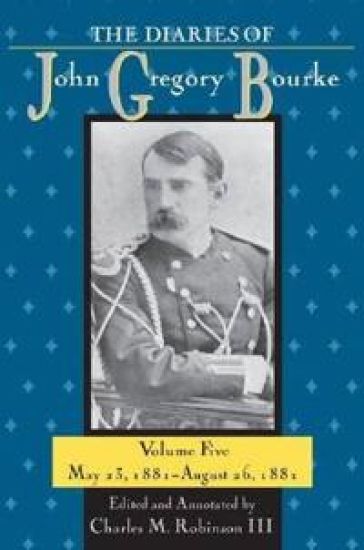
The Diaries of John Gregory Bourke, Volume 5

The Diaries of John Gregory Bourke, Volume 5

Charles M. Robinson

University of North Texas Press,U.S.
2013
sidottu
John Gregory Bourke kept a monumental set of diaries beginning as a young cavalry lieutenant in Arizona in 1872, and ending the evening before his death in 1896. As aide-de-camp to Brigadier General George Crook, he had an insider's view of the early Apache campaigns, the Great Sioux War, the Cheyenne Outbreak, and the Geronimo War. Bourke's writings reveal much about military life on the western frontier, but he also was a noted ethnologist, writing extensive descriptions of American Indian civilization and illustrating his diaries with sketches and photographs. Previously, researchers could consult only a small part of Bourke’s diary material in various publications, or else take a research trip to the archive and microfilm housed at West Point. Now, for the first time, the 124 manuscript volumes of the Bourke diaries are being compiled, edited, and annotated by Charles M. Robinson III in an easily accessible form to the modern researcher. This fifth volume opens at Fort Wingate as Bourke prepares to visit the Navajos. Next, at the Pine River Agency, he is witness to the Sun Dance, where despite his discomfort at what he saw, he noted that during the Sun Dance piles of food and clothing were contributed by the Indians themselves, to relieve the poor among their people. Bourke continued his travels among the Zunis, the Rio Grande pueblos, and finally, with the Hopis to attend the Hopi Snake dance. The volume concludes at Fort Apache, Arizona, which is stirring with excitement over the activities of the Apache medicine man, Nakai’-dokli’ni, which Bourke spelled Na Kay do Klinni. This would erupt into bloodshed less than a week later. Volume Five is especially important because it is the first in this series to deal almost exclusively with Bourke’s ethnological research. Aside from a brief trip to the East Coast, most of the text involves his observations either during the Great Oglala Sun Dance of 1881, or among the pueblos of New Mexico and Arizona. Bourke’s account of the Sun Dance is particularly significant because it was the last one held by the Oglalas. The Hopi material in this volume served as the basis of The Snake Dance of the Moquis of Arizona, published three years later in 1884, and perhaps his best-known work after On the Border with Crook. Extensively annotated and with a biographical appendix on Indians, civilians, and military personnel named in the diaries, this book will appeal to western and military historians, students of American Indian life and culture, and to anyone interested in the development of the American West.
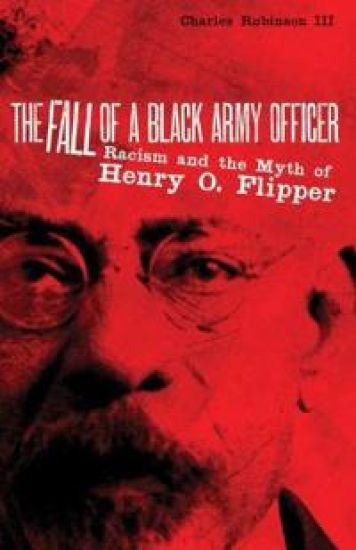
The Fall of a Black Army Officer

The Fall of a Black Army Officer

Charles M. Robinson

University of Oklahoma Press
2008
sidottu
Lieutenant Henry O. Flipper was a former slave who rose to become the first African American graduate of West Point. While serving as commissary officer at Fort Davis, Texas, in 1881, he was charged with embezzlement and conduct unbecoming an officer and a gentleman. A court-martial board acquitted Flipper of the embezzlement charge but convicted him of conduct unbecoming. He was then dismissed from the service of the United States. The Flipper case became known as something of an American Dreyfus Affair, emblematic of racism in the frontier army. Because of Flipper's efforts to clear his name, many assumed that he had been railroaded because he was black. In The Fall of a Black Army Officer, Charles M. Robinson III challenges that assumption. In this complete revision of his earlier work, The Court-Martial of Lieutenant Henry Flipper, Robinson finds that Flipper was the author of his own problems. The taint of racism on the Flipper affair became so widely accepted that in 1999 President Bill Clinton issued a posthumous pardon for Flipper. The Fall of a Black Army Officer boldly moves the arguments regarding racism--in both Lt. Flipper's case and the frontier army in general--beyond political correctness. Solidly grounded in archival research, it is a thorough and provocative reassessment of the Flipper affair, at last revealing the truth.
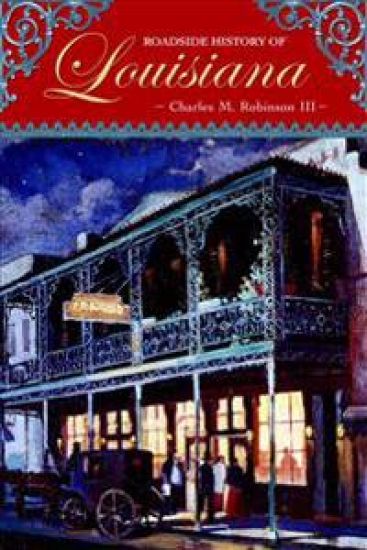
Roadside History of Louisiana

Roadside History of Louisiana

Charles M. Robinson

Mountain Press Publishing Company
2007
nidottu
If variety is the spice of life, then Louisiana's history is a red-hot gumbo. Roadside History of Louisiana is a piquant adventure through Shreveport, Baton Rouge, and, of course, the Big Easy, as well as historic plantations, tiny bayou towns, and old railroad stops. You can almost smell the jambalaya as we tour the Cajun country, learning how the Acadians adapted to their new southern environment after Le Grand Derangement, the tragic expulsion of the Acadians from Nova Scotia in 1755. And you can almost feel the beat of the drums in New Orlean's Congo Square, where slaves once gathered to dance. With insight and warmth, Charles M. Robinson III follows the ups and downs of this great southern state, from the optimism of early settlers to the struggles of the Civil War, from the joy of the Mardi Gras to the horror of Hurricane Katrina. Like the other books in this highly regarded series, Roadside History of Louisiana is divided into six regions, following highways and scenic byways through small towns and urban centers, enlightening both residents and visitors. Numerous historical photographs and maps enhance this delightful guide to the history of the Pelican State.
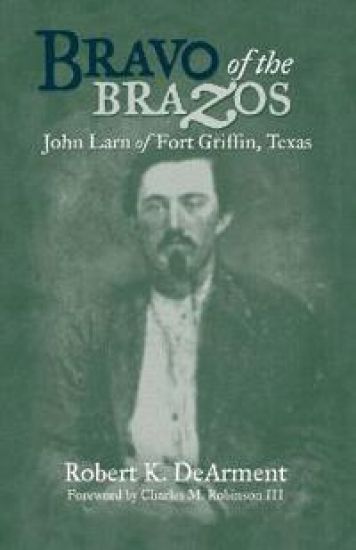
Bravo of the Brazos

Bravo of the Brazos

Robert K. DeArment; Charles M. Robinson

University of Oklahoma Press
2005
nidottu
More than a century after his death in 1878, the mere mention of John Larn's name can trigger strong reactions along the Clear Fork of the Brazos River in northern Texas. In Bravo of the Brazos, Robert K. DeArment tells for the first time the complete story of this enigmatic and controversial figure. Larn was good-looking, well-mannered, and gentle around women and children. He was a successful rancher and renowned frontier sheriff. Yet he was also the charismatic leader of a vigilante committee that enjoyed widespread support. Before his death at age 29, Larn had killed or participated in killing at least a dozen men.
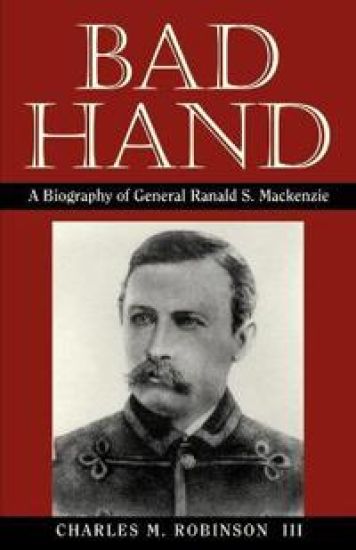
Bad Hand

Bad Hand

Charles M. Robinson

State House Press
2005
nidottu
A Civil War hero, victorious Indian fighter and eventual madman, General Ranald S. Mackenzie's fascinating life, his brilliant accomplishments, and his descent into madness are brought to life in a complete and thoroughly researched biography that reestablishes his importance in the history of Texas and the United States. Foreword by Stan Hoig.
General Crook and the Western Frontier

General Crook and the Western Frontier

Charles M. Robinson

University of Oklahoma Press
2001
sidottu
General George Crook was one of the most prominent soldiers in the frontier West. General William T. Sherman called him the greatest Indian fighter and manager the army ever had. And yet, on hearing of Crook's death, the Sioux chief Red Cloud lamented, ""He, at least, never lied to us."" As a young officer in the Pacific Northwest, Crook emphasized training and marksmanship--innovative ideas in the antebellum army. Crook's career in the West began with successful campaigns against the Apaches that resulted in his promotion to brigadier general. His campaign against the Lakota and Cheyennes was less successful, however, as he alternately displayed deep insight, egotism, indecision, and fear. Charles M. Robinson pieces together the contradictions of Crook's career to reveal that although the general sometimes micromanaged his campaigns to the point that his officers had virtually no flexibility, he gave his officers so much freedom on other occasions that they did not fully understand his expectations or objectives. Crook resented any criticism and was quick to blame both subordinates and superiors, yet Robinson shows that much of Crook's success in the Indian wars can be attributed to the efforts of subordinate officers. He also details Crook's later efforts to provide equal rights and opportunities for American Indians. General Crook and the Western Frontier, the first full-scale biography of Crook, uses contemporary manuscripts and primary sources to illuminate the general's personal life and military career.
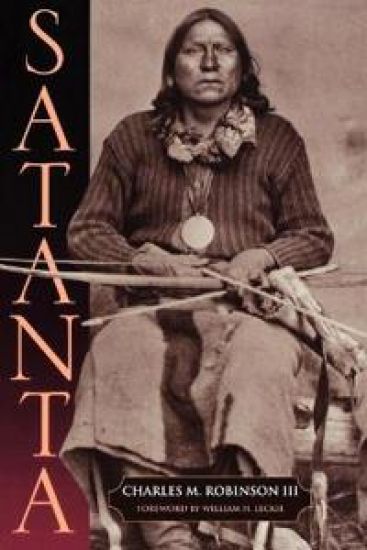
Satanta

Satanta

Charles M. Robinson

State House Press
1997
nidottu
In 1867 the New York Times wrote that "in cunning or native diplomacy Satanta has no equal in boldness, daring and merciless cruelty." Even in 1867, however, the Times was able to admit that there are "good points in this dusky chieftain which command admiration." Here at last is a brilliantly researched and written biography of the Kiowa chief who terrorized the western frontier but who fascinated the eastern press. The war leader of the Warren wagon train massacre was also the orator and diplomat who did much to publicize to the eastern establishment the 19th-century tragedies being inflicted upon the Indian tribes. From Satanta's birth ca. 1815 to his ignominious death in a Texas prison in 1878, award-winning biographer Charles M. Robinson III deals with Satanta, as both legend and man, within the context, heritage and history of the Kiowa culture as it came face-to-face with the encroachments of western immigration.
The Buffalo Hunters

The Buffalo Hunters

Charles M. Robinson

State House Press
1995
nidottu
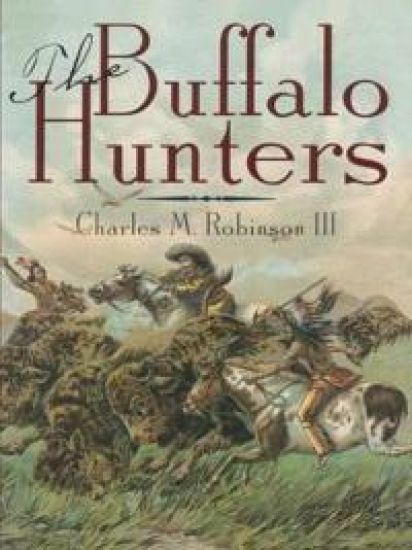
The near extinction of the North American buffalo, which in 1850 covered the mid-western plains by countless millions but which had been hunted to near-oblivion within thirty-five years, is one of the most exciting yet tragic stories of American history. Charles M. Robinson III dramatically relates this tale with both vivid, brilliantly researched text and with evocative photographs and illustrations. From the 18th century French fur traders, through the American industrial revolution with its demand for leather, and ending with the final sad hunts of the mid-1880s, Robinson eloquently and graphically describes all aspects of the hunt and the hunters, including the Indians for whom the destruction of their subsistence resulted in their own destruction. Here are the hunters such as Custer, Cody and the Mooars, and the rough and tumble towns that hides built--Adobe Walls, Buffalo Gap, Dodge City, and Fort Griffin. A wealth of photographs, including rare reproductions of the long-lost glass plates of photographer George Robertson taken during an 1874 hunt, and the photographs of L. A. Huffman in the early 1880s, illustrate this exciting volume of Western Americana.