
Kirjailija
Charles Mackay
Kirjat ja teokset yhdessä paikassa: 289 kirjaa, julkaisuja vuosilta 2000–2026, suosituimpiin kuuluu The Cavalier Songs and Ballads of England from 1642 to 1684. Vertaile teosten hintoja ja tarkista saatavuus suomalaisista kirjakaupoista.
289 kirjaa
Kirjojen julkaisuvuodet: 2000–2026.

Memoirs Of Extraordinary Popular Delusions Volume Two
Charles Mackay
KESSINGER PUBLISHING CO
2004
pokkari


Memoirs of Extraordinary Popular Delusions and the Madness of Crowds 1852
Charles MacKay
Kessinger Pub
2003
pokkari
More than a century before Alan Greenspan coined the phrase "irrational exuberance" to describe the speculative bubble inflating technology stocks, Charles Mackay was recording the history of "tulipomania," a speculative madness surrounding the value of tulips in the 18th century that was the ruin of many Dutch and English investors. This is only one of the "extraordinary popular delusions" documented by Mackay in a fascinating study of group psychology. He also describes notorious witch hunts, haunted houses, the Crusades, beliefs in fortunetellers and in the magical power of alchemy, veneration of relics, bogus health cures and health scares, and many other examples of human credulity and flights from reason. This work is a true classic in the study of paranormal beliefs, a funny, shocking, and unbelievable yet true history of human gullibility.
Memoirs of Extraordinary Popular Delusions and the Madness of Crowds, Volume 1
Charles MacKay
Xlibris Corporation
2000
pokkari
If you’ve ever wondered where popular catch phrases and slang comes from or why men’s beards go in and out of fashion, then this book is for you. How often do you come across a book that can explain most everything? Much of today’s news has a basis in prior historical events. The internet IPO market shares striking similarities to the Dutch “tulip mania” of the 1600’s. The conflict in the Middle East can trace its roots to the Crusades. The recent satanic child abuse trials are reminiscent of the European witch trials of the 1400s-1600s. This complete two-volume edition demonstrates that the madness and confusion of crowds knows no limits, and has no temporal bounds. Here are astonishing and entertaining tales of thievery, greed and madness. This informative, funny collection encompasses a broad range of manias and deceptions from haunted houses and the prophecies of Nostradamus to speculative excess. Charles MacKay explains it all in this classic edition. Enjoy! Author Biography: Peter-Eric Philipp is Managing Editor of The Essential Library, a classic literature series for the modern reader. The series features engaging and approachable literary works drawn from the fields of drama, poetry, novels, and non-fiction. Peter has studied at Cambridge University, England and holds a degree in international political relations from the University of California at Berkeley. He currently resides in San Francisco.
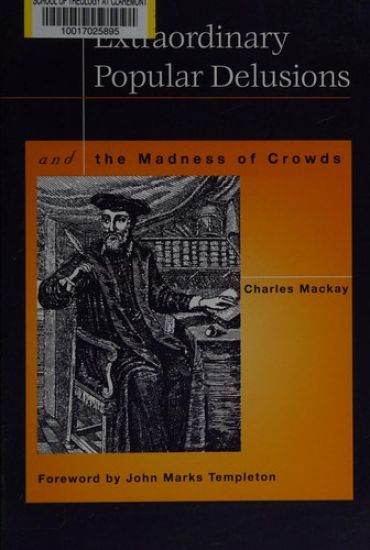
“Today, as in the time of the South Sea Bubble, human nature is drawn like a moth to a flame by the speculative fads of the marketplace. The excitement of new glamour issues in electronics or medical technology and the general euphoria over a rising market can lure even the most experienced investors. Their optimism overcomes their better judgment. They abandon critical analysis of the investment’s fundamental value. Like gamblers in a casino, they play against the odds, paying inflated prices and dreaming of quick profit.” -from the foreword by John Marks Templeton. Mackay’s classic, first published in 1841, studies the psychology of crowds and mass mania throughout history, including accounts of classic scams, grand-scale madness, and deceptions. Some of these include the Mississippi scheme that swept France in 1720, the South Sea Bubble that ruined thousands in England simultaneously, and the tulip mania of Holland when fortunes were made and lost on single tulip bulbs. Other chapters deal with fads and delusions that often spring from good ideas or causes, many of which still have their followers today: alchemy and the philosopher’s stone, the prophecies of Nostradamus, the coming of comets and judgment day, the Rosicrucians, and astrology. Time and again, we can avoid disastrous pitfalls and learn to profit by seeing how history repeats itself. Fascinating, mesmerizing, strikingly strange, and amazingly wise, this book will never be forgotten and cannot be ignored.