Kirjojen hintavertailu – 12 859 827 kirjaa ja 27 kauppaa

Kirjailija

Charles Marowitz

Kirjat ja teokset yhdessä paikassa: 11 kirjaa, julkaisuja vuosilta 1975–2021, suosituimpiin kuuluu Roar of the Canon. Vertaile teosten hintoja ja tarkista saatavuus suomalaisista kirjakaupoista.

11 kirjaa

Kirjojen julkaisuvuodet: 1975–2021.

The Marowitz Compendium

The Marowitz Compendium

Charles Marowitz

ibidem-Verlag, Jessica Haunschild u Christian Schon
2021
nidottu
Charles Marowitz was the first American to direct at the Royal Shakespeare Company and the first American to direct at the Czech National Theatre (while collaborating with Vaclav Havel). Known as a maverick playwright, director, and critic, he nurtured numerous figures who have come to shape contemporary theatre and larger society. Without Marowitz the theories and ideas of Antonin Artaud would remain obscure. The entire trajectory and ecology of theatre and performance since the 1960s have been considerably influenced by this alone. The present-day popularity of immersive theatre was a mode of performance introduced to the British theatre by Charles Marowitz and Allan Kaprow in the famous Happening at the 1963 Edinburgh Drama Conference. In 1968 Marowitz started the Open Space Theatre on Tottenham Court Road in collaboration with Thelma Holt. There is a gap in our collective understanding of this important figure and a gap in currently available literature about him. The Marowitz Compendium seeks to spark a revaluation. The audience for this book includes students, postgraduates, specialists and general readers interested in drama and the history of contemporary theatre.
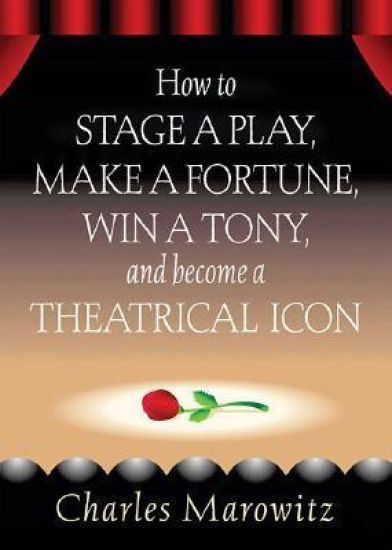
How to Stage a Play, Make a Fortune, Win a Tony and Become a Theatrical Icon
Based on his own personal experiences, this concise handbook follows a director's journey from the casting process to opening night, revealing the hidden or unspoken aspects of play and stage production that are rarely, if ever, described. Marowitz discusses topics such as: rehearsals; characterization; blocking; tempo-rhythm; dramaturgy; and actor/audience psychology. Demystifying an art form that is often dealt with only in terms of concepts and ideology rather than the mundane, here are nitty-gritty nuts-and-bolts requirements of just "getting the show on the road."
The Other Chekhov

The Other Chekhov

Charles Marowitz

Applause Theatre Book Publishers
2004
sidottu
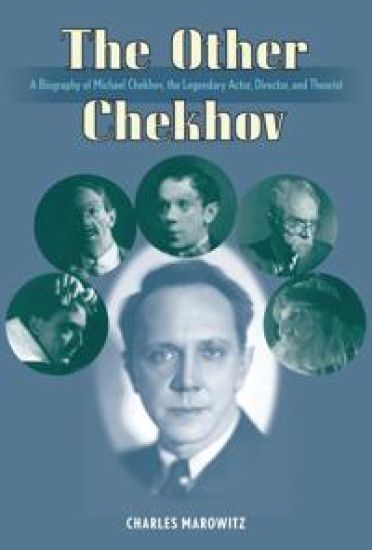
The first 30 years of the 20th-century produced a theatrical explosion whose reverberations are still felt today. Stanislavsky Meyerhold Vakhtanghov Michael Chekhov in Russia; Reinhardt Piscator & Brecht in Germany; and Copeau Barrault & Artaud in France collectively demolished the 19th-century aesthetic and in their wake created the modernity which is the hallmark of today's theatre. ÞMost of these men have already been turned into modern icons; there is no shortage of bios on the pioneers of the Moscow Arts Theatre and the achievements of the others are chronicled and archived for posterity. Only one of these artists remains murky and ill-defined. He is Michael Chekhov (1891-1955) nephew of the famous playwright Anton Chekhov the man that Stanislavsky described as the most brilliant actor in all of Russia. ÞA charismatic actor an inspiring director and a teacher that developed a dynamic antidote to Russian Naturalism Chekhov remains the invisible man of the modern theatre. Was he as Lee Strasberg alleged a dangerous mystic who would subvert the vigor of Stanislavsky's teachings and undermine the integrity of The Group Theatre? Or was he as his disciples ä Yul Brynner Gregory Peck Ingrid Bergman Anthony Quinn Jack Palance Leslie Caron Jennifer Jones Patricia Neal Anthony Hopkins Jack Nicholson & Marilyn Monroe ä believed a man who had discovered a unique approach to acting which transcended the precepts enshrined in Stanislavsky's System. ÞCharles Marowitz was granted special access to the Chekhov archives in Devon England and he interviewed actors and directors who worked closely with Chekhov both in Europe and America. The book chronicles Chekhov's influential period in Hollywood when he was nominated for an Oscar for his performance as the avuncular psychiatrist in Alfred Hitchcock's 1945 film ÊSpellboundÊ. It also describes his close association with Marilyn Monroe at the most delicate stage of her career.
Roar of the Canon

Roar of the Canon

Charles Marowitz

Applause Theatre Book Publishers
2002
sidottu
The acclaimed stage director and theatre critic Charles Marowitz in tandem with Jan Kott one of the most penetrating and incisive Shakespearean scholars to emerge in the 20th Century probe the mysteries of some of the more problematic plays in Shakespeare's canon. The innovative director and dazzling classicist bring two complementary viewpoints to bear as they delve into the collected works illuminating the constantly changing nature and philosophic nuances of the various plays. The book's centerpiece consists of Kott and Marowitz's insights on such plays as ÊOthello Romeo & Juliet Troilus & CressidaÊ and ÊMeasure for Measure. Ê They reveal the ideas behind Shakespeare's plays and the process of making them come alive before and audience and present frank no-holds barred discussions on such subjects as The Shakespeare Industry The Boundaries of Interpretation Dramaturgy and Mise-en-scene.
The Other Way: An Alternative Approach to Acting and Directing

The Other Way: An Alternative Approach to Acting and Directing

Charles Marowitz; Frank Langella

Applause Books
2000
sidottu
(Applause Books). Marowitz examines every aspect of contemporary theatre practice including auditions, first-readings, the rehearsal process, classical techniques and performance art. He delves beyond sub-text, probing the labyrinth that exists beneath conventional psychology. Marowitz comes up with a tantalizing new brew of ideas with which actors and directors can ply their craft into the new millennium.
Exit the King

Exit the King

Eugene Ionesco; Charles Marowitz; Donald Watson

Grove Press / Atlantic Monthly Press
1994
nidottu
Exit the King is a highly stylized, ritualized death rite unfolding the final hours of the once-great king Berenger the First. As he dies, his kingdom also dies. His armies suffer defeat, the young emigrate, the seasons change overnight, and his kingdom's borders shrink to the outline of his throne. At last, as the curtain falls, the king himself dissolves into a gray mist. The Killer is a study of pure evil. Berenger, a conscientious citizen, finds himself in a radiantly beautiful city marred only by the presence of a killer. Berenger's determination to find the murderer in the face of official indifference and his final defeat at the hands of an impersonal, pitiless cruelty speak with the universality of Kafka's The Trial. Macbett, inspired by Shakespeare's play, is "a grotesque joke . . . [and] a very funny play. . . . Ionecso maliciously undermines sources and traditions, spoofing Shakespeare along with tragedy."--Mel Gussow, The New York Times
Recycling Shakespeare

Recycling Shakespeare

Charles Marowitz

Red Globe Press
1991
nidottu
Recycling Shakespeare is an irreverent assault on the Shakespearian establishment which presumes to have squatter's rights on the 'collected works' which it treats as holy writ. Marowitz, himself both a critic and director with successful productions of nearly a dozen Shakespeare plays behind him, shows how Shakespeare, like so many of his own earlier sources, can be reused, restructured and recycled for contemporary consumption.
Recycling Shakespeare

Recycling Shakespeare

Charles Marowitz

Applause Theatre Book Publishers
1991
sidottu
(Applause Books). In the same way that Shakespeare himself continued to meditate and transform his own ideas and the shape they took, Marowitz gives us license to continue that meditation in productions extrapolated from Shakespeare's work. Shakespeare becomes the greatest of all catalysts who stimulates a constant re-formulation of the fundamental questions of philosophy, history and meaning. Marowitz introduces us to Shakespeare as an active contemporary collaborator who strives with us to yield a vibrant contemporary theatre.
Recycling Shakespeare

Recycling Shakespeare

Charles Marowitz

Applause Theatre Book Publishers
1991
pokkari
In the same way that Shakespeare himself continued to meditate and transform his own ideas and the shape they took, Marowitz gives us license to continue that meditation in productions extrapolated from Shakespeare's work. Shakespeare becomes the greatest of all catalysts who stimulates a constant re-formulation of the fundamental questions of philosophy, history and meaning. Marowitz introduces us to Shakespeare as an active contemporary collaborator who strives with us to yield a vibrant contemporary theatre.