Kirjojen hintavertailu – 12 859 819 kirjaa ja 27 kauppaa
Kirjailija
Charles Mitchell
Kirjat ja teokset yhdessä paikassa: 7 kirjaa, julkaisuja vuosilta 1995–2025, suosituimpiin kuuluu Law and Society in England 1750-1950. Vertaile teosten hintoja ja tarkista saatavuus suomalaisista kirjakaupoista.
This book looks at how European private international law is applied by English courts. Focusing on unjust enrichment claims, it asks the question (from the perspective of the litigant) whether the English courts have jurisdiction to hear and decide such disputes and, if so, whether they should exercise that jurisdiction? In answering the question, it examines the Brussels I, Rome I and Rome II regulations. Balancing theoretical explorations and practical problems, this important book will appeal to scholars and practitioners alike.
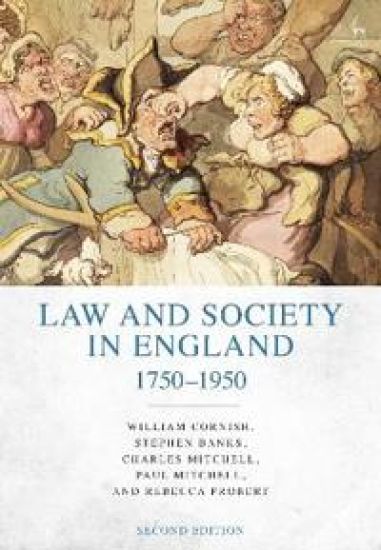
Law and Society in England 1750–1950 is an indispensable text for those wishing to study English legal history and to understand the foundations of the modern British state. In this new updated edition the authors explore the complex relationship between legal and social change. They consider the ways in which those in power themselves imagined and initiated reform and the ways in which they were obliged to respond to demands for change from outside the legal and political classes. What emerges is a lively and critical account of the evolution of modern rights and expectations, and an engaging study of the formation of contemporary social, administrative and legal institutions and ideas, and the road that was travelled to create them. The book is divided into eight chapters: Institutions and Ideas; Land; Commerce and Industry; Labour Relations; The Family; Poverty and Education; Accidents; and Crime. This extensively referenced analysis of modern social and legal history will be invaluable to students and teachers of English law, political science, and social history.
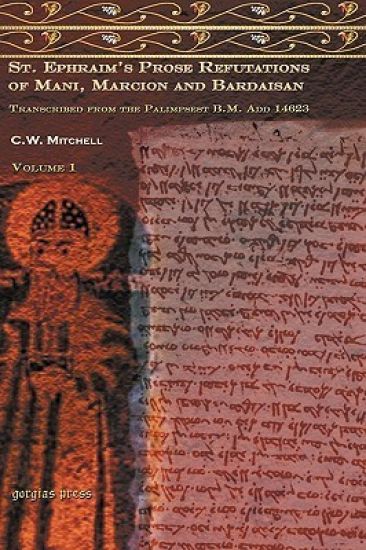
This two-volume set of St. Ephraim’s refutations of Mani, Marcion, and Bardaisan is presented in a bilingual edition with the Syriac original and English translation. The prose refutations are an important component to the understanding of one of the most important patriarchs of Eastern Christianity.
Subrogation: Law and Practice provides a clear and accessible account of subrogation, explaining when claimants are entitled to the remedy, how they should formulate their claims, and what practical difficulties they might encounter when attempting to enforce their subrogation rights. Although subrogation is a remedy that is frequently claimed in Chancery and commercial practice, the reasons why it is awarded and the way it works can often be misunderstood. In this text authors aim to present the subject in clear and simple terms through a structure that is readily accessible and of benefit to practitioners. Following an introductory overview, and discussion of the rules which determine the discharge of obligations by payment, the book is divided into three parts. Part II considers subrogation to extinguished rights, and explains all the consequences of the House of Lords' finding in Banque Financiere de la Cite v Parc (Battersea) Ltd that this form of subrogation is a remedy for unjust enrichment. The discussion examines the requirements that the defendant has been enriched, and that this enrichment has been gained at the claimant's expense. It also considers the most important reasons why a court might find that a defendant's enrichment is unjust, the defences which can be raised to a claim, the form of the remedy, and additional practical issues. Part III looks at insurers' claims to be subrogated to their insureds' subsisting rights, and carefully analyses the substantial body of case law on this subject which has built up over the past two hundred years. Finally, Part IV concerns the special insolvency rules which entitle claimants to acquire an insolvent party's subsisting indemnity rights against a third party. The discussion takes in claims under the Third Parties (Rights against Insurers) Act 1930 and claims by the creditors of trustees to be indemnified out of the trust estate. This work explains the underlying principles and practical operation of subrogation and is a readily accessible guide for the busy professional.
The English law of contribution and reimbursement is essentially concerned with any situation where two parties must both pay a debt to a third party, compensate him for harm that he has suffered at their hands, or restore an enrichment which they have unjustly gained at his expense. These situations give rise to questions of how the parties' common liability should be shared and how their relationships with the third party, and with one another, should be adjusted so as to ensure that they each pay their proper share. This book is based on the rules of English law which determine the answers to these questions. Contribution and reimbursement claims often arise in the course of complex multi-party litigation and the rules which govern their determination are scattered through the law reports and statute books. This book provides a clear guide through this maze of legislation and case law, and gives a detailed account of all the substantive and procedural rules in the area. It is an essential source of information for legal practitioners and academics seeking practical advice on this notoriously complex subject.
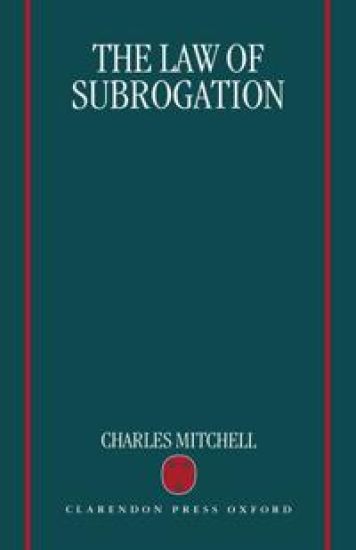
This book seeks to rationalize the position of the doctrine of subrogation within the general law of restitution. Within a systematic analytical framework, it gives a full account of the developing English and Commonwealth law of subrogation, and a selctive use is also made of United States decisions. A number of false assumptions which have entered the case-law are exposed, and the principles upon which subrogation should be awarded are set on a regular basis. Subrogation is a remedy which can be awarded in many different contexts, and this definitive account will be useful not only to restitution lawyers, but also to academics and practitioners concerned with the law of property, commercial law (in particular, the law of insurance, bills of exchange, and principal and surety), and even family law.