Kirjailija
Charles O'Brien
Kirjat ja teokset yhdessä paikassa: 20 kirjaa, julkaisuja vuosilta 2005–2022, suosituimpiin kuuluu Cinema's Conversion to Sound. Vertaile teosten hintoja ja tarkista saatavuus suomalaisista kirjakaupoista.
Nimi esiintyy myös muodoissa: Charles O’Brien
20 kirjaa
Kirjojen julkaisuvuodet: 2005–2022.
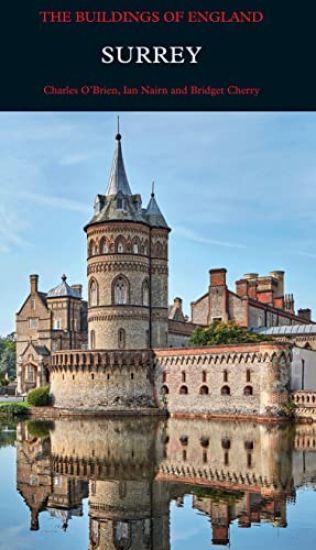
A newly expanded volume on England’s preeminent “Home County,” exploring its mix of rural and urban architecture as well as its many major historic buildingsSurrey, originally published in 1962, was the first Buildings of England volume that Pevsner shared with another author, and Ian Nairn’s brilliant, provocative descriptions have been treasured by many ever since. For centuries Surrey has been the playground for London, and home to thousands of its commuters. Yet much of the county is still deeply wooded or surprisingly bucolic. This fully revised and enhanced edition, the first since 1971, is packed with new information on its major historic buildings – Waverley Abbey, Farnham Castle, Sutton Place and Loseley Park among others – and much-expanded accounts of its Victorian set pieces – Royal Holloway College, Holloway Sanatorium and Charterhouse School – alongside fresh appreciation of the twentieth century, including its principal monument, Guildford’s cathedral. To the fore in Surrey is domestic architecture: medieval farmhouses, seventeenth-century gentry houses in the Artisan Classical style, eighteenth-century country houses, Victorian and Edwardian businessmen’s residences, designed most famously by Norman Shaw, Lutyens and Voysey, and high-class suburban estates. Into this small county is fitted architecture of endless variety, ranging from Georgian designed landscapes to military cemeteries, from seminaries to shooting clubs, and from lime kilns to lunatic asylums.
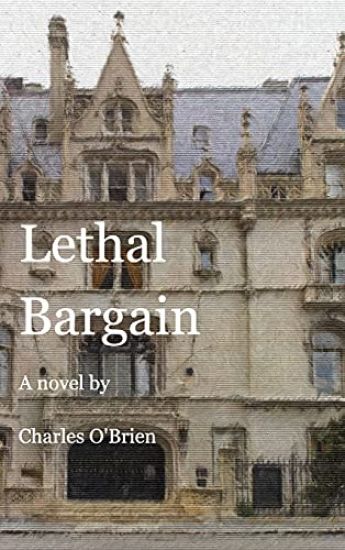
Pamela Thompson, private investigator, tracks down a missing boy on behalf of a wealthy Manhattan family. In the process she discovers the murderers of a doctor and a nurse, and unravels a mystery of child identity. All of this set at the end of the Gilded Age.
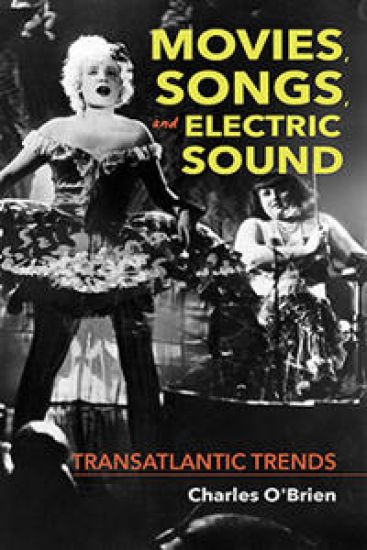
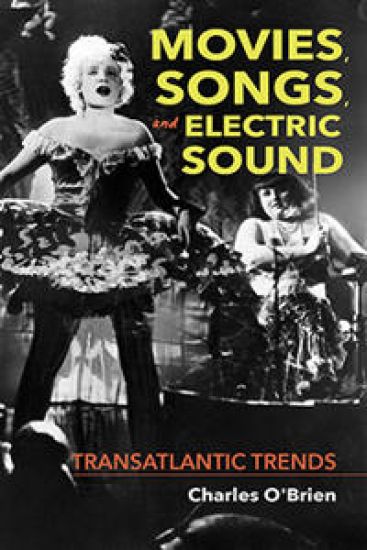
How did the introduction of recorded music affect the production, viewing experience, and global export of movies? In Movies, Songs, and Electric Sound, Charles O'Brien examines American and European musical films created circa 1930, when the world's sound-equipped theaters screened movies featuring recorded songs and filmmakers in the United States and Europe struggled to meet the artistic and technical challenges of sound production and distribution. The presence of singers in films exerted special pressures on film technique, lending a distinct look and sound to the films' musical sequences. Rather than advancing a film's plot, songs in these films were staged, filmed, and cut to facilitate the singer's engagement with her or his public. Through an examination of the export market for sound films in the early 1930s, when German and American companies used musical films as a vehicle for competing to control the world film trade, this book delineates a new transnational context for understanding the Hollywood musical. Combining archival research with the cinemetric analysis of hundreds of American, German, French, and British films made between 1927 and 1934, O'Brien provides the historical context necessary for making sense of the aesthetic impact of changes in film technology from the past to the present.
Hampshire: South
Charles O'Brien; Bruce Bailey; Nikolaus Pevsner; David W. Lloyd
Yale University Press
2018
sidottu
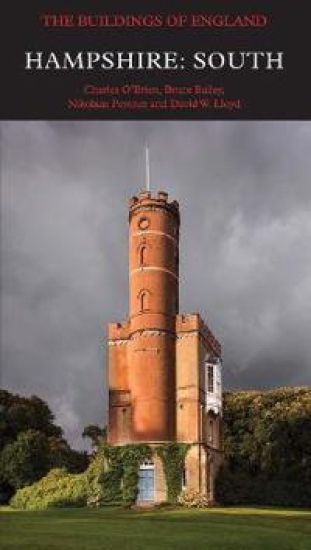
This volume, a companion to Hampshire: Winchester and the North, covers the county’s southern half, from the woodland and heath of the New Forest to the cities along the Solent, and from remote Saxon churches to Modernist seaside villas. The original text has been fully revised to include new research and 130 specially commissioned color photographs. The guide explores major ecclesiastical monuments at Romsey, the Bishop of Winchester’s palace at Bishops Waltham, and the remains of the great post-Dissolution houses at Beaulieu and Titchfield. At Southampton is one of England’s best preserved medieval town walls, while at Portsmouth the structures of the 18th- and 19th-century Royal Navy dockyard are among the most important of their kind. Amid all this beauty are traces of conflict, from the Roman fort at Portchester, to the coastal castles of Henry VIII’s rule, to the relics of the Normandy invasions of 1944.
A Treatise on Calico Printing, Theoretical and Practical
Charles O'Brien
Gale Ecco, Print Editions
2018
sidottu
The 18th century was a wealth of knowledge, exploration and rapidly growing technology and expanding record-keeping made possible by advances in the printing press. In its determination to preserve the century of revolution, Gale initiated a revolution of its own: digitization of epic proportions to preserve these invaluable works in the largest archive of its kind. Now for the first time these high-quality digital copies of original 18th century manuscripts are available in print, making them highly accessible to libraries, undergraduate students, and independent scholars. Delve into what it was like to live during the eighteenth century by reading the first-hand accounts of everyday people, including city dwellers and farmers, businessmen and bankers, artisans and merchants, artists and their patrons, politicians and their constituents. Original texts make the American, French, and Industrial revolutions vividly contemporary.++++The below data was compiled from various identification fields in the bibliographic record of this title. This data is provided as an additional tool in helping to insure edition identification: ++++British LibraryT132216Anonymous. By Charles O'Brien. A reissue of 'The callico printers' assistant' of 1789-92, with the twelve page introduction and additional preliminary material in vol.1 and new titlepages to both volumes. London]: Printed for C. O'Brien, Islington and sold by Bew: Richardson: Murray: and the booksellers of Manchester, Glasgow, Dublin, &c., 1792-93. 2v., table: ill.; 12
The British Manufacturers Companion, and Callico Printers Assistant; Being a Treatise on Callico Printing, in all its Branches, Theoretical and Practical; With an Essay on Genius, Invention and Designing of 2; Volume 1
Charles O'Brien
Gale Ecco, Print Editions
2018
sidottu
The 18th century was a wealth of knowledge, exploration and rapidly growing technology and expanding record-keeping made possible by advances in the printing press. In its determination to preserve the century of revolution, Gale initiated a revolution of its own: digitization of epic proportions to preserve these invaluable works in the largest archive of its kind. Now for the first time these high-quality digital copies of original 18th century manuscripts are available in print, making them highly accessible to libraries, undergraduate students, and independent scholars. The eighteenth-century fascination with Greek and Roman antiquity followed the systematic excavation of the ruins at Pompeii and Herculaneum in southern Italy; and after 1750 a neoclassical style dominated all artistic fields. The titles here trace developments in mostly English-language works on painting, sculpture, architecture, music, theater, and other disciplines. Instructional works on musical instruments, catalogs of art objects, comic operas, and more are also included. ++++The below data was compiled from various identification fields in the bibliographic record of this title. This data is provided as an additional tool in helping to insure edition identification: ++++British LibraryT073944A reissue of 'The callico printers' assistant', of 1789-92 with the 3 page introduction, a new titlepage to vol.1 and without a titlepage to vol.2. London: printed for the author; and sold by Hamilton and Co; and Vernor and Hood, 1795. 2v.table: ill.; 12
A Treatise on Calico Printing, Theoretical and Practical
Charles O'Brien
Gale Ecco, Print Editions
2018
sidottu
The 18th century was a wealth of knowledge, exploration and rapidly growing technology and expanding record-keeping made possible by advances in the printing press. In its determination to preserve the century of revolution, Gale initiated a revolution of its own: digitization of epic proportions to preserve these invaluable works in the largest archive of its kind. Now for the first time these high-quality digital copies of original 18th century manuscripts are available in print, making them highly accessible to libraries, undergraduate students, and independent scholars. Medical theory and practice of the 1700s developed rapidly, as is evidenced by the extensive collection, which includes descriptions of diseases, their conditions, and treatments. Books on science and technology, agriculture, military technology, natural philosophy, even cookbooks, are all contained here.++++The below data was compiled from various identification fields in the bibliographic record of this title. This data is provided as an additional tool in helping to insure edition identification: ++++British LibraryT073963Anonymous. By Charles O'Brien. A reissue of 'The callico printers' assistant' of 1789-92, with a new titlepage to Vol.1. With a three-page introduction; a variant has a twelve-page introduction. London]: Printed for C. O'Brien, Islington; and sold by Bew: Richardson: Murray: and the booksellers of Manchester, Glasgow, Dublin, &c., 1792. 2v., table: ill.; 12
A Treatise on Calico Printing, Theoretical and Practical
Charles O'Brien
Gale Ecco, Print Editions
2018
sidottu
The 18th century was a wealth of knowledge, exploration and rapidly growing technology and expanding record-keeping made possible by advances in the printing press. In its determination to preserve the century of revolution, Gale initiated a revolution of its own: digitization of epic proportions to preserve these invaluable works in the largest archive of its kind. Now for the first time these high-quality digital copies of original 18th century manuscripts are available in print, making them highly accessible to libraries, undergraduate students, and independent scholars. Medical theory and practice of the 1700s developed rapidly, as is evidenced by the extensive collection, which includes descriptions of diseases, their conditions, and treatments. Books on science and technology, agriculture, military technology, natural philosophy, even cookbooks, are all contained here.++++The below data was compiled from various identification fields in the bibliographic record of this title. This data is provided as an additional tool in helping to insure edition identification: ++++British LibraryT073963Anonymous. By Charles O'Brien. A reissue of 'The callico printers' assistant' of 1789-92, with a new titlepage to Vol.1. With a three-page introduction; a variant has a twelve-page introduction. London]: Printed for C. O'Brien, Islington; and sold by Bew: Richardson: Murray: and the booksellers of Manchester, Glasgow, Dublin, &c., 1792. 2v., table: ill.; 12
An enthusiast’s guide to exploring historic houses of England, this informative book, now in paperback, also enables readers to discover more about the history of their own houses. Users can learn to interpret domestic architecture, identify period styles, uncover the origins of a building, and understand why rooms are arranged in particular sequences, why window and chimney designs change through history, or why staircases are presented in a certain fashion. Color photography and informative line drawings illustrate the explanations and provide a rich visual history of domestic architecture from the earliest surviving dwellings to the most avant-garde developments.
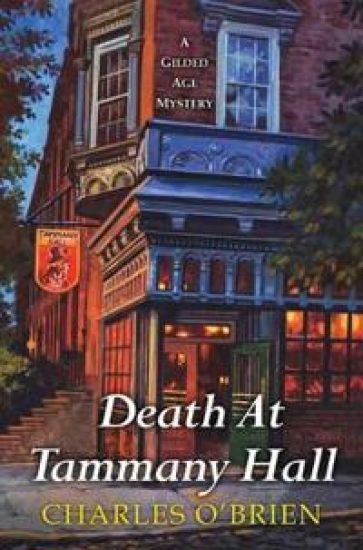
New York City, 1894. The Democratic Party headquarters at Tammany Hall is a hotbed of cronyism, corruption, and intimidation. Private investigator Pamela Thompson s close colleague at Jeremiah Prescott s law firm, former NYPD detective Harry Miller, has had his own career tainted by scandal. Seven years ago, while investigating a case connected to Tammany Hall, he was falsely accused and wrongfully convicted of extortion. Miller s conviction continues to cast its long shadow into his current life, so he seeks Pamela s help in exonerating him. The key to uncovering the truth lies with the murder of a cabdriver and a missing portfolio with the potential to incriminate certain city aldermen of taking backroom bribes. But as Pamela and Miller follow the money trail to expose the conspiracy, they find their own lives in jeopardy "
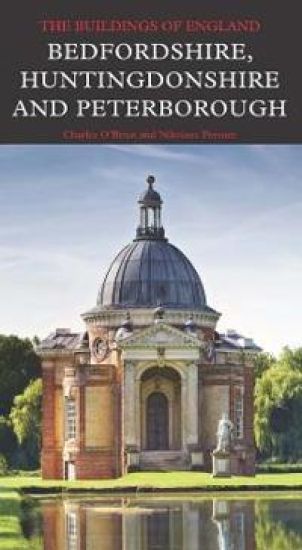
Bedfordshire, Huntingdonshire, and Peterborough
Charles O'Brien; Nikolaus Pevsner
Yale University Press
2014
sidottu
Bedfordshire is one of the smallest English counties but encompasses great variety in landscape and architecture. Its major monument is Woburn Abbey, one of the finest Georgian country houses in England, and the influence of the estate is widely felt in the model housing and schools in the county’s villages. Its many other attractions range from the churches of the market towns of Bedford, Leighton Buzzard, and Ampthill to the majestic gardens at Wrest Park. Such variety is also to be found in Huntingdonshire and Peterborough, famous not only for the cathedral and the spires of the stone medieval parish churches scattered across its remote and intimate landscape but also for vast and stately Burghley House and Vanbrugh’s Kimbolton Castle. This a fully revised edition of Pevsner’s original guide of 1968 and contains separate introductions, gazetteers, and photographs for Bedfordshire, Huntingdonshire, and Peterborough.
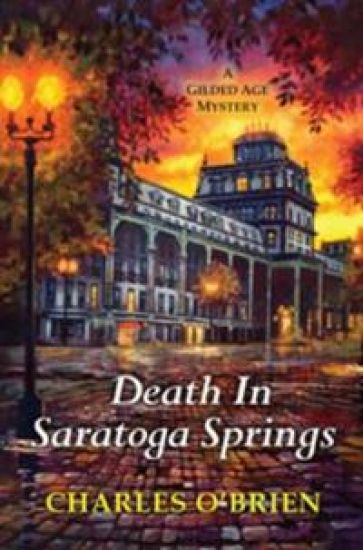
New York City, 1894. Captain Jed Crake is a decorated veteran of the Union army and a successful mogul in the meatpacking industry. But this powerful man also has a hidden private life as a predator of young women. Working for attorney Jeremiah Prescott, private investigators Pamela Thompson and former NYPD detective Harry Miller are engaged to search for a maid allegedly abducted by the captain... Before they can find the missing woman, Crake's dark history catches up with him and he is murdered in a posh hotel in Saratoga Springs. As fate would have it, Pamela's ward, Francesca Ricci, working as a chambermaid in the hotel, is accused of the crime. Now, in this pastoral playground of the idle rich, it's up to Pamela and Miller to find Crake's killer - as well as his victim - and save an innocent girl from a fate worse than death.
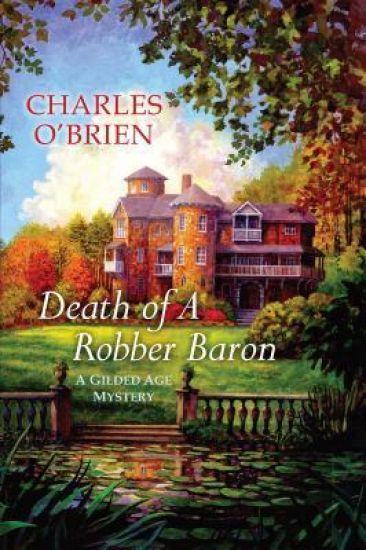
Novice private investigator Pamela Thompson is hired by Lydia Jennings to investigate mismanagement at her palatial 'cottage' Broadmore Hall, in the Berkshires of Western Massachusetts. Pamela discovers the butler living a double life at Lydia's expense. Soon Pamela has to deal with a mare's nest of family problems, mostly generated by Lydia's husband, Henry Jennings, the ruthless and unfaithful Copper King, whose sole purpose in life is to become the richest man in America. The climax comes at Broadmoar during Henry's 4th July party - a grandiose event that he personally orchestrates. The next morning, his body is found in his study. Pamela's boss, the lawyer Jeremiah Prescott, joins her for the investigation. Now they have to figure out, from among the many suspects, who killed Henry Jennings...
A treatise on calico printing, theoretical and practical
Charles O'Brien
Gale Ecco, Print Editions
2010
pokkari
A Treatise on Calico Printing, Theoretical and Practical
Charles O'Brien
Gale Ecco, Print Editions
2010
pokkari
A treatise on calico printing, theoretical and practical
Charles O'Brien
Gale Ecco, Print Editions
2010
pokkari
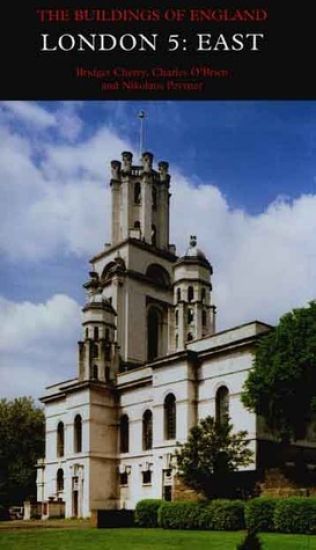
Publication of this book, one of six devoted to the buildings of London, marks the completion of the long-awaited revision of the original Pevsner guides and brings the account of the capital’s buildings entirely up to date. This fascinating volume provides a historical introduction to a uniquely diverse area as well as a detailed gazetteer of individual buildings. Along the Thames, relics of a powerful industrial and maritime past remain, and in the East End, Hawksmoor’s Baroque churches still tower over Georgian houses. The contributions of generations of immigrants are reflected in places of worship and cultural centers, while a century of social housing has produced architecture now of historic interest. Further out, medieval churches and country mansions stand among the suburban streets and proud civic buildings.
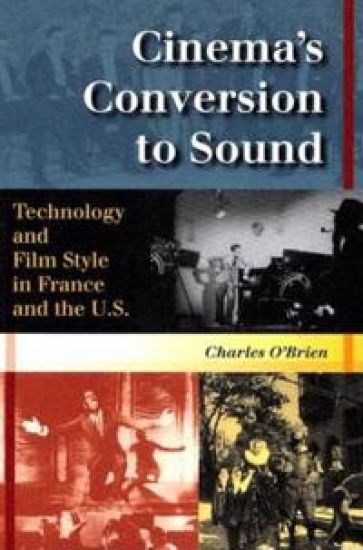
The conversion to sound cinema is routinely portrayed as a homogenizing process that significantly reduced the cinema's diversity of film styles and practices. Cinema's Conversion to Sound offers an alternative assessment of synchronous sound's impact on world cinema through a shift in critical focus: in contrast to film studies' traditional exclusive concern with the film image, the book investigates national differences in sound-image practice in a revised account of the global changeover from silent to sound cinema. Extending beyond recent Hollywood cinema, Charles O'Brien undertakes a geo-historical inquiry into sound technology's diffusion across national borders. Through an analysis that juxtaposes French and American filmmaking, he reveals the aesthetic consequences of fundamental national differences in how sound technologies were understood. Whereas the emphasis in 1930s Hollywood was on sound's intelligibility within a film's story-world, the stress in French filmmaking was on sound's fidelity as reproduction of the event staged for recording.