Kirjojen hintavertailu – 12 903 724 kirjaa ja 27 kauppaa

Kirjailija

Charles Reznikoff

Kirjat ja teokset yhdessä paikassa: 7 kirjaa, julkaisuja vuosilta 2007–2024, suosituimpiin kuuluu Holocaust. Vertaile teosten hintoja ja tarkista saatavuus suomalaisista kirjakaupoista.

7 kirjaa

Kirjojen julkaisuvuodet: 2007–2024.

Charles Reznikoff - Twilight Rhythms & Other Verse
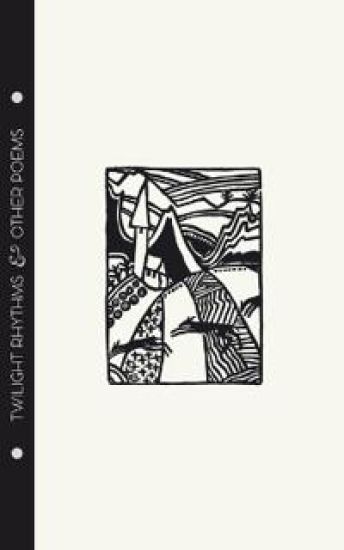
Charles Reznikoff - Twilight Rhythms & Other PoemsForgotten Poets #11 / forgottenpoets.substack.com'Twilight Rhythms & Other Poems' 124 pages] brings together over 100 poems by New York poet Charles Reznikoff, including selections from Rhythms I (1918), Rhythms II (1919), Poems (1920), Urial Acosta (1921) & Five Groups of Verse (1927); with a number of restored illustrations by artist Coulton Waugh. While Reznikoff never attained success as a poet in his own time, his haiku and tanka-like work was later celebrated, first by Louis Zukofsky and the Objectivists in the 1930s, and then by the Beats in the 1950s. Allen Ginsberg in particular was a fan of Reznikoff's work, and affectionately called him "one of Walt Whitman's grandchildren.". . . . . . . . . . On Brooklyn Bridge I saw a man drop dead, It meant no more than if he were a sparrow. Above us rose Manhattan, Below the river spread to meet bay and sky.. . . . . . . . . . It rains. The elms curve into clouds of twigsThe lawns are empty.. . . . . . . . . . The Forgotten Poets Newsletter presents new collections of out-of-print and obscure poetry, with a focus on compressed & fragmented 'free' and 'new' verse from the late-1800s & early-1900s, & the early history of English-language tanka & haiku. Verses are carefully selected & spaciously laid-out, adorned with illustrations & ornaments from the books & magazines they originally appeared in.
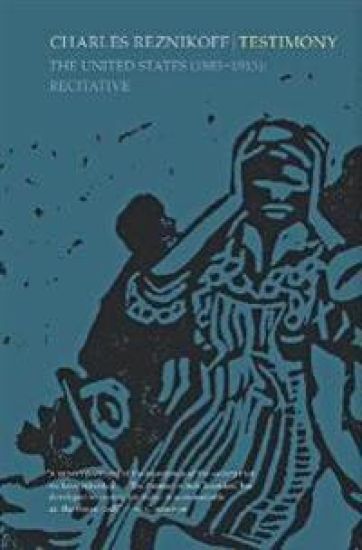
Testimony

Testimony

Charles Reznikoff

David R. Godine Publisher Inc
2015
pokkari
A milestone of modern poetry, American history comes to life in the actual words of victims and criminals in its courts. Taking as its raw material the voices of witnesses, victims, and perpetrators discovered by the author in criminal court transcripts, Charles Reznikoff’s book-length poem sets forth a stark panorama of late 19th and early 20th century America—the underside of the Gilded Age, beset by racism and casual violence, poverty and disease. In radically stripped-down language of tremendous intensity, Reznikoff’s poem is an unforgettable reading experience. This edition also includes Reznikoff’s prose studies for the poem, unavailable to readers since the 1930s, and a new introduction by critic and essayist Eliot Weinberger.
Förintelsen

Förintelsen

Charles Reznikoff

Rámus Förlag
2013
nidottu
Charles Reznikoff föddes 1894 av rysk-judiska föräldrar i Brooklyn, New York, där han också kom att leva fram till sin död 1976. Reznikoff tillhörde den objektivistiska skolan och hans inflytande på amerikansk, fransk och skandinavisk konceptuell diktning kan knappast överskattas. Han studerade juridik vilket starkt kom att prägla hans poetiska gärning och i nästan hela sitt liv arbetade han med sitt stora oavslutade diktverk Testimony där han utgår från vittnesmål i amerikanska rättsfall under perioden 18851915. Efter att länge ha tvekat inför ämnet ägnade han sina sista levnadsår åt förintelsen och de europeiska judarnas öde. I diktsamlingen Förintelsen bearbetar han protokollen från Nürnberg- och Eichmannrättegångarna, han sorterar, arrangerar och reviderar mödosamt det stora materialet domstolshandlingar för att nå fram till vittnets rena och intensiva röst. Så blir Reznikoffs Auschwitz inte bara en metafor för den mest fullständiga fasan i vår historia utan en materiell och verklig plats där män och kvinnor levde och dog, arbetade och mördades.
By the Waters of Manhattan

By the Waters of Manhattan

Charles Reznikoff; Phillip Lopate

Black Sparrow Press,U.S.
2008
pokkari
A novel about a Jewish immigrant family at the turn of the century — from Czarist Russia to Brownsville, Brooklyn. This is poet Charles Reznikoff’s finest fiction. By the Waters of Manhattan was Charles Reznikoff’s first novel, published in 1930 by Charles Boni in New York. Part family saga, part bildungsroman, and part unrequited love story, the novel follows the lives of a Jewish family at the turn of the century from Elizavetgrad, Russia, to Brownsville, Brooklyn, birthplace of the novel’s protagonist, Ezekiel, a young poet in search of ways to feed his stomach and his soul. Like Walt Whitman, Hart Crane, and Henry Roth, Reznikoff’s subject is as much the great island of Manhattan, as it is its inhabitants, struggling for their place in a new world. Milton Hindus wrote, “Both Whitman and Reznikoff are singers and chroniclers of the American island, the name of which derives from the language (Manna-hatta) of its original inhabitants. Reznikoff’s title also includes an allusion to the waters of Babylon beside which the prophet sat down and wept. The American Jew, who had been born in Brooklyn in 1894 and whose parents had emigrated from Czarist Russia some years before that date, evidently felt, like the hero of one of the novels of George Gissing, that he had been ‘born in exile’. But the reader should not, on this account, be expecting a tearful immigrant narrative, for if Reznikoff was a student of the Bible he was also a student of another student of the Bible, the philosopher Spinoza. From this stoic master, he had learned neither to laugh nor cry but to try to understand.”
Holocaust

Holocaust

Charles Reznikoff

Black Sparrow Press,U.S.
2007
pokkari
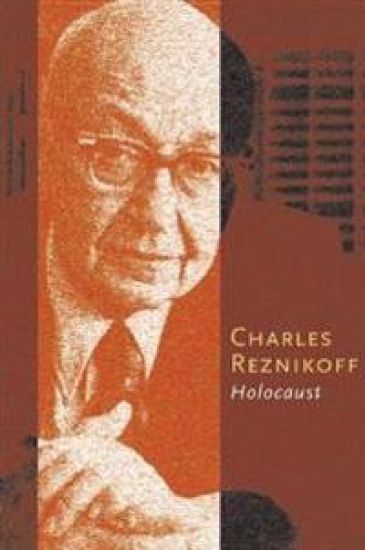
In Holocaust poet Charles Reznikoff’s subject is people’s suffering at the hand of another. His source materials are the U. S. government’s record of the trials of the Nazi criminals before the Nuremberg Military Tribunal and the transcripts of the Eichmann trial in Jerusalem. Except for the twelve part titles, none of the words here are Reznikoff’s own: instead he has created, through selection, arrangement, and the rhythms of the testimony set as verse on the page, a poem of witness by the perpetrators and the survivors of the Holocaust. He lets the terrible history unfold—in history’s own words.