Kirjojen hintavertailu – 12 903 725 kirjaa ja 27 kauppaa
Kirjailija
Charles River
Kirjat ja teokset yhdessä paikassa: 4 673 kirjaa, julkaisuja vuosilta 2013–2022, suosituimpiin kuuluu William Powell and Myrna Loy: The Lives and Careers of One of Classical Hollywood's Most Iconic Duos. Vertaile teosten hintoja ja tarkista saatavuus suomalaisista kirjakaupoista.
En el siglo 8 A. C., Samaria fue una de las m s importantes provincias del Imperio Asirio. Conocida tambi n como Israel, Samaria se rebel repetidamente contra los jefes asirios, pero en el a o 722, los asirios invadieron Samaria de una vez por todas, matando a innumerables personas y enviando al exilio forzoso a la mayor a de los sobrevivientes. Los acontecimientos de la ca da de Samaria fueron registrados en los anales del reino de Sarg n II y en el Antiguo Testamento; y aunque las dos fuentes presentan los hechos desde puntos de vista diferentes, en gran parte se corroboran mutuamente y entre los dos presentan la situaci n de una manera confiable. El resultado final fue que 30.000 israelitas fueron deportados de la regi n, una t ctica que los asirios encontraron tan efectiva que la seguir an usando contra todos los enemigos conquistados hasta la ca da de su propio imperio. El exilio forzado de los israelitas por parte de los asirios no fue la nica ocasi n en que sufrieron tal destino seg n lo indican los relatos babil nicos y las narraciones b blicas de la salida de Egipto, pero fue ese exilio el que dispers permanentemente la mayor a de las legendarias doce tribus de Israel, y la suerte de las diez tribus perdidas ha interesado desde entonces a la gente. Las historias patriarcales del G nesis explican lo siguiente acerca del origen de las tribus de Israel: El patriarca Jacob, cuyo nombre fue cambiado m s tarde por Israel (G n. 32:28) era el hijo de Isaac y nieto de Abrah n. l tuvo doce hijos que son los ancestros ep nimos de las doce tribus de Israel. El G nesis hace la lista de los doce hijos de acuerdo a sus madres. Jacob tuvo cinco hijos con su primera esposa: Rub n, Sime n, Lev , Jud e Isacar. La sirvienta de L a, Zilp , engendr otros dos hijos a Jacob: Gad y Aser. Su segunda esposa, Raquel, tambi n le dio dos hijos: Jos y Benjam n; lo mismo que su sirvienta, Bilh Dan y Neftal . La versi n simple de las Diez Tribus Perdidas es que las comunidades jud as modernas est n compuestas por los descendientes de dos de esas doce tribus porque Ciro el Grande permiti que ellas retornaran a Jud desde su cautividad en Babilonia. Sin embargo la localizaci n y la suerte de las restantes diez tribus, deportadas por los asirios del reino del norte, Israel, dos siglos antes, permanece un misterio y es este misterio el que est en el coraz n de la b squeda de las Diez Tribus Perdidas. Las Diez Tribus Perdidas investiga lo conocido y lo desconocido sobre las tribus perdidas de Israel lo mismo que las especulaciones acerca de su suerte. Junto con fotos de gente importante, lugares y acontecimientos, usted aprender acerca de las Tribus Perdidas de Israel como nunca antes y en muy poco tiempo.
*Includes pictures. *Explains the Taj Mahal's construction history and cultural influences. *Includes footnotes and a bibliography for further reading. "Should guilty seek asylum here, Like one pardoned, he becomes free from sin. Should a sinner make his way to this mansion, All his past sins are to be washed away. The sight of this mansion creates sorrowing sighs; And the sun and the moon shed tears from their eyes. In this world this edifice has been made; To display thereby the creator's glory." - Emperor Shah Jahan's description of the Taj Mahal "The Taj Mahal rises above the banks of the river like a solitary tear suspended on the cheek of time." - Rabindranath Tagore, Bengali Nobel Laureate Poet "Rahul had wondered how someone could love their beloved so much that their dedication to them became one of the wonders of the world." - Faraaz Kazi, modern novelist Taj Mahal is Arabic for "crown of palaces", and the name could not be more fitting for one of the most instantly recognizable buildings in the world. Constructed over a span of about 20 years in the mid-17th century as a mausoleum for the wife of Emperor Shah Jahan, the Taj Mahal is aptly described by UNESCO, which designated it a World Heritage site, as "the jewel of Muslim art in India and one of the universally admired masterpieces of the world's heritage". Indeed, the Taj Mahal is truly a global icon because it masterfully fused the artistic and architectural elements of several cultures, including Indian, Ottoman, Persian, and Islamic cultures across the region. While the marble dome is the first feature that pops out about the Taj Mahal, the careful layout of the entire structure is also incredibly impressive, and it took thousands of laborers several years to work on the other features, from the gardens to the calligraphy inscribed on the exterior. The Taj Mahal also includes other buildings, including a mosque and other tombs and mausoleums for people close to the emperor. Not surprisingly, given the scope and quality of the work, the Taj Mahal has fascinated people around the world for centuries, and naturally, all sorts of myths about it have sprung up. For the most part, however, people are simply drawn to it today as one of the premiere tourist sites in the world, and millions of people come from around the world to visit it every year. The Taj Mahal: The History of India's Most Famous Monument chronicles the origins, construction, and history of the Taj Mahal over the last 350 years. Along with pictures of important people, places, and events, you will learn about one of the world's most famous memorials like you never have before.
*Includes pictures *Includes ancient accounts and legends about Eridu *Includes online resources and a bibliography for further reading *Includes a table of contents "After the kingship descended from heaven, the kingship was in Eridu." - Excerpt from the opening paragraph of the Sumerian King List Emerging from the desert flats of southern Iraq can be seen the remains of a large mound, approximately 1750 feet x 1750 feet in size, surrounded by several smaller mounds. Known today as Tell Abu Shahrain or in the ancient world as Eridu, this site contains some of best examples of the Ubaid culture, and it was one of the first urban centers of civilization in southern Mesopotamia, if not the first itself. Many famous stories came from the mythical landscapes of Iraq's deep south. In the literature of ancient Sumer, Eridu was regarded as the primordial city, the first urban center, believed to have existed long before the great mythical Flood that wiped out human culture in the Book of Genesis and other earlier traditions. It was to places like this that Western explorers first came in the 19th century, searching for the origins of the lands which the Bible described as the cradle of the human race. In doing so, they discovered that Eridu was also a real place. The astonishing site is located about 8 miles southwest of the Sumerian city of Ur, and when it was first excavated in the mid-19th century, Western archaeologists were confused as to how a city as large as this could have existed in such a vast and waterless desert. But Eridu is positioned on the edge of the great alluvial plain of Sumer, a wild and beautiful marshland where the Tigris and the Euphrates meet. This was the Biblical "Garden of Eden", an ancient landscape that was renowned for its fertility in the past. To many Westerners, Iraq's history and culture were a blank before 1991, but ironically, as war engulfed the region, it helped underscore the importance and influence of the area on Western civilization. It was here, in the ferocious landscape of south Iraq, old Sumer, that the first laws, science, and cities came into being. Eridu is a place of extraordinary significance for the study of the earliest stages of civilization in history, and it is one of the best examples of cultural continuity in Mesopotamia, from the earliest prehistoric stages in which settlements emerged to the later historic periods. Eridu had a special status, not as the residence of a ruling dynasty of kings but for its religious significance; a series of temples were built there, devoted to the patron god of the city, Enki. Each one was built upon the ruins of its predecessor, and each one represents the architectural, religious, and social changes that occurred at the site throughout its history. Eridu: The History and Legacy of the Oldest City in Ancient Mesopotamia examines the tumultuous history of one of the most important cities of antiquity. Along with pictures depicting important people, places, and events, you will learn about Eridu like never before.
*Includes pictures *Includes ancient accounts describing the Phoenicians and their history, language, and culture. *Includes a bibliography for further reading "These people, who had formerly dwelt on the shores of the Erythraean Sea, having migrated to the Mediterranean and settled in the parts which they now inhabit, began at once, they say, to adventure on long voyages, freighting their vessels with the wares of Egypt and Assyria..." - Herodotus Of all the peoples of the ancient Near East, the Phoenicians are among the most recognizable but also perhaps the least understood. The Phoenicians never built an empire like the Egyptians and Assyrians; in fact, the Phoenicians never created a unified Phoenician state but instead existed as independent city-state kingdoms scattered throughout the Mediterranean region. However, despite the fact there was never a "Phoenician Empire," the Phoenicians proved to be more prolific in their exploration and colonization than any other peoples in world history until the Spanish during the Age of Discovery. The Phoenicians were well-known across different civilizations throughout the ancient world, and their influence can be felt across much of the West today because they are credited with inventing the forerunner to the Greek alphabet, from which the Latin alphabet was directly derived. Nonetheless, the Phoenicians left behind few written texts, so modern historians have been forced to reconstruct their past through a variety of ancient Egyptians, Assyrian, Babylonian, Greek, and Roman sources. It's not even clear what the Phoenicians called themselves, because the name "Phoenician" is derived from the Greek word "phoinix", which possibly relates to the dyes they produced and traded (Markoe 2000, 10). The mystery of the ancient Phoenicians is further compounded by the fact that archaeologists have only been able to excavate small sections of the three primary Phoenician cities: Byblos, Sidon, and Tyre. Despite the inherent problems in reconstructing Phoenician history, there are enough primary sources available to accurately place the Phoenician people in their proper historical context within the ancient Near East, and scholars have found that given their extensive exploration, colonization, trade, and manufacturing (among other things), the Phoenicians deserve to be considered alongside the other well-known peoples of antiquity. The Phoenicians: The History and Culture of One of the Ancient World's Most Influential Civilizations comprehensively covers the history, culture, and lingering mysteries behind the Phoenicians, profiling their origins and their lasting legacy.. Along with pictures of important people, places, and events, you will learn about the Phoenicians like never before, in no time at all.
*Includes pictures *Includes accounts of the stock market crash written by newspapers and other contemporaries *Includes a bibliography for further reading *Includes a table of contents The Roaring Twenties were an age of optimism. New technology was being invented, and novel products were making their way to the store shelves. Americans believed that a new era, driven by technology, was upon them, and this optimism extended to financial markets. Investments especially soared in the bond market, where investors lent money to companies, and the stock market, where investors bought partial ownership of companies. During the 1920s, financiers believed that the economy would continue to boom, as it had been since the end of World War I. As a result, investors and financiers increasingly accepted lower and lower returns on money they lent. In the stock market, the result was much the same: stocks skyrocketed throughout the 1920s, led by new technology stocks, such as Radio Corporation of America, or RCA, which made radios and owned broadcasters. However, the rampant purchasing and rise in prices meant that stock prices soon bore little relationship to the underlying value of the businesses, because the prices were bid up by investors. Prior to 1920, few middle class Americans owned shares in the stock market, but as the prices of stocks grew, the enthusiasm for purchasing stocks grew as well. More middle class Americans purchased stocks in the 1920s than ever before. As stock prices rose throughout the 1920s, some economists believed that stock prices would never fall back to where they had been before World War I. Economist Irving Fisher famously said "Stock prices have reached what looks like a permanently high plateau." Some speculators even sought to capitalize on rising stock prices by borrowing money to buy stocks. Buying stocks with borrowed money had previously seemed very risky, because if the stock market declined, the speculator would be required to post additional collateral to back the loan. But with share prices continuously rising, buying with borrowed money seemed like a good way to make larger profits. However, during the fall of 1929, the stock market was becoming increasingly unstable. Prices would rise and fall rapidly, and some investors were becoming more cautious. Then, on October 24, 1929, the stock market lost 11% of its value right at the opening of the stock market. Panic ensued, but several prominent investment bankers were able to restore confidence by buying stocks well above the market rate. Investors were still extremely nervous, however, and when word of the panic spread over the weekend, investors flooded their brokers with sell orders for Monday morning. On Monday, October 28, the market fell almost 13%, earning it the moniker "Black Monday". The market fared no better the next day, falling nearly another 12% during what became known as "Black Tuesday". This time, efforts by wealthy investors, including members of the Rockefeller family and General Motors founder William C. Durant to restore confidence failed. Durant believed he could single-handedly restore confidence to the market by committing his whole fortune to buying stocks; instead, his business failed. Black Tuesday was a catastrophe the country wasn't ready for, and in fact, the market would not return to its 1929 peak until the 1950s. Black Tuesday is best remembered for investors and consumers making a run on banks that could not service everyone, and banks failed often during the Great Depression, due to bad loans and a lack of public confidence that produced further bank runs. The Federal Reserve was reluctant to backstop banks and protect them against bank runs, so banks were unable to borrow enough money to cover depositors' demands. When banks failed, depositors who couldn't get their money out of the bank were wiped out.
*Includes pictures of the church *Includes a bibliography for further reading *Includes a table of contents The most famous church in Jerusalem for nearly 2,000 years, the Church of the Holy Sepulchre, often called the Church of the Resurrection, was built in the era of St. Constantine, and the church as a structure has no history separable from the city of Jerusalem and its environs. It is venerated as being on the site where Jesus was crucified and buried, and naturally, making it a crucial pilgrimage site for Christians, and it is now the home of the Greek Orthodox Jerusalem Patriarchate. Moreover, it was the site of many important councils, some of which altered Christian history forever. In short, the Sepulchre was and is synonymous with Jerusalem, and it was essentially the nodal center of the city. Naturally, the Church has had a turbulent history just as Jerusalem has. Under the Emperor Vespasian, Jerusalem was attacked and depopulated by Roman forces in 70 CE, and from 131-134, the Jewish revolt invited another Roman reprisal. Over and over again, Jerusalem has been decimated, sacked and razed. In 135, Hadrian rebuilt the city as a Roman outpost and called it "Aelia Capitolina" (Sicker, 2-3), and even the era of St. Constantine provided no respite from wars and dislocation. The Emperor Hadrian also removed Jews from the city upon its renovation (Sicker, 2-4). In 313, Constantine the Great converted the Roman Empire and stopped the persecution of Christians, but the problems were far from over in Jerusalem. Jerusalem at the time was a center of pagan worship, with the emperor's main sanctuary being the temple of "Jupiter Capitolinus". The persecution had ended, but the hostility between Christians and non-Christians continued. In 314, Macarius, the Bishop of Jerusalem, set out to destroy the shrines around these pagan cults. Temples were the banks of the ancient world, and there was a tremendous amount of class warfare in the city. All the while, the church complex was about more than metaphysics, and Macarius sought to find the place where Jesus was buried. It is not known why he offered to look for this, but local tradition placed the site where the Church of the Holy Sepulchre stands. Underneath the pagan temple on the site before the Church of the Holy Sepulchre, workers found a Jewish cemetery where several caves lay with large, circular stones set in front as a means of blocking entry. Little doubt was expressed that it was the location of Christ's burial because this was the only cemetery in the area, was of ancient origin, and several tombs were built just as the New Testament describes. Even more, these few tombs (4 out of 900) with the large front stone were rare in Judea at the time. Only a handful of the wealthy had them, but since the New Testament speaks of Nikodemus as a rich man, the location of Christ's tomb was thought to be undoubtedly at this location (Berrett, 36ff). The evidence that Christ's tomb was at that location was backed by the apostolic tradition and basic common sense. The local population had venerated this site since apostolic times, but so much had been destroyed in the ensuing centuries that records which might have been consulted were likely long lost already. The site is close to the Mount of Olives east of Jerusalem and the Holy Church of the Lord's Hill, which lies to the west of it as a place particularly venerated by Christians. An artificial cave, located approximately 300 feet south of the hill, was certainly a burial crypt. The area around the cave itself suffered greatly from the Roman legionaries and the warfare there, so much has been lost, and the topography has changed radically since that time (Berrett, 35). The Church of the Holy Sepulchre traces the history and legacy of Jerusalem's most important church. Along with pictures of important people, places, and events, you will learn about the Church of the Holy Sepulchre like never before.
*Includes pictures of Earp, Holliday, and important people and places in their lives. *Includes a detailed description of their feud with the Clantons and McLaurys, and the Gunfight at the O. K. Corral. *Discusses the various myths and legends about each man. *Includes bibliographies of both men for further reading. "For my handling of the situation at Tombstone, I have no regrets. Were it to be done over again, I would do exactly as I did at that time. If the outlaws and their friends and allies imagined that they could intimidate or exterminate the Earps by a process of assassination, and then hide behind alibis and the technicalities of the law, they simply missed their guess." - Wyatt Earp "Doc was a dentist, not a lawman or an assassin, whom necessity had made a gambler; a gentleman whom disease had made a frontier vagabond; a philosopher whom life had made a caustic wit; a long lean ash-blond fellow nearly dead with consumption, and at the same time the most skillful gambler and the nerviest, speediest, deadliest man with a six-gun that I ever knew." - Wyatt Earp They were an unlikely duo. Wyatt Earp (1848-1929), the "toughest and deadliest gunman of his day", symbolized the swagger, the heroism, and even the lawlessness of the West, notorious for being a law enforcer, gambler, saloon keeper, and vigilante. Then there was John Henry "Doc" Holliday (1851-1887), a dentist turned professional gambler who was widely recognized as one of the fastest draws in the West and one of its quirkiest figures. The only thing that might have been faster than the deadly gunman's draw was his violent temper, which was easily set off when Holliday was drunk, a frequent occurrence. By the early 1880s, Holliday had been arrested nearly 20 times. Together the two formed an enduring friendship that proved pivotal in some of the West's most legendary events. The seminal moment in both men's lives also happened to be the West's most famous gunfight, the Gunfight at the O. K. Corral, which famously pitted Earp, his brothers Morgan and Virgil, and Holliday against Ike Clanton, Billy Clanton, Billy Claiborne, Tom McLaury and Frank McLaury. Though the gunfight lasted less than a minute, it is still widely remembered as the climactic event of the period, representing lawlessness and justice, vendettas, and a uniquely Western moral code. The aftermath led to assassination attempts against the Earp brothers, one of which was successful, touching off the "Earp Vendetta Ride". For those two events alone, the legacies of Earp and Holliday have endured to make them the two most recognizable figures of the West, and their unique characteristics have added a mystique, legendary quality to them. Despite their fame and notoriety, to a great extent some of the details of their lives remain a mystery, as the embellishment of time and legend have made it difficult to separate fact from legend. Did Holliday earn his deadly reputation through actual violence or mostly through myths spread by the man himself? The same can be asked of Wyatt, who became a living legend and even served as an advisor for early Hollywood Westerns. Wyatt Earp & Doc Holliday attempts to separate fact from fiction in chronicling the lives of the two legends, while also analyzing their legacies and the mythology that has enveloped their stories. Along with pictures of important people, places, and events in his life, you will learn about Wyatt Earp & Doc Holliday like you never have before, in no time at all.
*Explains the major themes, characters, and plot of each part of the Divine Comedy. *Includes a summary and analysis of each cantica in the Divine Comedy. "But already my desire and my will were being turned like a wheel, all at one speed, by the Love which moves the sun and the other stars." - Dante, The Divine Comedy One of the surest signs of fame is to be known solely by one's first name, with the mention of just that first name making clear who is being spoken of. So it is with Dante Alighieri (1265-1321), known simply as Dante thanks to the success of the Divine Comedy, one of the seminal works in Western literature. With Divine Comedy, Dante is often considered the master of contemporary Italian, as well as a forerunner of the Renaissance, which began to flourish in Florence around the same time. The Divine Comedy tells of Dante's journey through Hell (the Inferno), Purgatory, and Paradise, guided by famous poets including Virgil. Dante's epic discusses religion, philosophy, and a wide range of subject matter throughout his travels. Dante took nearly 13 years to compose the Divine Comedy, all the while living in exile from his home city of Florence, and the work influenced just about every important writer any literary scholar can name, among them, Boccaccio (1313-75); Chaucer (circa 1344-1400); John Milton (1608-74); William Blake (1757-1827); Victor Hugo (1802-85); Joseph Conrad (Teodor Josef Konrad Korzeniowski) (1857-1924); James Joyce (1882-1941); and Ezra Pound (1885-1972). One of the greatest poems in English, T. S. Eliot's The Waste Land, is in many ways derivative of Dante. Dante Alighieri, especially when one considers his time and environment, was bold and fearless, following the calling and mission of the artist in the purest sense. He not only took his contemporaries to task in an enormous fashion, he also embraced the timeless challenges that metaphysical questions present. Dante had the nerve to force his reader to question life's toughest mysteries, and offer at least one possible blueprint for redemption. His mind, his language and his contributions to art, culture and intellect remain unsurpassed. Everything You Need to Know About The Divine Comedy is a comprehensive guide that provides a synopsis, a description of the characters, and a summary and analysis of every chapter. You can use this as a guide while you read or as a way to brush up on everything you once knew and since forgot.
*Includes pictures depicting important people, places, and events. *Includes ancient accounts about the Library of Alexandria and its destruction. *Includes a bibliography for further reading. "When I wrote 'The Alexandria Link, ' I discovered that we are only aware of about 10 percent of the knowledge of the ancient world. In the ancient world, most of the knowledge was destroyed." - Steve Berry In the modern world, libraries are taken for granted by most people, perhaps because their presence is ubiquitous. Every school has a library, large libraries can be found in every major city, and even most small towns have public libraries. However, the omnipresent nature of libraries is a fairly recent historical phenomenon, because libraries were still few and far between before the 19th century. For centuries in the Western world, during what is known as the Middle Ages, written knowledge was guarded closely and hidden away in private repositories, usually by the religious classes, and hidden away in private repositories. The lack of libraries in the West has helped contribute to the popular imagination of the ancient Library at Alexandria, and all the myths and legends that have come to be associated with it, but the Library of Alexandria deserves its reputation. Before the Middle Ages, Greek scholars carefully collected and inventoried books and other written materials in the Library of Alexandria, which truly made it a sort of precursor to all modern libraries. In fact, the Library of Alexandria proved to be one of the greatest institutions created in the ancient world because it influenced the minds of countless people in profound ways for centuries. The Library not only inspired the imaginations of artists but gave birth to new research methods, which proved to provide the basis for many considered common-place today. The Library of Alexandria was one of the few libraries in the ancient Greek world, which helped ensure that mathematicians, scientists and other scholars from across the Mediterranean traveled to Egypt to study there, and it was so impressive in its size and influence that it left an indelible mark on the world that still reverberates today. While the exact nature of the Library remains murky, it functioned for at least several centuries and is believed to have housed hundreds of thousands of books, most written as scrolls on papyrus, and it essentially became the culmination of two ancient literary and cultural traditions converging: the Greek and Egyptian. Of course, the most controversial aspect of the Library of Alexandria is its destruction, which is still a topic of debate today. Several ancient historians attributed its destruction to the Roman conquest of Egypt during the 1st century B. C., with some like Plutarch specifically citing Julius Caesar's soldiers as the ultimate cause of its destruction. The Roman writer Seneca wrote that 40,000 books were lost in the fire. However, other ancient historians claimed to have gone to the Library of Alexandria after Caesar stayed in the city, and all of these claims might be muddled by the fact that there was more than one library in the area. It's possible that the Library of Alexandria or some version of it survived until the 7th century A. D., but either way, the destruction of the library is often viewed as one of the reasons the Middle Ages were "Dark". Nobody knows for sure how much knowledge was lost in the Library, nor how it affected what Western societies knew and didn't during medieval times. The Library of Alexandria: The History and Legacy of the Ancient World's Most Famous Library looks at the history of the library in an attempt to separate fact and fiction. Along with pictures of important people, places, and events, you will learn about the Library of Alexandria like never before.
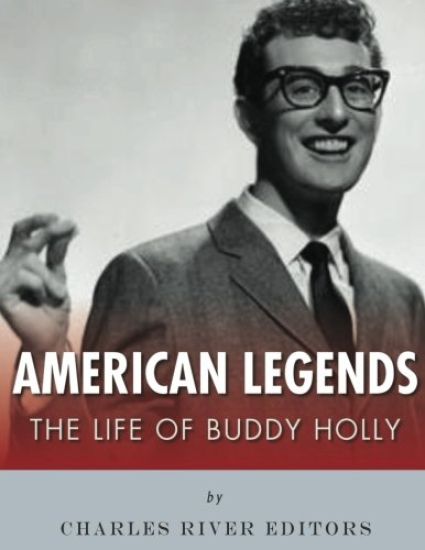
*Includes pictures *Includes some of Buddy Holly's quotes *Includes footnotes and a bibliography for further reading "If anyone asks you what kind of music you play, tell him 'pop.' Don't tell him 'rock'n'roll' or they won't even let you in the hotel." - Buddy Holly At the time of Buddy Holly's birth in 1936, in Lubbock Texas, rock music and its various hybrid genres were in early infancy. Signs of rock's future magnitude would soon be seen in the sexual charisma of the young Elvis Presley, the rhythm and passion of Chuck Berry, the riveting musical dialogues of Little Richard, and the raw virtuosity of Jerry Lee Lewis. Even then, however, no one yet knew what a rock star really was, and who could become one. Viewed in that light, observers of the time must have thought it fantastical that a nerdy boy-next-door, wearing bow ties and thick, dark horn-rimmed glasses, would consider such a climb into the rarified air of the traditionally-accepted stage performer, with a charisma not to be found in daily life. The fact that Holly stuck to his guns and persevered would actually come to make him an important pillar of rock music's origins. His visual appearance and easy, unassuming style struck a sympathetic note with the "everyman" audience, and his brilliant, albeit brief, career demonstrated that there was a flip side to the "suave and sexy" style of Elvis and his early rock contemporaries. Despite his lack of overt sex appeal in the traditional sense, the quirky Holly, who spent only 21 months in the public eye, was nevertheless "a good student, possessed of infectious personal charm." For young men around the world who shared Holly's "nerdiness," and women who were of a mind to take a break from being seduced from the stage to focus their attention on the "good boy," he was "hard not to like, with his goofy charisma, innovative vocal style, and very catchy tune." Holly did not immediately seek out a niche to occupy, but studied, tweaked, experimented, and grew constantly in the areas of sound, arrangement, orchestration, unique lyrics and technology to become the "most progressive rock and roll star of the 50s." He attracted an audience of kindred spirits with the affable "boy next door charm" to become "one of rock 'n' roll's founding fathers." Along the way, he contributed his own gifts as a visionary, in the same way that Presley did, by conveying through his music, whatever the setting, "the wide-open spaces of Texas." In addition, he altered the rock music industry in such a way that performing artists could also become self-arrangers and songwriters. Holly was, in fact, an artist whose career sustained itself almost entirely on original songs, an act of courage in the rock industry, and he has been singled out as one of the two greatest songwriters of his era, the other being Chuck Berry. While Holly is frequently given the credit he deserves, he is probably best remembered for the tragic plane crash that killed him when he was still just 22. Known as "The Day The Music Died", Holly, Ritchie Valens, and the J. P. "The Big Bopper" Richardson boarded a small plane after performing a show on the "Winter Dance Party" tour in Clear Lake, Iowa, but that night, February 3, 1959, their plane crashed shortly after takeoff when the pilot got confused due to bad weather and poor visibility. In addition to prematurely killing 3 young artists, the crash was immortalized by Don McLean's "American Pie." American Legends: The Life of Buddy Holly looks at the life and career of one of America's most famous rock stars. Along with pictures of important people, places, and events, you will learn about Buddy Holly like never before, in no time at all.
*Includes pictures *Profiles important figures like John Winthrop, Roger Williams, and others *Includes online resources and a bibliography for further reading *Includes a table of contents The first successful American colony in North America was settled in 1607 at Jamestown, Virginia. Though the Virginian colonists had difficulty in the beginning, by the late 1620s the Chesapeake area was thriving, having become a haven for those seeking economic opportunity in the new world. Pressures in England were growing as King Charles I was on the throne. Though Charles I himself was an Anglican, many suspected him of Catholic sympathies, a suspicion not alleviated by Charles I marriage to a French Catholic princess. Many Protestants had a growing desire to practice their faith and conduct their lives away from the mother country, and sought refuge in a destination called New England. The land chosen by this group, who "could pay their own way across the Atlantic" in contrast to the poorer settlers of the Chesapeake region was "colder, less abundant, but far healthier" than Virginia. Alan Taylor sees this decision as one in "classic Puritan fashion", citing one settler's view: "If men desire to have a people degenerate speedily, and to corrupt their minds and bodies too...let them seek a rich soil, that beings in much with little labor; but if they desire that Piety and Godliness should prosper...let them choose a Country such as New England] which yields sufficiency with hard labor and industry." The Puritans who came to America were, therefore, primed for hard work, discipline and the independent life, unlike their English counterparts who "preferred Anglicanism and the traditional culture characterized by church ales, Sunday diversions, ceremonial services, inclusive churches, and deference to the monarch." Ultimately, the men of the New England Company decided that the time had come to remove themselves from England, and to pursue their lives in the Americas. The Dorchester Company was founded by a group of investors with an interest in settlement in the New World. This settlement would be a for-profit venture, but it would have as its two main causes the spreading of the Gospel to the Indian population and the stop of the spread of Roman Catholicism in the American colonies. John White, the company's leader, also wanted to compete with the separatists who had begun the Plymouth colony in 1620. Cape Ann, a promontory very near to Cape Cod was established by the Dorchester Company as an early settlement. The fishing was excellent, but Cape Ann proved unable to provide the farm goods needed to sustain the Puritan settlers who came to the New World. The Dorchester Company was dissolved, but investors seeking to salvage its aims formed the New England Company or Massachusetts Bay Company and secured a charter just before King Charles I dissolved the Parliament in 1629. The Massachusetts Bay Colony: The History and Legacy of the Settlement of Colonial New England profiles the history of the colony, as well as its most famous leaders and individuals. Along with pictures of important people, places, and events, you will learn about colonial New England like never before, in no time at all.