Kirjojen hintavertailu – 12 903 725 kirjaa ja 27 kauppaa
Kirjailija
Charles River
Kirjat ja teokset yhdessä paikassa: 4 673 kirjaa, julkaisuja vuosilta 2013–2022, suosituimpiin kuuluu William Powell and Myrna Loy: The Lives and Careers of One of Classical Hollywood's Most Iconic Duos. Vertaile teosten hintoja ja tarkista saatavuus suomalaisista kirjakaupoista.
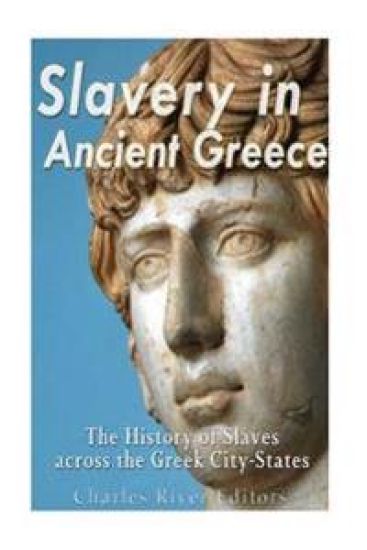
*Includes pictures*Includes ancient accounts of slavery and debating its role in Greek society*Includes online resources and a bibliography for further reading "A free man? There is no such thing All men are slaves; some, slaves of money; some, of chance; others are forced, either by mass opinion, or the threatening law, to act against their nature." - Euripides, Hecuba Slavery was a universal and totally accepted feature of ancient Greek society, so much so that while the conditions under which slaves lived and worked varied considerably, many ordinary citizens kept at least one slave, often working alongside their owners, while larger commercial enterprises involved huge numbers, many of whom could rise to positions of authority and wealth. It was possible for some slaves to buy their freedom, while others lived and died in conditions of appalling brutality, notably in the silver mines at Laurium. The revenues from these mines paid for the fleet with which Athens defeated Xerxes and were the basis of the Attic owls, the four drachma coins that revolutionized the Athenian economy. The mines were often leased to contractors and worked by slaves and condemned criminals. The galleries averaged approximately three and a half feet in height, so most miners had to work on their hands and knees. Another specific group of slaves that suffered particularly brutal treatment was the pornai, slaves used in the brothels as prostitutes. While those sound like the conditions of slavery people are accustomed to hearing about in more modern times, other forms of slavery in Greece were quite unique, and perhaps fittingly, Sparta might have had the most unusual system of all. Sparta will forever be known for its military prowess, but the importance the Spartans placed upon being a warrior society meant their way of life was entirely dependent on a class of indentured servants known as the helots. The Spartans needed the helots to maintain the domestic front, but they also frequently brought helots to the battlefield with them, and they repeatedly had to turn their own hoplites on unruly helots to suppress potential rebellions. As this makes clear, however unpalatable it may be to modern historians who expound on the virtues of the Greek legacy to Western Civilization, it is indisputably the case that slavery constituted a central part of that legacy. Indeed, slavery underpinned to a large extent the very foundations of the classical Greek way of life. Slavery in Ancient Greece: The History of Slaves across the Greek City-States examines the different ways people were enslaved in Greece, and what the Ancient Greeks wrote about slavery. Along with pictures depicting important people, places, and events, you will learn about slavery in Greece like never before.
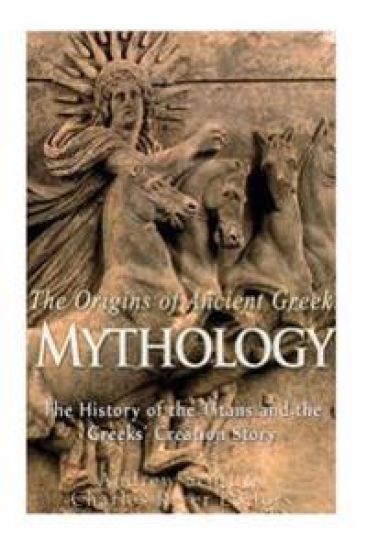
*Includes pictures *Includes ancient Greek accounts of the mythology *Includes online resources and a bibliography for further reading *Includes a table of contents "Even Cronus, the Titan who literally had his kids for breakfast, would find these facts hard to swallow." - Tai, Cupid's Academy: Argus' Big Fat Greek Wedding Ring "The sole art that suits me is that which, rising from unrest, tends toward serenity." This quote by Andr Gide perfectly encapsulates the story of the Titans. Most commonly known as the antagonists of the pantheon of gods led by Zeus, the Titans embody "unrest" and "transience" for the modern reader, but for reasons less than the obvious. History, after all, is the story of the winners, and the world of the ancient Greeks was a world of a very real, highly querulous pantheon that would behoove ancient writers to glorify in their works. Unlike the other gods, the Titans' appearance in ancient Greek writing is limited, and the full treatment of their "history" appears, predominantly, in just two works: Hesiod's Theogony and Works and Days. The story of the Titans appears in both works in different degrees of detail, and for that reason, any work about their story has to incorporate references from each. Rather than becoming ensnared in source criticism, it's necessary to combine the works to create a fuller picture of the mythology Hesiod expounds. For example, it's worth noting that the Theogony, at least, has all of the hallmarks of a "hymn to glory of Zeus the King." The reason for this is that, throughout the work, Zeus is lauded as being the progenitor of "order" in the cosmos, once he had defeated his enemies and ceased to battle monsters. It will soon become apparent that Zeus is not only the "lord of gods and men," but also the revolutionary leader of a new power system. This understanding of the cosmos as a political arena is vital to the interpretation of the myth of the Titans. By looking at these works of Hesiod, it's possible to get a better understanding of how the ancient Greeks viewed their cosmos, their pantheon of gods, and the power struggles their deities went through in order to become dominant celestial beings. The Titans play a much larger part in this process than they are often given credit for, and the importance of their lasting effect upon the cosmos, the mythology, and the ancient Greek psyche cannot be overstated. The Origins of Ancient Greek Mythology: The History of the Titans and the Greeks' Creation Story looks at the Titans and their role in the ancient Greeks' creation story. Along with pictures depicting important people, places, and events, you will learn about the origins of Greek mythology like never before.
*Includes pictures *Includes ancient historians' descriptions of Persepolis and the Persians *Includes online resources and a bibliography for further reading "By the favor of Ahuramazda these are the countries which I got into my possession along with this Persian people, which felt fear of me and bore me tribute: Elam, Media, Babylonia, Arabia, Assyria, Egypt, Armenia, Cappadocia, Lydia, the Greeks who are of the mainland and those who are by the sea, and countries which are across the sea, Sagartia, Parthia, Drangiana, Aria, Bactria, Sogdia, Chorasmia, Sattagydia, Arachosia, Hindus, Gandara, Sacae, Maka." - An inscription on a terrace wall in Persepolis, circa 521 CE Lying in the middle of a plain in modern day Iran is a forgotten ancient city: Persepolis. Built two and a half thousand years ago, it was known in its day as the richest city under the sun. Persepolis was the capital of Persia, the largest empire the world had ever seen, but after its destruction, it was largely forgotten for nearly 2,000 years, and the lives and achievements of those who built it were almost entirely erased from history. Alexander the Great's troops razed the city to the ground in a drunken riot to celebrate the conquest of the capital, after which time and sand buried it for centuries. It was not until the excavations of the 1930s that many of the relics, reliefs, and clay tablets that offer so much information about Persian life could be studied for the first time. Through archaeological remains, ancient texts, and work by a new generation of historians, a picture can today be built of this remarkable civilization and their capital city. Although the city had been destroyed, the legacy of the Persians survived, even as they mostly remain an enigma to the West and are not nearly as well understood as the Greeks, Romans, or Egyptians. In a sense, Persepolis and the Persian Empire are some of the most enduring mysteries of ancient civilization. Persepolis: The History and Legacy of the Ancient Persian Empire's Capital City looks at how the Persian city was built, its importance, and its collapse. Along with pictures depicting important people, places, and events, you will learn about Persepolis like never before.
En el sur de Irak hay un silencio aplastante sobre las dunas. Durante casi 5.000 a os, las arenas del desierto iraqu han mantenido los restos de la civilizaci n conocida m s antigua: los sumerios. Cuando los arque logos estadounidenses descubrieron una colecci n de tablas cuneiformes en Irak a finales del siglo XIX, se encontraron con un idioma y un pueblo que en aquel momento apenas eran conocidos por los estudiosos especializados en la antigua Mesopotamia. Las haza as y logros de otros pueblos mesopot micos, como los asirios y los babilonios ya eran conocidos por un gran segmento de la poblaci n a trav s del Antiguo Testamento; y el campo emergente de los estudios del Medio Oriente hab a resuelto el enigma de la lengua acadia que era ampliamente utilizado por toda la regi n en la antig edad, pero el descubrimiento de las tablas sumerias trajo a la luz la existencia de la cultura sumeria, que era la m s antigua de todas las culturas mesopot micas. Aunque los sumerios siguen apareciendo segundos o incluso terceros en comparaci n con los babilonios y los asirios, tal vez porque nunca construyeron un imperio tan grande como los asirios o establecieron una ciudad tan duradera y grande como Babilonia, fueron ellos los que sentaron las bases de la civilizaci n en las qu que todos los mesopot micos se basaron posteriormente. A los sumerios se les atribuye ser los primeros en inventar la escritura, bibliotecas, ciudades y escuelas en Mesopotamia (Ziskind 1972, 34), y muchos dir an que fueron el primer pueblo en crear y hacer todo esto en el mundo entero. Aunque Uruk no fue la nica ciudad que construyeron los sumerios durante el per odo Uruk, fue de lejos la m s grande y tambi n la fuente de la mayor a de las pruebas arqueol gicas y escritos referentes a la cultura sumeria temprana (Kuhrt 2010, 1:23). Uruk pas de ser la primera ciudad del mundo al centro pol tico y cultural m s importante en el antiguo Medio Oriente de forma relativamente r pida. Alrededor de 3200 a. C., la cultura sumeria de Uruk comenz a expandirse m s all de las fronteras de Sumeria, lo cual coincidi con el surgimiento de la escritura (Kuhrt 2010, 1:23). La forma de escritura que los sumerios desarrollaron se hizo conocida por su nombre griego, "cuneiforme", por los caracteres de estilo de cu a que empleaba (van de Mieroop 2007, 28). La escritura, como muchas otras invenciones a lo largo de la historia mundial, parece haber sido creada por necesidad; a medida que crec a la cultura de Uruk, los sumerios necesitaban desarrollar una forma sofisticada de mantener los registros, lo cual s lo se pod a hacer a trav s de la escritura (van de Mieroop 2007, 28). A pesar de que al principio era utilizado exclusivamente para la lengua sumeria, el sistema de escritura cuneiforme fue adaptado y utilizado m s adelante por un n mero de diversos idiomas en el antiguo Medio Oriente tales como el acadio, hitita y el antiguo persa (Dalby 1986, 475). Uruk: La Historia y Legado de la Primera Gran Ciudad del Mundo Antiguo examina c mo se construy Uruk, su importancia y su colapso. Junto a fotos que representan personas importantes, lugares y eventos, aprender s sobre Uruk como nunca antes.
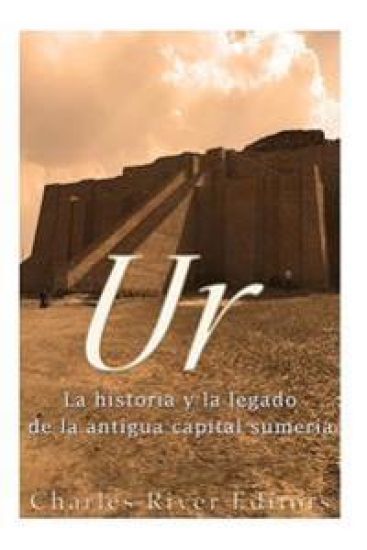
Cuando los arque logos americanos descubrieron la colecci n de tablas cuneiformes en Iraq a finales del siglo XIX, se encontraron con una lengua y un pueblo que en aquel tiempo eran apenas conocidos incluso por los escolares m s expertos en la antigua Mesopotamia: los sumerios. Las haza as y logros de los otros pueblos mesopot micos, como los asirios y los babilonios, ya eran conocidos por un gran segmento de la poblaci n a trav s del Antiguo Testamento; y el campo emergente de los estudios del Oriente Pr ximo ya hab a descifrado el enigma de la lengua acadia, la cual era usada ampliamente en toda la regi n en tiempos antiguos. Pero el descubrimiento de las tablas sumerias dieron luz la existencia de la cultura tura sumeria, la m s antigua de todas las culturas mesopot micas. Mucho antes de que Alejandr a fuese una ciudad e incluso antes de que Menfis y Babilonia alcanzasen la grandeza, la antigua ciudad mesopot mica de Ur fue una de las primeras ciudades en Oriente Pr ximo. Hoy en d a, la grandeza y la influencia cultural de Ur han ca do en el olvido para la mayor a, en parte porque sus monumentos no han aguantado el paso del tiempo de la misma forma que lo han hecho los monumentos de otras ciudades antiguas. Por ejemplo, los monumentos de Egipto se construyeron en piedra, mientras que los de Ur y la mayor a de ciudades de Mesopotamia se construyeron con ladrillo de barro y, como se discutir en este informe, el ladrillo de barro puede ser un material m s facil de trabajar que la piedra, pero tambi n se descompone mucho m s r pido. La misma observaci n se aplica a los documentos escritos producidos en Ur. Los pueblos de Mesopotamia, a los cuales Ur pertenecia, empleaban el sistema de escritura cuneiforme. Ya que la escritura cuneiforme casi siempre se escrib a en tablas de arcilla, los investigadores modernos se han visto enfrentados al desafortunado problema de que muchas de esas tablas se han roto y se han vuelto ilegibles a lo largo de los siglos. A pesar de la naturaleza ef mera de sus monumentos y en cierto modo de sus textos, Ur demostr ser una inspiraci n para los sumerios que construyeron la ciudad, as como para las siguientes culturas y dinast as que habitaron Mesopotamia. Un an lisis de las primeras fuentes vinculadas a Ur, as como las excavaciones arqueol gicas llevadas a cabo en la antigua ciudad, revelan que la ciudad fue un modelo cultural durante miles de a os. Ur comenz como una ciudad sumeria de importancia secundaria, pero r pidamente se convirti en la ciudad sumeria m s importante. En su momento lgido, Ur fue el centro de una gran dinast a que control la mayor a de Mesopotamia a trav s de un ej rcito y administraci n bien mantenida, y las reas que no estaban bajo su control directo eran influenciadas por los diplom ticos e ideas religiosas de Ur. Este estudio tambi n revelar que Ur era una ciudad realmente resistente, ya que sobrevivi a la ca da de los sumerios, a la destrucci n absoluta a manos de los elamitas, y m s tarde a la ocupaci n de numerosos pueblos, incluyeron a Saddam Hussein m s recientemente. Ur inspir la imaginaci n de los pueblos antiguos, pero tambi n ha cautivado a las mentes modernas, quienes han trabajado por m s de 150 a os para descifrar los misterios de esta ciudad. Realmente, en lo que se refiere a las ciudades antiguas m s importantes, Ur deber a contarse entre las m s grandes. Ur: la historia y el legado de la antigua capital sumeria rastrea la historia y el legado de una de las ciudades m s influyentes de la antig edad. Junto a im genes de gente importante, lugares y eventos, aprender s sobre la historia de Ur como nunca antes y en poqu simo tiempo.