Kirjojen hintavertailu – 12 903 725 kirjaa ja 27 kauppaa

Kirjailija

Charles River

Kirjat ja teokset yhdessä paikassa: 4 673 kirjaa, julkaisuja vuosilta 2013–2022, suosituimpiin kuuluu William Powell and Myrna Loy: The Lives and Careers of One of Classical Hollywood's Most Iconic Duos. Vertaile teosten hintoja ja tarkista saatavuus suomalaisista kirjakaupoista.

4 673 kirjaa

Kirjojen julkaisuvuodet: 2013–2022.

History's Greatest Artists: The Life and Legacy of Salvador Dali

History's Greatest Artists: The Life and Legacy of Salvador Dali

Charles River

Createspace Independent Publishing Platform
2015
nidottu
*Includes pictures *Includes Dali's quotes about his life and art *Includes online resources and a bibliography for further reading *Includes a table of contents "Each morning when I awake, I experience again a supreme pleasure - that of being Salvador Dali." - Salvador Dali In his review of Salvador Dali's first autobiography, George Orwell declared that "One ought to be able to hold in one's head simultaneously the two facts that Dali is a good draughtsman and a disgusting human being." Whether or not one agrees with the famous author's assessment, Orwell captures the polarizing nature of Salvador Dali, and the extent to which his undeniable technical virtuosity often brushed against his penchant for provoking his audiences (not to mention provoking long-entrenched standards of "proper" taste). Dali, after all, was unafraid to eschew Renaissance perspective, thereby incorporating often graphic subject matter. In other words, if Dali stands as one of the canonical figures of modern art, this involved holding both a seminal role in the canon of cutting-edge art but also a tendency to challenge audiences, challenging the contours of "Art with a Capital A." While Orwell may have separated Dali the master technician from Dali the person, it would be more accurate to acknowledge that the virtues of Dali's art cannot be dissociated from its provocative nature. Always a showman, Dali's very public persona was predicated on pushing the boundaries of artistic form, content, and professional identity. He was also not alone in this regard, and Dali's career cannot be separated entirely from important modern art movements, particularly surrealism. Indeed, Dali's genius lay not only in his undeniable gifts as an artist but in his savvy ability to market himself and befriend major figures in the art movements of his historical moment. His friendships with Luis Bunuel and Federico Garcia Lorca deserve particular mention within the contexts of his career and European modernism more broadly. Perhaps it's no surprise that Dali's life and art took many turns and was quite diverse. The foundations for both his love for art and his public persona came from his background growing up, but at the same time, the showmanship with which Dali carried himself was in many respects a fa ade; his upbringing brings to light the insecurities and anxieties that were not just contained within his childhood but informed his personal and professional lives as an adult. History's Greatest Artists: The Life and Legacy of Salvador Dali looks at the personal background that led to Dali becoming an artist and the cultural climate in which he rose to fame. Dali's technique and artistic legacy are also analyzed, including his working methods and artistic education. Along with pictures of important people, places, and events, you will learn about Dali like never before, in no time at all.
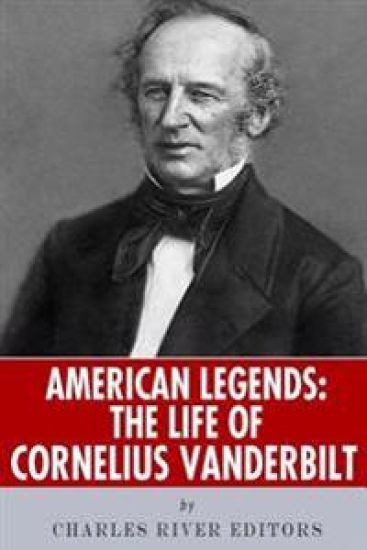
American Legends: The Life of Cornelius Vanderbilt

American Legends: The Life of Cornelius Vanderbilt

Charles River

Createspace Independent Publishing Platform
2015
nidottu
*Includes pictures *Includes Vanderbilt's quotes about his own life and work *Includes online resources and a bibliography for further reading *Includes a table of contents "I don't care half so much about making money as I do about making my point, and coming out ahead." - Cornelius Vanderbilt A lot of ink has been spilled covering the lives of history's most influential figures, but how much of the forest is lost for the trees? In Charles River Editors' American Legends series, readers can get caught up to speed on the lives of America's most important men and women in the time it takes to finish a commute, while learning interesting facts long forgotten or never known. The Gilded Age and the dawn of the 20th century are often remembered as an era full of monopolies, trusts, and economic giants in heavy industries like oil and steel. Men like Andrew Carnegie built empires like Carnegie Steel, and financiers like J. P. Morgan merged and consolidated them. The era also made names like Astor, Cooke, and Vanderbilt instantly recognizable across the globe. Over time, the unfathomable wealth generated by the businesses made the individuals on top incredibly rich, and that in turn led to immense criticism and an infamous epithet used to rail against them: robber barons. Dozens of men were called "robber barons", but few of them were as notorious as Cornelius Vanderbilt, who also happened to be one of the nation's first business titans. Vanderbilt was a railroad and shipping magnate at a time that the industry was almost brand new, but he rode his success to become one of the richest and most powerful men in American history. The industrial might wielded by men like Vanderbilt in the later 19th century directly led to a public backlash and made President Teddy Roosevelt the "trust buster", and there has since been countless regulations to attempt to avoid the types of monopolies found over 100 years ago. However, many 20th century historians and writers pushed back against the allegations hurled at the "robber barons" and even took issue with the name. Libertarian writer John Stossel argued, "They weren't robbers, because they didn't steal from anyone, and they weren't barons-they were born poor..." Moreover, Vanderbilt set a precedent of sorts with his philanthropy, most notably his gift to Vanderbilt University, which bears his name. American Legends: The Life of Cornelius Vanderbilt looks at the life and career of one of America's richest men. Along with pictures of important people, places, and events, you will learn about Vanderbilt like never before, in no time at all.
The Greatest Civil War Battles: The Battle of Nashville

The Greatest Civil War Battles: The Battle of Nashville

Charles River

Createspace Independent Publishing Platform
2015
nidottu
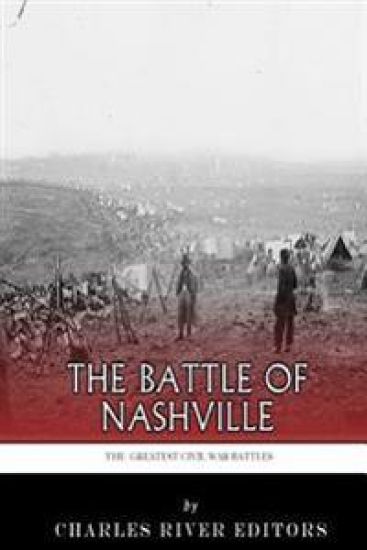
*Includes pictures *Includes accounts of the fighting by generals and soldiers on both sides *Includes online resources and a bibliography for further reading *Includes a table of contents "Never had there been such an overwhelming victory during the Civil War - indeed, never in American military history." - Wiley Ford's comment on the Franklin-Nashville Campaign As Sherman began his infamous march to the sea, Lincoln instructed Grant to redirect General George H. Thomas' efforts back to Tennessee to protect Union supply lines and stop the offensive mounted by Confederate general John Bell Hood. Hood had broken away from Atlanta and was trying to compel Sherman to follow him, thus diverting him from his intended path of destruction. With Sherman marching east toward the sea, he directed Thomas to try to block Hood around Nashville. On November 30, the Union army began digging in around Franklin, and that afternoon Hood ordered a frontal assault on the dug in Union army which deeply upset his own officers. Hood stressed the necessity of defeating Schofield's forces before Thomas could arrive, though some historians believe his decision to mount a frontal attack was a rash decision made out of fury at the fact Schofield had escaped his grasp. Either way, after repeated frontal assaults failed to create a gap in the Union lines, Schofield withdrew his men across the river on the night of November 30, successfully escaping Hood's army. Meanwhile, Hood had inflicted nearly 8,000 casualties upon his army (men the Confederacy could scarcely afford to lose), while the Union lost about a quarter of that. Despite practically wrecking his army, which was now only about 25,000 strong, Hood marched his battered army to a position outside Nashville, Tennessee, where he took up defensive positions while awaiting reinforcements from Texas. On December 1, General Thomas sent word to Grant that he had "retired to the fortifications around Nashville until I can get my cavalry equipped", a reference to the fact that Forrest's cavalry had more than double the manpower of the Union cavalry. But Thomas also added that "if Hood attacks our position, we] would be seriously damaged, but if he makes no attack until our cavalry can be equipped, I] or General Schofield will move against him at once." The following day Grant wired back, "If Hood is permitted to remain quietly about Nashville, you will lose all the road back to Chattanooga, and possibly have to abandon the line of the Tennessee. Should he attack you it is all well; but if he does not, you should attack him before he fortifies. Arm and put in the trenches your quartermaster's employees, citizens, etc." Even as Grant sniped at him, Thomas held back for nearly two weeks, partly because of a bad ice storm, and his delay nearly resulted in having Grant remove him from command. When reinforcements didn't arrive by December 15, Thomas finally devised a complex two-pronged attack that feinted at Hood's right flank while bringing overwhelming force on the left flank. During the two day battle, Thomas effectively destroyed Hood's command, inflicting over 6,000 more Confederate casualties while losing less than half that. Upon reaching his headquarters at Tupelo, Mississippi, General Hood requested to be relieved of command rather than be removed in disgrace. The Greatest Civil War Battles: The Battle of Nashville analyzes the events leading up to the important Union victory and the end of the Franklin-Nashville Campaign. Along with pictures of important people, places, and events, you will learn about the Battle of Nashville like never before.