Kirjojen hintavertailu – 12 903 725 kirjaa ja 27 kauppaa

Kirjailija

Charles Sheppard

Kirjat ja teokset yhdessä paikassa: 6 kirjaa, julkaisuja vuosilta 2008–2024, suosituimpiin kuuluu Usability Testing of Height and Angles of Ten-Print Fingerprint Capture. Vertaile teosten hintoja ja tarkista saatavuus suomalaisista kirjakaupoista.

6 kirjaa

Kirjojen julkaisuvuodet: 2008–2024.

The Chagos Archipelago

The Chagos Archipelago

Charles Sheppard

TAYLOR FRANCIS LTD
2024
sidottu
This book is the story of the natural history of Chagos Archipelago, and of the efforts of many to get it recognized as an important and protected wildlife reserve. Exploring its immense natural riches and biodiversity, both on islands and in the marine environment, this book addresses competing claims to its resources, its politics, and the desire of some commercial and political parties to exploit the area. It is about the fight to conserve a wonderland of biodiversity and obtain its protection from exploitation, especially of its reefs and other marine life. This book shows the importance of the Chagos Archipelago and why so much research was done there. Rather than being a typical research book, this work presents research in a narrative form and describes the now substantial Government, UN, and legal interest in the archipelago since the UK was told to ‘decolonise’ it. It is also the story of our planet in miniature: the archipelago encapsulates much of the world’s conservation tribulations in a way we can much more easily understand. This narrative explores the difficulties faced by the Chagos Archipelago, including displaced people, old and derelict industries (coconut in this case), the military, politics, rich and untouched ecosystems that some want to exploit, ruined habitats on land, climate change, and territorial claims. It examines how all of these factors have affected the natural history, biodiversity, and conservation of the archipelago. With beautiful photography of the Chagos Archipelago coral reefs and islands, as well as graphs indicating their findings, this book offers professionals, researchers, academics, and students in conservation and biodiversity an insight into one of the world’s most diverse ecosystems. It is also accessible for non-academic readers with an interest in climate change, biodiversity, and the importance of conservation.
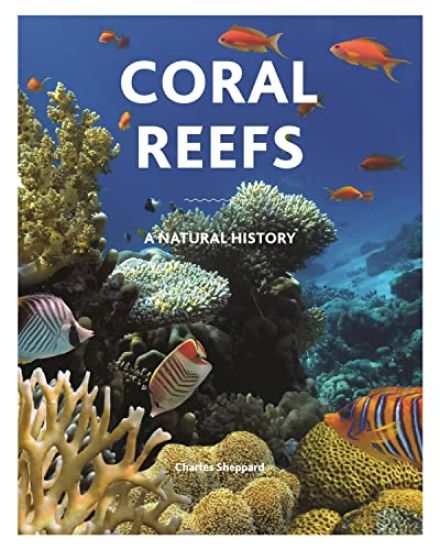
Coral Reefs

Coral Reefs

Russell Kelley; Charles Sheppard

PRINCETON UNIVERSITY PRESS
2021
sidottu
An illustrated look at corals and the reefs they build around the world, and the causes and dire consequences of their rapid disappearanceCorals are among the most varied lifeforms on Earth, ranging from mushroom corals and leather corals to button polyps, sea fans, anemones, and pulse corals. Bridging the gap between plant and animal, these marine invertebrates serve as homes to reef fish and share symbiotic relationships with photosynthesizing algae, which provide corals with their nourishment. This stunningly illustrated book profiles the astonishing diversity of the world's coral groups, describing key aspects of their natural history and explaining why coral reefs are critical to the health of our oceans. Representative examples of corals have been selected to illustrate the broad range of species, and the book's lively and informative commentary covers everything from identification to conservation, making it an essential resource for marine biologists, divers, and anyone who is fascinated by these remarkable sea creatures. Features more than 200 exquisite color photosHighlights key aspects of corals and their natural historyFeatures representative examples from around the worldIncludes photos of rare and unusual species
Coral Reefs

Coral Reefs

Charles Sheppard

Oxford University Press
2021
nidottu

Halvin toimitettuna 18,90 €

Very Short Introductions: Brilliant, Sharp, Inspiring Coral reefs are among the most beautiful, and most diverse, of ecosystems. Early seafarers were wary of them, naturalists were confused by them, yet many coastal people benefited greatly from these mysterious rocky structures that grew up to the surface of the sea. They have been rich in their supply of food, and they provided a breakwater from storms and high waves to countless coastal communities that developed from their protection. Their scale is enormous and their value high. Found in countless locations around the world, from the Indo-Pacific coral reef province to the Caribbean and Australia, they support both marine and human life. But today coral reefs are in trouble, with many dying or suffering from over-exploitation, pollution, and the warming and acidification of the oceans. Understanding reefs, their conservation and management, is vital, and so is conveying this to authority if we are to preserve these remarkable ecosystems. In this Very Short Introduction Charles Sheppard describes the complex structure and interdependencies of a reef, how reefs have evolved, the diversity of marine life that they support, and their importance to the human population who live beside them. This new edition describes the latest research on the complex symbioses of coral animals with microorganisms. It also highlights the scale of the challenge facing our reefs today, following recent ocean heatwaves - part of wider climate disruption - that killed half the world's reefs, and considers what can be done to preserve these essential and vibrant ecosystems. ABOUT THE SERIES: The Very Short Introductions series from Oxford University Press contains hundreds of titles in almost every subject area. These pocket-sized books are the perfect way to get ahead in a new subject quickly. Our expert authors combine facts, analysis, perspective, new ideas, and enthusiasm to make interesting and challenging topics highly readable.
Doctoral education in South Africa

Doctoral education in South Africa

Nico Cloete; Johann Mouton; Charles Sheppard

African Minds
2015
nidottu
Worldwide, in Africa and in South Africa, the importance of the doctorate has increased disproportionately in relation to its share of the overall graduate output over the past decade. This heightened attention has not only been concerned with the traditional role of the PhD, namely the provision of future academics; rather, it has focused on the increasingly important role that higher education - and, particularly, high-level skills - is perceived to play in national development and the knowledge economy. This book is unique in the area of research into doctoral studies because it draws on a large number of studies conducted by the Centre of Higher Education Trust (CHET) and the Centre for Research on Evaluation, Science and Technology (CREST), as well as on studies from the rest of Africa and the world. In addition to the historical studies, new quantitative and qualitative research was undertaken to produce the evidence base for the analyses presented in the book. The findings presented in Doctoral Education in South Africa pose anew at least six tough policy questions that the country has struggled with since 1994, and continues to struggle with, if it wishes to gear up the system to meet the target of 5 000 new doctorates a year by 2030. Discourses framed around the single imperatives of growth, efficiency, transformation or quality will not, however, generate the kind of policy discourses required to resolve these tough policy questions effectively. What is needed is a change in approach that accommodates multiple imperatives and allows for these to be addressed simultaneously.