Kirjailija
Charles W. Diffin
Kirjat ja teokset yhdessä paikassa: 9 kirjaa, julkaisuja vuosilta 2013–2017, suosituimpiin kuuluu Flame-Jewel of the Ancients & The Pirate Planet. Vertaile teosten hintoja ja tarkista saatavuus suomalaisista kirjakaupoista.
Nimi esiintyy myös muodoissa: Charles W Diffin
9 kirjaa
Kirjojen julkaisuvuodet: 2013–2017.
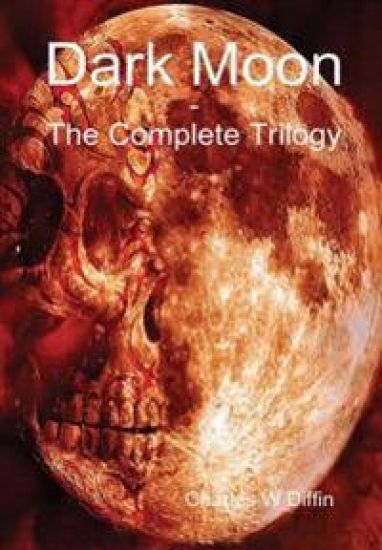
Dark Moon - The Complete Trilogy Dark Moon - Mysterious, dark, out of the unknown deep comes a new satellite to lure three courageous Earthlings on to strange adventures. Brood of the Dark Moon - Once more Chet, Walt and Diane are united in a wild ride to the Dark Moon - but this time they go as prisoners of their deadly enemy Schwartzmann. The Finding of Haldgren - Chet Ballard answers the pinpoint of light that from the craggy desolation of the moon stabs out man's old call for help.
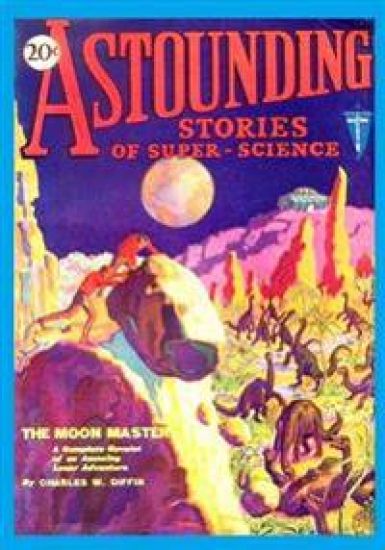
Astounding Stories of Super-Science, Vol. 2, No. 3 (June, 1930) (Volume 2)
Charles W. Diffin
Createspace Independent Publishing Platform
2015
nidottu
Analog Science Fiction and Fact is an American science fiction magazine. As of 2015, it is the longest running continuously published magazine of that genre, the June 2015 issue being number 1,000. Initially published in 1930 in the United States as Astounding Stories as a pulp magazine, it has undergone several name changes, primarily to Astounding Science-Fiction in 1938, and Analog Science Fact & Fiction in 1960. In November 1992, its logo changed to use the term "Fiction and Fact" rather than "Fact & Fiction". It is in the library of the International Space Station. Spanning three incarnations since 1930, this is perhaps the most influential magazine in the history of the genre. It remains a fixture of the genre today. As Astounding Science-Fiction, a new direction for both the magazine and the genre under editor John W. Campbell was established. His editorship influenced the careers of Isaac Asimov and Robert A. Heinlein, and also introduced the Dianetics theories of L. Ron Hubbard in May 1950. Analog frequently publishes new authors, including then-newcomers such as Orson Scott Card and Joe Haldeman in the 1970s, Barry B. Longyear, Harry Turtledove, Timothy Zahn, Greg Bear, and Joseph H. Delaney in the 1980s, and Paul Levinson, Michael A. Burstein, and Rajnar Vajra in the 1990s. One of the major publications of what fans and historians call the Golden Age of Science Fiction and afterward, it has published much-reprinted work by such major SF authors as E. E. Smith, Theodore Sturgeon, Harlan Ellison, Isaac Asimov, Robert A. Heinlein, A. E. van Vogt, Lester del Rey, H. P. Lovecraft and many others.
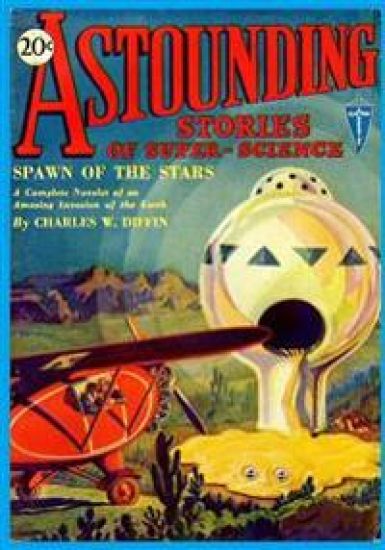
Astounding Stories of Super-Science, Vol. 1, No. 2 (February, 1930)
Charles W. Diffin
Createspace Independent Publishing Platform
2015
nidottu
Analog Science Fiction and Fact is an American science fiction magazine. As of 2015, it is the longest running continuously published magazine of that genre, the June 2015 issue being number 1,000. Initially published in 1930 in the United States as Astounding Stories as a pulp magazine, it has undergone several name changes, primarily to Astounding Science-Fiction in 1938, and Analog Science Fact & Fiction in 1960. In November 1992, its logo changed to use the term "Fiction and Fact" rather than "Fact & Fiction". It is in the library of the International Space Station. Spanning three incarnations since 1930, this is perhaps the most influential magazine in the history of the genre. It remains a fixture of the genre today. As Astounding Science-Fiction, a new direction for both the magazine and the genre under editor John W. Campbell was established. His editorship influenced the careers of Isaac Asimov and Robert A. Heinlein, and also introduced the Dianetics theories of L. Ron Hubbard in May 1950. Analog frequently publishes new authors, including then-newcomers such as Orson Scott Card and Joe Haldeman in the 1970s, Barry B. Longyear, Harry Turtledove, Timothy Zahn, Greg Bear, and Joseph H. Delaney in the 1980s, and Paul Levinson, Michael A. Burstein, and Rajnar Vajra in the 1990s. One of the major publications of what fans and historians call the Golden Age of Science Fiction and afterward, it has published much-reprinted work by such major SF authors as E. E. Smith, Theodore Sturgeon, Harlan Ellison, Isaac Asimov, Robert A. Heinlein, A. E. van Vogt, Lester del Rey, H. P. Lovecraft and many others.

Flame-Jewel of the Ancients & The Pirate Planet
Charles W. Diffin; Edwin L. Graber
Armchair Fiction Music
2014
nidottu
Anthology of Sci-Fi V23, the Pulp Writers - Charles W. Diffin
Charles W Diffin
Spastic Cat Press
2013
pokkari