Kirjojen hintavertailu – 12 859 819 kirjaa ja 27 kauppaa

Kirjailija

Charles Wright

Kirjat ja teokset yhdessä paikassa: 34 kirjaa, julkaisuja vuosilta 1988–2025, suosituimpiin kuuluu The Collected Novels of Charles Wright: The Messenger, the Wig, and Absolutely Nothing to Get Alarmed about. Vertaile teosten hintoja ja tarkista saatavuus suomalaisista kirjakaupoista.

34 kirjaa

Kirjojen julkaisuvuodet: 1988–2025.

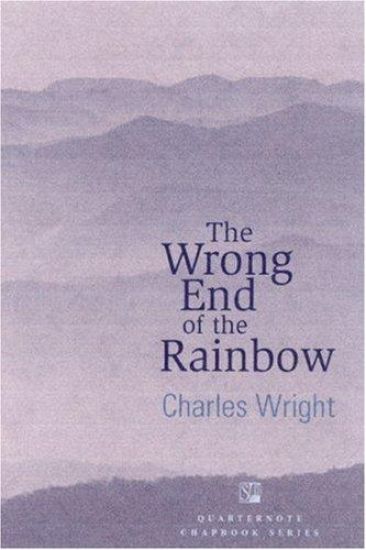
The Wrong End of the Rainbow

The Wrong End of the Rainbow

Charles Wright

Sarabande Books, Incorporated
2005
pokkari
“Wright has a hunk of the ineffable in his teeth and he won’t let go. In poem after poem, he plumbs our deepest relationships with nature, time, love, death, creation. Wright’s search breaks all the barriers of time, space, action, for its dramatic narrative simply refuses to acknowledge the usual unities, as though all time were this time, all places this place and all actions one.”—Philip Levine, from his citation for the 1996 Lenore Marshall Poetry Prize. Charles Wright was named chancellor of The Academy of American Poets in 1999 and has won a Pulitzer Prize, a National Book Critics Circle Prize and a Los Angeles Times Book Prize. Since 1983, he has been at the University of Virginia.
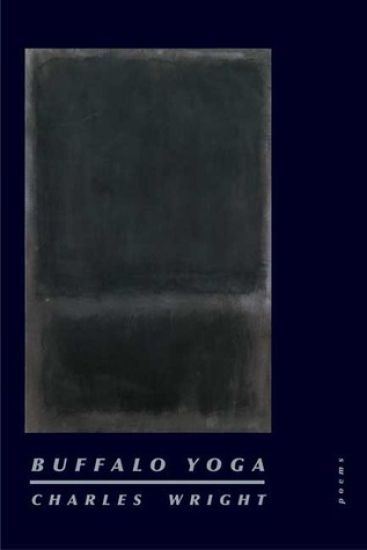
Buffalo Yoga: Poems

Buffalo Yoga: Poems

Charles Wright

Farrar, Straus and Giroux
2005
nidottu
" Wright's] penetrating and ravishingly gorgeous lyrical poems are at once classically philosophical and freshly revealing" (Booklist) Never has Charles Wright's vision been more closely aligned with the work of the ancient Chinese painters and writers who inform his poetry than in his newest collection. Wright's short lyrics, in Charles Simic's words, "achieve a level of eloquence where the reader says to himself, if this is not wisdom, I don't know what is" (The New York Review of Books). The poems in Buffalo Yoga are pristine examples of the Tennessee poet's deft, painterly touch-"crows in a caterwaul" are "scored like black notes in the bare oak"-and his oblique, expansive, and profound interrogation of mortality, as in the title sequence, where the soul is "a rhythmical knot. / That form unties. Or reties."
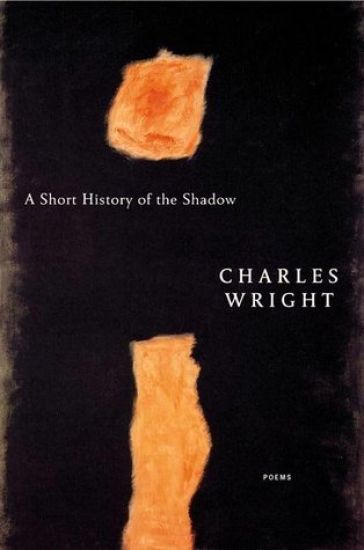
A Short History of the Shadow

A Short History of the Shadow

Charles Wright

Farrar, Straus and Giroux
2003
pokkari
Luminous new poems from one who "has long been a poet of gorgeous description" William Logan, "The New Criterion""Landscape, as Wang Wei says, softens the sharp edges of isolation.""Don't just do something, sit there.""And so I have, so I have, ""the seasons curling around me like smoke, ""Gone to the end of the earth and back without a sound." from "Body and Soul II"This is Charles Wright's first collection of verse since the gathering, in "Negative Blue," of his "Appalachian Book of the Dead," a trilogy of trilogies hailed "among the great long poems of the century" (James Longenbach, "Boston Review"). In "A Short History of the Shadow," Wright's return to the landscapes of his early work finds his art resilient in a world haunted by death and the dead."
Discrete Mathematics

Discrete Mathematics

Kenneth Ross; Charles Wright

Pearson
2002
nidottu
Revised for extra clarity, the distinguishing characteristic of Ross and Wright is a sound mathematical treatment that increases smoothly in sophistication. The text presents utility-grade discrete math tools so students can understand them, use them, and move on to more advanced mathematical topics.
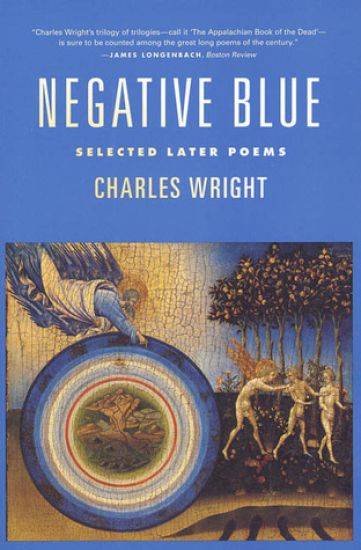
Negative Blue

Negative Blue

Charles Wright

Farrar Strauss Giroux-3pl
2001
pokkari
The culmination of the cycle that won Wright the Pulitzer Prize and National Book Critics Circle Award"Time will append us like suit coats left out overnight""On a deck chair, loose change dead weight in the right pocket, ""Silk handkerchief limp with dew, "" sleeves in a slow dance with the wind.""And love will kill us--""Love, and the winds from under the earth"" that grind us to grain-out."--from "Still Life with Spring and Time to Burn"When Charles Wright published "Appalachia "in 1998, it marked the completion of a nine-volume project, of which James Longenbach wrote in the "Boston Review," "Charles Wright's trilogy of trilogies--call it 'The Appalachian Book of the Dead'--is sure to be counted among the great long poems of the century." The first two of those trilogies were collected in "Country Music" (1982) and "The World of the Ten Thousand Things" (1990). Here Wright adds to his third trilogy ("Chickamauga " 1995], "Black Zodiac" 1997], and "Appalachia " 1998]) a section of new poems that suggest new directions in the work of this sensuous, spirit-haunted poet.
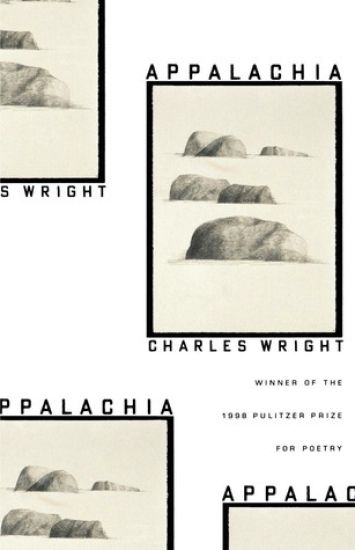
Appalachia

Appalachia

Charles Wright

Farrar, Straus Giroux Inc
1999
nidottu
Almost thirty years ago, Charles Wright (who teaches at the University of Virginia in Charlottesville and has won both the Pulitzer Prize and the National Book Award for Poetry) began a poetic project of astonishing scope--a series of three trilogies. The first trilogy was collected in "Country Music, the second in "The World of the Ten Thousand Things, and the third began with "Chickamauga and continued with "Black Zodiac. "Appalachia is the last book in the final trilogy of this pathbreaking and majestic series. If "Country Music traced "Wright's journey from the soil to the stars" and "The World of the Ten Thousand Things "lovingly detailed" our world and made "a visionary map of the world beyond" (James Longenbach, "The Nation), this final book in Wright's great work reveals a master's confrontation with his own mortality and his stunning ability to discover transcendence in the most beautifully ordinary of landscapes.
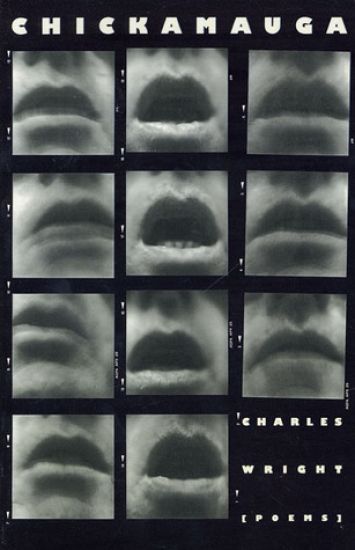
Chickamauga

Chickamauga

Charles Wright

Farrar, Straus and Giroux
1996
pokkari
This volume, Wright's eleventh book of poetry, is a vivid, contemplative, far-reaching, yet wholly plain-spoken collection of moments appearing as lenses through which to see the world beyond our moments. "Chickamauga" is also a virtuoso exploration of the power of concision in lyric poetry--a testament to the flexible music of the long line Wright has made his own. As a reviewer in "Library Journal" noted: "Wright is one of those rare and gifted poets who can turn thought into music. Following his self-prescribed regimen of purgatio, illuminato, and contemplatio, Wright spins one lovely lyric after another on such elemental subjects as sky, trees, birds, months, and seasons. But the real subject is the thinking process itself and the mysterious alchemy of language: 'The world is a language we never quite understand.'"
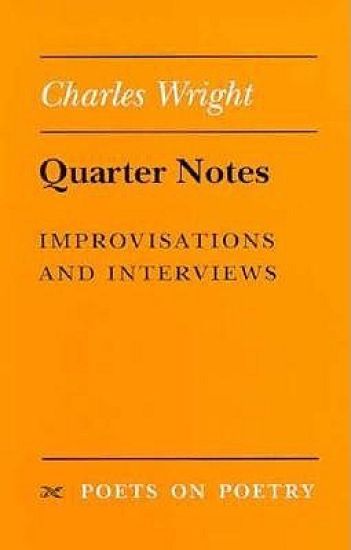
Quarter Notes

Quarter Notes

Charles Wright

The University of Michigan Press
1995
sidottu
Quarter Notes harvests recent reviews, essays, memoirs, and interviews by acclaimed poet Charles Wright. Wright uses creative variations on the form of the linear essay including interviews with himself as interviewee, correspondence (with Charles Simic), and experimentation with what he calls Improvisations "non- linear associational storylines". The book's short, staccato-like bursts add up to much more than the sum of their parts. This satisfying collection includes reminiscences and meditations on the details of memory and what it means to visit the past; the vices of titleism and the hydrosyllabic foot in poetry; a comparison of poems and journeys; appreciation of poets Donald Justice and John Crow Ransom; an attempt to define "image"; discussions of the current state of poetry; and various highlights from the Charles Wright Literary Festival. Charles Wright's books of poetry include The World of the Ten Thousand Things and Country Music: Selected Early Poems. He received the 1993 Ruth Lilly Poetry Prize and the 1992 Award of Merit Medal from the American Academy of Arts and Letters. He is Souder Family Professor of English, University of Virginia.
Quarter Notes

Quarter Notes

Charles Wright

The University of Michigan Press
1995
nidottu
Quarter Notes harvests recent reviews, essays, memoirs, and interviews by acclaimed poet Charles Wright. Wright uses creative variations on the form of the linear essay including interviews with himself as interviewee, correspondence (with Charles Simic), and experimentation with what he calls Improvisations "non- linear associational storylines". The book's short, staccato-like bursts add up to much more than the sum of their parts. This satisfying collection includes reminiscences and meditations on the details of memory and what it means to visit the past; the vices of titleism and the hydrosyllabic foot in poetry; a comparison of poems and journeys; appreciation of poets Donald Justice and John Crow Ransom; an attempt to define "image"; discussions of the current state of poetry; and various highlights from the Charles Wright Literary Festival. Charles Wright's books of poetry include The World of the Ten Thousand Things and Country Music: Selected Early Poems. He received the 1993 Ruth Lilly Poetry Prize and the 1992 Award of Merit Medal from the American Academy of Arts and Letters. He is Souder Family Professor of English, University of Virginia.
Halflife

Halflife

Charles Wright

The University of Michigan Press
1988
nidottu
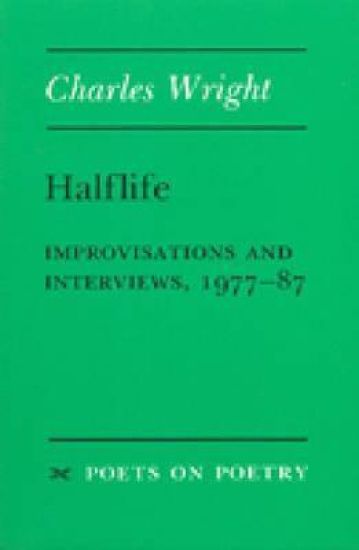
"I myself am interested in a kind of structural investigation of the line, an attempt at some kind of harmonics involving new patterns and new designs using a long image-freighted line (the odd marriage of Emily and Walt) that can carry information (and 'sincerity' and a lyric intensity at the same time. Not only will it sing, but it will tell time too. Or as Fats Domino once observed, 'I don't want to bury the lyrics, man; I want 'em to understand what I'm saying.'" Halflife is captivating. Charles Wright, in disclosing the contents of his journal, reveals the influence of Ezra Pound, Eugenio Montale, Emily Dickinson, Italian painter Giorgio Morandi, and country music legend A. P. Carter.