Kirjojen hintavertailu – 12 859 829 kirjaa ja 27 kauppaa
Kirjailija
Charles Y. Glock
Kirjat ja teokset yhdessä paikassa: 4 kirjaa, julkaisuja vuosilta 1970–2021, suosituimpiin kuuluu Anti-Semitism in America. Vertaile teosten hintoja ja tarkista saatavuus suomalaisista kirjakaupoista.
Periodic outbreaks of anti-Jewish hostility testify to the continuing presence of anti-Semitism in America. Based on the most extensive research ever conducted on the subject, Anti-Semitism in America, now in a new paperback edition, provides us with the often surprising facts about the enduring form of bigotry and sheds new light on the nature of prejudice in general. The authors draw their conclusions from a specially designed nationwide survey on anti-Semitism conducted by the Survey Research Center at the University of California, Berkeley, and by other public opinion polls.
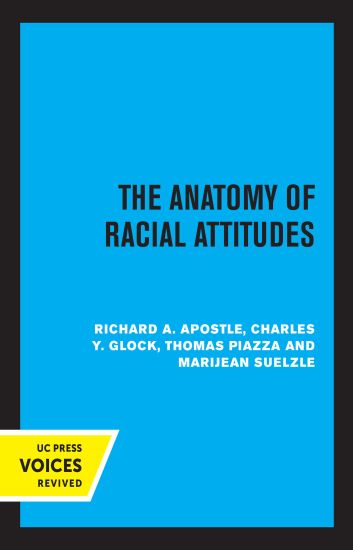
Racial tension divides American society. Racial equality remains a distant goal. Although the potion of Black Americans has improved in recent years, the widespread enthusiasm for the Civil Rights movement has waned. Why has progress slowed? What makes racial problems in America so difficult to solve? A principal cause, according to The Anatomy of Racial Attitudes, is the way in which white Americans explain, or account for, the social conditions in which most black Americans find themselves. A substantial proportion of whites believe that stereotypes that Black Americans are relatively less well off because blacks do not try hard enough to better themselves or because of the difference due to genertics or to God's plan. Whites who hold such views have relatively little sympathy for programs designed to improve the social conditions. In contrast, whites who believe that Black Americans are kept back either by deliberate discrimination or by the accumulated social results of past discrimination are much more receptive to policies designed to help blacks. Using qualitative and quantitive data, this book explores the variety and extent of these explanations for social differences; it also describes how each explanation--or combination of explanations--influences a person's views on policies designed to bring about greater racial equality. This study promises to influence not only the course of future academic research on race relations but also the formulation of public policy to deal with racial problems. It reveals that the resistance of many whites to policies favorable to racial equality are not isolated phenomenon but instead is part of a comprehensive view of how society works. If strides toward racial equality are to be made in the foreseeable future, the insights provided here must be considered seriously by policy makers and be incorporated into their strategies. This title is part of UC Press's Voices Revived program, which commemorates University of California Press's mission to seek out and cultivate the brightest minds and give them voice, reach, and impact. Drawing on a backlist dating to 1893, Voices Revived makes high-quality, peer-reviewed scholarship accessible once again using print-on-demand technology. This title was originally published in 1983.
Racial tension divides American society. Racial equality remains a distant goal. Although the potion of Black Americans has improved in recent years, the widespread enthusiasm for the Civil Rights movement has waned. Why has progress slowed? What makes racial problems in America so difficult to solve? A principal cause, according to The Anatomy of Racial Attitudes, is the way in which white Americans explain, or account for, the social conditions in which most black Americans find themselves. A substantial proportion of whites believe that stereotypes that Black Americans are relatively less well off because blacks do not try hard enough to better themselves or because of the difference due to genertics or to God's plan. Whites who hold such views have relatively little sympathy for programs designed to improve the social conditions. In contrast, whites who believe that Black Americans are kept back either by deliberate discrimination or by the accumulated social results of past discrimination are much more receptive to policies designed to help blacks. Using qualitative and quantitive data, this book explores the variety and extent of these explanations for social differences; it also describes how each explanation--or combination of explanations--influences a person's views on policies designed to bring about greater racial equality. This study promises to influence not only the course of future academic research on race relations but also the formulation of public policy to deal with racial problems. It reveals that the resistance of many whites to policies favorable to racial equality are not isolated phenomenon but instead is part of a comprehensive view of how society works. If strides toward racial equality are to be made in the foreseeable future, the insights provided here must be considered seriously by policy makers and be incorporated into their strategies. This title is part of UC Press's Voices Revived program, which commemorates University of California Press's mission to seek out and cultivate the brightest minds and give them voice, reach, and impact. Drawing on a backlist dating to 1893, Voices Revived makes high-quality, peer-reviewed scholarship accessible once again using print-on-demand technology. This title was originally published in 1983.
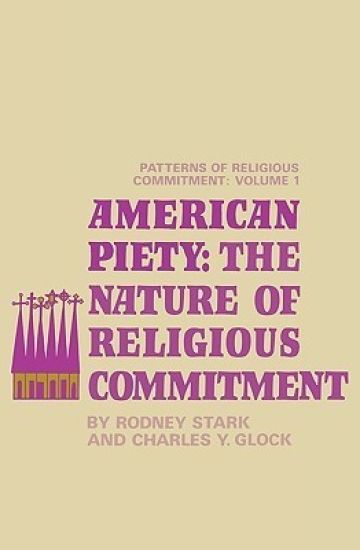
How religious are Americans these days? How many still believe in God, in Biblical miracles, in heaven and hell? Do people pray? How much money is being given to churches, by Episcopalians, Presbyterians, Roman Catholics, Lutherans, and other groups? American Piety, the first of a three-volume study of religious commitment, answers these and a host of other questions about the contemporary religious scene. Particularly startling are the contrasts in beliefs, practices, and experiences revealed among the eleven major Christian denominations whose membership is compared.