Kirjojen hintavertailu – 12 903 724 kirjaa ja 27 kauppaa

Kirjailija

Charlie Laderman

Kirjat ja teokset yhdessä paikassa: 7 kirjaa, julkaisuja vuosilta 2017–2026, suosituimpiin kuuluu Marknaden : Kapital, stater och tankar om en fri värld. Vertaile teosten hintoja ja tarkista saatavuus suomalaisista kirjakaupoista.

7 kirjaa

Kirjojen julkaisuvuodet: 2017–2026.

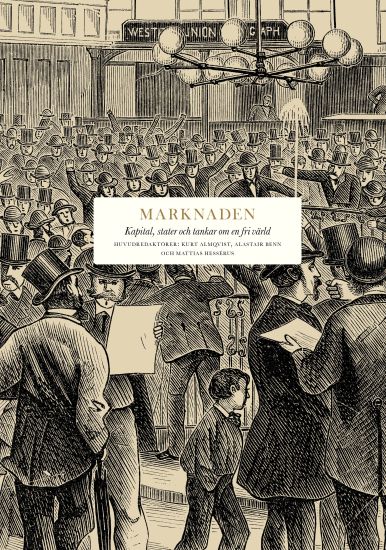
Marknaden : Kapital, stater och tankar om en fri värld

Marknaden : Kapital, stater och tankar om en fri värld

David Abulafia; Ali Ansari; Richard Bratby; Mary Bridges; Caroline Burt; David Butterfield; Edward Chancellor; Marie Kawthar Daouda; Eloise Davies; Ulrike Franke; Francis J. Gavin; Magnus Henrekson; William Inboden; Shashank Joshi; Knut N. Kjaer; Kwasi Kwarteng; Charlie Laderman; Ian Leslie; Nicklas Berild Lundblad; Iain Martin; Jade McGlynn; Mario Pisani; Alina Polyakova; Sergey Radchenko; Mick Ryan; Paul Tucker; Rikard Westerberg; Adrian Wooldridge; David Wootton; Linda Yueh

Bokförlaget Stolpe
2026
sidottu
Från det romerska torget till digitala valutor – hur har marknaden utvecklats under historiens gång och hur kan den komma att se ut i framtiden? Denna antologi gör en djupdykning i marknadsutvecklingen och tittar närmare på marknaders avgörande roll i att utforma samtiden men tar också upp den brännande frågan om hur vi ska navigera mot en hållbar framtid. I tankeväckande essäer skrivna av internationella forskare, politiker och andra sakkunniga utforskas marknadens dynamik. Med utgångspunkt i de antika torgen och i det medeltida Europas marknader undersöker författarna hur tekniska framsteg, konsumentbeteende och geopolitisk strategi – till exempel den politik som utövades under Reagan-eran – har format nutida marknader. Slutligen tar boken upp de utmaningar för stabiliteten på marknaden som utgörs av auktoritära stater och AI. Boken finns även i engelsk utgåva, The Market.
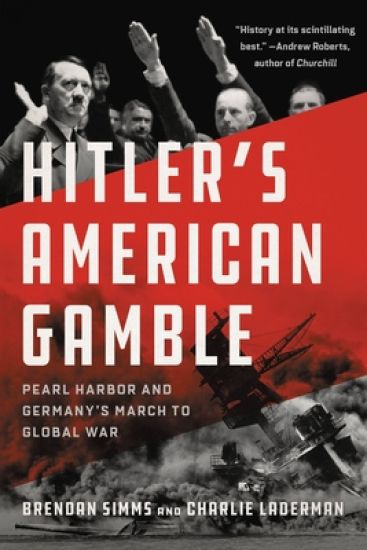
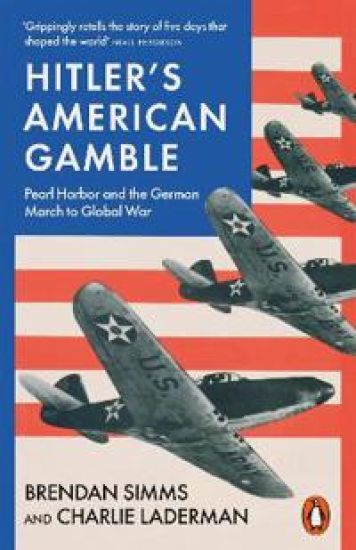
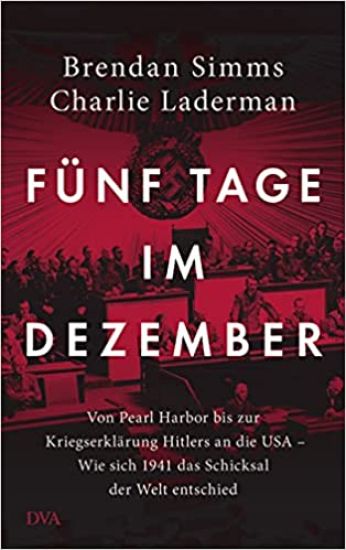
Hitler's American Gamble: Pearl Harbor and Germany's March to Global War
An "absorbing" and "visceral" (New York Times) account of the five most crucial days in twentieth-century diplomatic history: from Pearl Harbor to Hitler's declaration of war on the United States By early December 1941, war had changed much of the world beyond recognition. Nazi Germany occupied most of the European continent, while in Asia, the Second Sino-Japanese War had turned China into a battleground. But these conflicts were not yet inextricably linked--and the United States remained at peace. Hitler's American Gamble recounts the five days that upended everything: December 7 to 11. Tracing developments in real time and backed by deep archival research, historians Brendan Simms and Charlie Laderman show how Hitler's intervention was not the inexplicable decision of a man so bloodthirsty that he forgot all strategy, but a calculated risk that can only be understood in a truly global context. This book reveals how December 11, not Pearl Harbor, was the real watershed that created a world war and transformed international history.
Hitler's American Gamble

Hitler's American Gamble

Brendan Simms; Charlie Laderman

PENGUIN BOOKS LTD
2022
pokkari

Halvin toimitettuna 18,70 €

'History at its scintillating best ... hard-hitting, revelatory and superbly researched' Andrew Roberts, author of Churchill: Walking with Destiny 'A rare achievement ... sure to become an instant classic' John Lewis Gaddis, Yale University This gripping book dramatizes the extraordinarily compressed and terrifying period between the surprise Japanese attack on Pearl Harbor and Hitler's declaration of war on the United States. These five days transformed much of the world and have shaped our own experience ever since. Simms and Laderman's aim in the book is to show how this agonizing period had no inevitability about it and that innumerable outcomes were possible. Key leaders around the world were taking decisions with often poor and confused information, under overwhelming pressure and knowing that they could be facing personal and national disaster. And yet, there were also long-standing assumptions that shaped these decisions, both consciously and unconsciously. Hitler's American Gamble is a superb work of history, both as an explanation for the course taken by the Second World War and as a study in statecraft and political choices.
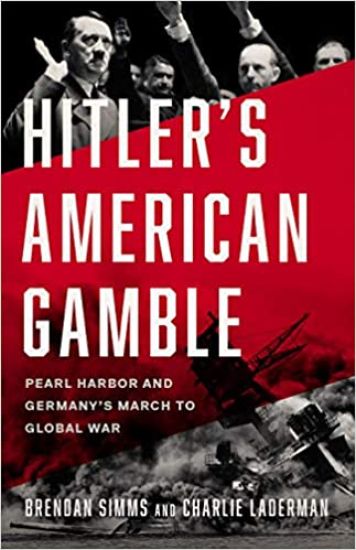
Hitler's American Gamble: Pearl Harbor and Germany's March to Global War
A riveting account of the five most crucial days in twentieth-century diplomatic history: from Pearl Harbor to Hitler's declaration of war on the United StatesBy early December 1941, war had changed much of the world beyond recognition. Nazi Germany occupied most of the European continent, while in Asia, the Second Sino-Japanese War had turned China into a battleground. But these conflicts were not yet inextricably linked--and the United States remained at peace. Hitler's American Gamble recounts the five days that upended everything: December 7 to 11. Tracing developments in real time and backed by deep archival research, historians Brendan Simms and Charlie Laderman show how Hitler's intervention was not the inexplicable decision of a man so bloodthirsty that he forgot all strategy, but a calculated risk that can only be understood in a truly global context. This book reveals how December 11, not Pearl Harbor, was the real watershed that created a world war and transformed international history.
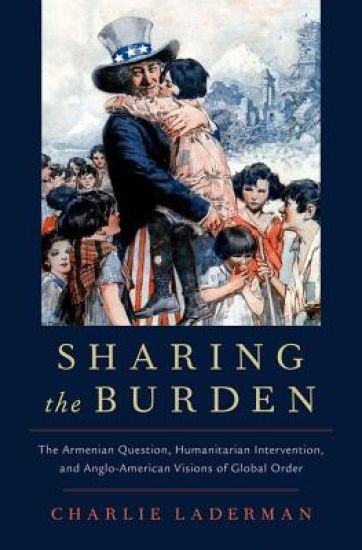
Sharing the Burden

Sharing the Burden

Charlie Laderman

Oxford University Press Inc
2019
sidottu
The destruction of the Armenian community in the Ottoman Empire was an unprecedented tragedy. Even amidst the horrors of the First World War, Theodore Roosevelt insisted that it was the greatest crime of the conflict. The wartime mass killing of approximately one million Armenian Christians was the culmination of a series of massacres that Winston Churchill would later recall had roused publics on both sides of the Atlantic and inspired fervent appeals to save the Armenians. Sharing the Burden explains how the Armenian struggle for survival became so entangled with the debate over the international role of the United States as it rose to world power status in the early twentieth century. In doing so, Charlie Laderman provides a fresh perspective on the role of humanitarian intervention in US foreign policy, Anglo-American relations, and the emergence of a new world order after World War I. The United States' responsibility to protect the Armenians was a central preoccupation of Presidents Theodore Roosevelt and Woodrow Wilson. Both American and British leaders proposed an Anglo-American alliance to take joint responsibilities for the Middle East and envisioned a US intervention to secure an independent Armenia as key to the new League of Nations. The Armenian question illustrates how policymakers, missionaries, and the public grappled for the first time with atrocities on this scale. It also reveals the values that animated American society during this pivotal period in the nation's foreign relations. Deepening understanding of the Anglo-American special relationship and its role in reforming global order, Sharing the Burden illuminates the possibilities, limitations, and continued dilemmas of humanitarian intervention in international politics.
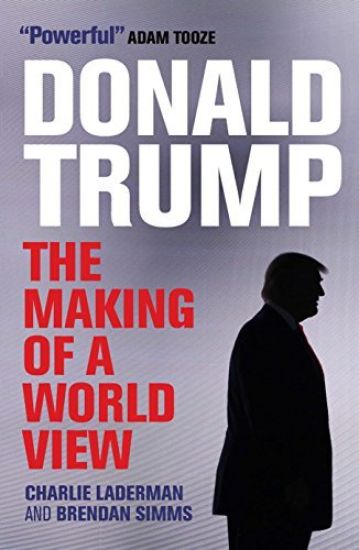
Donald Trump

Donald Trump

Simms Brendan; Charlie Laderman

I.B. Tauris
2017
nidottu
On November 8, 2016, Donald Trump won the American presidential election, to the surprise of many across the globe. Now that Trump is Commander-in-Chief of the most powerful country on earth, Americans and non-Americans alike have been left wondering what this will mean for the world. It has been claimed that Trump's foreign policy views are impulsive, inconsistent and that they were improvised on the campaign trail. However, drawing on interviews from as far back as 1980, Charlie Laderman and Brendan Simms show that this assumption is dangerously false. They reveal that Trump has had a consistent position on international trade and America's alliances since he first considered running for president in the late 1980s. Furthermore, his foreign policy views have deep roots in American history. For the new President, almost every international problem that has confronted the United States can be explained by the mistakes of its leaders. Yet, after decades of dismissing America's leaders as fools and denouncing their diplomacy, Trump must now prove that he can do better. Over the past three decades, he has been laying out in interviews, articles, books and tweets what amounts to a foreign policy philosophy. This book reveals the world view that Trump brings to the Oval Office. It shows how that world view was formed, what might result if it is applied in policy terms and the potential consequences for the rest of the world.