Kirjojen hintavertailu – 12 903 725 kirjaa ja 27 kauppaa

Kirjailija

Charlotte A. Roberts

Kirjat ja teokset yhdessä paikassa: 8 kirjaa, julkaisuja vuosilta 2003–2026, suosituimpiin kuuluu The Archaeology of Disease. Vertaile teosten hintoja ja tarkista saatavuus suomalaisista kirjakaupoista.

Nimi esiintyy myös muodoissa: Charlotte A Roberts

8 kirjaa

Kirjojen julkaisuvuodet: 2003–2026.

The Archaeology of Disease

The Archaeology of Disease

Charlotte A. Roberts; Mary E. Lewis; Jacalyn Duffin; Keith Manchester; Anne L. Grauer

CORNELL UNIVERSITY PRESS
2026
pokkari
This revised fourth edition of The Archaeology of Disease focuses on reconstructing the origin, evolution, and history of disease as seen mainly through human skeletons from archaeological sites. In addition, this edition addresses new concepts in medicine and explores the challenges faced by individuals and populations, including their children. Integrating conceptual frameworks from bioarchaeology, medical history, and clinical health, the authors take a long view of disease over thousands of years to examine how frequencies of disease have changed over time in relation to epidemiological transitions. They further investigate the risk of disease in populations at specific time periods and geographic locations. As a result, they provide a better understanding of the impact of health problems on our ancestors and present ethical considerations for palaeopathologists around the world when working with human remains using both archaeological and historical evidence.
The Archaeology of Disease

The Archaeology of Disease

Charlotte A. Roberts; Mary E. Lewis; Jacalyn Duffin; Keith Manchester; Anne L. Grauer

CORNELL UNIVERSITY PRESS
2026
sidottu
This revised fourth edition of The Archaeology of Disease focuses on reconstructing the origin, evolution, and history of disease as seen mainly through human skeletons from archaeological sites. In addition, this edition addresses new concepts in medicine and explores the challenges faced by individuals and populations, including their children. Integrating conceptual frameworks from bioarchaeology, medical history, and clinical health, the authors take a long view of disease over thousands of years to examine how frequencies of disease have changed over time in relation to epidemiological transitions. They further investigate the risk of disease in populations at specific time periods and geographic locations. As a result, they provide a better understanding of the impact of health problems on our ancestors and present ethical considerations for palaeopathologists around the world when working with human remains using both archaeological and historical evidence.
The Bioarchaeology of Tuberculosis

The Bioarchaeology of Tuberculosis

Charlotte A. Roberts; Jane E. Buikstra

University Press of Florida
2003
sidottu
A study of tuberculosis, a persistent and important infectious disease, covering its aetiology, epidemiology, and pathogenesis. It reveals that tuberculosis has repeatedly increased over time as societies have become more complex socially, economically and politically.
Leprosy

Leprosy

Charlotte A. Roberts

University Press of Florida
2020
sidottu
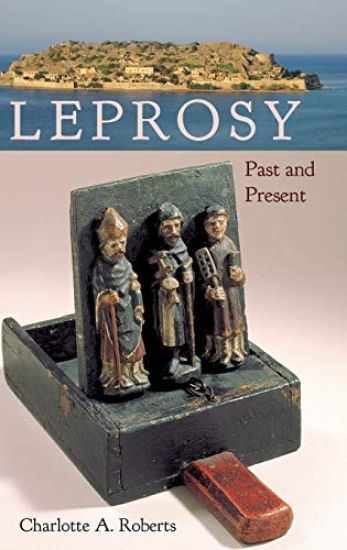
Through an unprecedented multidisciplinary and global approach, this book documents the dramatic several-thousand-year history of leprosy using bioarchaeological, clinical, and historical information from a wide variety of contexts, dispelling many long-standing myths about the disease. Drawing on her 30 years of research on the infection, Charlotte Roberts begins by outlining its bacterial causes, how it spreads, and how it affects the body. She then considers its diagnosis and treatment, both historically and in the present. She also looks at the methods and tools used by paleopathologists to identify signs of leprosy in skeletons. Examining evidence in human remains from many countries, particularly in Europe and including Britain, Hungary, and Sweden, Roberts demonstrates that those affected were usually buried in the same cemeteries as their communities, contrary to the popular belief that they were all ostracized or isolated from society into leprosy hospitals. Other myths addressed by Roberts include the assumptions that leprosy can't be cured, that leprosy is no longer a problem today, and that what is called "leprosy" in the Bible is the same illness as the disease with that name now. Roberts concludes by projecting the future of leprosy, arguing that researchers need to study the disease through an ethically grounded evolutionary perspective. Importantly, she advises against use of the word "leper" to avoid perpetuating stigma today surrounding people with the infection and resulting disabilities. Leprosy will stand as the authoritative source on the subject for years to come. A volume in the series Bioarchaeological Interpretations of the Human Past: Local, Regional, and Global Perspectives, edited by Clark Spencer Larsen.
Human Remains in Archaeology

Human Remains in Archaeology

Charlotte A Roberts

Council for British Archaeology
2019
nidottu
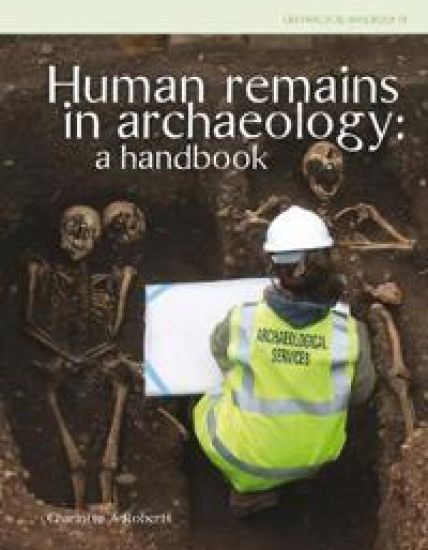
This revised and updated 2nd edition of Professor Charlotte Robert's best-selling Practical Handbook provides the very latest guidance on all aspects of the recovery, handling and study of human remains. Professon Roberts is one of the UK's leading experts in bioarchaeology, and is internationally renowned in the field. It begins by asking why we should study human remains, and the ethical issues surrounding their recovery, analysis, curation and display, along with consideration of the current legal requirements for the excavation of such remains in the UK. How people were laid to rest at death is considered, as well as the effect of various factors on their preservation, including the environment. Further chapters give practical advice on the excavation, processing and conservation of human remains, and the recording of data such as age at death, sex, height, and pathological lesions. The author then discusses recent technological advances in the study of human remains, such as stable isotope and ancient DNA analyses. This book, with its extensive bibliography, is essential and fascinating reading for all practictioners and students of bioarchaeology and burial archaeology and is accessible for anyone with an interest in the study of human remains.
The Bioarchaeology of Tuberculosis

The Bioarchaeology of Tuberculosis

Charlotte A. Roberts; Jane E. Buikstra

University Press of Florida
2008
nidottu
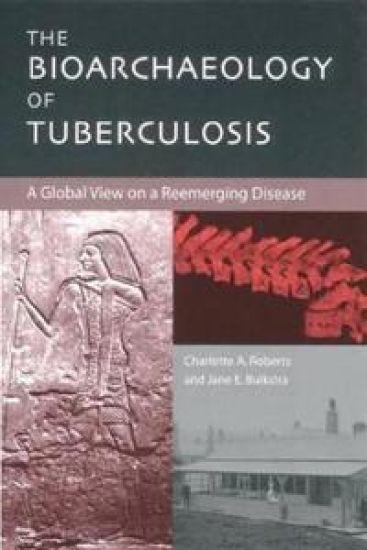
Tuberculosis has plagued humans and animals for thousands of years. Though apparently in decline with the advent of effective chemotherapy and improved living conditions, sanitation, and diet during the first half of the 20th century, TB has reawakened in both developed and developing countries, particularly among susceptible populations with immunodeficiency disorders. These authors offer a detailed study of the history of this persistent and important infectious disease, covering its etiology, epidemiology, and pathogenesis. Beginning with a discussion of the epidemiology, clinical signs and symptoms of tuberculosis, and skeletal changes associated with it, Roberts and Buikstra examine evidence for the disease through time in both human and nonhuman populations. They devote particular attention to the paleopathological evidence of tuberculosis throughout human history found in both Old and New World archaeological sites. With a review of the hard evidence of tuberculosis from the archaeological record (skeletons showing evidence of the disease), they focus on how and why the disease developed in antiquity, its evolutionary routes, and how past populations treated it. The authors augment clinical data with evidence from a variety of sources including art and documentary materials. A concluding chapter addresses the current reemergent status of the disease and its future prospects. The authors reveal that tuberculosis has repeatedly increased over time as societies have become more complex socially, economically, and politically. Their detailed presentation of the clinical data on tuberculosis and its many causative factors brings together information from a wealth of sources worldwide and mounts an argument rich in paleoepidemiological and historical data that challenges accepted dogma about the conquest of TB by modern technology. Their account will be of interest to anthropologists, archaeologists, biologists, and sociologists as well as clinicians and medical historians.
The Archaeology of Disease

The Archaeology of Disease

Charlotte A. Roberts; Keith Manchester

Sutton Publishing Ltd
2007
nidottu
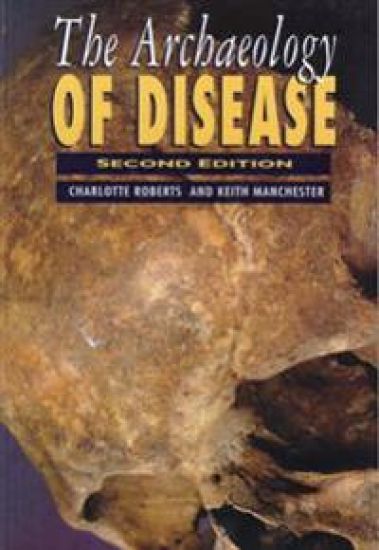
This text shows how scientific and archaeological techniques can be used to identify the common illnesses and injuries from which humans suffered in antiquity. Charlotte Roberts and Keith Manchester study evidence gleaned from written records and works of art as well as from ancient human remains, and they combine a clinical interpretation of prevalent diseases with a graphic description of thier social, economic, and cultural consequences. This edition includes case studies from around the world and gives an account of the rapid technical advances that have dramatically increased our knowledge of illness in the distant past. The book offers a picture of ancient disease and trauma by combining the results of scientific research with information gathered from documents, from other areas of archaeology, and from art and ethnography. Chapters focus on trauma, tumours, arthritis, and congenital, infectious, dental and metabolic diseases. The authors provide a context for clinical knowledge about specific ailments and accidents by considering ancient demography, basic bone biology, funerary practices, and prehistoric medicine.
The Archaeology of Disease

The Archaeology of Disease

Charlotte A. Roberts; Keith Manchester

Cornell University Press
2007
pokkari
The Archaeology of Disease shows how the latest scientific and archaeological techniques can be used to identify the common illnesses and injuries from which humans suffered in antiquity. Charlotte Roberts and Keith Manchester offer a vivid picture of ancient disease and trauma by combining the results of scientific research with information gathered from documents, other areas of archaeology, art, and ethnography. The book contains information on congenital, infectious, dental, joint, endocrine, and metabolic diseases. The authors provide a clinical context for specific ailments and accidents and consider the relevance of ancient demography, basic bone biology, funerary practices, and prehistoric medicine. This fully revised third edition has been updated to and encompasses rapidly developing research methods of in this fascinating field.