Kirjojen hintavertailu – 12 859 819 kirjaa ja 27 kauppaa
Kirjailija
Charlotte Bronte
Kirjat ja teokset yhdessä paikassa: 903 kirjaa, julkaisuja vuosilta 1847–2027, suosituimpiin kuuluu Kotiopettajattaren romaani. Vertaile teosten hintoja ja tarkista saatavuus suomalaisista kirjakaupoista.
Nimi esiintyy myös muodoissa: Charlotte Brontë, Charlotte Bronte'
In this book: The Sorrows of Young Werther J. W. von Goethe Translator: R. D. Boylan Pride and Prejudice Jane Austen Jane Eyre Charlotte Bronte Wuthering Heights Emily Bronte The Lady of the Camellias Alexandre Dumas, son Madame Bovary Gustave Flaubert Translator: Eleanor Marx-Aveling
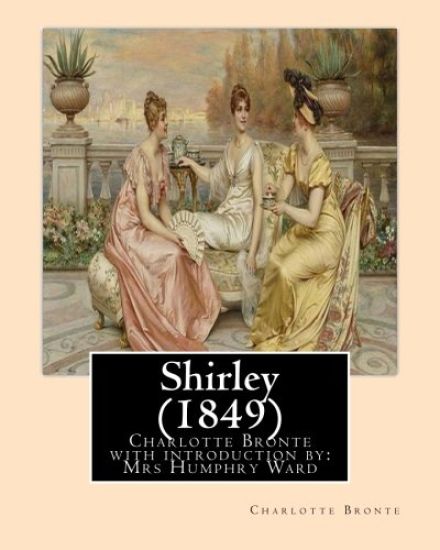
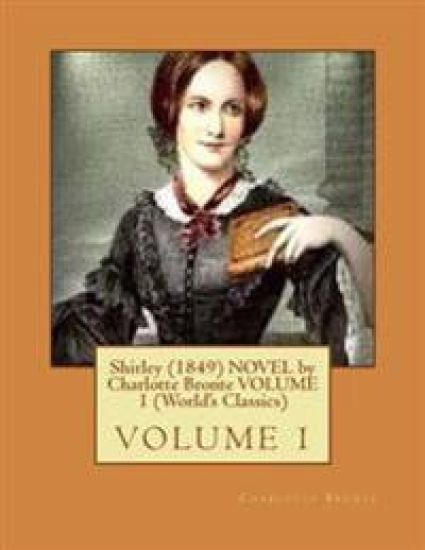
Shirley is an 1849 social novel(illustrated) by the English novelist Charlotte Bronte. It was Bronte's second published novel after Jane Eyre (originally published under Bronte's pseudonym Currer Bell). The novel is set in Yorkshire in the period 1811-12, during the industrial depression resulting from the Napoleonic Wars and the War of 1812. The novel is set against a backdrop of the Luddite uprisings in the Yorkshire textile industry. The novel's popularity led to Shirley's becoming a woman's name. The title character was given the name that her father had intended to give a son. Before the publication of the novel, Shirley was an uncommon - but distinctly male - name and would have been an unusual name for a woman. Today it is regarded as a distinctly female name and an uncommon male name. Robert Moore is a mill owner noted for apparent ruthlessness toward his employees - more than any other mill owner in town. He has laid off many of them, apparently indifferent to their resulting poverty. But in fact he has no choice, since the mill is deep in debt. The mill was inefficiently run by his late father and is already mortgaged. As the novel opens, Robert awaits delivery of new labour-saving machinery to the mill. The new machinery will let him lay off additional employees. Robert, with some friends, watches all night, but the machinery is destroyed on the way by angry millworkers. Robert's business difficulties continue, due in part to the continuing labour unrest, but even more so to the Napoleonic Wars and the accompanying Orders in Council which forbid British merchants from trading in American markets. Robert is very close to Caroline Helstone, who comes to his house to learn French from his sister, Hortense. Caroline worships Robert and he likes her too. Caroline's father is dead and her mother had abandoned her, leaving her to be brought up by her uncle, the local parson, Rev. Helstone. Caroline is penniless, and to keep himself from falling in love with her, Robert keeps his distance from her, since he cannot afford to marry for pleasure or love. He has to marry for money if he is to get his mill going again. Caroline realizes that Robert is growing increasingly distant and withdraws into herself. Her uncle does not sympathise with her 'fancies', and she has no money of her own, so she cannot leave the place, which is what she longs to do. She suggests taking up the job of a governess but her uncle dismisses it and assures her that she need not work. Caroline cheers up a great deal, however, when she meets Shirley. Shirley is a landowner, an independent heiress whose parents are dead and who lives with Mrs. Pryor, an old governess. Shirley is lively, cheerful, full of ideas about how to use her money and how to help people, and very interested in business concerns. Caroline and Shirley soon become very close friends. They both dislike social hypocrisy and wish they could do something significant with their lives. As Caroline gets closer to Shirley, she notices that Shirley and Robert get along very well, which makes her think that they would end up marrying each other. Shirley likes Robert, is very interested in his work, and is concerned about him and the threats he gets from laid-off millworkers. Both good and bad former employees are depicted. Some passages show the real suffering of those who were honest workers and can no longer find good employment; other passages show how some people use losing their jobs as an excuse to get drunk, fight with their previous employers, and incite other people to violence. Shirley uses her money to help the poorest of the lot, but she is also motivated by the desire to prevent any attack on Robert, a motive that makes Caroline both happy and unhappy... Mary Augusta Ward was a British novelist who wrote under her married name as Mrs Humphry Ward (11 June 1851 - 24 March 1920)
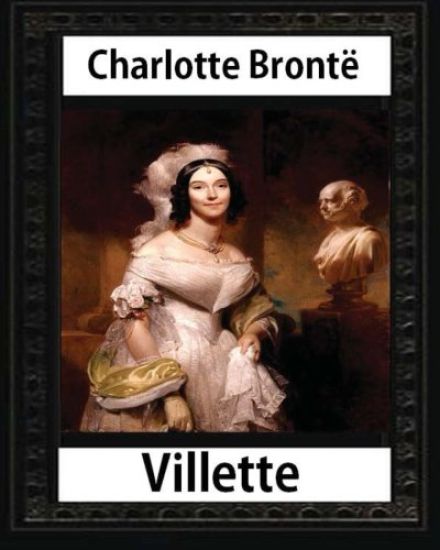
Villette is an 1853 novel written by English author Charlotte Bront . After an unspecified family disaster, the protagonist Lucy Snowe travels from her native England to the fictional French-speaking city of Villette to teach at a girls' school, where she is drawn into adventure and romance. Villette was Charlotte Bront 's fourth novel; it was preceded by and is a reworking of the posthumously published The Professor, her first novel, and then by Jane Eyre and Shirley. Villette begins with its famously passive protagonist, Lucy Snowe, age 14, staying at the home of her godmother Mrs. Bretton in "the clean and ancient town of Bretton", in England. Also in residence are Mrs. Bretton's son, John Graham Bretton (whom the family calls Graham), and a young visitor, Paulina Home (who is called Polly). Polly is a peculiar little girl who soon develops a deep devotion to Graham, who showers her with attention. But Polly's visit is cut short when her father arrives to take her away. For reasons that are not stated, Lucy leaves Mrs. Bretton's home a few weeks after the Polly's departure. Some years pass, during which an unspecified family tragedy leaves Lucy without family, home, or means. After some initial hesitation, she is hired as a caregiver by Miss Marchmont, a rheumatic crippled woman. Lucy is soon accustomed to her work and has begun to feel content with her quiet lifestyle. During an evening of dramatic weather changes, Miss Marchmont regains all her energy and feels young again. She shares with Lucy her sad love story of 30 years previously, and concludes that she should treat Lucy better and be a better person. She believes that death will reunite her with her dead lover. The next morning, Lucy finds Miss Marchmont dead. Lucy then leaves the English countryside and goes to London. At the age of 23, she boards a ship for Labassecour despite knowing very little French. She travels to the city of Villette, where she finds employment as a bonne (nanny) at Mme. Beck's boarding school for girls. (This school is seen as being based upon the H gers' Brussels pensionnat). After a time, she is hired to teach English at the school, in addition to having to mind Mme. Beck's three children. She thrives despite Mme. Beck's constant surveillance of the staff and students. Dinah Maria Craik ( born Dinah Maria Mulock, also often credited as Miss Mulock or Mrs. Craik) (20 April 1826 - 12 October 1887) was an English novelist and poet.
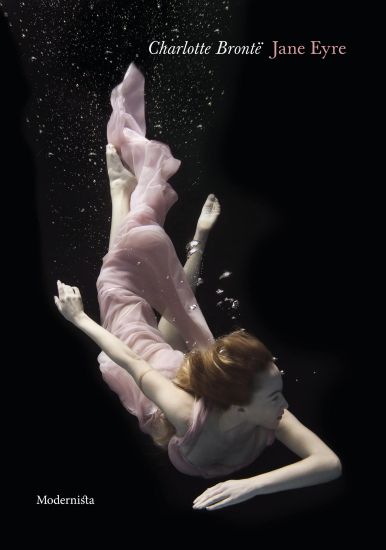
»Mot slutet är läsaren genomsyrad av all den vrede och våldsamhet och det geni som är Charlotte Brontës.« Virginia WoolfJane Eyre är historien om en föräldralös flicka som tack vare sin självständighet tar sig ur ett liv i förtryck till att bli en oberoende kvinna. Hon växer upp bland hjärtlösa släktingar och går i skola för fattiga. Senare blir Jane själv lärare på samma skola. Hon lämnar den när hon erbjuds ställningen som guvernant på Thornfield Hall, ett gods som liknar ett medeltida slott. Ägaren, mr Edward Rochester, blir hennes stora kärlek. Så visar det sig att han är gift - och att han håller sin »sinnessjuka« fru inlåst i en avskild del av slottet, varpå Jane tvingas ta ett svårt beslut. Jane Eyre är utan tvekan det viktigaste av Charlotte Brontës verk. En kärleksroman och en lek med det skräckgotiska, under ytan en hård verklighetsskildring sedd ur kvinnans perspektiv. Jane Eyre gav upphov till det världsspridda feministiska begreppet The Mad Woman in the Attic, en symbol för kvinnans inspärrade fantasi och tänkande. Verket gavs ut under pseudonym 1847 och har fängslat alla generationer läsare sedan dess. I översättning av Ingegärd von Tells. CHARLOTTE BRONTË [1816-1855] var en engelsk romanförfattare och poet, den äldsta av de berömda systrarna Brontë. Till hennes verk hör Jane Eyre [1847], Shirley [1849], Villette [1853] och Professorn [1957]. Samtliga ingår i Modernistas utgivning av Charlotte Brontë, de tre sistnämnda i svenska nyöversättningar.
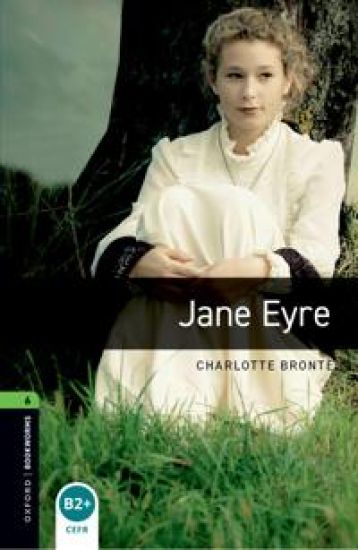
The most consistent of all series in terms of language control, length, and quality of story. David R. Hill, Director of the Edinburgh Project on Extensive Reading.
The most consistent of all series in terms of language control, length, and quality of story. David R. Hill, Director of the Edinburgh Project on Extensive Reading.
The novel Jane Eyre is a first-person narrative of the title character. The novel is set somewhere in the north of England, during the reign of George III (1760-1820), and goes through five distinct stages: Jane's childhood at Gateshead Hall, where she is emotionally and physically abused by her aunt and cousins; her education at Lowood School, where she acquires friends and role models but suffers privations and oppression; her time as governess at Thornfield Hall, where she falls in love with her Byronic employer, Edward Rochester; her time with the Rivers family, during which her earnest but cold clergyman cousin, St. John Rivers, proposes to her; and her reunion with, and marriage to, her beloved Rochester. During these sections the novel provides perspectives on a number of important social issues and ideas, many of which are critical of the status quo (see the Themes section below). Literary critic Jerome Beaty opines that the close first person perspective leaves the reader "too uncritically accepting of her worldview", and often leads reading and conversation about the novel towards supporting Jane, regardless of how irregular her ideas or perspectives
Part of Penguin's beautiful hardback Clothbound Classics series, designed by the award-winning Coralie Bickford-Smith, these delectable and collectible editions are bound in high-quality colourful, tactile cloth with foil stamped into the design. With neither friends nor family, Lucy Snowe sets sail from England to find employment in a girls' boarding school in the small town of Villette. There, she struggles to retain her self-possession in the face of unruly pupils, the hostility of headmistress Madame Beck, and her own complex feelings - first for the school's English doctor and then for the dictatorial professor Paul Emanuel. Drawing on her own deeply unhappy experiences as a governess in Brussels, Charlotte Brontë'sautobiographical novel, the last published during her lifetime, is a powerfully moving study of loneliness and isolation, and the pain of unrequited love, narrated by a heroine determined to preserve an independent spirit in the face of adverse circumstances. Helen M. Cooper's new introduction places the novel in the context of Brontë's life and career and argues for the importance of the novel as an exploration of imperialism.'I am only just returned to a sense of real wonder about me, for I have been reading Villette' George Eliot'Her finest novel'Virginia Woolf
Charlotte was born in Thornton, west of Bradford in the West Riding of Yorkshire, in 1816, the third of the six children of Maria (n e Branwell) and Patrick Bront (formerly surnamed Brunty or Prunty), an Irish Anglican clergyman. In 1820 her family moved a few miles to the village of Haworth, where her father had been appointed perpetual curate of St Michael and All Angels Church. Maria died of cancer on 15 September 1821, leaving five daughters, Maria, Elizabeth, Charlotte, Emily and Anne, and a son, Branwell, to be taken care of by her sister, Elizabeth Branwell.
Charlotte was born in Thornton, west of Bradford in the West Riding of Yorkshire, in 1816, the third of the six children of Maria (n e Branwell) and Patrick Bront (formerly surnamed Brunty or Prunty), an Irish Anglican clergyman. In 1820 her family moved a few miles to the village of Haworth, where her father had been appointed perpetual curate of St Michael and All Angels Church. Maria died of cancer on 15 September 1821, leaving five daughters, Maria, Elizabeth, Charlotte, Emily and Anne, and a son, Branwell, to be taken care of by her sister, Elizabeth Branwell.
Charlotte was born in Thornton, west of Bradford in the West Riding of Yorkshire, in 1816, the third of the six children of Maria (n e Branwell) and Patrick Bront (formerly surnamed Brunty or Prunty), an Irish Anglican clergyman. In 1820 her family moved a few miles to the village of Haworth, where her father had been appointed perpetual curate of St Michael and All Angels Church. Maria died of cancer on 15 September 1821, leaving five daughters, Maria, Elizabeth, Charlotte, Emily and Anne, and a son, Branwell, to be taken care of by her sister, Elizabeth Branwell.
Charlotte was born in Thornton, west of Bradford in the West Riding of Yorkshire, in 1816, the third of the six children of Maria (n e Branwell) and Patrick Bront (formerly surnamed Brunty or Prunty), an Irish Anglican clergyman. In 1820 her family moved a few miles to the village of Haworth, where her father had been appointed perpetual curate of St Michael and All Angels Church. Maria died of cancer on 15 September 1821, leaving five daughters, Maria, Elizabeth, Charlotte, Emily and Anne, and a son, Branwell, to be taken care of by her sister, Elizabeth Branwell
Charlotte was born in Thornton, west of Bradford in the West Riding of Yorkshire, in 1816, the third of the six children of Maria (n e Branwell) and Patrick Bront (formerly surnamed Brunty or Prunty), an Irish Anglican clergyman. In 1820 her family moved a few miles to the village of Haworth, where her father had been appointed perpetual curate of St Michael and All Angels Church. Maria died of cancer on 15 September 1821, leaving five daughters, Maria, Elizabeth, Charlotte, Emily and Anne, and a son, Branwell, to be taken care of by her sister, Elizabeth Branwell