Kirjojen hintavertailu – 12 859 828 kirjaa ja 27 kauppaa

Kirjailija

Charlotte Davies

Kirjat ja teokset yhdessä paikassa: 4 kirjaa, julkaisuja vuosilta 2008–2023, suosituimpiin kuuluu Families in transition. Vertaile teosten hintoja ja tarkista saatavuus suomalaisista kirjakaupoista.

4 kirjaa

Kirjojen julkaisuvuodet: 2008–2023.

A Practical Guide to the Mental Health Tribunal

A Practical Guide to the Mental Health Tribunal

Charlotte Davies

Law Brief Publishing
2023
pokkari
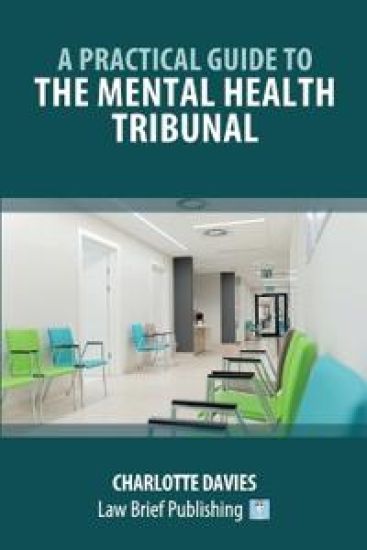
The Mental Health Act 1983 is an Act that saves lives. But in order to do that, it gives the state powers to take control of people in a way that most of us would think should be reserved for those who commit the most serious of crimes. The deprivation of a person's liberty and freedom is the most arbitrary course of action a state can take. Individuals suffering from mental disorders have no control over their diagnosis, or the symptoms that flow from it. It is these symptoms than can place them, and others, at risk from harm, and it is at that point that the provisions of the Mental Health Act 1983 step in. The Mental Health Tribunal is the independent judicial body set up to act as a check and balance on the use of those powers. It is vital to ensuring that the rights of individuals under the European Convention on Human Rights are adhered to. Practitioners who represent patients during the Mental Health Tribunal process need to have a rigorous understanding of the legal framework underpinning the 'sectioning' process, as well as a thorough knowledge of the rules and procedures that govern the way in which detention under the Act can be challenged. They also need to possess and hone the very particular skills required when it comes to representing a person at their most vulnerable. This book aims to provide those who practise in the rewarding area of representing patients at Mental Health Tribunal hearings with an accessible and practical overview of what to expect both in the lead up to and during the hearing itself. Due to the very private nature of Mental Health Tribunal hearings, many representatives go into their first hearing without having had any specific training, and often without ever having even sat in on one at all. They have no idea what to expect, which, for a conscientious legal practitioner, can be extraordinarily stressful. This practical guide aims to alleviate at least some of that stress and provide the practitioner with the tools needed to gain the vital trust of the patient for whom the tribunal hearing will be seen as a pivotal moment on their mental health journey. ABOUT THE AUTHORCharlotte Davies has years of experience both representing patients at Mental Health Tribunal hearings, and then sitting as a judge on the tribunal panel. She was called to the bar in 2007, having read law at Bristol University followed by an LLM at King's College London, with a focus on mental health law. After practising in London for three years, Charlotte moved to Cornwall with her young family and joined KBG Chambers, where she has a broad civil and general common law practice. In 2020, Charlotte was appointed as a Fee Paid First-Tier Tribunal Judge, sitting in the Health, Education and Social Care Chamber, and deployed to the Mental Health Tribunal. She is also a Deputy District Judge on the Western Circuit. CONTENTSChapter One - What Is the Mental Health Tribunal? Chapter Two - The Mental Health Tribunal's PowersChapter Three - Sectioning Under the Mental Health Act 1983Chapter Four - When Does a Mental Health Tribunal Hearing Happen? Chapter Five - Making an ApplicationChapter Six - The Written EvidenceChapter Seven - The Application of the Statutory Criteria by the Mental Health Tribunal PanelChapter Eight - The Hearing: Part I - Online or Attended? Chapter Nine - The Hearing: Part II - Who Attends? Chapter Ten - The Hearing: Part III - the Panel & Preliminary IssuesChapter Eleven - The Hearing: Part IV - Oral Evidence, Submissions & the DecisionChapter Twelve - The Mental Health Bill 2022
Blackstone's Employment Law Practice 2019 (book and digital pack)

Blackstone's Employment Law Practice 2019 (book and digital pack)

Gavin Mansfield QC; Lydia Banerjee; Damian Brown QC; Charlotte Davies; Simon Forshaw; Mark Humphreys; Anthony Korn; Eleena Misra; Brian Napier QC; David Reade QC; Catherine Taylor

Oxford University Press
2019
muu
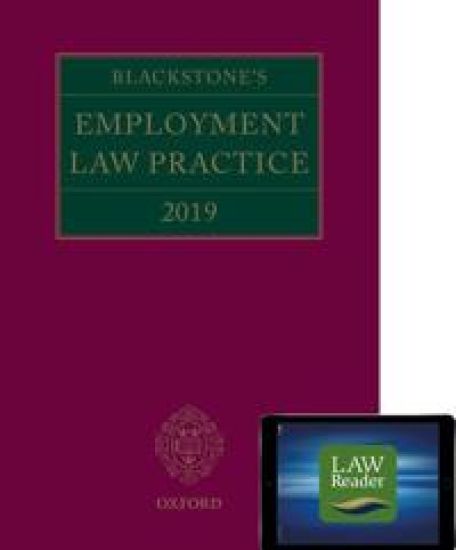
Companion website:www.oup.com/BELP Blackstone's Employment Law Practice 2019 is the only text to provide everything you need for bringing, defending, and appealing employment cases in one single, portable volume, providing an unbeatable combination of clear commentary and key legislation. Drawing together comprehensive coverage of practice and procedure in the Employment Tribunals, Employment Appeal Tribunal, and Central Arbitration Committee, Blackstone's Employment Law Practice 2019 is an essential purchase for all employment practitioners. This new edition offers up-to-date guidance on the latest developments in substantive law, practice, and procedure in the employment tribunal and civil courts. An eminent team of expert authors share consummate experience of every aspect of employment law and practice to offer up-to-date advice and commentary on the latest developments in substantive law and procedure.
Families in transition

Families in transition

Charles Nickie; Charlotte Davies; ; Chris Harris

Policy Press
2008
sidottu
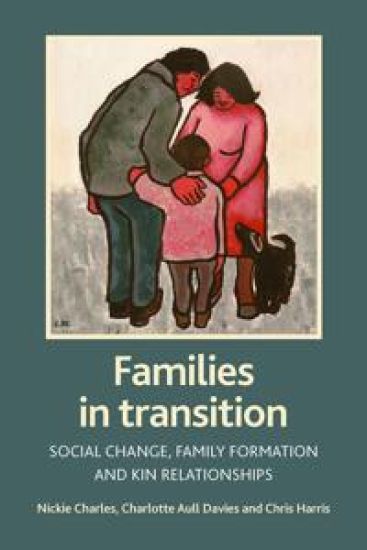
This book addresses the complexity of family change. It draws on evidence from two linked studies, one carried out in the 1960s and the other in the early years of the 21st century, to analyse the specific ways in which family lives have changed and how they have been affected by the major structural and cultural changes of the second half of the twentieth century. The book shows that, while there has undeniably been change, there is a surprising degree of continuity in family practices. It casts doubt on claims that families have been subject to a process of dramatic change and provides an alternative account which is based on careful analysis of empirical data. The book presents a unique opportunity to chart the nature of social change in a particular locality over the last 50 years; includes discussions of social and cultural variations in family life, focusing on younger as well as older generations; explores not only what happens within family-households but also what happens within networks of kin across different households and shows the way changing patterns of employment affect kinship networks and how geographical mobility co-exists with the maintenance of strong kinship ties. The findings will be of interest to students of sociology, social anthropology, social policy, women's studies, gender studies and human geography at undergraduate and postgraduate level.
Families in transition

Families in transition

Nickie Charles; Charlotte Davies; Chris Harris

Policy Press
2008
nidottu
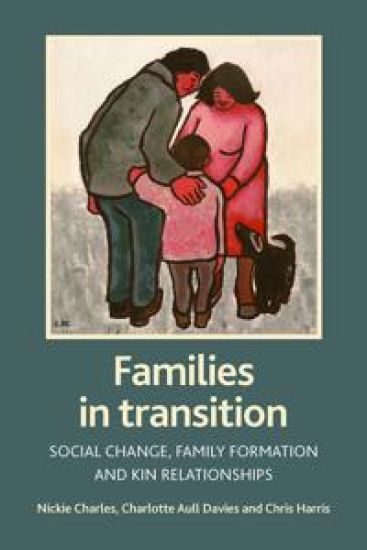
This book addresses the complexity of family change. It draws on evidence from two linked studies, one carried out in the 1960s and the other in the early years of the 21st century, to analyse the specific ways in which family lives have changed and how they have been affected by the major structural and cultural changes of the second half of the twentieth century. The book shows that, while there has undeniably been change, there is a surprising degree of continuity in family practices. It casts doubt on claims that families have been subject to a process of dramatic change and provides an alternative account which is based on careful analysis of empirical data. The book presents a unique opportunity to chart the nature of social change in a particular locality over the last 50 years; includes discussions of social and cultural variations in family life, focusing on younger as well as older generations; explores not only what happens within family-households but also what happens within networks of kin across different households and shows the way changing patterns of employment affect kinship networks and how geographical mobility co-exists with the maintenance of strong kinship ties. The findings will be of interest to students of sociology, social anthropology, social policy, women's studies, gender studies and human geography at undergraduate and postgraduate level.