Kirjojen hintavertailu – 12 903 725 kirjaa ja 27 kauppaa
Kirjailija
Charlotte M Yonge
Kirjat ja teokset yhdessä paikassa: 683 kirjaa, julkaisuja vuosilta 2004–2026, suosituimpiin kuuluu Stray Pearls: Memoirs of Margaret De Ribaumont, Viscountess of Bellaise. Vertaile teosten hintoja ja tarkista saatavuus suomalaisista kirjakaupoista.
Charlotte Mary Yonge (11 August 1823 - 24 May 1901) was an English novelist known for her huge output, now mostly out of print. Life: Charlotte Mary Yonge was born in Otterbourne, Hampshire, England, on 11 August 1823 to William Yonge and Fanny Yonge, n e Bargus. She was educated at home by her father, studying Latin, Greek, French, Euclid and algebra. Her father's lessons could be harsh: He required a diligence and accuracy that were utterly alien to me. He thundered at me so that nobody could bear to hear it, and often reduced me to tears, but his approbation was so delightful that it was a delicious stimulus... I believe, in spite of all breezes over my innate slovenliness, it would have broken our hearts to leave off working together. And we went on till I was some years past twenty. Yonge's devotion to her father was lifelong and her relationship with him seems to have been for her the standard for all other relationships, including marriage. His "approbation was throughout life my bliss; his anger my misery for the time." She was born into a religious family background, was devoted to the High Church, and much influenced by John Keble, Vicar of Hursley from 1835, a near neighbour and one of the leaders of the Oxford Movement. Yonge is herself sometimes referred to as "the novelist of the Oxford Movement", as her novels frequently reflect the values and concerns of Anglo-Catholicism. She remained in Otterbourne all her life and for 71 years was a teacher in the village Sunday school. In 1868 a new parish was formed to the south of Yonge's home village of Otterbourne; the parish was to contain the villages of Eastley and Barton. Yonge donated 500 towards the parish church and was asked to choose which of the two villages the parish should be named after. She chose Eastley, but decided that it should be spelt 'Eastleigh' as she perceived this as being more modern. Yonge died in her hometown of Otterbourne on 24 May 1901. Her obituary in The Times said: Her friends, and especially her poorer neighbours, knew both the strength and the winning charm of her character. Thus the late Archbishop Benson noted in his diary her 'odd majesty and kindliness, which are very strong'. But it is of course as a writer that Miss Yonge will be remembered. She had an inventive mind and a ready pen, and a bare list of the books written or edited by her would probably occupy nearly a whole column of The Times. She wrote chiefly for young people, especially young girls, and her books are the result not only of a strong ethical purpose, but also of her firm devotion to the High Church view of Christian doctrine and practice.

Charlotte Mary Yonge (11 August 1823 - 24 May 1901) was an English novelist known for her huge output, now mostly out of print. Life: Charlotte Mary Yonge was born in Otterbourne, Hampshire, England, on 11 August 1823 to William Yonge and Fanny Yonge, n e Bargus. She was educated at home by her father, studying Latin, Greek, French, Euclid and algebra. Her father's lessons could be harsh: He required a diligence and accuracy that were utterly alien to me. He thundered at me so that nobody could bear to hear it, and often reduced me to tears, but his approbation was so delightful that it was a delicious stimulus... I believe, in spite of all breezes over my innate slovenliness, it would have broken our hearts to leave off working together. And we went on till I was some years past twenty. Yonge's devotion to her father was lifelong and her relationship with him seems to have been for her the standard for all other relationships, including marriage. His "approbation was throughout life my bliss; his anger my misery for the time." She was born into a religious family background, was devoted to the High Church, and much influenced by John Keble, Vicar of Hursley from 1835, a near neighbour and one of the leaders of the Oxford Movement. Yonge is herself sometimes referred to as "the novelist of the Oxford Movement", as her novels frequently reflect the values and concerns of Anglo-Catholicism. She remained in Otterbourne all her life and for 71 years was a teacher in the village Sunday school. In 1868 a new parish was formed to the south of Yonge's home village of Otterbourne; the parish was to contain the villages of Eastley and Barton. Yonge donated 500 towards the parish church and was asked to choose which of the two villages the parish should be named after. She chose Eastley, but decided that it should be spelt 'Eastleigh' as she perceived this as being more modern. Yonge died in her hometown of Otterbourne on 24 May 1901. Her obituary in The Times said: Her friends, and especially her poorer neighbours, knew both the strength and the winning charm of her character. Thus the late Archbishop Benson noted in his diary her 'odd majesty and kindliness, which are very strong'. But it is of course as a writer that Miss Yonge will be remembered. She had an inventive mind and a ready pen, and a bare list of the books written or edited by her would probably occupy nearly a whole column of The Times. She wrote chiefly for young people, especially young girls, and her books are the result not only of a strong ethical purpose, but also of her firm devotion to the High Church view of Christian doctrine and practice. Lorenz Fr lich (25 October 1820 in Hellerup - 25 October 1908 in Copenhagen) was a Danish painter, illustrator, and etcher. He studied in Copenhagen under Christoffer Wilhelm Eckersberg, in Dresden under Eduard Julius Bendemann, and in Paris under Thomas Couture. Afterward he lived much in Rome and in Paris, where he constantly exhibited at the salons. In 1877 he was appointed professor at the Royal Danish Academy of Art, Copenhagen. His illustrations, especially of children's books, are known everywhere and are more important than his paintings. His daughter Edma Fr lich was his favorite model when a baby and a child for his French albums with Pierre-Jules Hetzel. He also furnished original etchings for Adam Kristoffer Fabricius (da)' Illustrated History of Denmark (da); for Apuleius' Cupid and Psyche; The Lord's Prayer; Die G tter des Nordens, and many other works. He painted a decoration in the Court of Appeals at Flensburg, Schleswig-Holstein, and in some public buildings of his native land.
Charlotte Mary Yonge (11 August 1823 - 24 May 1901) was an English novelist known for her huge output, now mostly out of print. Life: Charlotte Mary Yonge was born in Otterbourne, Hampshire, England, on 11 August 1823 to William Yonge and Fanny Yonge, n e Bargus. She was educated at home by her father, studying Latin, Greek, French, Euclid and algebra. Her father's lessons could be harsh: He required a diligence and accuracy that were utterly alien to me. He thundered at me so that nobody could bear to hear it, and often reduced me to tears, but his approbation was so delightful that it was a delicious stimulus... I believe, in spite of all breezes over my innate slovenliness, it would have broken our hearts to leave off working together. And we went on till I was some years past twenty. Yonge's devotion to her father was lifelong and her relationship with him seems to have been for her the standard for all other relationships, including marriage. His "approbation was throughout life my bliss; his anger my misery for the time." She was born into a religious family background, was devoted to the High Church, and much influenced by John Keble, Vicar of Hursley from 1835, a near neighbour and one of the leaders of the Oxford Movement. Yonge is herself sometimes referred to as "the novelist of the Oxford Movement", as her novels frequently reflect the values and concerns of Anglo-Catholicism. She remained in Otterbourne all her life and for 71 years was a teacher in the village Sunday school. In 1868 a new parish was formed to the south of Yonge's home village of Otterbourne; the parish was to contain the villages of Eastley and Barton. Yonge donated 500 towards the parish church and was asked to choose which of the two villages the parish should be named after. She chose Eastley, but decided that it should be spelt 'Eastleigh' as she perceived this as being more modern. Yonge died in her hometown of Otterbourne on 24 May 1901. Her obituary in The Times said: Her friends, and especially her poorer neighbours, knew both the strength and the winning charm of her character. Thus the late Archbishop Benson noted in his diary her 'odd majesty and kindliness, which are very strong'. But it is of course as a writer that Miss Yonge will be remembered. She had an inventive mind and a ready pen, and a bare list of the books written or edited by her would probably occupy nearly a whole column of The Times. She wrote chiefly for young people, especially young girls, and her books are the result not only of a strong ethical purpose, but also of her firm devotion to the High Church view of Christian doctrine and practice.
Charlotte Mary Yonge (11 August 1823 - 24 May 1901) was an English novelist known for her huge output, now mostly out of print. Charlotte Mary Yonge was born in Otterbourne, Hampshire, England, on 11 August 1823 to William Yonge and Fanny Yonge, n e Bargus. She was educated at home by her father, studying Latin, Greek, French, Euclid and algebra. Her father's lessons could be harsh: He required a diligence and accuracy that were utterly alien to me. He thundered at me so that nobody could bear to hear it, and often reduced me to tears, but his approbation was so delightful that it was a delicious stimulus... I believe, in spite of all breezes over my innate slovenliness, it would have broken our hearts to leave off working together. And we went on till I was some years past twenty. Yonge's devotion to her father was lifelong and her relationship with him seems to have been for her the standard for all other relationships, including marriage. His "approbation was throughout life my bliss; his anger my misery for the time." She was born into a religious family background, was devoted to the High Church, and much influenced by John Keble, Vicar of Hursley from 1835, a near neighbour and one of the leaders of the Oxford Movement. Yonge is herself sometimes referred to as "the novelist of the Oxford Movement", as her novels frequently reflect the values and concerns of Anglo-Catholicism. She remained in Otterbourne all her life and for 71 years was a teacher in the village Sunday school. In 1868 a new parish was formed to the south of Yonge's home village of Otterbourne; the parish was to contain the villages of Eastley and Barton. Yonge donated 500 towards the parish church and was asked to choose which of the two villages the parish should be named after. She chose Eastley, but decided that it should be spelt 'Eastleigh' as she perceived this as being more modern. 8] Yonge died in her hometown of Otterbourne on 24 May 1901. Her obituary in The Times said: 9] Her friends, and especially her poorer neighbours, knew both the strength odd majesty and kindliness, which are very strong. But it is of course as a writer that Miss Yonge will be remembered. She had an inventive mind and a ready pen, and a bare list of the books written or edited by her would probably occupy nearly a whole column of The Times. She wrote chiefly for young people, especially young girls, and her books are the result not only of a strong ethical purpose, but also of her firm devotion to the High Church view of Christian doctrine and practice. Herbert Gandy 1857-1934 British

Charlotte Mary Yonge (11 August 1823 - 24 May 1901) was an English novelist known for her huge output, now mostly out of print. LIFE: Charlotte Mary Yonge was born in Otterbourne, Hampshire, England, on 11 August 1823 to William Yonge and Fanny Yonge, n e Bargus. She was educated at home by her father, studying Latin, Greek, French, Euclid and algebra. Her father's lessons could be harsh: He required a diligence and accuracy that were utterly alien to me. He thundered at me so that nobody could bear to hear it, and often reduced me to tears, but his approbation was so delightful that it was a delicious stimulus... I believe, in spite of all breezes over my innate slovenliness, it would have broken our hearts to leave off working together. And we went on till I was some years past twenty. Yonge's devotion to her father was lifelong and her relationship with him seems to have been for her the standard for all other relationships, including marriage. His "approbation was throughout life my bliss; his anger my misery for the time." She was born into a religious family background, was devoted to the High Church, and much influenced by John Keble, Vicar of Hursley from 1835, a near neighbour and one of the leaders of the Oxford Movement. Yonge is herself sometimes referred to as "the novelist of the Oxford Movement", as her novels frequently reflect the values and concerns of Anglo-Catholicism. She remained in Otterbourne all her life and for 71 years was a teacher in the village Sunday school. In 1868 a new parish was formed to the south of Yonge's home village of Otterbourne; the parish was to contain the villages of Eastley and Barton. Yonge donated 500 towards the parish church and was asked to choose which of the two villages the parish should be named after. She chose Eastley, but decided that it should be spelt 'Eastleigh' as she perceived this as being more modern. Yonge died in her hometown of Otterbourne on 24 May 1901. Her obituary in The Times said: Her friends, and especially her poorer neighbours, knew both the strength and the winning charm of her character. Thus the late Archbishop Benson noted in his diary her 'odd majesty and kindliness, which are very strong'. But it is of course as a writer that Miss Yonge will be remembered. She had an inventive mind and a ready pen, and a bare list of the books written or edited by her would probably occupy nearly a whole column of The Times. She wrote chiefly for young people, especially young girls, and her books are the result not only of a strong ethical purpose, but also of her firm devotion to the High Church view of Christian doctrine and practice.
Charlotte Mary Yonge (11 August 1823 - 24 May 1901) was an English novelist known for her huge output, now mostly out of print. Charlotte Mary Yonge was born in Otterbourne, Hampshire, England, on 11 August 1823 to William Yonge and Fanny Yonge, n e Bargus. She was educated at home by her father, studying Latin, Greek, French, Euclid and algebra. Her father's lessons could be harsh: He required a diligence and accuracy that were utterly alien to me. He thundered at me so that nobody could bear to hear it, and often reduced me to tears, but his approbation was so delightful that it was a delicious stimulus... I believe, in spite of all breezes over my innate slovenliness, it would have broken our hearts to leave off working together. And we went on till I was some years past twenty. Yonge's devotion to her father was lifelong and her relationship with him seems to have been for her the standard for all other relationships, including marriage. His "approbation was throughout life my bliss; his anger my misery for the time." She was born into a religious family background, was devoted to the High Church, and much influenced by John Keble, Vicar of Hursley from 1835, a near neighbour and one of the leaders of the Oxford Movement. Yonge is herself sometimes referred to as "the novelist of the Oxford Movement", as her novels frequently reflect the values and concerns of Anglo-Catholicism. She remained in Otterbourne all her life and for 71 years was a teacher in the village Sunday school. In 1868 a new parish was formed to the south of Yonge's home village of Otterbourne; the parish was to contain the villages of Eastley and Barton. Yonge donated 500 towards the parish church and was asked to choose which of the two villages the parish should be named after. She chose Eastley, but decided that it should be spelt 'Eastleigh' as she perceived this as being more modern. Yonge died in her hometown of Otterbourne on 24 May 1901. Her obituary in The Times said: 9] Her friends, and especially her poorer neighbours, knew both the strength and the winning charm of her character. Thus the late Archbishop Benson noted in his diary her odd majesty and kindliness, which are very strong. But it is of course as a writer that Miss Yonge will be remembered. She had an inventive mind and a ready pen, and a bare list of the books written or edited by her would probably occupy nearly a whole column of The Times. She wrote chiefly for young people, especially young girls, and her books are the result not only of a strong ethical purpose, but also of her firm devotion to the High Church view of Christian doctrine and practice.
Richard I (28 August 933 - 20 November 996), also known as Richard the Fearless (French, Richard Sans-Peur), was the Count of Rouen from 942 to 996. Dudo of Saint-Quentin, whom Richard commissioned to write the "De moribus et actis primorum Normanniae ducum" (Latin, "On the Customs and Deeds of the First Dukes of Normandy"), called him a Dux. However, this use of the word may have been in the context of Richard's renowned leadership in war, and not as a reference to a title of nobility. Richard either introduced feudalism into Normandy or he greatly expanded it. By the end of his reign, most important Norman landholders held their lands in feudal tenure.... Charlotte Mary Yonge (11 August 1823 - 24 May 1901) was an English novelist known for her huge output, now mostly out of print. Life Charlotte Mary Yonge was born in Otterbourne, Hampshire, England, on 11 August 1823 to William Yonge and Fanny Yonge, n e Bargus. She was educated at home by her father, studying Latin, Greek, French, Euclid and algebra. Her father's lessons could be harsh: He required a diligence and accuracy that were utterly alien to me. He thundered at me so that nobody could bear to hear it, and often reduced me to tears, but his approbation was so delightful that it was a delicious stimulus... I believe, in spite of all breezes over my innate slovenliness, it would have broken our hearts to leave off working together. And we went on till I was some years past twenty. Yonge's devotion to her father was lifelong and her relationship with him seems to have been for her the standard for all other relationships, including marriage. His "approbation was throughout life my bliss; his anger my misery for the time." She was born into a religious family background, was devoted to the High Church, and much influenced by John Keble, Vicar of Hursley from 1835, a near neighbour and one of the leaders of the Oxford Movement. Yonge is herself sometimes referred to as "the novelist of the Oxford Movement", as her novels frequently reflect the values and concerns of Anglo-Catholicism. She remained in Otterbourne all her life and for 71 years was a teacher in the village Sunday school. Charlotte Mary Yonge, ca. 1845. In 1868 a new parish was formed to the south of Yonge's home village of Otterbourne; the parish was to contain the villages of Eastley and Barton. Yonge donated 500 towards the parish church and was asked to choose which of the two villages the parish should be named after. She chose Eastley, but decided that it should be spelt 'Eastleigh' as she perceived this as being more modern.....
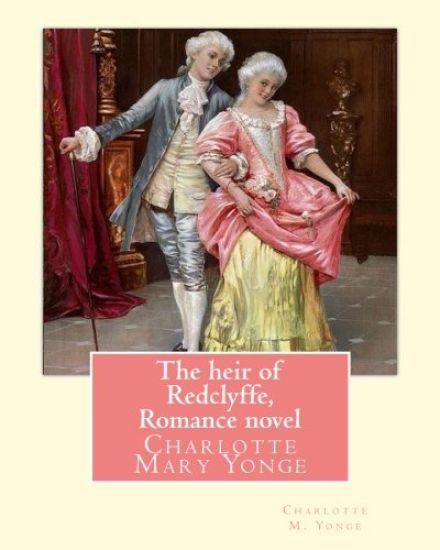
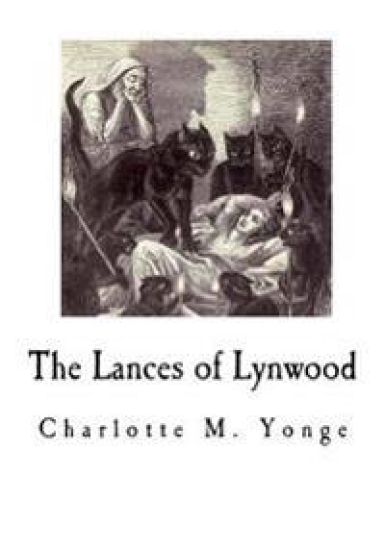
The Heir of Redclyffe (1853) was the first of Charlotte M. Yonge's bestselling romantic novels. Its religious tone derives from the High Church background of her family and from her friendship with a leading figure in the Oxford Movement, John Keble, who closely supervised the writing of the book. The germ of its plot was suggested by her friend Marianne Dyson. According to J. B. Priestley The Heir of Redclyffe was "the most popular novel of the whole age... Its popularity left Dickens and Thackeray far behind." Synopsis--The Heir of Redclyffe tells the story of the Byronic Guy Morville, heir to the Redclyffe baronetcy, and his cousin Philip Morville, a conceited hypocrite who enjoys an unwarrantedly high reputation. When Guy raises money to secretly pay off the debts of his blackguard uncle, Philip spreads the rumour that Guy is a reckless gambler. As a result Guy's proposed marriage to his guardian's daughter Amy is called off and he is disowned by his guardian. Guy bears the situation with a new-found Christian fortitude until the uncle clears his character, enabling him to marry Amy after all. They honeymoon in Italy, finding Philip there suffering from a life-threatening fever. Guy nurses him back to health, but catches the fever himself and dies. Philip, transformed by contrition, inherits Redclyffe. Charlotte Mary Yonge (11 August 1823 - 24 May 1901) was an English novelist known for her huge output, now mostly out of print. Charlotte Mary Yonge was born in Otterbourne, Hampshire, England, on 11 August 1823 to William Yonge and Fanny Yonge, n e Bargus. She was educated at home by her father, studying Latin, Greek, French, Euclid and algebra. Her father's lessons could be harsh: He required a diligence and accuracy that were utterly alien to me. He thundered at me so that nobody could bear to hear it, and often reduced me to tears, but his approbation was so delightful that it was a delicious stimulus... I believe, in spite of all breezes over my innate slovenliness, it would have broken our hearts to leave off working together. And we went on till I was some years past twenty Yonge's devotion to her father was lifelong and her relationship with him seems to have been for her the standard for all other relationships, including marriage. His "approbation was throughout life my bliss; his anger my misery for the time." Charlotte Yonge (1823-1902) was not only a prolific novelist, but a serious student of history, especially in its personal aspects. Having dealt in The Constable's Tower with Hubert de Burgh, with his famous defence of Dover Castle against Prince Louis of France (1213), and his still more famous victory at sea off Sandwich, and with Edward I as a crusader (The Prince and the Page), Miss Yonge drew on the Vie de Bertrand du Guesclin as well as on Froissart for her fascinating tale The Lances of Lynwood. With characteristic modesty she expressed the hope that her sketch might "serve as an inducement to some young readers to make acquaintance with the delectable old Canon (Froissart) for themselves ". The wise, of all ages, will fulfil her hope.
The Lances of Lynwood by Charlotte M. Yonge - For an explanation of the allusions in the present Tale, scarcely any Notes are necessary, save a reference to the bewitching Chronicle of Froissart; and we cannot but hope that our sketch may serve as an inducement to some young readers to make acquaintance with the delectable old Canon for themselves, undeterred by the size of his tomes. The story of Orthon is almost verbally copied from him, and bears a curious resemblance to various German legends