Kirjojen hintavertailu – 12 859 818 kirjaa ja 27 kauppaa
Kirjailija
Charlotte Perkins Gilman
Kirjat ja teokset yhdessä paikassa: 508 kirjaa, julkaisuja vuosilta 1892–2026, suosituimpiin kuuluu Förfärande kvinnor : gotisk skräck från Brontë till Gilman i urval och översättning av KG Johansson. Vertaile teosten hintoja ja tarkista saatavuus suomalaisista kirjakaupoista.
Nimi esiintyy myös muodoissa: Charlotte Perkins-Gilman
Charlotte Perkins Gilman called herself a humanist and believed the domestic environment oppressed women through the patriarchal beliefs upheld by society. She argued that womens contributions to civilization, throughout history, have been halted because of an androcentric culture, and she believed economic independence is the only thing that could really bring freedom for women, and make them equal to men.
First published serially in Gilman's magazine the Forerunner in 1909-10, the novel tells the story of Diantha Bell, a young woman who leaves her home and her fianc to start a housecleaning business. A resourceful heroine, Diantha quickly expands her business into an enterprise that includes a maid service, cooked food delivery service, restaurant, and hotel. By assigning a cash value to women's "invisible" work, providing a means for the well-being and moral uplift of working girls, and releasing middle- and leisure-class women from the burden of conventional domestic chores, Diantha proves to her family and community the benefits of professionalized housekeeping.
Women and Economics - A Study of the Economic Relation Between Men and Women as a Factor in Social Evolution is a book written by Charlotte Perkins Gilman and published in 1898. It is considered by many to be her single greatest work, and as with much of Gilman's writing, the book touched a few dominant themes: the transformation of marriage, the family, and the home, with her central argument: "the economic independence and specialization of women as essential to the improvement of marriage, motherhood, domestic industry, and racial improvement."
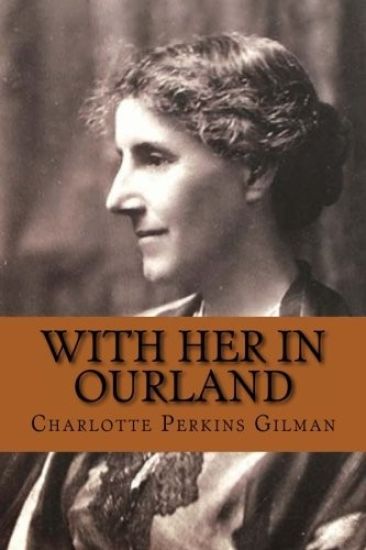
Herland described an all-women utopia in a secluded high valley, where 3 adventurous young men visit by airplane. Eventually, 2 of the 3 are expelled, along with a young Herland woman who has married one of the men. With Her in Ourland continues as the husband and wife tour the world outside of Herland, interviewing people, taking notes and photographs, and discussing history, religions, war, child-rearing, the role of women, treatment of immigrants, women's suffrage, and more. The two novels together convey the author's social criticisms of our world at her time and her prescriptions to improve the human condition in the United States.
Kort f r 1. verdenskrig s tter verden i brand i 1914, g r tre unge amerikanske opdagelsesrejsende et utroligt fund i et uudforsket naturomr de. "Kvindeland" er navnet p det utopiske samfund, der i tusindvis af r har v ret afsk rmet fra omverdenen, og hvor der nu kun bor kvinder. De tre m nds frygt for at blive m dt med mistro og modvilje g res til skamme, da kvinderne tager dem til sig med bne arme og g r en stor indsats for at l re dem deres sprog, s de kan blive en del af deres samfund. I takt med at m ndene kommer til at forst landets socialistiske og solidariske normer, befolkningens benhed og hj lpsomhed og den fuldst ndige mangel p k nsrollernes sn rende b nd, begynder de at se deres eget hjemland i et helt andet lys. Charlotte Perkins Gilman (1860-1935) var en af de f rste feminister, der fors gte at forene feminisme med socialisme. Hun brugte sit liv p at holde foredrag og skrive b ger for at fremme kvindesagen. Ud over fiktion og digte skrev hun b ger om historie, antropologi, etik og filosofi, og hendes bidrag til kulturhistorien og kvindesagen har v ret enormt.
Two works in one, this volume contains the full text of With Her in Ourland by Charlotte Perkins Gilman, as well as an illuminating sociological analysis by Mary Jo Deegan with the assistance of Michael R. Hill. Ourland is the sequel to Gilman's acclaimed feminist utopian novel Herland; both were published in her journal, The Forerunner, in 1915 and 1916. Ourland resumes the adventures of Herland's protagonists, Ellador and Van, but turns from utopian fantasy to a challenging analysis of contemporary social fissures in "his land," or the real world. The republication of Herland as a separate novel in 1979 revived critical interest in Gilman's work but truncated the larger aims implicit in the Herland/Ourland saga, leaving an erroneous understanding of Gilman's other/better half of the story, in which it is suggested that strong women can resocialize men to be nurturant and cooperative. Gilman's choice of a sexually integrated society in With Her in Ourland provides us with her answer to her ideal society, but her foray into a woman-only society as a corrective to a male dominated one is a controversial option. The challenging message of Ourland, however, does not impede the pleasure of reading it as a novel.
This edition of What Diantha Did makes newly available Charlotte Perkins Gilman's first novel, complete with an in-depth introduction. First published serially in Gilman's magazine The Forerunner in 1909-10, the novel tells the story of Diantha Bell, a young woman who leaves her home and her fianc to start a housecleaning business. A resourceful heroine, Diantha quickly expands her business into an enterprise that includes a maid service, cooked food delivery service, restaurant, and hotel. By assigning a cash value to women's "invisible" work, providing a means for the well-being and moral uplift of working girls, and releasing middle-class and leisure-class women from the burden of conventional domestic chores, Diantha proves to her family and community the benefits of professionalized housekeeping. In her introduction to the novel, Charlotte J. Rich highlights Gilman's engagement with such hotly debated Progressive Era issues as the "servant question," the rise of domestic science, and middle-class efforts to protect and aid the working girl. She illuminates the novel's connections to Gilman's other feminist works, including "The Yellow Wall-Paper" and Herland; to her personal life; and to her commitment to women's social and economic freedom. Rich contends that the novel's engagement with class and race makes it particularly significant to the newly complex understanding of Gilman that has emerged in recent scholarship. What Diantha Did provides essential insight into Charlotte Perkins Gilman's important legacy of social thought
Herland is a utopian novel from 1915, written by feminist Charlotte Perkins Gilman. The book describes an isolated society composed entirely of women who reproduce via parthenogenesis (asexual reproduction). The result is an ideal social order, free of war, conflict and domination.
Charlotte Perkins Gilman's Concerning Children reflects her innovative thinking on the social and economic construction of motherhood. In this volume, she takes on American society at its core principles: the betterment of our society through the development of our children. Gilman attacks our conventional model of child rearing, one based on obedience and discipline, rather than on the development of creativity and individuality. She responds to popular practices such as the corporal punishment of children, and proposes new and radical ways of child-rearing including social motherhood, which frees women to pursue careers. Presciently observing more than a century ago that it takes an entire village to raise a child, Gilman's Concerning Children is a must-read for anyone interested in gender and family studies.
The Yellow Wallpaper by Charlotte Perkins Gilman is a semi-autobiographical short story which she wrote after a severe bout of post-partum depression. The story is written in the first person as a series of journal entries. The narrator is a woman confined to the upstairs bedroom of a summer house. Her husband, a physician, has diagnosed her as suffering of a "temporary nervous depression - a slight hysterical tendency;" a diagnosis common to women in that period. The story illustrates the effect of confinement on the narrator's mental health, and her descent into psychosis. With nothing to stimulate her, she becomes obsessed by the pattern and color of the room's wallpaper.
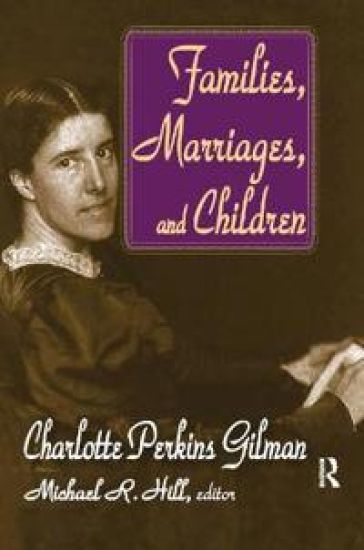
Charlotte Perkins Gilman (1860-1935) was a pioneering sociologist, feminist pragmatist, author, and lecturer. A skilled and perceptive writer, she explained sociological concepts and principles clearly and concisely to popular audiences. This volume presents a focused and provocative set of Gilman's penetrating analyses of marriage, motherhood, and family relationships. Generally unavailable, except in archives and special libraries, the lion's share of the analyses are drawn directly from Gilman's quintessentially unique self-published journal, The Forerunner. Transcending her era, Gilman speaks with wit, insight, and candor to twenty-first century readers about many controversial aspects of family and family life. She believes deeply that women's values regeneration, cooperation, and compassion make for better societies. Men's values, she concludes, are destructive, competitive, and often violent. Families produce double standards and inequalities between husbands and wives, resulting in inferior mothers and, as a direct consequence, in substandard children. To improve society, Gilman argues, we need healthy, happy children. This requires well-trained, competent mothers, widespread social parenting, and enlightened, non-patriarchal marriages. Largely self-taught, Gilman supported herself through writing and lecturing. She was at one time a settlement house leader and an active member of the American Sociological Society. Her wide sociological circle included lasting friendships with Jane Addams, Edward A. Ross, and Lester F. Ward.
"The Yellow Wallpaper" is a 6,000-word short story by American writer Charlotte Perkins Gilman, first published in January 1892 in The New England Magazine. It is regarded as an important early work of American feminist literature, illustrating attitudes in the 19th century toward women's health, both physical and mental.
As brilliant, bold, and prescient as it was when first was published in 1892, The Yellow Wallpaper stands strong not only as an stellar example of early American Feminist literature, but as a prime example of the short story as well. Told as brief journal entries penned by an unnamed narrator, the unsettling story of this woman and her preventable descent into madness illuminates an all-too-common aspect of the lives most women experienced in the 19th century, and to an unfortunate extent, still do today. Semi-autobiographical, the author Charlotte Perkins Gilman (1860-1935) was a proud feminist, humanist, social reformer, artist, writer, editor, and publisher. Her works are too great in number to list here, but run the gamut from poetry and short stories, to academic studies and drama. Her autobiography, The Living of Charlotte Perkins Gilman, was published shortly after her death in 1935. This Yellow Wallpaper Press edition features the unabridged story along with a brief biography and the full article "Why I Wrote the Yellow Wallpaper" penned by Gilman and published in her magazine The Forerunner in October 1913.
OBS! Nyöversättning! Den gula tapeten av Charlotte Perkins Gilman (1860 – 1935) väcker frågor om makt och maktlöshet, om familj och könsroller, om över- och underordning, om normalitet och avvikelse, om galenskap och frihet. Det är en suggestiv skildring av att glida in i en psykos, och det är svårt att värja sig mot känslan av växande katastrof och hotande undergång. Efter hand växer emellertid något annat fram, något mer än en skakande sjukdomsbeskrivning.
Charlotte Perkins Gilman ( also Charlotte Perkins Stetson (July 3, 1860 - August 17, 1935), was a prominent American feminist, sociologist, novelist, writer of short stories, poetry, and nonfiction, and a lecturer for social reform. She was a utopian feminist and served as a role model for future generations of feminists because of her unorthodox concepts and lifestyle. Her best remembered work today is her semi-autobiographical short story "The Yellow Wallpaper" which she wrote after a severe bout of postpartum psychosis. Early life: Gilman was born on July 3, 1860 in Hartford, Connecticut, to Mary Perkins (formerly Mary Fitch Westcott) and Frederic Beecher Perkins. She had only one brother, Thomas Adie, who was fourteen months older, because a physician advised Mary Perkins that she might die if she bore other children. During Charlotte's infancy, her father moved out and abandoned his wife and children, leaving them in an impoverished state. Since their mother was unable to support the family on her own, the Perkins were often in the presence of her father's aunts, namely Isabella Beecher Hooker, a suffragist, Harriet Beecher Stowe (author of Uncle Tom's Cabin) and Catharine Beecher. Her schooling was erratic: she attended seven different schools, for a cumulative total of just four years, ending when she was fifteen. Her mother was not affectionate with her children. To keep them from getting hurt as she had been, she forbade her children to make strong friendships or read fiction. In her autobiography, The Living of Charlotte Perkins Gilman, Gilman wrote that her mother showed affection only when she thought her young daughter was asleep. Although she lived a childhood of isolated, impoverished loneliness, she unknowingly prepared herself for the life that lay ahead by frequently visiting the public library and studying ancient civilizations on her own. Additionally, her father's love for literature influenced her, and years later he contacted her with a list of books he felt would be worthwhile for her to read. Much of Gilman's youth was spent in Providence, Rhode Island. What friends she had were mainly male, and she was unashamed, for her time, to call herself a "tomboy." Her natural intelligence and breadth of knowledge always impressed her teachers, who were nonetheless disappointed in her because she was a poor student. Her favorite subject was "natural philosophy," especially what later would become known as physics. In 1878, the eighteen-year-old enrolled in classes at the Rhode Island School of Design with the monetary help of her absent father, and subsequently supported herself as an artist of trade cards. She was a tutor, and encouraged others to expand their artistic creativity. She was also a painter........................
Charlotte Perkins Gilman ( also Charlotte Perkins Stetson (July 3, 1860 - August 17, 1935), was a prominent American feminist, sociologist, novelist, writer of short stories, poetry, and nonfiction, and a lecturer for social reform. She was a utopian feminist and served as a role model for future generations of feminists because of her unorthodox concepts and lifestyle. Her best remembered work today is her semi-autobiographical short story "The Yellow Wallpaper" which she wrote after a severe bout of postpartum psychosis. Early life: Gilman was born on July 3, 1860 in Hartford, Connecticut, to Mary Perkins (formerly Mary Fitch Westcott) and Frederic Beecher Perkins. She had only one brother, Thomas Adie, who was fourteen months older, because a physician advised Mary Perkins that she might die if she bore other children. During Charlotte's infancy, her father moved out and abandoned his wife and children, leaving them in an impoverished state. Since their mother was unable to support the family on her own, the Perkins were often in the presence of her father's aunts, namely Isabella Beecher Hooker, a suffragist, Harriet Beecher Stowe (author of Uncle Tom's Cabin) and Catharine Beecher. Her schooling was erratic: she attended seven different schools, for a cumulative total of just four years, ending when she was fifteen. Her mother was not affectionate with her children. To keep them from getting hurt as she had been, she forbade her children to make strong friendships or read fiction. In her autobiography, The Living of Charlotte Perkins Gilman, Gilman wrote that her mother showed affection only when she thought her young daughter was asleep. Although she lived a childhood of isolated, impoverished loneliness, she unknowingly prepared herself for the life that lay ahead by frequently visiting the public library and studying ancient civilizations on her own. Additionally, her father's love for literature influenced her, and years later he contacted her with a list of books he felt would be worthwhile for her to read. Much of Gilman's youth was spent in Providence, Rhode Island. What friends she had were mainly male, and she was unashamed, for her time, to call herself a "tomboy." Her natural intelligence and breadth of knowledge always impressed her teachers, who were nonetheless disappointed in her because she was a poor student. Her favorite subject was "natural philosophy," especially what later would become known as physics. In 1878, the eighteen-year-old enrolled in classes at the Rhode Island School of Design with the monetary help of her absent father, and subsequently supported herself as an artist of trade cards. She was a tutor, and encouraged others to expand their artistic creativity. She was also a painter.............
This edition of What Diantha Did makes newly available Charlotte Perkins Gilman's first novel, complete with an in-depth introduction. First published serially in Gilman's magazine The Forerunner in 1909-10, the novel tells the story of Diantha Bell, a young woman who leaves her home and her fianc to start a housecleaning business. A resourceful heroine, Diantha quickly expands her business into an enterprise that includes a maid service, cooked food delivery service, restaurant, and hotel. By assigning a cash value to women's "invisible" work, providing a means for the well-being and moral uplift of working girls, and releasing middle-class and leisure-class women from the burden of conventional domestic chores, Diantha proves to her family and community the benefits of professionalized housekeeping. In her introduction to the novel, Charlotte J. Rich highlights Gilman's engagement with such hotly debated Progressive Era issues as the "servant question," the rise of domestic science, and middle-class efforts to protect and aid the working girl. She illuminates the novel's connections to Gilman's other feminist works, including "The Yellow Wall-Paper" and Herland; to her personal life; and to her commitment to women's social and economic freedom. Rich contends that the novel's engagement with class and race makes it particularly significant to the newly complex understanding of Gilman that has emerged in recent scholarship. What Diantha Did provides essential insight into Charlotte Perkins Gilman's important legacy of social thought