Kirjojen hintavertailu – 12 859 818 kirjaa ja 27 kauppaa
Kirjailija
Charlotte Perkins Gilman
Kirjat ja teokset yhdessä paikassa: 508 kirjaa, julkaisuja vuosilta 1892–2026, suosituimpiin kuuluu Förfärande kvinnor : gotisk skräck från Brontë till Gilman i urval och översättning av KG Johansson. Vertaile teosten hintoja ja tarkista saatavuus suomalaisista kirjakaupoista.
Nimi esiintyy myös muodoissa: Charlotte Perkins-Gilman
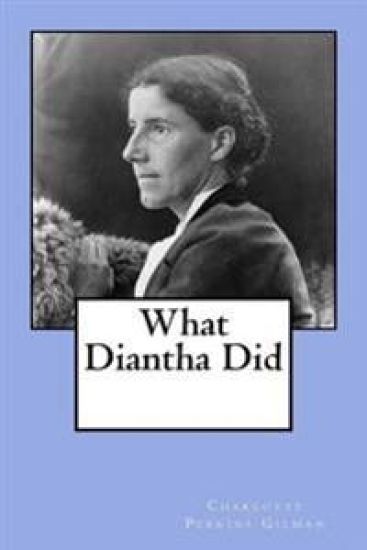
First published serially in Gilman's magazine the Forerunner in 1909-10, the novel tells the story of Diantha Bell, a young woman who leaves her home and her fianc to start a housecleaning business. A resourceful heroine, Diantha quickly expands her business into an enterprise that includes a maid service, cooked food delivery service, restaurant, and hotel. By assigning a cash value to women's "invisible" work, providing a means for the well-being and moral uplift of working girls, and releasing middle- and leisure-class women from the burden of conventional domestic chores, Diantha proves to her family and community the benefits of professionalized housekeeping.
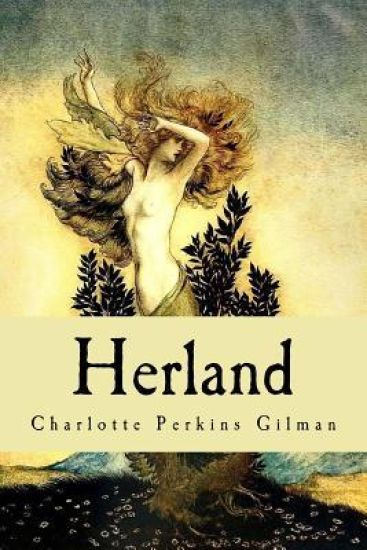
Herland is a utopian novel from 1915, written by feminist Charlotte Perkins Gilman. The book describes an isolated society composed entirely of women who reproduce via parthenogenesis (asexual reproduction). The result is an ideal social order, free of war, conflict and domination.
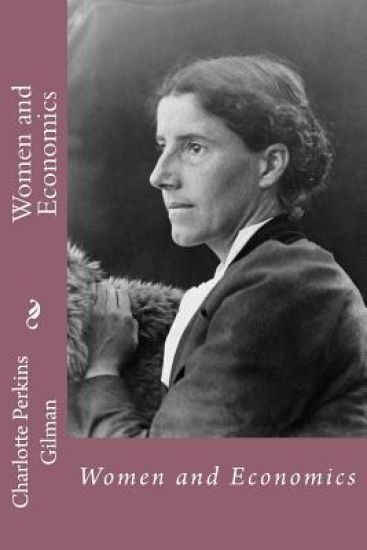
Women and Economics - A Study of the Economic Relation Between Men and Women as a Factor in Social Evolution is a book written by Charlotte Perkins Gilman and published in 1898. It is considered by many to be her single greatest work, and as with much of Gilman's writing, the book touched a few dominant themes: the transformation of marriage, the family, and the home, with her central argument: "the economic independence and specialization of women as essential to the improvement of marriage, motherhood, domestic industry, and racial improvement."
This 1910 novel tells the story of Diantha Bell, a young lady who wants to rethink the costliness of housework, contribute to her family economy and have a fulfilling job all of her own. She leaves her home and her fianc to start a housecleaning business in California. A capable heroine, Diantha quickly expands her business into an enterprise that includes a maid service, cooked food delivery service, restaurant, and hotel...
Herland is a utopian novel from 1915, written by feminist Charlotte Perkins Gilman. The book describes an isolated society composed entirely of women, who reproduce via parthenogenesis (asexual reproduction). The result is an ideal social order: free of war, conflict, and domination. It first appeared as a serial in The Forerunner, a magazine edited and written by Gilman between 1909 and 1916. The book is the middle volume in her utopian trilogy; it was preceded by Moving the Mountain (1911), and followed with a sequel, With Her in Ourland (1916). It was not published in book form until 1979.
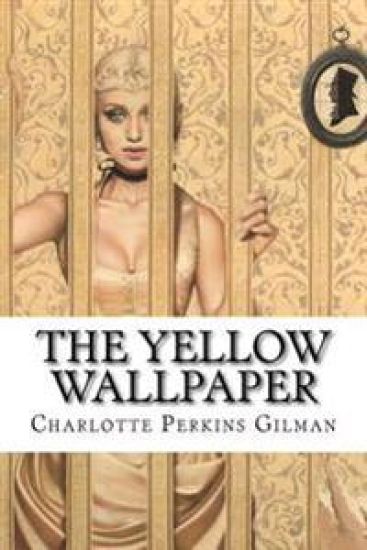
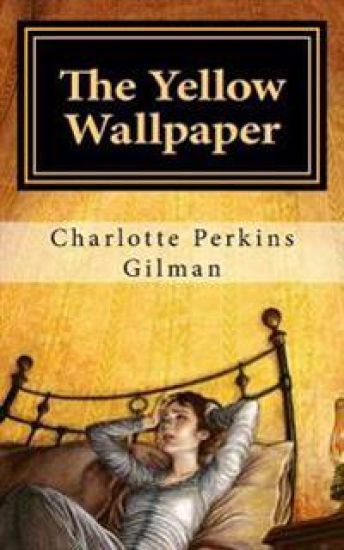
Presented in the first person, the story is a collection of journal entries written by a woman whose physician husband (John) has rented an old mansion for the summer. Forgoing other rooms in the house, the couple moves into the upstairs nursery. As a form of treatment, the unnamed woman is forbidden from working, and is encouraged to eat well and get plenty of exercise and air, so she can recuperate from what he calls a "temporary nervous depression - a slight hysterical tendency", a diagnosis common to women in that period. She hides her journal from her husband and his sister the housekeeper, fearful of being reproached for overworking herself. The room's windows are barred to prevent children from climbing through them, and there is a gate across the top of the stairs, though she and her husband have access to the rest of the house and its adjoining estate. The story depicts the effect of understimulation on the narrator's mental health and her descent into psychosis. With nothing to stimulate her, she becomes obsessed by the pattern and color of the wallpaper. "It is the strangest yellow, that wall-paper It makes me think of all the yellow things I ever saw - not beautiful ones like buttercups, but old foul, bad yellow things. But there is something else about that paper - the smell ... The only thing I can think of that it is like is the color of the paper A yellow smell."