Kirjojen hintavertailu – 12 859 818 kirjaa ja 27 kauppaa
Kirjailija
Charlotte Smith
Kirjat ja teokset yhdessä paikassa: 65 kirjaa, julkaisuja vuosilta 1995–2026, suosituimpiin kuuluu Talent in the Legal Profession. Vertaile teosten hintoja ja tarkista saatavuus suomalaisista kirjakaupoista.
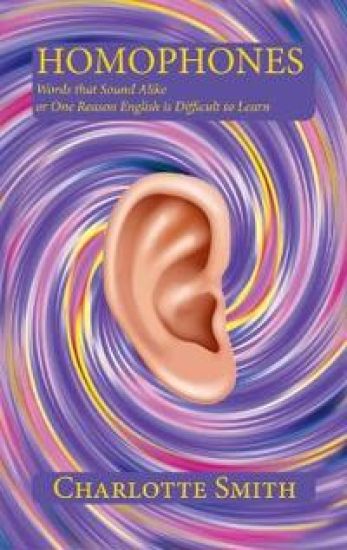
One reason the English language may seem difficult to learn is that there are so many words that sound alike but are spelled differently. This large group of multiple-meaning words is called homophones. The term "homophone" comes from the Greek words "homos" (same) and "phone" (sound). There are hundreds of homophones. This book lists those that may help English as a second language students the most in their study of the English language. Some words are not pronounced exactly the same way but are very similar. Studying homophones is a fun and interesting way to improve one's language skills. The reader might be amazed at how many homophones are used in everyday life.
The book, Emmeline, the Orphan of the Castle, has been considered important throughout the human history, and so that this work is never forgotten we have made efforts in its preservation by republishing this book in a modern format for present and future generations. This whole book has been reformatted, retyped and designed. These books are not made of scanned copies of their original work and hence the text is clear and readable.
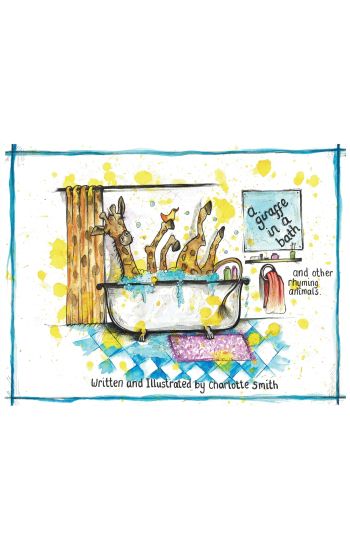
A Giraffe in a bath and other rhyming animals is a fun, simple rhyming book of unusual things that animals may get up to. The pages explode with colour, which adds to the fantasy situation the animals are in. On each page you will find lovely rhyming words that make the book fun to read. Keep an eye out on every page, you will find MR Spider, but look carefully, he is good at hiding.
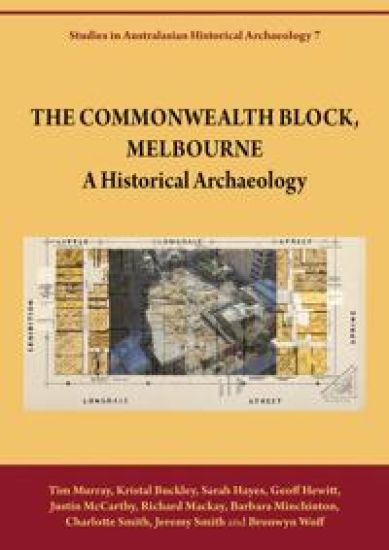
Tim Murray; Kristal Buckley; Sarah Hayes; Geoff Hewitt; Justin McCarthy; Richard Mackay; Barbara Minchinton; Charlotte Smith; Jeremy Smith; Bronwyn Woff
For much of the 19th and 20th centuries, Melbourne’s Little Lonsdale Street – locally known as ‘Little Lon’ – was notorious as a foul slum and brothel district, occupied by the itinerant and the criminal. The stereotype of ‘slumdom’ defined ‘Little Lon’ in the minds of Melbournians, and became entrenched in Australian literature and popular culture. The Commonwealth Block, Melbourne tells a different story. This groundbreaking book reports on almost three decades of excavations conducted on the Commonwealth Block – the area of central Melbourne bordered by Little Lonsdale, Lonsdale, Exhibition and Spring streets. Since the 1980s, archaeologists and historians have pieced together the rich and complex history of this area, revealing a working-class and immigrant community that was much more than just a slum. The Commonwealth Block, Melbourne delves into the complex social, cultural and economic history of this forgotten community.
Charlotte Turner Smith (4 May 1749 - 28 October 1806) was an English Romantic poet and novelist. She initiated a revival of the English sonnet, helped establish the conventions of Gothic fiction, and wrote political novels of sensibility. A successful writer, she published ten novels, three books of poetry, four children's books, and other assorted works, over the course of her career. She saw herself as a poet first and foremost, poetry at that period being considered the most exalted form of literature. Scholars now credit her with transforming the sonnet into an expression of woeful sentiment. During adulthood, Charlotte Smith eventually left husband Benjamin Smith and began writing to support their children. Smith's struggle to provide for her children and her frustrated attempts to gain legal protection as a woman provided themes for her poetry and novels; she included portraits of herself and her family in her novels as well as details about her life in her prefaces. Her early novels are exercises in aesthetic development, particularly of the Gothic and sentimentality. "The theme of her many sentimental and didactic novels was that of a badly married wife helped by a thoughtful sensible lover" (Smith's entry in British Authors Before 1800: A Biographical Dictionary Ed. Stanley Kunitz and Howard Haycraft. New York: H. W. Wilson, 1952. pg. 478.) Her later novels, including The Old Manor House, often considered her best, supported the ideals of the French Revolution. After 1798, however, Smith's popularity waned and by 1803 she was destitute and ill-she could barely hold a pen, and sold her books to pay off her debts. In 1806, Smith died. Largely forgotten by the middle of the 19th century, her works have now been republished and she is recognized as an important Romantic writer. Early life: Smith was born on 4 May 1749 in London and baptized on 12 June; she was the oldest child of well-to-do Nicholas Turner and Anna Towers. Her two younger siblings, Nicholas and Catherine Ann, were born within the next five years. Smith was born into a wealthy family and received a typical education for a woman during the late 18th century. Smith's childhood was shaped by her mother's early death (probably in giving birth to Catherine) and her father's reckless spending. Her father's reckless spending then forced her to marry early. In a marriage that she later described as prostitution, she was given by her father to the violent and profligate Benjamin Smith. After losing his wife, Nicholas Turner travelled and the children were raised by Lucy Towers, their maternal aunt (when exactly their father returned is unknown). At the age of six, Charlotte went to school in Chichester and took drawing lessons from the painter George Smith. Two years later, she, her aunt, and her sister moved to London and she attended a girls school in Kensington where she learned dancing, drawing, music, and acting. She loved to read and wrote poems, which her father encouraged. She even submitted a few to the Lady's Magazine for publication, but they were not accepted.