Kirjailija
Chen Qiufan
Kirjat ja teokset yhdessä paikassa: 10 kirjaa, julkaisuja vuosilta 2019–2024, suosituimpiin kuuluu The Book of Shanghai. Vertaile teosten hintoja ja tarkista saatavuus suomalaisista kirjakaupoista.
10 kirjaa
Kirjojen julkaisuvuodet: 2019–2024.
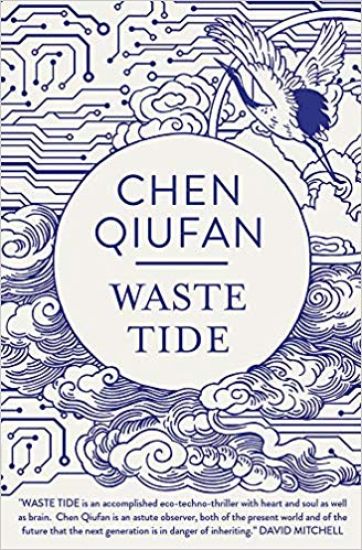
A Guardian Science Fiction Book of the Year. Mimi is drowning in the world's trash. She's a 'waste girl', a scavenger picking through towering heaps of hazardous electronic detritus. Along with thousands of other migrant workers, she was lured to Silicon Isle, off the southern coast of China, by the promise of steady work and a better life. But Silicon Isle is where the rotten fruits of capitalism and consumer culture come to their toxic end. The land is hopelessly polluted, the workers utterly at the mercy of those in power. And now a storm is gathering, as ruthless local gangs skirmish for control, eco-terrorists conspire, investors hunger for profit, and a Chinese-American interpreter searches for his roots. As these forces collide, conflict erupts – a war between rich and poor, a battle between past and future. Mimi must decide if she will remain a pawn... or change the rules of the game altogether. 'An accomplished eco-techno-thriller with heart and soul' DAVID MITCHELL. 'Waste Tide is a work of spoiled and toxic beauty... It's more than a timely eco-thriller; it's a dark mirror held up to our selves' SIMON INGS.
The Book of Shanghai
Xiao Bai; Pu Yuehui; Shen Dacheng; Cai Jun; Wang Zhanhei; Chen Danyan; Chen Qiufan; Wang Anyi; Xia Shang
Comma Press
2020
nidottu
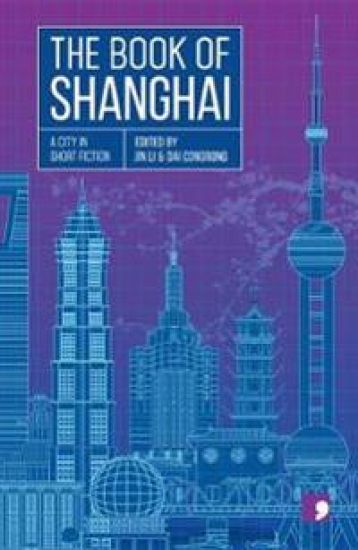
The characters in this literary exploration of one of the world’s biggest cities are all on a mission. Whether it is responding to events around them, or following some impulse of their own, they are defined by their determination – a refusal to lose themselves in a city that might otherwise leave them anonymous, disconnected, alone. From the neglected mother whose side-hustle in collecting sellable waste becomes an obsession, to the schoolboy determined to end a long-standing feud between his family and another, the characters in The Book of Shanghai show a defiance that reminds us why Shanghai – despite its hurtling economic growth –remains an epicentre for individual creativity.
A LOCUS AWARD FINALIST FOR BEST FIRST NOVEL Award-winning author Chen Qiufan's Waste Tide is a thought-provoking vision of the future. Translated by Ken Liu, who brought Cixin Liu's Hugo Award-winning The Three Body Problem to English-speaking readers. Mimi is drowning in the world's trash. She's a waste worker on Silicon Isle, where electronics -- from cell phones and laptops to bots and bionic limbs -- are sent to be recycled. These amass in towering heaps, polluting every spare inch of land. On this island off the coast of China, the fruits of capitalism and consumer culture come to a toxic end. Mimi and thousands of migrant waste workers like her are lured to Silicon Isle with the promise of steady work and a better life. They're the lifeblood of the island's economy, but are at the mercy of those in power. A storm is brewing, between ruthless local gangs, warring for control. Ecoterrorists, set on toppling the status quo. American investors, hungry for profit. And a Chinese-American interpreter, searching for his roots. As these forces collide, a war erupts -- between the rich and the poor; between tradition and modern ambition; between humanity's past and its future. Mimi, and others like her, must decide if they will remain pawns in this war or change the rules of the game altogether. "An accomplished eco-techno-thriller with heart and soul as well as brain. Chen Qiufan is an astute observer, both of the present world and of the future that the next generation is in danger of inheriting." - David Mitchell, New York Times bestselling author of Cloud Atlas
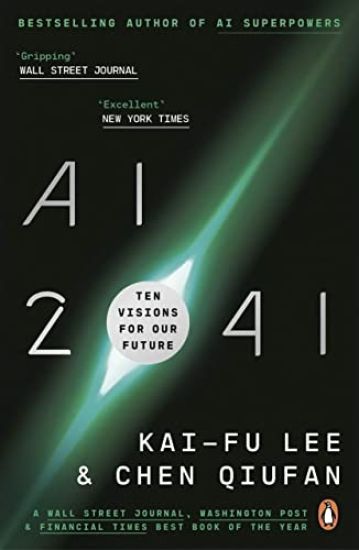
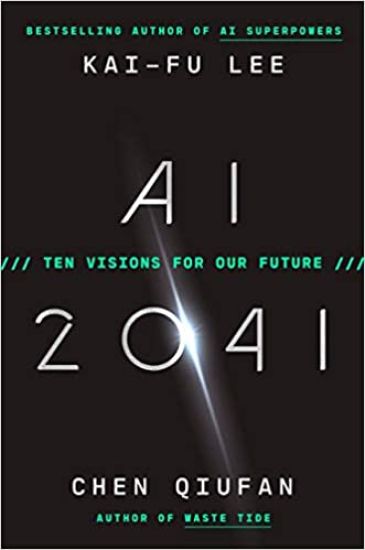
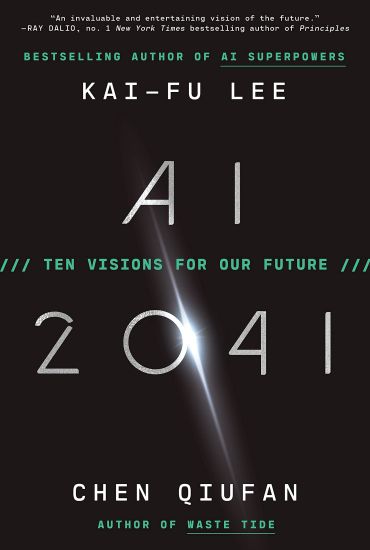
A WALL STREET JOURNAL, WASHINGTON POST, AND FINANCIAL TIMES BEST BOOK OF THE YEAR*Now with a new foreword on ChatGPT*_____________How will artificial intelligence change our world within twenty years? AI will be the defining development of the twenty-first century. Within two decades, aspects of daily human life will be unrecognizable. AI will generate unprecedented wealth, revolutionize medicine and education through human-machine symbiosis, and create brand new forms of communication and entertainment. However, AI will also challenge the organizing principles of our economic and social order and bring new risks in the form of autonomous weapons and smart technology that inherits human bias. AI is at a tipping point, and people need to wake up-both to AI's radiant pathways and its existential perils for life as we know it. In this provocative, utterly original work of "scientific fiction," Kai-Fu Lee, the former president of Google China and bestselling author of AI Superpowers, joins forces with celebrated novelist Chen Qiufan to imagine our AI world in 2041 in ten gripping short stories. Gazing toward a not-so-distant horizon, AI 2041 offers urgent insights into our collective future and reminds us that we are the authors of our own destiny.
AI 2041: Ten Visions for Our Future
Kai-Fu Lee; Chen Qiufan
Crown Currency
2024
nidottu
Halvin toimitettuna 21,80 €
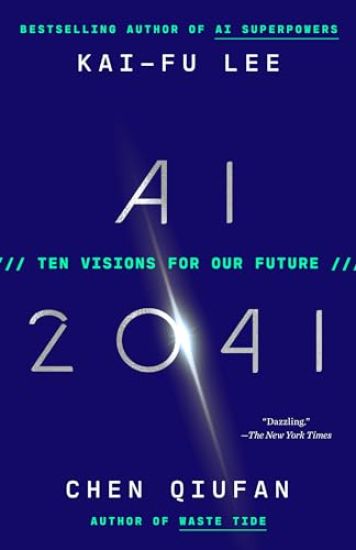
How will AI change our world within twenty years? A pioneering technologist and acclaimed writer team up for a "dazzling" (The New York Times) look at the future that "brims with intriguing insights" (Financial Times). This edition includes a new foreword by Kai-Fu Lee. A BEST BOOK OF THE YEAR: The Wall Street Journal, The Washington Post, Financial Times Long before the advent of ChatGPT, Kai-Fu Lee and Chen Qiufan understood the enormous potential of artificial intelligence to transform our daily lives. But even as the world wakes up to the power of AI, many of us still fail to grasp the big picture. Chatbots and large language models are only the beginning. In this "inspired collaboration" (The Wall Street Journal), Lee and Chen join forces to imagine our world in 2041 and how it will be shaped by AI. In ten gripping, globe-spanning short stories and accompanying commentary, their book introduces readers to an array of eye-opening settings and characters grappling with the new abundance and potential harms of AI technologies like deep learning, mixed reality, robotics, artificial general intelligence, and autonomous weapons.
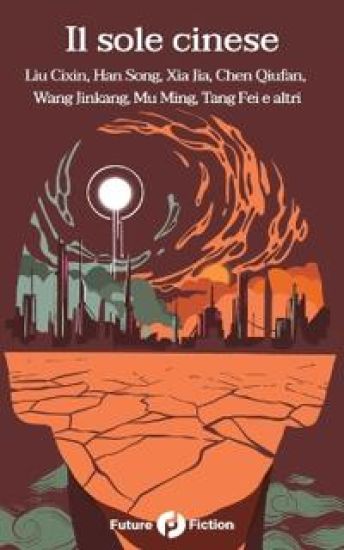
"Basta aprire una finestra in Cina per vedere un'anteprima del nostro futuro." Con queste parole, lo scrittore Han Song resuscita un genere dato per moribondo in Occidente, che invece, proprio da Oriente, trova nuova linfa e vitalit grazie a una serie di storie capaci di aggiornare e arricchire la fantascienza contemporanea mondiale. Si tratta di un vero e proprio fenomeno socio-culturale che sta investendo molti settori, da quello letterario a quello accademico, da quello universitario a quello industriale, inclusi i fumetti, i videogiochi, i film e le serie TV. In tanti oggi considerano la fantascienza come l'unico genere capace di cogliere e rappresentare al meglio lo spirito dei nostri tempi accelerati, con in pi la tradizione millenaria cinese a fare da sfondo alle storie di tre generazioni di scrittori e scrittrici, dagli anni '70 fino ai nostri giorni: templi olografici per continuare a onorare i morti nella realt aumentata, linguaggio dei segni per sfuggire alla sorveglianza cibernetica, consulenti artificiali a supporto di una popolazione in rapido invecchiamento, social network per mantenere vive le festivit tradizionali e un immenso "sole cinese" che - dall'alto - illumina il futuro di un paese avviato verso uno sviluppo tecnologico inesorabile. Questa antologia rappresenta il meglio della fantascienza cinese pubblicata da Future Fiction nel corso degli ultimi cinque anni, una raccolta definitiva di diciassette racconti e ben otto storie inedite. INDICELo sviluppo della fantascienza cinese negli ultimi dieci anni di Zhang FengParadiso 28 di Han SongIl gigante reincarnato di Wang JinkangSenza ritorno di Chi HuiIl sole cinese di Liu CixinFesta di primavera di Xia JiaLa trasmigrazione dell'anima di Jiang BoEtere di Zhang RanI ricordi nascosti di Bao ShuPoesie e terre lontane di Gu ShiIl tempio ancestrale nella scatola di Chen QiufanIl robot che amava inventare storie di Fei DaoIl commutatore di Babel di Kanyu WangUn biochip per sempre di A QueL'era della post-coscienza di Su MinAmore che non pu parlare di Fan YilunSpore di Tang FeiCon quelle mani di Mu Ming
How will AI change our world within twenty years? A pioneering technologist and acclaimed writer team up for a "dazzling" (The New York Times) look at the future that "brims with intriguing insights" (Financial Times) A BEST BOOK OF THE YEAR: The Wall Street Journal, The Washington Post, Financial Times Long before the advent of ChatGPT, Kai-Fu Lee and Chen Qiufan understood the enormous potential of artificial intelligence to transform our daily lives. But even as the world wakes up to the power of AI, many of us still fail to grasp the big picture. Chatbots and large language models are only the beginning. In this "inspired collaboration" (The Wall Street Journal), Lee and Chen join forces to imagine our world in 2041 and how it will be shaped by AI. In ten gripping, globe-spanning short stories and accompanying commentary, their book introduces readers to an array of eye-opening settings and characters grappling with the new abundance and potential harms of AI technologies like deep learning, mixed reality, robotics, artificial general intelligence, and autonomous weapons.
MAAILMA ON RAUNIOINA. OLETKO PELAAJA VAI PELINAPPULA? Mimi on jätteenkäsittelijä. Lupaukset työstä ja paremmasta elämästä ovat houkutelleet hänet ja lukemattomat muut köyhät Kiinan etelärannikolle Piisaarelle, missä työläisten tehtävä on purkaa ja lajitella myrkyllistä elektroniikkajätettä. Piisaari on kuitenkin lohduttoman saastunut ja jätteenkäsittelijät pahasti valtaapitävien ikeen alla. Myrsky nousee, kun paikalliset valtaklaanit, ekoterroristit ja ahneet monikansalliset yhtiöt kamppailevat rahasta ja vallasta. Kilpailevien voimien yhteentörmäys antaa kipinän sodalle, jossa vastakkain ovat köyhät ja rikkaat, mennyt ja tuleva. Mimin on tehtävä valinta: tyytyykö hän sodassa pelinappulan rooliin, vai määritteleekö hän uudet pelisäännöt itse. Chen Qiufan (myös Stanley Chan) on palkittu kiinalainen tieteiskirjailija. Vuonna 2013 julkaistu Jättömaa on hänen esikoisromaaninsa.
A LOCUS AWARD FINALIST FOR BEST FIRST NOVEL Award-winning author Chen Qiufan's Waste Tide is a thought-provoking future vision of how climate change affects the world. Translated by Ken Liu, who brought Cixin Liu's Hugo Award-winning The Three Body Problem to English-speaking listeners. Mimi is a 'waste girl.' A member of the lowest caste on Silicon Isle, located off China's southeastern coast, and home to the world's largest electronic waste recycling center. There, thousands of miles from home, Mimi struggles to earn a living for her family and dreams of a better life. Luo Jincheng is the head of one of three clans who run the island, a role passed down from his father and grandfather before him. As the government enforces tighter restrictions, Luo in turn tightens the reins on the waste workers in his employ. Ruthlessness is his means of survival. Scott Brandle has come to Silicon Isle representing TerraGreen Recycling, an American corporation that stands to earn ungodly sums if they can reach a deal to modernize the island's recycling process. Chen Kaizong, a Chinese American, travels to Silicon Isle as Scott's interpreter. There, Kaizong is hoping to find his heritage, but finds only more questions. The home he longs for may not exist. As these forces collide, a dark futuristic virus is unleashed on the island. Against the backdrop of a gritty near-future Chinese landscape, in a world of body modifications and virtual reality, a war erupts -- between the rich and the poor; between ancient traditions and modern ambition; between humanity's past and its future.