Kirjojen hintavertailu – 12 859 819 kirjaa ja 27 kauppaa
Kirjailija
Chen Schechter
Kirjat ja teokset yhdessä paikassa: 6 kirjaa, julkaisuja vuosilta 2017–2026, suosituimpiin kuuluu Leadership for Society: Leading Education for Social Integration and Mobility. Vertaile teosten hintoja ja tarkista saatavuus suomalaisista kirjakaupoista.
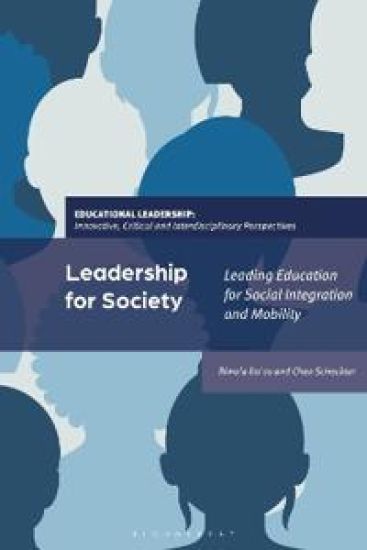
This book explores a range of issues related to minority educational leaders' role in their society, in particular those working in a divided society under conflict. The political and cultural challenges faced by minorities in divided societies raise the specific and important need to study leadership from a new perspective, based on the leaders' role in their society and community, and on their role in leveraging their school toward integration in their society while staying aligned with environmental changes. The authors present a new theoretical framework of "leadership for society" with practical implications for effective leadership in complex societies. The book also develops our understanding of minority education in the reality of conflicts between the state and the minority's identity. The authors believe that school leaders' participation in the extended community will improve and affect the development of schools and enable leaders to negotiate cultural, social and political complexities.
This book explores a range of issues related to minority educational leaders' role in their society, in particular those working in a divided society under conflict. The political and cultural challenges faced by minorities in divided societies raise the specific and important need to study leadership from a new perspective, based on the leaders' role in their society and community, and on their role in leveraging their school toward integration in their society while staying aligned with environmental changes. The authors present a new theoretical framework of "leadership for society" with practical implications for effective leadership in complex societies. The book also develops our understanding of minority education in the reality of conflicts between the state and the minority's identity. The authors believe that school leaders’ participation in the extended community will improve and affect the development of schools and enable leaders to negotiate cultural, social and political complexities.
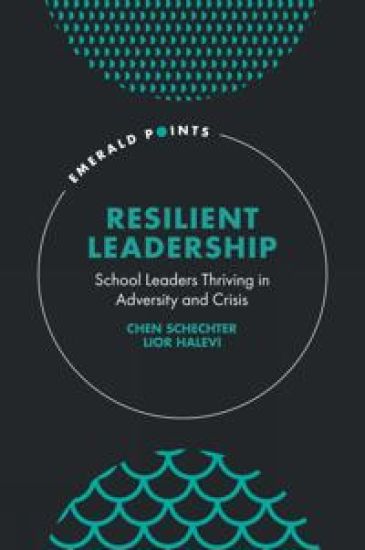
School leadership is a complex and challenging profession, with principals working in technological, dynamic and uncertain environments. They often experience resistance to their activities and challenge to their authority which can lead to considerable mental and emotional stress. This was never more apparent than during the COVID-19 pandemic, when many school principals faced unprecedented uncertainty and challenges. Schechter and Halevi answer questions such as what promotes the development of resilience among school principals? What hinders it? What are the characteristics and practices of school principals’ resilience? They go on to explore how school principals with high levels of resilience are more able to recover from times of stress and crisis than those with lower levels of resilience, examining the characteristics and practices of resilience used by school principals. Resilient Leadership serves as a basis for new and renewed thinking regarding school resilience dimensions in training, mentoring, and professional development, and is essential reading for academics, researchers, students, school leaders and policymakers in educational leadership.
Leverage Professional Wisdom with Asset-Based Professional Learning Many professional learning designs are built on the assumption that we learn best by studying our failures. However, learning from failure often evokes responses of denial, avoidance and the same defensive dynamics that contributed to the failure in the first place. Schechter’s resource, presents the Collective Learning-from-Success approach. This fresh, new, assets-based framework will shift educators’ minds from focusing in isolation on failure to continuously deliberating together, sharing past experiences and best practices, and solving problems related to teaching and learning. Whether you serve as a teacher, school or district leader, or a policy maker, your professional growth will benefit by reflecting on actionable knowledge through collective inquiry. This book offers educators an opportunity to come together in forming a productive alternative to the learning from failure paradigm. The Collective Wisdom of Practice provides a model for how to learn from successes by providing • An assets-based approach to designing and implementing professional learning • Strategies to focus on learning from educators’ past successes • Multinational case studies, sample learning materials, templates, and tools • A framework that can be applied to multiple levels, such as grade and subject areas, building level, system level, and policy level Grounded in more than 20 years of extensive research in the US and internationally, this approach will have a powerful influence on professional learning. Learn to nurture your wisdom of practice to meet the challenge of preparing students to be co-creators of society.
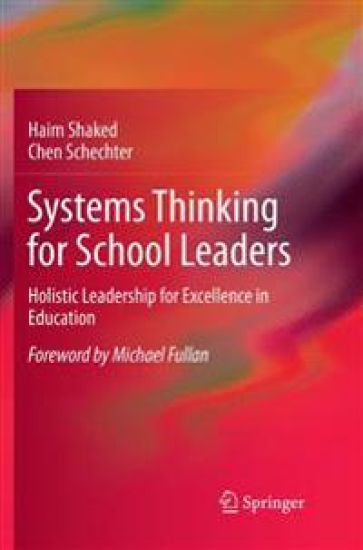
This book presents a new approach to school leadership – Holistic School Leadership, whereby school leaders lead schools through systems-thinking concepts and procedures. Facing growing complexity, change and diversity, school leaders need to regularly apply the systems view and perform at the systems level. This book proposes a holistic approach, providing school leaders with systemic principles of action for excellence in education. “What a wonderful book – once I started it, I couldn’t put it down. The book masterfully makes a systems leadership perspective accessible and grounded in the reality of the daily life of educators. Holistic School Leadership is a “must read” for anyone who has the responsibility for making schools better places, from professors to emerging teacher leaders.” Karen Seashore (Louis), Regents Professor of Organizational Leadership, Policy and Development, University of Minnesota“Shaked and Schechter have constructed a much needed bridge to the future of educational leadership, a future of systemic thinking and positivity.” Joseph Murphy, Professor of Education and Public Policy, Peabody College of Education, Vanderbilt University“Shaked and Schechter offer a comprehensive yet concise account of the meaning of systems thinking. The authors systematically develop their Holistic School Leadership approach with compelling examples, carefully attending to the perennial challenge of implementation. Important reading for scholars and practitioners of school leadership and management!" James P. Spillane, Olin Professor in Learning and Organizational Change, Northwestern University“This is the most important book on systems thinking since Senge’s (1990) seminal work on learning organizations. Shaked and Schechter demonstrate the critical and practical utility of systems thinking for school leaders—a must read for all reflective practitioners.” Wayne K. Hoy, Professor Emeritus, The Ohio State University.“Holistic School Leadership provides an innovative and exciting look into a new perspective on educational leadership that holds tremendous potential in reshaping educational research, policy, and practice. The idea of interdependence alone makes this powerful new book required reading for anyone concerned with the future of education and educational leadership in particular. Give yourself, your colleagues, your students, and your system the gift of the wisdom in this book.” Alan J. Daly, Chair and Professor, Department of Education Studies, University of California, San Diego“In this informative book, Shaked and Schechter offer a fresh application of systems thinking to schools and to the work of school leaders. This book is a useful addition to the bookshelves of both those who prepare and those who support school leaders.” Megan Tschannen-Moran, Professor of Educational Leadership, College of William and Mary
This book presents a new approach to school leadership – Holistic School Leadership, whereby school leaders lead schools through systems-thinking concepts and procedures. Facing growing complexity, change and diversity, school leaders need to regularly apply the systems view and perform at the systems level. This book proposes a holistic approach, providing school leaders with systemic principles of action for excellence in education. “What a wonderful book – once I started it, I couldn’t put it down. The book masterfully makes a systems leadership perspective accessible and grounded in the reality of the daily life of educators. Holistic School Leadership is a “must read” for anyone who has the responsibility for making schools better places, from professors to emerging teacher leaders.” Karen Seashore (Louis), Regents Professor of Organizational Leadership, Policy and Development, University of Minnesota“Shaked and Schechter have constructed a much needed bridge to the future of educational leadership, a future of systemic thinking and positivity.” Joseph Murphy, Professor of Education and Public Policy, Peabody College of Education, Vanderbilt University“Shaked and Schechter offer a comprehensive yet concise account of the meaning of systems thinking. The authors systematically develop their Holistic School Leadership approach with compelling examples, carefully attending to the perennial challenge of implementation. Important reading for scholars and practitioners of school leadership and management!" James P. Spillane, Olin Professor in Learning and Organizational Change, Northwestern University“This is the most important book on systems thinking since Senge’s (1990) seminal work on learning organizations. Shaked and Schechter demonstrate the critical and practical utility of systems thinking for school leaders—a must read for all reflective practitioners.” Wayne K. Hoy, Professor Emeritus, The Ohio State University.“Holistic School Leadership provides an innovative and exciting look into a new perspective on educational leadership that holds tremendous potential in reshaping educational research, policy, and practice. The idea of interdependence alone makes this powerful new book required reading for anyone concerned with the future of education and educational leadership in particular. Give yourself, your colleagues, your students, and your system the gift of the wisdom in this book.” Alan J. Daly, Chair and Professor, Department of Education Studies, University of California, San Diego“In this informative book, Shaked and Schechter offer a fresh application of systems thinking to schools and to the work of school leaders. This book is a useful addition to the bookshelves of both those who prepare and those who support school leaders.” Megan Tschannen-Moran, Professor of Educational Leadership, College of William and Mary