Kirjojen hintavertailu – 12 859 819 kirjaa ja 27 kauppaa

Kirjailija

Cheng Wang

Kirjat ja teokset yhdessä paikassa: 13 kirjaa, julkaisuja vuosilta 2017–2026, suosituimpiin kuuluu Introduction to LiDAR Remote Sensing. Vertaile teosten hintoja ja tarkista saatavuus suomalaisista kirjakaupoista.

13 kirjaa

Kirjojen julkaisuvuodet: 2017–2026.

Introduction to Space Archaeology

Introduction to Space Archaeology

Huadong Guo; Xinyuan Wang; Fulong Chen; Cheng Wang

SPRINGER VERLAG, SINGAPORE
2025
nidottu
This book presents the basic principles and the latest advances in space archaeology. Following general reviews of the state of the art of Earth observation technologies and archaeology, the book introduces the principles and methods of space archaeology, remote sensing methods for archaeological survey, and integrated archaeological survey methods including geophysics, virtual reality, web technologies, global positioning systems (GPS), geographical information systems (GIS), and big data. The book then presents two chapters on case studies of word heritage sites in Asia, Europe, Africa, and Americas, including three major world heritage sites in China: The Great Wall, Grand Canal, and Silk Road. The last chapter of the book discusses the future of space archaeology. This book has an interdisciplinary appeal and scholars with an interest in cultural heritage and remote sensing technologies for Earth value its contribution.
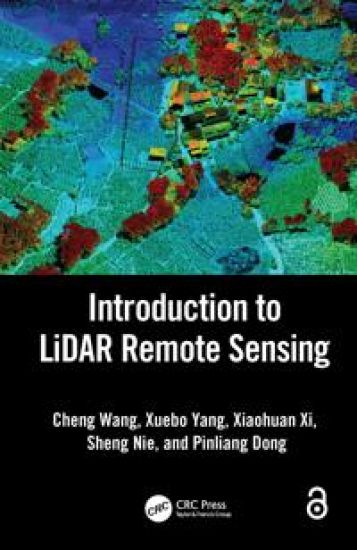
Introduction to LiDAR Remote Sensing

Introduction to LiDAR Remote Sensing

Cheng Wang; Xuebo Yang; Xiaohuan Xi; Sheng Nie; Pinliang Dong

TAYLOR FRANCIS LTD
2024
sidottu
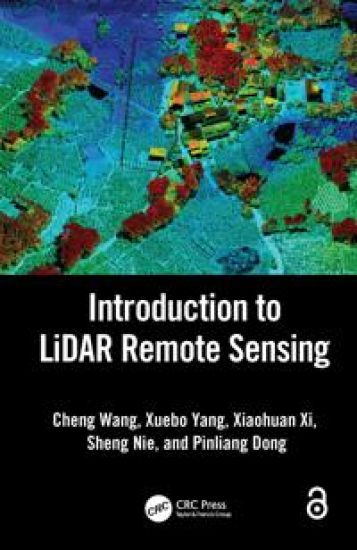
Light detection and ranging, or LiDAR, is an advanced active remote sensing technology developed in the last 30 years to measure variable distances to the Earth. This book explains the fundamental concepts of LiDAR technology and its extended spaceborne, airborne, terrestrial, mobile, and unmanned aerial vehicle (UAV) platforms. It addresses the challenges of massive LiDAR data intelligent processing, LiDAR software engineering, and in-depth applications. The theory and algorithms are integrated with multiple applications in a systematic way and with step-by-step instructions. Written for undergraduate and graduate students and practitioners in the field of LiDAR remote sensing, this book is a much-needed comprehensive resource. FEATURESExplains the fundamentals of LiDAR remote sensing, including theory, techniques, methods, and applicationsHighlights the dissemination and popularization of LiDAR remote sensing technology in the last decadeIncludes new advances in LiDAR data processing and applicationsIntroduces new technologies such as spaceborne LiDAR and photon-counting LiDARProvides multiple LiDAR application cases regarding topography mapping, forest investigation, power line inspection, building modeling, automatic driving, crop monitoring, indoor navigation, cultural heritage conservation, and underwater mappingThis book is written for graduate and upper-level undergraduate students taking courses in remote sensing, geography, photogrammetric engineering, laser techniques, surveying and mapping, geographic information systems (GIS), forestry, and resources and environmental protection. It is also a comprehensive resource for researchers and scientists interested in learning techniques for collecting LiDAR remote sensing data and processing, analyzing, and managing LiDAR data for applications in forestry, surveying and mapping, cultural relic protection, and digital products. Chapters 1 and 2 of this book are freely available as a downloadable Open Access PDF at http://www.taylorfrancis.com under a Creative Commons Attribution-Non Commercial-No Derivatives (CC-BY-NC-ND) 4.0 license.
Introduction to Space Archaeology

Introduction to Space Archaeology

Huadong Guo; Xinyuan Wang; Fulong Chen; Cheng Wang

SPRINGER VERLAG, SINGAPORE
2024
sidottu
This book presents the basic principles and the latest advances in space archaeology. Following general reviews of the state of the art of Earth observation technologies and archaeology, the book introduces the principles and methods of space archaeology, remote sensing methods for archaeological survey, and integrated archaeological survey methods including geophysics, virtual reality, web technologies, global positioning systems (GPS), geographical information systems (GIS), and big data. The book then presents two chapters on case studies of word heritage sites in Asia, Europe, Africa, and Americas, including three major world heritage sites in China: The Great Wall, Grand Canal, and Silk Road. The last chapter of the book discusses the future of space archaeology. This book has an interdisciplinary appeal and scholars with an interest in cultural heritage and remote sensing technologies for Earth value its contribution.
Introduction to LiDAR Remote Sensing

Introduction to LiDAR Remote Sensing

Cheng Wang; Xuebo Yang; Xiaohuan Xi; Sheng Nie; Pinliang Dong

TAYLOR FRANCIS LTD
2026
nidottu
Light detection and ranging, or LiDAR, is an advanced active remote sensing technology developed in the last 30 years to measure variable distances to the Earth. This book explains the fundamental concepts of LiDAR technology and its extended spaceborne, airborne, terrestrial, mobile, and unmanned aerial vehicle (UAV) platforms. It addresses the challenges of massive LiDAR data intelligent processing, LiDAR software engineering, and in-depth applications. The theory and algorithms are integrated with multiple applications in a systematic way and with step-by-step instructions. Written for undergraduate and graduate students and practitioners in the field of LiDAR remote sensing, this book is a much-needed comprehensive resource. FEATURES Explains the fundamentals of LiDAR remote sensing, including theory, techniques, methods, and applications Highlights the dissemination and popularization of LiDAR remote sensing technology in the last decade Includes new advances in LiDAR data processing and applications Introduces new technologies such as spaceborne LiDAR and photon-counting LiDAR Provides multiple LiDAR application cases regarding topography mapping, forest investigation, power line inspection, building modeling, automatic driving, crop monitoring, indoor navigation, cultural heritage conservation, and underwater mapping This book is written for graduate and upper-level undergraduate students taking courses in remote sensing, geography, photogrammetric engineering, laser techniques, surveying and mapping, geographic information systems (GIS), forestry, and resources and environmental protection. It is also a comprehensive resource for researchers and scientists interested in learning techniques for collecting LiDAR remote sensing data and processing, analyzing, and managing LiDAR data for applications in forestry, surveying and mapping, cultural relic protection, and digital products. Chapters 1 and 2 of this book are freely available as a downloadable Open Access PDF at http://www.taylorfrancis.com under a Creative Commons Attribution-Non Commercial-No Derivatives (CC-BY-NC-ND) 4.0 license.
Computational Structural Behavior

Computational Structural Behavior

Cheng Wang

SPRINGER VERLAG, SINGAPORE
2025
sidottu
mso-bidi-font-weight: bold;">Addressing cutting-edge applications in behavior analysis, modeling, and prediction, this book explores how behavioral molecular structures can enhance the expressive power of intelligent models in handling complex behavioral data.
Human Factor Security and Safety

Human Factor Security and Safety

Cheng Wang

Springer Nature Switzerland AG
2025
sidottu
As we navigate an increasingly complex digital landscape, ensuring human factor security and safety has never been more critical. This groundbreaking book offers an innovative perspective by leveraging behavioral computing to address challenges in human factor security across diverse scenarios. Through comprehensive coverage, the book introduces advanced methods like behavioral modeling and simulation to analyze multimodal behavioral data—spanning structure, language, and vision. These approaches not only deepen our understanding of human behavior but also enable robust solutions to modern security concerns, presenting a new paradigm for safeguarding systems in dynamic environments. Ideal for researchers, professionals, and advanced students in security technologies and behavioral sciences, this work bridges theoretical frameworks with practical applications. Key topics include the evolution of behavioral paradigms, the role of behavioral structures in simulation, and real-world applications in cyberfinance and human factor engineering.
Anti-Fraud Engineering for Digital Finance

Anti-Fraud Engineering for Digital Finance

Cheng Wang

SPRINGER VERLAG, SINGAPORE
2024
nidottu
This book offers an introduction to the topic of anti-fraud in digital finance based on the behavioral modeling paradigm. It deals with the insufficiency and low-quality of behavior data and presents a unified perspective to combine technology, scenarios, and data for better anti-fraud performance. The goal of this book is to provide a non-intrusive second security line, rather than replaced with existing solutions, for anti-fraud in digital finance. By studying common weaknesses in typical fields, it can support the behavioral modeling paradigm across a wide array of applications. It covers the latest theoretical and experimental progress and offers important information that is just as relevant for researchers as for professionals.
Universal Behavior Computing for Security and Safety

Universal Behavior Computing for Security and Safety

Cheng Wang; Hangyu Zhu

SPRINGER VERLAG, SINGAPORE
2024
sidottu
This book presents advanced solutions for integrated security and safety based on universal behavior computing. It provides a comprehensive survey of recent representative research in the field of universal behavior computing, including a review of traditional behavior analysis methods, an introduction to emerging key technologies and frameworks for building behavior models, and a discussion on further opportunities for utilizing behavior simulation in future research. This book aims to provide a comprehensive and promising perspective for behavior computing-based security and safety solutions. By examining common weaknesses in typical real-world cases, it offers representative examples for a wide range of practical applications. It can provide valuable insights for both researchers and professionals in the field.
Anti-Fraud Engineering for Digital Finance

Anti-Fraud Engineering for Digital Finance

Cheng Wang

SPRINGER VERLAG, SINGAPORE
2023
sidottu
This book offers an introduction to the topic of anti-fraud in digital finance based on the behavioral modeling paradigm. It deals with the insufficiency and low-quality of behavior data and presents a unified perspective to combine technology, scenarios, and data for better anti-fraud performance. The goal of this book is to provide a non-intrusive second security line, rather than replaced with existing solutions, for anti-fraud in digital finance. By studying common weaknesses in typical fields, it can support the behavioral modeling paradigm across a wide array of applications. It covers the latest theoretical and experimental progress and offers important information that is just as relevant for researchers as for professionals.
From Tea to Coffee

From Tea to Coffee

Cheng Wang

Open Books Publishing (UK)
2021
pokkari
"From Tea to Coffee is a wonderful exploration of history and a life that has extended across half a century and two continents. For those who believe that East and West can never meet or can only stand in opposition to each other, this memoir offers a beautiful counterpoint." -Bennett R. Coles, award-winning author of six published books including Dark Star Rising "Cheng Wang's transformative evolution from young Communist ideologue to astute western observer is a must-read cultural travelogue." -Don Vaughan, founder, Triangle Association of Freelancers, North Carolina Following Mao's call to the young during the Cultural Revolution, Cheng Wang, a so-called "Educated Youth," boarded a train destined for a secluded village in Inner Mongolia for the compulsory period of re-education. For the next three grueling years in rural exile, he pondered how his once privileged family had been caught in a political undertow, and how his own future might unfold. From Tea to Coffee is a story of struggle and triumph during China's modern-day cultural and political drama, and is a rare and personal account that showcases the Chinese national psyche. Like all political movements of the past, the Cultural Revolution was not the first of its kind, nor quite possibly the last, yet Cheng Wang, now at home in both America and in China, maintains an optimism in confronting today's social polarization between the East and the West.
Sweet Potato Processing Technology

Sweet Potato Processing Technology

Taihua Mu; Hongnan Sun; Miao Zhang; Cheng Wang

Academic Press Inc
2017
nidottu
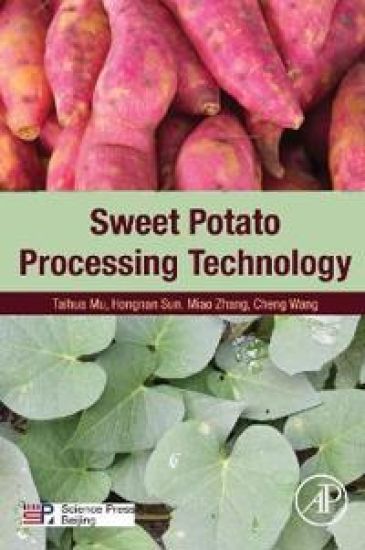
Sweet Potato Processing Technology systematically introduces processing technologies of sweet potato starch and its series products including sweet potato protein, dietary fibers, pectin, granules, anthocyanins and chlorogenic acids. The book provides a detailed and comprehensive account of physicochemical and functional properties of sweet potato products, the nutritional components extracted from sweet potato, as well as their utilization in food, medicine and cosmetic fields. This book can provide the scientific basis and technical support for virtuous circle promotion and structure upgrade of sweet potato processing industry. This book will be a valuable reference for undergraduate and graduate students, as well as specialists and enterprise research staff in the field of food technology.