Kirjojen hintavertailu – 12 903 725 kirjaa ja 27 kauppaa
Kirjailija
Cheryl Cashin
Kirjat ja teokset yhdessä paikassa: 5 kirjaa, julkaisuja vuosilta 2012–2016, suosituimpiin kuuluu Une Couverture Sanitaire Universelle Pour Un Développement Durable Inclusif. Vertaile teosten hintoja ja tarkista saatavuus suomalaisista kirjakaupoista.
Key components of the macroeconomic, fiscal, and public financial management context that need to be considered for an informed health financing policy dialogue at the country level. The guidance note is organized around four sets of questions and identifies resources available to assist in answering these questions for a specific country.
Los fines de la cobertura universal de salud son asegurar que toda la poblacion pueda acceder a servicios de salud de calidad. Parses que han logrado la cobertura universal de salud estan demostrando c6mo estos programas pueden servir como mecanismos esenciales de mejora de la salud.
La couverture sanitaire universelle pour un développement durable inclusif synthétise les expériences de 11 pays ? Bangladesh, Brésil, Éthiopie, France, Ghana, Indonésie, Japon, Pérou, Thaïlande, Turquie et Vietnam - dans la mise en ?uvre de politiques et de stratégies d'atteinte et de maintien de la CSU.
The goals of universal health coverage (UHC) are to ensure that all people can access quality health services, to safeguard all people from public health risks, and to protect all people from impoverishment due to illness, whether from out-of-pocket payments for health care or loss of income when a household member falls sick. Countries as diverse as Brazil, France, Japan, Thailand, and Turkey have shown how UHC can serve as vital mechanisms for improving the health and welfare of their citizens, and lay the foundation for economic growth and competitiveness grounded in the principles of equity and sustainability. Ensuring universal access to affordable, quality health services will be an important contribution to ending extreme poverty by 2030 and boosting shared prosperity in low-income and middle-income countries (LMICs), where most of the world's poor live. The book synthesizes the experiences from 11 countries – Bangladesh, Brazil, France, Ethiopia, Ghana, Indonesia, Japan, Peru, Thailand, Turkey and Vietnam – in implementing policies and strategies to achieve and sustain UHC. These countries represent diverse geographic and economic conditions, but all have committed to UHC as a key national aspiration and are approaching it in different ways. The study examined the UHC policies for each country around three common themes: (i) the political economy and policy process for adopting, achieving, and sustaining UHC; (ii) health financing policies to enhance health coverage; and (iii) human resources for health policies for achieving UHC. The findings from these country studies are intended to provide lessons that can be used by countries aspiring to adopt, achieve, and sustain UHC. Although the path to UHC is specific to each country, countries can benefit from the experiences of others in learning about different approaches and avoiding potential risks.
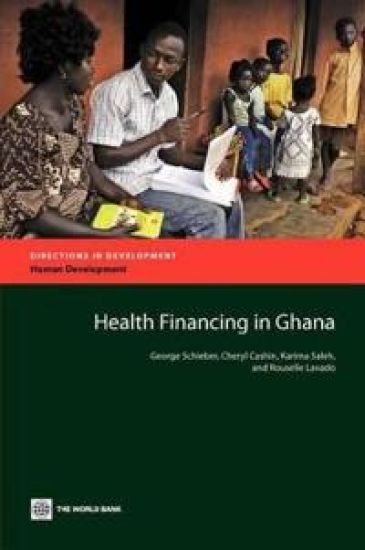
Ghana is one of only several African countries to enact legislation and earmark financing for universal health insurance coverage for its entire population. Seven years into its implementation the Ghana National Health Insurance Scheme (NHIS) has made significant progress in transitioning to universal coverage, but faces significant fiscal and coverage challenges. This study reviews Ghana's health financing system with a special emphasis on its National Health Insurance Scheme. Such an assessment is important because Ghana is often considered a global 'good practice' in terms of earmarking significant amounts of its general revenues for health insurance coverage, providing formal coverage to its vulnerable population groups, and extending coverage by transitioning its existing community health insurance schemes into a national health insurance program. In addition to the global interest in the Ghana 'model', this review is timely in view of recent critiques of the system and questions about its financial sustainability. The study is also unique in terms of evaluating Ghana's NHIS in terms of basic health system goals of health outcomes, financial protection, consumer satisfaction, equity, efficiency, and financial sustainability. The strengths and weaknesses of Ghana's health financing system are assessed on the basis of these performance goals to provide the current health policy reform baseline. The assessment is also based on several new and updated sources of information on: total health spending, inputs, outcomes, household spending, and the macro economy. It also undertakes for the first time an extensive international benchmarking analysis; assesses the financial protection/equity of the system at both macro and micro levels; and, contains an extensive fiscal space analysis based on Ghana's new macroeconomic realities (i.e., the revaluation of Ghana's Gross Domestic Product (GDP) upward by some 60 percent in November 2010, making Ghana a lower middle income country). The study concludes with an assessment of potential structural and operational reform options to assure NHISs long-term efficacy and sustainability in the context of its future available fiscal space.