Kirjailija
Chet'la Sebree
Kirjat ja teokset yhdessä paikassa: 25 kirjaa, julkaisuja vuosilta 2019–2026, suosituimpiin kuuluu Historical Sources on World War I. Vertaile teosten hintoja ja tarkista saatavuus suomalaisista kirjakaupoista.
Nimi esiintyy myös muodoissa: Chet`la Sebree
25 kirjaa
Kirjojen julkaisuvuodet: 2019–2026.
A probing essay collection that chronicles one woman's complicated quest to find home in a fractured America, from the award-winning author of Field Study and contributor to Four Hundred Souls, edited by Ibram X. Kendi and Keisha N. Blain Where do I belong in a country that has never loved me? What does it mean to be an American? Lauded poet and essayist Chet'la Sebree interrogates these questions as she traverses an America that has always had a fraught relationship with its Black citizens. Her journey takes her from the shores of the Atlantic to the prairies of the Midwest, to the forests of the Pacific Northwest, abroad, and then back again. Through these shifting landscapes, Sebree seamlessly weaves memoir with history and cultural criticism in a collection of essays bound by themes of movement, home, inheritance, and belonging. Growing up in a family that would pile into the car for lengthy excursions, Sebree has always loved to travel. Once she left her parents' home in Delaware, she rarely kept an address for more than two years and was more comfortable with a suitcase and an itinerary than the idea of a mortgage and stillness of settling down. Her life as a writer, scholar, poet, and professor fed her hunger for exploration domestically and internationally while staving off the pang that she never quite felt at home anywhere. That latter fact became increasingly unsettling as she desired to put down roots--both for herself, and for the child she began to consider bringing into the world as a single mother. Building on the work of scholars like Saidiya Hartman and Imani Perry, Sebree navigates her relationship to a place that was not made for her to survive, let alone thrive, as she dreams of new futures. In exploring this fracture, Sebree carves out space of her own through clear-eyed observations and fearless revelations.

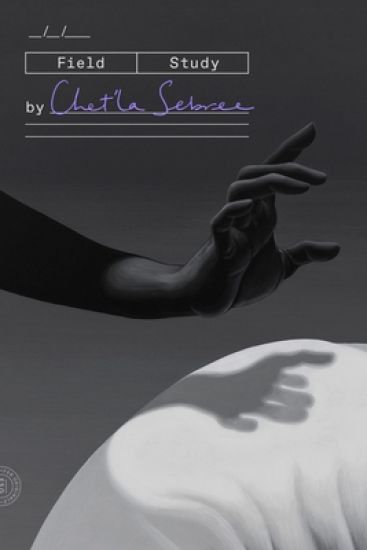
Winner of the 2020 James Laughlin Award from the Academy of American Poets "Layered, complex, and infinitely compelling, Chet'la Sebree's Field Study is a daring exploration of the self and our interactions with others--a meditation on desire, race, loss and survival." --Natasha Trethewey, Pulitzer Prize-winning author of Memorial DriveChet'la Sebree's Field Study is a genre-bending exploration of black womanhood and desire, written as a lyrical, surprisingly humorous, and startlingly vulnerable prose poem I am society's eraser shards--bits used to fix other people's sh*t, then discarded. Somehow still a wet nurse, from actual babes to Alabama special elections. Seeking to understand the fallout of her relationship with a white man, the poet Chet'la Sebree attempts a field study of herself. Scientifically, field studies are objective collections of raw data, devoid of emotion. But during the course of a stunning lyric poem, Sebree's control over her own field study unravels as she attempts to understand the depth of her feelings in response to the data of her life. The result is a singular and provocative piece of writing, one that is formally inventive, playfully candid, and soul-piercingly sharp. Interspersing her reflections with Tweets, quips from TV characters, and excerpts from the Black thinkers--Audre Lorde, Maya Angelou, Tressie McMillan Cottom--that inspire her, Sebree analyzes herself through the lens of a society that seems uneasy, at best, with her very presence. She grapples with her attraction to, and rejection of, whiteness and white men; probes the malicious manifestation of colorism and misogynoir throughout American history and media; and struggles with, judges, and forgives herself when she has more questions than answers. "Even as I accrue these notes," Sebree writes, "I'm still not sure I've found the pulse." A poem of love, heartbreak, womanhood, art, sex, Blackness, and America--sometimes all at once--Field Study throbs with feeling, searing and tender. With uncommon sensitivity and precise storytelling, Sebree makes meaning out of messiness and malaise, breathing life into a scientific study like no other.
Although World War I started in summer 1914 after the assassination of Archduke Franz Ferdinand, the United States didn't enter the war until April 1917. Students will learn about the United States' initial decision to remain neutral, the cost of this decision, and the effects of the war both abroad and at home. They'll hear directly from the words of civilians, soldiers, politicians, and doctors involved in the conflict. Through this cross-section of individuals, students will come to understand how the Great War not only changed the face of Europe but changed America and the nature of international warfare.
Historical Sources on the New Republic, 1783-1830
Chet'la Sebree
Cavendish Square Publishing
2019
sidottu
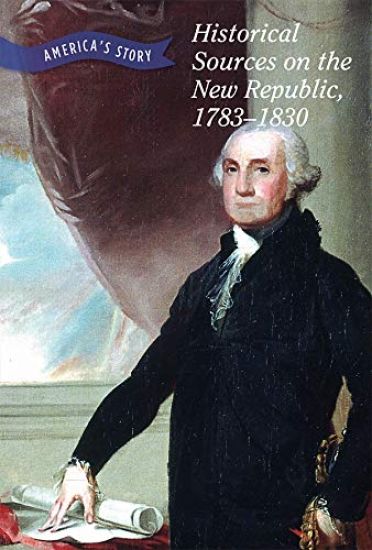
The American colonists solidified their independence from England with the conclusion of the Revolutionary War in 1783. However, the new citizens of this new country called the United States of America still had to figure out their own way forward. Students will hear from Founding Fathers including John Adams, Thomas Jefferson, and Benjamin Franklin about how the government was formed. Students will also learn about how the United States handled international and domestic affairs, about explorations of new territories, and about the day-to-day lives of early Americans, including Native Americans and enslaved Africans, through letters, speeches, legal documents, slave narratives, newspaper articles, and more. Students will gain a rounded understanding of the foundations of America.
While some students might know about the Battles of Lexington and Concord and the Declaration of Independence, this book will offer them the opportunity to engage with riveting primary-source material about the war that formed a nation. Letters, newspapers, speeches, legal documents, and diary entries paint a picture of the toll and cost of the American Revolution. Students will learn from the words of soldiers, doctors, wives, and politicians about the laws that enraged the colonists. They'll get a glimpse at the lives of those who fought on both sides of the conflict as well as those who remained at home.
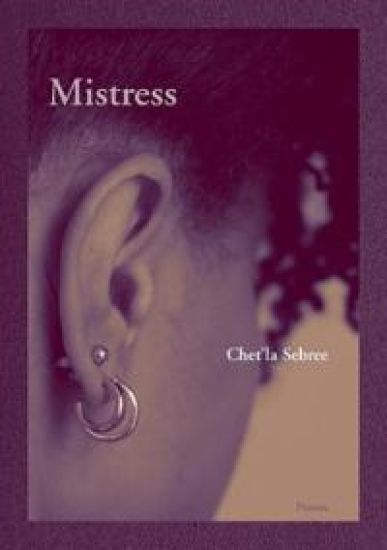
This book of poems presents a cross-generational conversation between Sally Hemings and the contemporary narrator about what it means to be a black woman in their respective landscapes, while at the same time demonstrating how little the ways in which we talk about black women and black female experiences have changed in more than two hundred years. In these poems, the speakers engage with historical texts, art, literature, and popular culture, while never allowing us to lose sight of their location within their own settings, the twenty-first century and the antebellum South. With an intentionally fraught title, Mistress not only addresses the ways in which that word is perhaps inappropriate to define Hemings, but also about how we tend to oversimplify the ways in which we see women. The title is investigated through a series of poems, in which the speakers contemplate the various definitions of “mistress”: extramarital partner, skilled individual, school teacher, authority figure, head of household, etc. In this way, the collection asks readers to complicate their understandings of both the word “mistress” and of black women. This collection seeks to resurrect Hemings from the limited historical narrative she’s often provided, while also bucking up against the limited ways in which black women are currently represented in popular culture. Through a series of poems with “mistress” in the title, the book looks at how narrowly we use the word, almost exclusively as extramarital partner, but how the word’s different definitions are related to power and strength. When we strip the term of its positive connotations, it mirrors the way that we strip Hemings of the agency she had over her life and the lives of her children.
Historical Sources on Slavery
Chet'la Sebree; Elizabeth Sirimarco
Cavendish Square Publishing
2019
sidottu
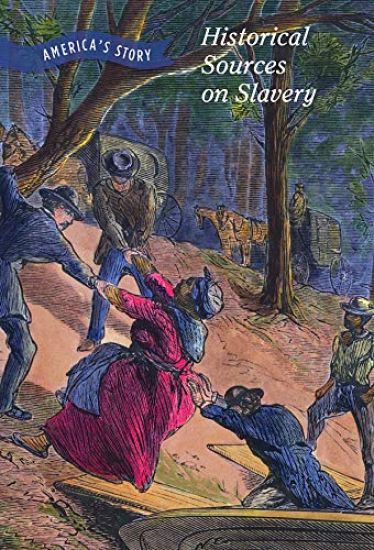
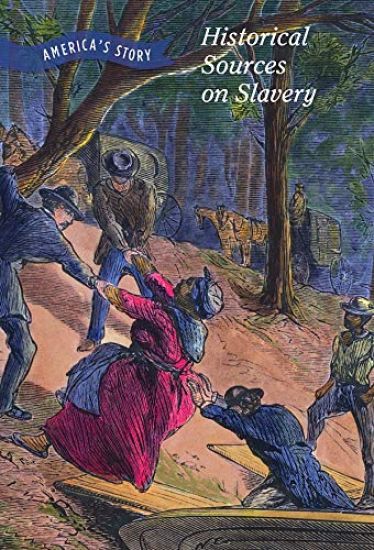
In 1619, Dutch traders sold twenty Africans to English settlers for the purposes of slave labor. By the late seventeenth century, enslaved Africans would become the primary source of labor in America, especially in the South. While the North relied more on technology after the Industrial Revolution, the Southern economy was based on agriculture. Despite the aversion of many Northerners to slavery after the American Revolution, the demand for cotton and tobacco in the North kept slavery, on which the antebellum Southern economy was based, alive. Students will read accounts about the lives of those enslaved laborers. Through primary sources, they'll also learn about the laws designed to protect the institution of slavery and how the institution was dismantled.
What are taxes and what are they used for? Through this book, students will gain a general understanding of the obligatory fees each person in a country is required to pay the government. The text explains the history of taxation as well as the different types of taxes and their effects. Additionally, students will learn how important taxation is to modern economies and how taxation levels can rise or fall depending on a nation's financial health. Through real-world examples, readers will see how twenty-first century tax policies affect individuals, corporations, and countries.
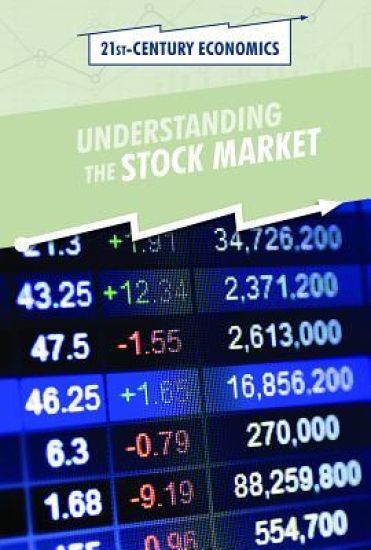
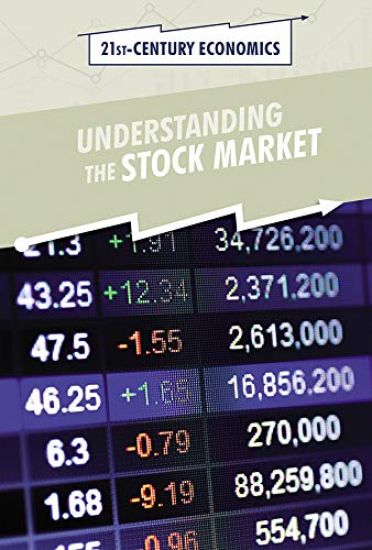
Although the stock market has a major impact on the economy, many people do not fully understand it. Through this book, students will learn about stocks, the open market, and the dangers and benefits of investments. They will come to understand why individuals and businesses place their financial confidence in the market in hopes of further financial gains. Additionally, the dangers of taking these financial risks will be explored through the examples of the Great Depression and the Great Recession, where people lost large amounts of money on their investments. Ultimately, students will gain an understanding of how the stock market has such a substantial effect on the economy.
Readers will learn about recessions and how they are a part of the normal economic cycle: peak, recession, trough, and recovery. This narrative explores how inflation and the imbalance of supply and demand can cause an economic downturn. Through the twenty-first-century example of the Great Recession, students will learn what causes these periods of economic contraction, what leads to recovery, and how to avoid severe and prolonged periods of stagnancy, also known as economic depressions.
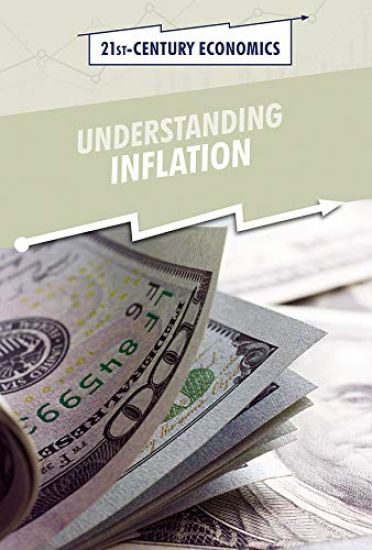
Inflation is a complicated concept. Under ideal circumstances, an inflation rate of 2 or 3 percent can be good for the economy, as it helps boost businesses' profits. Unchecked, however, inflation can lead not only to financial hardships for individuals but to widespread economic downturns. Students will learn how inflation is affected by supply and demand, how it existed long before paper currency, how it can be regulated, and how a lack of regulation can affect the economy. From examples throughout U. S. history and comparisons of the costs of goods over time, students will understand how different rates of inflation in different contexts affect the economy.
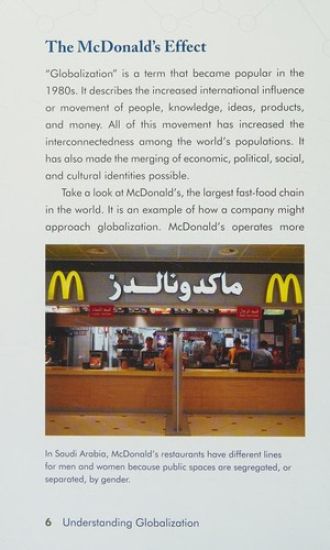
This volume helps demonstrate the interconnectedness of international economies and cultures in the twenty-first century. Through discussions of economic, political, and cultural globalization, students will begin to understand the varied dimensions of global economies. This book presents twenty-first-century examples of globalization ranging from Apple's outsourced manufacturing to the ways in which countries that are a part of the United Nations work together to combat climate change. Students will also learn how, even though the term globalization is still relatively new, the concept itself dates all the way back to ancient trade routes.
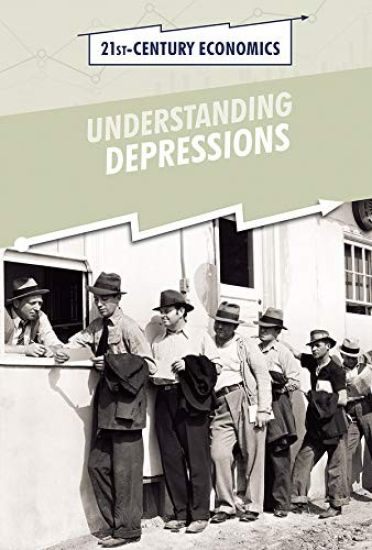
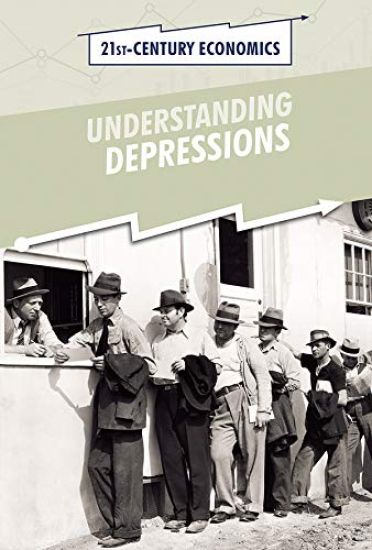
What are economic depressions, and what causes them? Through this book, students will gain a general understanding of economic cycles and how depressions are not part of the normal ebb and flow. They will learn about what triggers these extreme economic downturns and how countries try to recover from them through the real-world example of the Great Depression. Readers will explore twenty-first century recessions in the United States, Greece, and Argentina, and learn how these crises did not become depressions.
Historical Sources on Women's Rights
Chet'la Sebree; Virginia Schomp
Cavendish Square Publishing
2019
sidottu
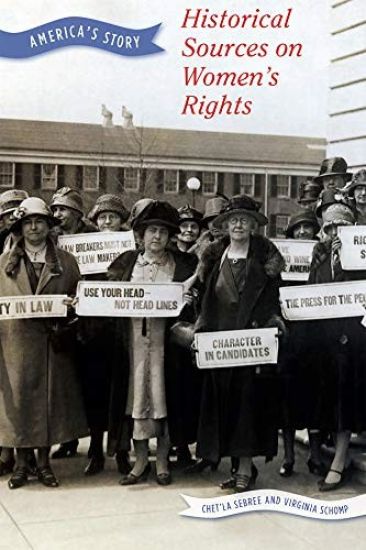
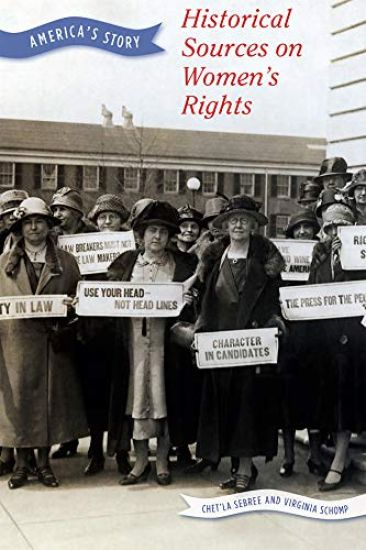
In the mid-nineteenth century, women's rights activists called for the end of social and legal inequality for women. Although women won the right to vote in 1920 with the ratification of the Nineteenth Amendment, the struggle for equality was not over. Students will read primary sources related to gender discrimination, suffrage, and reproductive rights as they learn about the continued struggle for gender equality. Through these sources, students will understand how feminism has roots in the Revolutionary War and the abolitionist movement, how women moved from the private to public sphere, and how sexism continues to prevail.
Historical Sources on Women's Rights
Chet'la Sebree; Virginia Schomp
Cavendish Square Publishing
2019
nidottu
In the mid-nineteenth century, women's rights activists called for the end of social and legal inequality for women. Although women won the right to vote in 1920 with the ratification of the Nineteenth Amendment, the struggle for equality was not over. Students will read primary sources related to gender discrimination, suffrage, and reproductive rights as they learn about the continued struggle for gender equality. Through these sources, students will understand how feminism has roots in the Revolutionary War and the abolitionist movement, how women moved from the private to public sphere, and how sexism continues to prevail.
Historical Sources on Slavery
Chet'la Sebree; Elizabeth Sirimarco
Cavendish Square Publishing
2019
nidottu
In 1619, Dutch traders sold twenty Africans to English settlers for the purposes of slave labor. By the late seventeenth century, enslaved Africans would become the primary source of labor in America, especially in the South. While the North relied more on technology after the Industrial Revolution, the Southern economy was based on agriculture. Despite the aversion of many Northerners to slavery after the American Revolution, the demand for cotton and tobacco in the North kept slavery, on which the antebellum Southern economy was based, alive. Students will read accounts about the lives of those enslaved laborers. Through primary sources, they'll also learn about the laws designed to protect the institution of slavery and how the institution was dismantled.
Historical Sources on Immigration to the United States, 1820-1924
Chet'la Sebree; Rebecca Stefoff
Cavendish Square Publishing
2019
sidottu
Between the nineteenth and early twentieth centuries, nearly forty million people immigrated to the United States. Poverty, widespread famine, and the California gold rush prompted many people to leave their home countries for America. Over time, however, the government tried to slow the flow of immigration with laws like the Johnson-Reed Act in 1924. Students will read accounts from immigrants about the decision to leave home, the journey to America, and life in the new world. Additionally, students will read about xenophobic responses to immigration from the descendants of colonists. Through primary sources, this book provides students with an in-depth understanding of immigration to the United States.
Although the stock market has a major impact on the economy, many people do not fully understand it. Through this book, students will learn about stocks, the open market, and the dangers and benefits of investments. They will come to understand why individuals and businesses place their financial confidence in the market in hopes of further financial gains. Additionally, the dangers of taking these financial risks will be explored through the examples of the Great Depression and the Great Recession, where people lost large amounts of money on their investments. Ultimately, students will gain an understanding of how the stock market has such a substantial effect on the economy.