Kirjojen hintavertailu – 12 859 829 kirjaa ja 27 kauppaa

Kirjailija

Cholachat Rujikiatkamjorn

Kirjat ja teokset yhdessä paikassa: 7 kirjaa, julkaisuja vuosilta 2011–2025, suosituimpiin kuuluu Advanced Rail Geotechnology – Ballasted Track. Vertaile teosten hintoja ja tarkista saatavuus suomalaisista kirjakaupoista.

7 kirjaa

Kirjojen julkaisuvuodet: 2011–2025.

Waste Materials Utilisation for Transport Infrastructure

Waste Materials Utilisation for Transport Infrastructure

Buddhima Indraratna; Yujie Qi; Cholachat Rujikiatkamjorn

TAYLOR FRANCIS LTD
2025
sidottu
As natural geologic materials become scarce, nations around the world are embracing a circular economy perspective to reduce their carbon footprint. This book provides a unique perspective on this shift by highlighting several methods of waste materials recycling for use in civil infrastructure construction and transportation geotechnics. The authors explore innovative and cost-effective solutions to modern-day waste management problems through the use of granular waste materials from mining and mineral processing industries, power plants, steel manufacturing, rubber tyres, and demolished buildings in construction and soft ground stabilisation. This book contains a rich repository of experimental studies conducted on recycled materials and industry byproducts using static and dynamic geotechnical testing, 1:1 scale physical modelling through large-scale process simulation testing, and fully instrumented field monitoring. With fresh insights from international experts, this book will transform transportation infrastructure practices into a new paradigm. This is a valuable resource for academics, practitioners, and postgraduate researchers in the fields of transportation geotechnics, ground improvement, and sustainable infrastructure engineering.
Advanced Rail Geotechnology – Ballasted Track

Advanced Rail Geotechnology – Ballasted Track

Buddhima Indraratna; Cholachat Rujikiatkamjorn; Wadud Salim

TAYLOR FRANCIS LTD
2023
sidottu

Halvin toimitettuna 346,80 €

Ballast plays a vital role in transmitting and distributing the train wheel loads to the underlying track substructure. The load-bearing capacity, safe train speed, and the levels of noise and vibration, as well as passenger comfort depend on the behaviour of ballast through particle interlocking and the corresponding deformation of this granular assembly. Attrition and breakage of ballast occur progressively under heavy and continual cyclic loading, causing track deterioration and rail misalignment affecting safety, while exacerbating the intensity of track maintenance. In the absence of realistic computational models, the track substructure is traditionally designed using mostly empirical approaches. In this book, the authors present the detailed information on the strength, deformation, and degradation aspects of fresh and recycled ballast under monotonic, cyclic, and impact loading using innovative geotechnical testing devices. A constitutive model for ballast incorporating particle breakage is presented representing a more realistic stress–strain response. The mathematical formulations and numerical models are validated using controlled experimental simulations and fully instrumented field trials. Revised ballast gradation is described to provide greater track resiliency and extended longevity. The book also provides a detailed description of geosynthetics for substructure improvement considering track deterioration caused by particle degradation, fouling, and impeded drainage. New to this second edition are extensive discussions on subgrade soil stabilisation, causes and mechanisms of soil fluidisation (mud pumping) under cyclic loading, and preventive and remedial measures to alleviate undue instability of ballast tracks. This book should prove most beneficial for final-year civil engineering students and for postgraduate teaching and learning. It is an ideal supplement for practising railway engineers and researchers engaged in the challenging tasks of future track design for heavier and faster trains.
Advanced Rail Geotechnology - Ballasted Track

Advanced Rail Geotechnology - Ballasted Track

Buddhima Indraratna; Wadud Salim; Cholachat Rujikiatkamjorn

CRC Press
2018
nidottu
Ballast plays a vital role in transmitting and distributing train wheel loads to the underlying sub-ballast and subgrade. Bearing capacity of track, train speed, riding quality and passenger comfort all depend on the stability of ballast through mechanical interlocking of particles. Ballast attrition and breakage occur progressively under heavy cyclic loading, causing track deterioration and rail misalignment—affecting safety and demanding frequent and costly track maintenance. In the absence of realistic constitutive models, the track substructure is traditionally designed using empirical approaches. In Advanced Rail Geotechnology: Ballasted Track, the authors present detailed information on the strength, deformation and degradation, and aspects of fresh and recycled ballast under monotonic, cyclic, and impact loading using innovative geotechnical testing devices. The book presents a new stress-strain constitutive model for ballast incorporating particle breakage and validates mathematical formulations and numerical models using experimental evidence and field trials. The text also elucidates the effectiveness of various commercially available geosynthetics for enhancing track drainage and stability. It presents revised ballast gradations for modern high-speed trains capturing particle breakage and describes the use of geosynthetics in track design. It also provides insight into track design, capturing particle degradation, fouling, and drainage. This book is ideal for final year civil engineering students and postgraduates and is a solid reference for practicing railway engineers and researchers with the task of modernizing existing track designs for heavier and faster trains.
Ground Improvement Case Histories

Ground Improvement Case Histories

Buddhima Indraratna; Jian Chu; Cholachat Rujikiatkamjorn

Butterworth-Heinemann Ltd
2015
nidottu
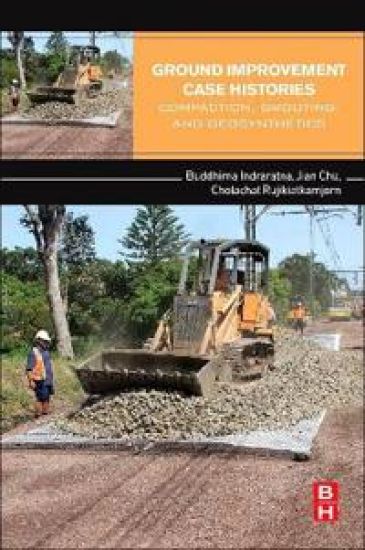
Written by an international group of contributors, Ground Improvement Case Histories: Compaction, Grouting and Geosynthetics provides over 700 pages of international case-histories. Each case-history provides an overview of the specific technology followed by applications, with some cases offering a comprehensive back-analysis through numerical modelling. Specific case-histories include: The Use of Alternative and Improved Construction Materials and Geosynthetics in Pavements, Case Histories of Embankments on Soft Soils and Stabilisation with Geosynthetics, Ground Improvement with Geotextile Reinforcements, Use of Geosynthetics to aid Construction over Soft Soils and Soil Improvement and Foundation Systems with Encased Columns and Reinforced Bearing Layers.
Ground Improvement Case Histories

Ground Improvement Case Histories

Buddhima Indraratna; Jian Chu; Cholachat Rujikiatkamjorn

Butterworth-Heinemann Ltd
2015
nidottu
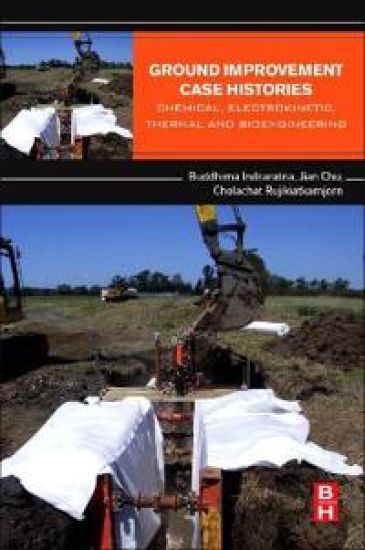
Written by an international group of experts, Ground Improvement Case Histories: Chemical, Electrokinetic, Thermal and Bioengineering Methods provides over 700 pages of case-histories collected from all over the world. Each case-history provides an overview of the specific technology followed by applications, and in some cases, comprehensive back analysis through numerical modelling is discussed. The book includes methods for employing bacterial and biological treatment, and native vegetation for stabilizing problematic soils. Specific case-histories included in the book are: Effect of Drainage and Grouting for the World Longest Seikan Undersea Tunnel Construction, Cement/lime Mixing Ground Improvement for Road Construction on Soft Ground, Use of Jet Grouting in Deep Excavations, and Stabilization of Reactive Sulphide Mine Tailings using Water Cover Technology.
Ground Improvement Case Histories

Ground Improvement Case Histories

Buddhima Indraratna; Jian Chu; Cholachat Rujikiatkamjorn

Butterworth-Heinemann Ltd
2015
nidottu
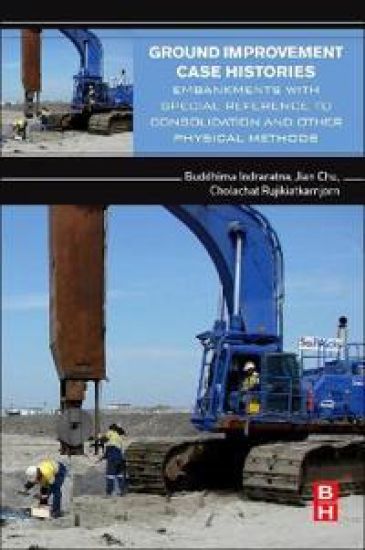
Written by a group of international contributors, Ground Improvement Case Histories: Embankments with Special Reference to Soil Consolidation and Other Physical Methods, employs the use of case-histories to illustrate and apply equations, numerical methods and technology to undertake even the most complicated ground improvement projects. In this book, each case-history provides an overview of the specific technology followed by field applications and in some cases comprehensive back-analysis through numerical modelling. Specific embankment case-histories with special reference to soil consolidation included are: Ballina Bypass (Australia), Tianjin Port (China), Second Bangkok International Airport (Thailand), Changi East reclamation (Singapore), Maizuru-Wakasa Expressway (Japan) and Colombo Airport Expressway, Sri Lanka. Other physical methods include performance of stone columns at Penny’s Bay reclamation in Hong Kong and PCC piles for highway and high-speed railway construction in China, among others.
Advanced Rail Geotechnology - Ballasted Track

Advanced Rail Geotechnology - Ballasted Track

Buddhima Indraratna; Wadud Salim; Cholachat Rujikiatkamjorn

CRC Press
2011
sidottu
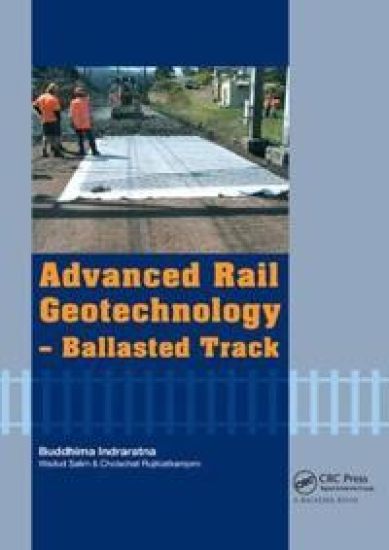
Ballast plays a vital role in transmitting and distributing train wheel loads to the underlying sub-ballast and subgrade. Bearing capacity of track, train speed, riding quality and passenger comfort all depend on the stability of ballast through mechanical interlocking of particles. Ballast attrition and breakage occur progressively under heavy cyclic loading, causing track deterioration and rail misalignment—affecting safety and demanding frequent and costly track maintenance. In the absence of realistic constitutive models, the track substructure is traditionally designed using empirical approaches. In Advanced Rail Geotechnology: Ballasted Track, the authors present detailed information on the strength, deformation and degradation, and aspects of fresh and recycled ballast under monotonic, cyclic, and impact loading using innovative geotechnical testing devices. The book presents a new stress-strain constitutive model for ballast incorporating particle breakage and validates mathematical formulations and numerical models using experimental evidence and field trials. The text also elucidates the effectiveness of various commercially available geosynthetics for enhancing track drainage and stability. It presents revised ballast gradations for modern high-speed trains capturing particle breakage and describes the use of geosynthetics in track design. It also provides insight into track design, capturing particle degradation, fouling, and drainage. This book is ideal for final year civil engineering students and postgraduates and is a solid reference for practicing railway engineers and researchers with the task of modernizing existing track designs for heavier and faster trains.