Kirjailija
Chrétien De Troyes
Kirjat ja teokset yhdessä paikassa: 55 kirjaa, julkaisuja vuosilta 1976–2025, suosituimpiin kuuluu Réussir son Bac de français 2025 : Analyse du roman Lancelot ou le Chevalier à la Charrette de Chrétien de Troyes. Vertaile teosten hintoja ja tarkista saatavuus suomalaisista kirjakaupoista.
Nimi esiintyy myös muodoissa: Chretien De Troyes
55 kirjaa
Kirjojen julkaisuvuodet: 1976–2025.
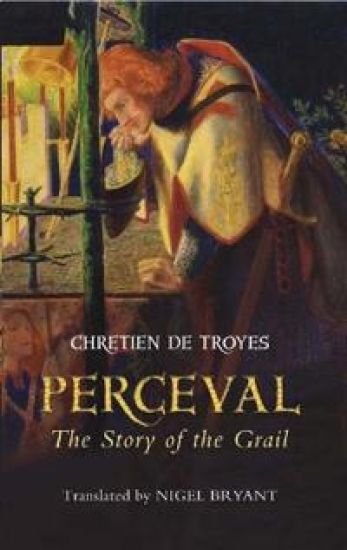
The original version of one of the greatest and most potent of medieval legends. Chrétien de Troyes' Perceval is the most important single Arthurian romance. It contains the very first mention of the mysterious grail, later to become the Holy Grail and the focal point of the spiritual quest of the knights of Arthur's court. Chrétien left the poem unfinished, but the extraordinary and intriguing theme of the Grail was too good to leave, and other poets continued and eventually completed it. This is the only English translation to include selections from the three continuations and from the work of Gerbert de Montreuil, making the romance a coherent whole, and following through Chrétien's essential theme of the making of a knight, in both worldlyand spiritual terms. It is thus the most complete account available in English of the essential Arthurian romance, the origin of the Grail legend.
Cligès was probably written after Erec et Enide and is thus Chrétien de Troyes' second romance. There are several modern English and French translations of the text, but a need has long been felt for a modern German version, particularly as references in Middle High German texts and text fragments indicate that there was at least one Middle High German version. This gap is now filled with the present modern German translation which is published together with the original text in a bilingual edition; this means that the special position which Cligès takes up in more than one respect in the history of the medieval European romance can now form a stronger focus in German Studies. Thus a broader basis is formed both for interdisciplinary medieval studies and for research into the history and theory of the romance. A comprehensive introduction sketches the most important problems in interpreting the work, the present state of research into Cligès in international Romance Studies and its place in the history of the Arthurian romance. With the translation, the introduction, the commentary, and a comprehensive bibliography, this monograph provides an indispensable foundation for future research. It is anticipated that it will meet with wide interest and significantly alter the view taken by German Studies of the history of the romance in medieval Europe.
One of the most influential storytellers in Western literature, French poet Chrétien de Troyes helped to shape the ever-fascinating legend of King Arthur and the Round Table. Of Chrétien's five surviving romantic Arthurian poems, the last and longest is Perceval, an unfinished work that introduces the story of the Grail—a legend quickly adopted by other medieval writers and taken up by a continuing succession of authors. In Chrétien's romance, Perceval progresses from a naive boyhood in rural seclusion to a position of high respect as a knight at Arthur's court. With the help of two teachers—his mother and Gornemant of Goort—Perceval is ultimately able to reject the worldly adventures chosen by other knights and seek important moral and spiritual answers. Acclaimed for his sensitive and faithful translations of the poems of Chrétien, Burton Raffel completes the Arthurian series with this rendition of Perceval. Raffel conveys to the modern English language reader all the delights of Chrétien’s inventive storytelling, perceptive characterizations and vividly evoked emotions.
Chrestien de Troyes skabte den litterære genre vi kalder ridderromanen, og med Løveridderen (fra ca. 1170) foreligger dermed en af de første ridderromaner på dansk. Løveridderen er i dag både historisk læsning og historielæsning - ikke mindst hvis den læses højt, hvad den medrivende handling, de livfulde scenerier og den muntre fortællestil indbyder til. Ivan - romanens helt - er dristig og frembrusende, ivrig efter at lykkes hvor andre mislykkes. Han udfordrer den Forunderlige Kilde, han vinder Jordens Skønneste Kvinde, han erobrer et rige - og dér kunne historien ende, men det er kun begyndelsen. I tilgift får læseren et sjældent levende indblik i de sæder og skikke, værdinormer og forestillinger, som prægede tilværelsen for 800 år siden. Kajsa Mejer, ph.d., har også oversat Kong Arthurs død - en fortælling fra det trettende århundrede.
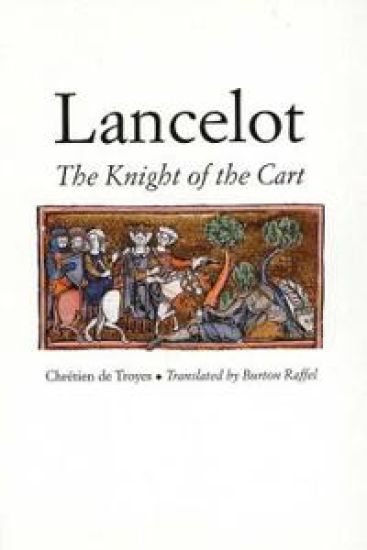
In this outstanding new translation of Lancelot, Burton Raffel brings to English language readers the fourth of Chrétien’s five surviving romantic Arthurian poems. This poem was the first to introduce Lancelot as an important figure in the King Arthur legend.
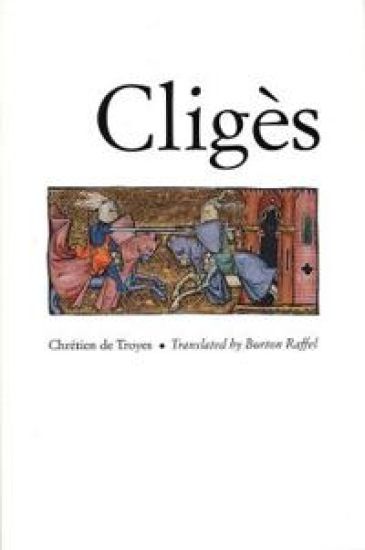
In this extraordinarily fine translation of Cligès, the second of five surviving Arthurian poems by twelfth-century French poet Chrétien de Troyes, Burton Raffel captures the liveliness, innovative spirit, and subtle intentions of the original work. In this poem, Chrétien creates his most artful plot and paints the most starkly medieval portraits of any of his romances. The world he describes has few of the safeguards and protections of civilization: battles are brutal and merciless, love is anguished and desperate. Cligès tells the story of the unhappy Fenice, trapped in a marriage of constraint to the emperor of Constantinople. Fenice feigns death, then awakens to a new, happy life with her lover. Enormously popular in their own time, each of Chrétien's great verse romances is a fast-paced psychologically oriented narrative. In a rational and realistic manner, Chrétien probes the inner workings of his characters and the world they live in, evoking the people, their customs, and their values in clear, emotionally charged verse. Cligès is filled with Chrétien's barbs and bawdiness, his humor and his pleasure, his affection and his contempt. It is the unmistakable work of a brilliantly individualistic poet, brought to modern English readers by Raffel's poetic translation in a metric form invented specifically to reflect Chrétien's narrative speed and tone.
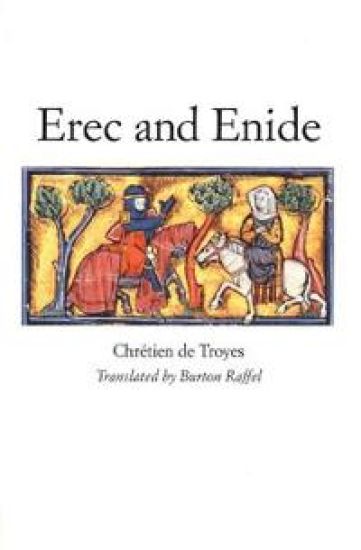
Erec and Enide, the first of five surviving Arthurian romantic poems by twelfth-century French poet Chrétien de Troyes, narrates a vivid chapter from the legend of King Arthur. Chrétien's romances became the source for Arthurian tradition and influenced countless other poets in England and on the Continent. Yet his swift-moving style is difficult to capture in translation, and today's English-speaking audiences remain largely unfamiliar with the pleasures of reading his poems. Now an experienced translator of medieval verse who is himself a poet has translated Eric and Enide in an original three-stress metric verse form that fully captures the movement, the sense, and the spirit of the Old French original. Burton Raffel's rendition preserves the subtlety and charm of a poem that is in turn serious, dramatic, bawdy, merry, and satiric. Erec and Enide tells the story of Erec, a knight at King Arthur's court, whose retirement to domestic bliss with his beautiful new wife Enide takes him away from his chivalric duties. To regain his knightly honor, Erec sets out with Enide on a series of amazing adventures. Eric dispatches thieves and giants with prodigious strength and valor but treats his wife rather harshly for doubting his abilities. When Enide is kidnapped by a robber baron, Erec revives from near-death to perform a courageous rescue, and at length the two are reconciled.
Fully annotated edition, in French, of late 12c Arthurian romance. Cligés is generally thought to be the second of Chrétien's Arthurian romances, probably written between 1185-87. This critical edition of Cligésis the first since Wendelin Foerster's in (1884) to take account of allthe manuscripts. Based on the Guiot manuscript, it contains many emendations, producing a text closer to that of Chrétien's original. Variant apparatus, notes, glossary, and editorial comment on the manuscripts accompany the text. STEWART GREGORY is in the Department of French, Leicester University; the late CLAUDE LUTTRELL was formerly in the Department of English at the same university, and is known for his books and articles on 12c French Arthurian romance.
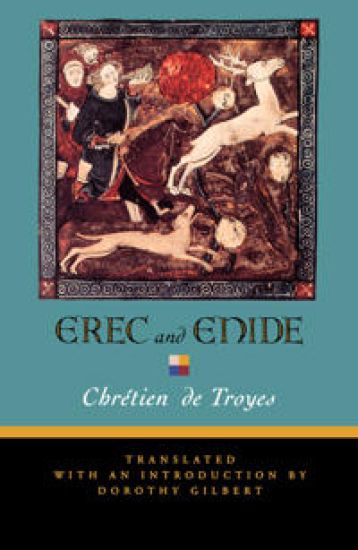
In this new verse translation of one of the great works of French literature, Dorothy Gilbert captures the vivacity, wit, and grace of the first known Arthurian romance. "Erec and Enide" is the story of the quest and coming of age of a young knight, an illustrious member of Arthur's court, who must learn to balance the demands of a masculine public life - tests of courage, skill, adaptability, and mature judgment - with the equally urgent demands of the private world of love and marriage. We see his wife, Enide, develop as an exemplar of chivalry in the female, not as an Amazon, but as a brave, resolute, and wise woman. Composed ca. 1170, "Erec and Enide" masterfully combines elements of Celtic legend, classical and ecclesiastical learning, and French medieval culture and ideals. In choosing to write in rhymed octosyllabic couplets - Chretien's prosodic pattern - Dorothy Gilbert has tried to reproduce what so often gets lost in prose or free verse translations: the precise and delicate meter; the rhyme, with its rich possibilities for emphasis, nuance, puns and jokes; and the 'mantic power' implicit in proper names. The result will enable the scholar who cannot read Old French, the student of literature, and the general reader to gain a more sensitive and immediate understanding of the form and spirit of Chretien's poetry, and to appreciate the more Chretien's great contribution to European literature.
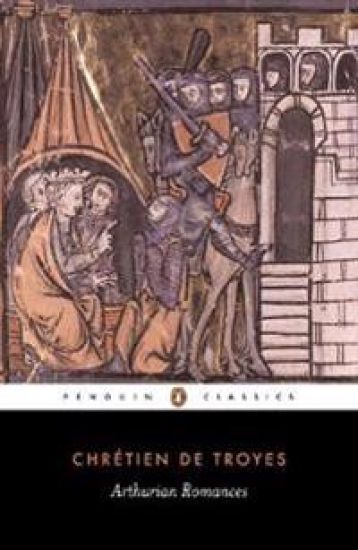
Taking the legends surrounding King Arthur and weaving in new psychological elements of personal desire and courtly manner, Chrétien de Troyes fashioned a new form of medieval Romance. The Knight of the Cart is the first telling of the adulterous relationship between Lancelot and Arthur's Queen Guinevere, and in The Knight with the Lion Yvain neglects his bride in his quest for greater glory. Erec and Enide explores a knight's conflict between love and honour, Cligés exalts the possibility of pure love outside marriage, while the haunting The Story of the Grail chronicles the legendary quest. Rich in symbolism, these evocative tales combine closely observed detail with fantastic adventure to create a compelling world that profoundly influenced Malory, and are the basis of the Arthurian legends we know today.
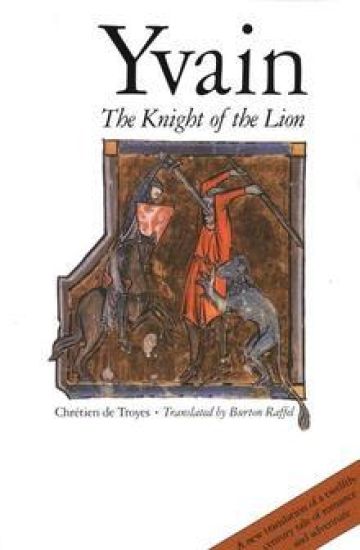
The twelfth-century French poet Chrétien de Troyes is a major figure in European literature. His courtly romances fathered the Arthurian tradition and influenced countless other poets in England as well as on the continent. Yet because of the difficulty of capturing his swift-moving style in translation, English-speaking audiences are largely unfamiliar with the pleasures of reading his poems. Now, for the first time, an experienced translator of medieval verse who is himself a poet provides a translation of Chrétien’s major poem, Yvain, in verse that fully and satisfyingly captures the movement, the sense, and the spirit of the Old French original. Yvain is a courtly romance with a moral tenor; it is ironic and sometimes bawdy; the poetry is crisp and vivid. In addition, the psychological and the socio-historical perceptions of the poem are of profound literary and historical importance, for it evokes the emotions and the values of a flourishing, vibrant medieval past.