Kirjojen hintavertailu – 12 859 819 kirjaa ja 27 kauppaa

Kirjailija

Chris Andersen

Kirjat ja teokset yhdessä paikassa: 5 kirjaa, julkaisuja vuosilta 2013–2025, suosituimpiin kuuluu Indigenous Statistics. Vertaile teosten hintoja ja tarkista saatavuus suomalaisista kirjakaupoista.

5 kirjaa

Kirjojen julkaisuvuodet: 2013–2025.

Indigenous Statistics

Indigenous Statistics

Chris Andersen; Maggie Walter; Tahu Kukutai; Chelsea Gabel

TAYLOR FRANCIS LTD
2025
nidottu
This second edition of the groundbreaking Indigenous Statistics opens up a major new approach to research across the disciplines and applied fields. While qualitative methods have been rigorously critiqued and reformulated, the population statistics relied on by virtually all research on Indigenous Peoples continue to be taken for granted as straightforward, transparent numbers. Drawing on a diverse new author team, this book dismantles that persistent positivism with a forceful critique, then fills the void with a new paradigm for Indigenous quantitative methods using concrete examples of research projects from first world Indigenous Peoples in the United States, Australia, Aotearoa New Zealand and Canada. Concise and accessible, it is an ideal supplementary text as well as a core component of the methodological toolkit for anyone conducting Indigenous research or using Indigenous population statistics. This is an essential text for students studying quantitative methods, statistics and research methods. The Open Access version of this book, available at http://www.taylorfrancis.com, has been made available under a Creative Commons Attribution-Non-Commercial-No Derivative Licence (CC-BY-NC-ND) 4.0 license.
Indigenous Statistics

Indigenous Statistics

Chris Andersen; Maggie Walter; Tahu Kukutai; Chelsea Gabel

TAYLOR FRANCIS LTD
2025
sidottu
This second edition of the groundbreaking Indigenous Statistics opens up a major new approach to research across the disciplines and applied fields. While qualitative methods have been rigorously critiqued and reformulated, the population statistics relied on by virtually all research on Indigenous Peoples continue to be taken for granted as straightforward, transparent numbers. Drawing on a diverse new author team, this book dismantles that persistent positivism with a forceful critique, then fills the void with a new paradigm for Indigenous quantitative methods using concrete examples of research projects from first world Indigenous Peoples in the United States, Australia, Aotearoa New Zealand and Canada. Concise and accessible, it is an ideal supplementary text as well as a core component of the methodological toolkit for anyone conducting Indigenous research or using Indigenous population statistics. This is an essential text for students studying quantitative methods, statistics and research methods. The Open Access version of this book, available at http://www.taylorfrancis.com, has been made available under a Creative Commons Attribution-Non-Commercial-No Derivative Licence (CC-BY-NC-ND) 4.0 license.
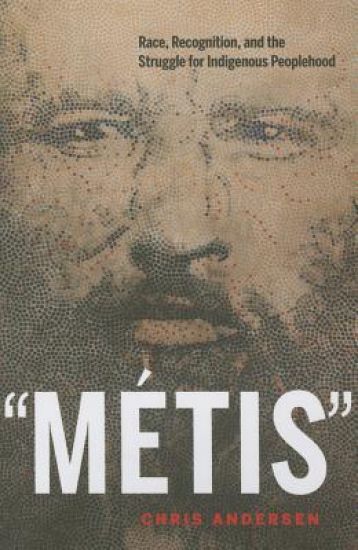
"Métis"

"Métis"

Chris Andersen

University of British Columbia Press
2015
pokkari
Ask any Canadian what "Métis" means, and they will likely say "mixed race." Canadians consider Métis mixed in ways that other indigenous people are not, and the census and courts have premised their recognition of Métis status on this race-based understanding. According to Andersen, Canada got it wrong. Our very preoccupation with mixedness is not natural but stems from more than 150 years of sustained labour on the part of the state and others. From its roots deep in the colonial past, the idea of "Métis as mixed" has pervaded the Canadian consciousness until it settled in the realm of common sense. In the process, "Métis" has become a racial category rather than the identity of an indigenous people with a shared sense of history and culture. Andersen asks all Canadians to consider the consequences of adopting a definition of "Métis" that makes it nearly impossible for the Métis nation to make political claims as a people.
Indigenous Statistics

Indigenous Statistics

Chris Andersen; Maggie Walter

Left Coast Press Inc
2013
sidottu
In the first book ever published on Indigenous quantitative methodologies, Maggie Walter and Chris Andersen open up a major new approach to research across the disciplines and applied fields. While qualitative methods have been rigorously critiqued and reformulated, the population statistics relied on by virtually all research on Indigenous peoples continue to be taken for granted as straightforward, transparent numbers. This book dismantles that persistent positivism with a forceful critique, then fills the void with a new paradigm for Indigenous quantitative methods, using concrete examples of research projects from First World Indigenous peoples in the United States, Australia, and Canada. Concise and accessible, it is an ideal supplementary text as well as a core component of the methodological toolkit for anyone conducting Indigenous research or using Indigenous population statistics.
Indigenous Statistics

Indigenous Statistics

Chris Andersen; Maggie Walter

Left Coast Press Inc
2013
nidottu
In the first book ever published on Indigenous quantitative methodologies, Maggie Walter and Chris Andersen open up a major new approach to research across the disciplines and applied fields. While qualitative methods have been rigorously critiqued and reformulated, the population statistics relied on by virtually all research on Indigenous peoples continue to be taken for granted as straightforward, transparent numbers. This book dismantles that persistent positivism with a forceful critique, then fills the void with a new paradigm for Indigenous quantitative methods, using concrete examples of research projects from First World Indigenous peoples in the United States, Australia, and Canada. Concise and accessible, it is an ideal supplementary text as well as a core component of the methodological toolkit for anyone conducting Indigenous research or using Indigenous population statistics.