Kirjojen hintavertailu – 12 859 819 kirjaa ja 27 kauppaa

Kirjailija

Chris Armstrong

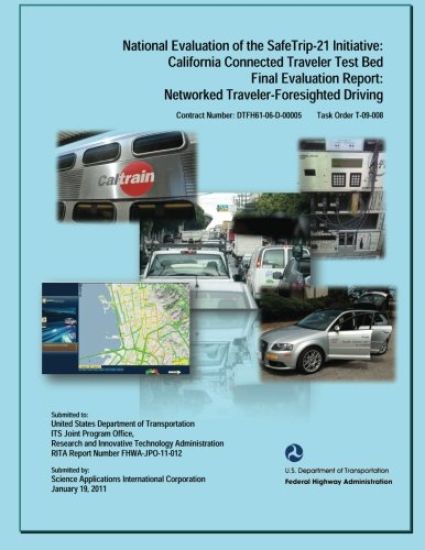
Kirjat ja teokset yhdessä paikassa: 22 kirjaa, julkaisuja vuosilta 1981–2024, suosituimpiin kuuluu National Evaluation of the SafeTrip-21 Initiative: Final Report Networked Traveler-Foresighted Driving. Vertaile teosten hintoja ja tarkista saatavuus suomalaisista kirjakaupoista.

22 kirjaa

Kirjojen julkaisuvuodet: 1981–2024.

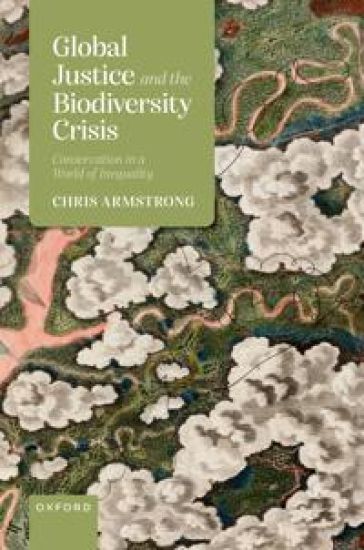
Global Justice and the Biodiversity Crisis

Global Justice and the Biodiversity Crisis

Chris Armstrong

Oxford University Press
2024
sidottu
The world is in the midst of a biodiversity crisis, which existing conservation policies have failed to arrest. Policymakers, academics, and the general public are coming to recognise that much more ambitious conservation policies are in order. But biodiversity conservation raises major issues of global justice - even if the connection between conservation and global justice is too seldom made. The lion's share of conservation funding is spent in the global North, despite the fact that most biodiversity exists in the global South, and local people can often scarcely afford to make sacrifices in the interests of biodiversity conservation. Many responses to the biodiversity crisis threaten to exacerbate existing global injustices, to lock people into poverty, and to exploit the world's poor. At the extreme, policies aimed at protecting biodiversity have also been associated with exclusion, dispossession, and violence. The challenge this book grapples with is how biodiversity might be conserved without producing global injustice. It distinguishes policies which are likely to exacerbate global injustice, and policies which promise to reduce them. The struggle to formulate and implement just conservation policies is vital to our planet's future.
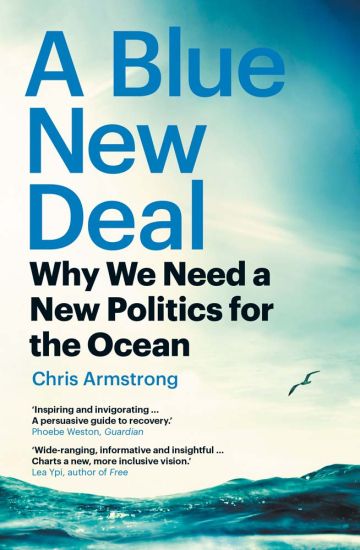
A Blue New Deal

A Blue New Deal

Chris Armstrong

YALE UNIVERSITY PRESS
2023
pokkari
An urgent account of the state of our oceans today—and what we must do to protect them “Provides a persuasive guide to recovery, and is an inspiring and invigorating read.”—Phoebe Weston, The Guardian The ocean sustains life on our planet, from absorbing carbon to regulating temperatures, and, as we exhaust the resources to be found on land, it is becoming central to the global market. But today we are facing two urgent challenges at sea: massive environmental destruction, and spiraling inequality in the ocean economy. Chris Armstrong reveals how existing governing institutions are failing to respond to the most pressing problems of our time, arguing that we must do better. Armstrong examines these crises—from the fate of people whose lands will be submerged by sea level rise to the exploitation of people working in fishing to the rights of marine animals—and makes the case for a powerful World Ocean Authority capable of tackling them. A Blue New Deal presents a radical manifesto for putting equality, democracy, and sustainability at the heart of ocean politics.
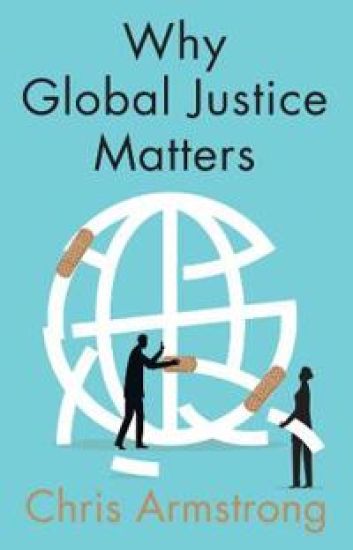
Why Global Justice Matters

Why Global Justice Matters

Chris Armstrong

Polity Press
2019
sidottu

Halvin toimitettuna 60,10 €

While many are born into prosperity, hundreds of millions of people lead lives of almost unimaginable poverty. Our world remains hugely unequal, with our place of birth continuing to exert a major influence on our opportunities. In this accessible book, leading political theorist Chris Armstrong engagingly examines the key moral and political questions raised by this stark global divide. Why, as a citizen of a relatively wealthy country, should you care if others have to make do with less? Do we have a moral duty to try to rectify this state of affairs? What does 'global justice' mean anyway - and why does it matter? Could we make our world a more just one even if we tried? Can you as an individual make a difference? This book powerfully demonstrates that global justice is something we should all be concerned about, and sketches a series of reforms that would make our divided world a fairer one. It will be essential introductory reading for students of global justice, activists and concerned citizens.
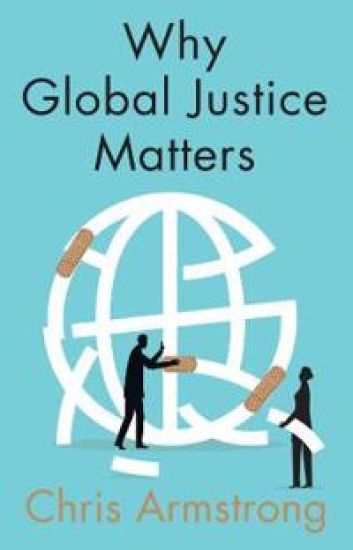
Why Global Justice Matters

Why Global Justice Matters

Chris Armstrong

Polity Press
2019
nidottu

Halvin toimitettuna 24,10 €

While many are born into prosperity, hundreds of millions of people lead lives of almost unimaginable poverty. Our world remains hugely unequal, with our place of birth continuing to exert a major influence on our opportunities. In this accessible book, leading political theorist Chris Armstrong engagingly examines the key moral and political questions raised by this stark global divide. Why, as a citizen of a relatively wealthy country, should you care if others have to make do with less? Do we have a moral duty to try to rectify this state of affairs? What does 'global justice' mean anyway - and why does it matter? Could we make our world a more just one even if we tried? Can you as an individual make a difference? This book powerfully demonstrates that global justice is something we should all be concerned about, and sketches a series of reforms that would make our divided world a fairer one. It will be essential introductory reading for students of global justice, activists and concerned citizens.
Justice and Natural Resources

Justice and Natural Resources

Chris Armstrong

Oxford University Press
2017
sidottu
Struggles over precious resources such as oil, water, and land are increasingly evident in the contemporary world. States, indigenous groups, and corporations vie to control access to those resources, and the benefits they provide. These conflicts are rapidly spilling over into new arenas, such as the deep oceans and the Polar regions. How should these precious resources be governed, and how should the benefits and burdens they generate be shared? Justice and Natural Resources provides a systematic theory of natural resource justice. It argues that we should use the benefits and burdens flowing from these resources to promote greater equality across the world, and share governance over many important resources. At the same time, the book takes seriously the ways in which particular resources can matter in peoples lives. It provides invaluable guidance on a series of pressing issues, including the scope of state resource rights, the claims of indigenous communities, rights over ocean resources, the burdens of conservation, and the challenges of climate change and transnational resource governance. It will be required reading for anyone interested in natural resource governance, climate politics, and global justice.
Civic Symbol

Civic Symbol

Chris Armstrong

University of Toronto Press
2015
sidottu
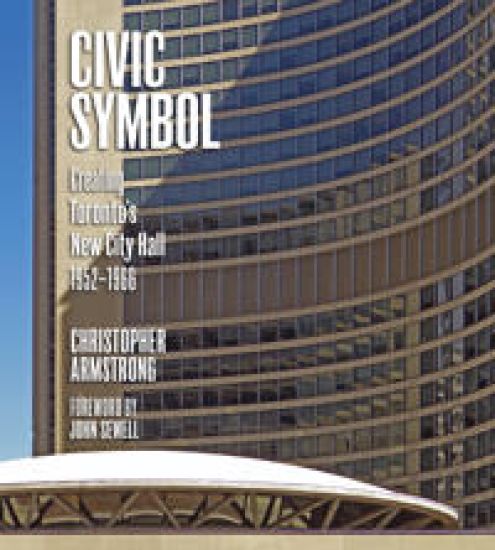
When Toronto’s New City Hall opened in 1965, it was an iconic modernist symbol for what was still a sedate and conservative city. Its futuristic design by Finnish architect Viljo Revell, composed of two curved towers flanking a clam-shaped council chamber, remains as strange and distinctive today as it did fifty years ago. In Civic Symbol, Christopher Armstrong chronicles the complex and controversial development of this urban landmark from the initial international competition to the many debates that surrounded its construction and furnishing. Armstrong catalogs the many twists and turns along the path from idea to reality for the extraordinary building that Frank Lloyd Wright claimed future generations would say “marks the spot where Toronto fell.” Lavishly illustrated with contemporary photographs, plans, and drawings, Civic Symbol is the essential history of this iconic Canadian building.
Prospects for Citizenship

Prospects for Citizenship

Gerry Stoker; Andrew Mason; Anthony McGrew; Chris Armstrong; David Owen; Graham Smith; Momoh Banya; Derek McGhee; Clare Saunders

Bloomsbury Academic
2015
nidottu
This book is available as open access through the Bloomsbury Open Access programme and is available on www.bloomsburycollections.com. Is citizenship in decline due to globalisation and an erosion of civic participation and democratic representation? Or is it merely transformed and extended to new levels and larger scales? Should we assess these challenges and changes primarily from a perspective of global justice, or consider also membership in a democratic polity as itself a basic good? Prospects for Citizenship addresses these broad questions in a unique collaborative effort. The result is an impressive book that looks at the future of citizenship from multiple research perspectives while remaining coherent in its overall purpose. Rainer Bauböck, European University Institute, FlorenceThis book offers a perspicuous overview of the prospects for citizenship in our contemporary political context. The authorial team draw on a wide range of empirical and normative research in order to offer an incisive analysis of the problems and pressures of citizenship in the twenty-first century. The authors focus in particular on the apparent decline of traditional forms of civic engagement, the emergence of new forms of participation and the relationship between citizenship and globalization.
Global Distributive Justice

Global Distributive Justice

Chris Armstrong

Cambridge University Press
2012
pokkari
Global distributive justice is now part of mainstream political debate. It incorporates issues that are now a familiar feature of the political landscape, such as global poverty, trade justice, aid to the developing world and debt cancellation. This is the first textbook to focus exclusively on issues of distributive justice on the global scale. It gives clear and up-to-date accounts of the major theories of global justice and spells out their significance for a series of important political issues, including climate change, international trade, human rights and migration. These issues are brought to life through the use of case studies, which emphasise the connection of theories of justice to contemporary politics, and 'Further Issues' sections, which discuss emerging debates or controversies that are likely to command increasing attention in the coming years.
Global Distributive Justice

Global Distributive Justice

Chris Armstrong

Cambridge University Press
2012
sidottu
Global distributive justice is now part of mainstream political debate. It incorporates issues that are now a familiar feature of the political landscape, such as global poverty, trade justice, aid to the developing world and debt cancellation. This is the first textbook to focus exclusively on issues of distributive justice on the global scale. It gives clear and up-to-date accounts of the major theories of global justice and spells out their significance for a series of important political issues, including climate change, international trade, human rights and migration. These issues are brought to life through the use of case studies, which emphasise the connection of theories of justice to contemporary politics, and 'Further Issues' sections, which discuss emerging debates or controversies that are likely to command increasing attention in the coming years.
Rethinking Equality

Rethinking Equality

Chris Armstrong

Manchester University Press
2006
sidottu
Although formally equal, relations between citizens are actually characterised by many and varied forms of inequality. Do contemporary theories of equality provide an adequate response to the inequalities that afflict contemporary societies? And what is the connection between theories of equality and the contemporary politics of citizenship? Accessible and comprehensive, Rethinking equality provides a clear, critical and very up-to-date account of the most important contemporary egalitarian theories. Unusually, it also relates these theories to contemporary political practice, assessing them in relation to the impact of neoliberalism on contemporary welfare states, and the shift from ‘social’ to ‘active’ forms of citizenship. As well as representing a significant intervention within academic debates on equality and citizenship, this book represents essential reading for students of contemporary political theory.
Rethinking Equality

Rethinking Equality

Chris Armstrong

Manchester University Press
2006
nidottu
Although formally equal, relations between citizens are actually characterised by many and varied forms of inequality. Do contemporary theories of equality provide an adequate response to the inequalities that afflict contemporary societies? And what is the connection between theories of equality and the contemporary politics of citizenship? Accessible and comprehensive, Rethinking equality provides a clear, critical and very up-to-date account of the most important contemporary egalitarian theories. Unusually, it also relates these theories to contemporary political practice, assessing them in relation to the impact of neoliberalism on contemporary welfare states, and the shift from ‘social’ to ‘active’ forms of citizenship. As well as representing a significant intervention within academic debates on equality and citizenship, this book represents essential reading for students of contemporary political theory. This book is relevant to United Nations Sustainable Development Goal 10, Reduced inequalities
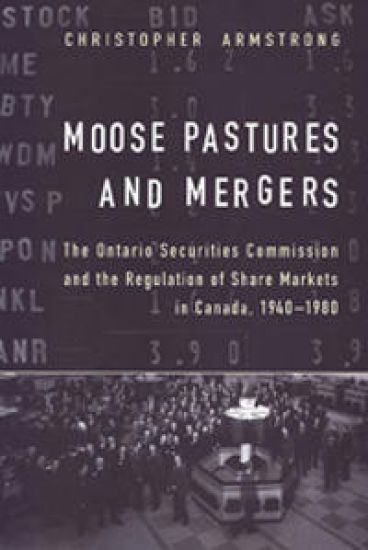
Moose Pastures and Mergers

Moose Pastures and Mergers

Chris Armstrong

University of Toronto Press
2001
pokkari
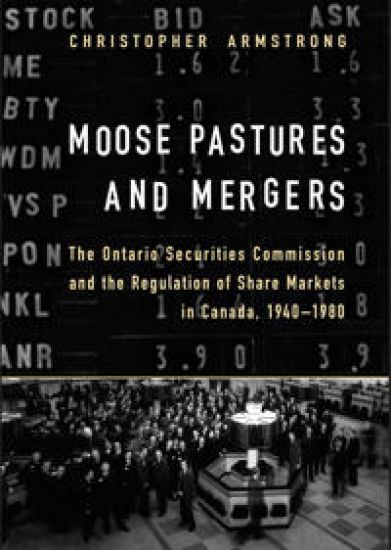
Long before the spectacular collapse of Bre-X in 1997, the Canadian capital markets had their share of swindlers and crooks. In the boom times after Second World War, hard-sell speculative mining ventures, pushing what often amounted to a few acres of moose pasture, riddled over-the-counter markets and the TSE. It was in this context that the Ontario Securities Commission developed into Canada's leading securities regulator. Following the war, the OSC concerned itself primarily with fraudsters and attempts to reign in Toronto's boiler rooms, but by the mid-sixties increasingly sophisticated markets and a series of scandals culminating in the Windfall affair resulted in a rewriting of the Securities Act and a widening of the OSC's investor protection mandate. The seventies tested the Commission's new powers as increased corporate merger activity brought the phrase "insider-trading" into the popular lexicon. Surprisingly, considering that capital markets have such a profound impact on Canada's well-being, this is the first thorough study of the their post-war evolution and regulation. Moose Pastures and Mergers takes off where the author's acclaimed previous work, Blue Skies and Boiler Rooms: Buying and Selling Securities in Canada, 1870–1940, left off. With an ear for a good story – seedy personalities, bunglers and guileless victims abound – and a scholar's rigour, Armstrong has met the protean beast of share markets head on and revealed its shape for the timid or the merely baffled. Essential reading for business journalists, securities lawyers, academics, and interested investors. Winner of the J. J. Talman Award presented by the Ontario Historical Society
Moose Pastures and Mergers

Moose Pastures and Mergers

Chris Armstrong

University of Toronto Press
2001
sidottu
Long before the spectacular collapse of Bre-X in 1997, the Canadian capital markets had their share of swindlers and crooks. In the boom times after Second World War, hard-sell speculative mining ventures, pushing what often amounted to a few acres of moose pasture, riddled over-the-counter markets and the TSE. It was in this context that the Ontario Securities Commission developed into Canada's leading securities regulator. Following the war, the OSC concerned itself primarily with fraudsters and attempts to reign in Toronto's boiler rooms, but by the mid-sixties increasingly sophisticated markets and a series of scandals culminating in the Windfall affair resulted in a rewriting of the Securities Act and a widening of the OSC's investor protection mandate. The seventies tested the Commission's new powers as increased corporate merger activity brought the phrase "insider-trading" into the popular lexicon. Surprisingly, considering that capital markets have such a profound impact on Canada's well-being, this is the first thorough study of the their post-war evolution and regulation. Moose Pastures and Mergers takes off where the author's acclaimed previous work, Blue Skies and Boiler Rooms: Buying and Selling Securities in Canada, 1870–1940, left off. With an ear for a good story – seedy personalities, bunglers and guileless victims abound – and a scholar's rigour, Armstrong has met the protean beast of share markets head on and revealed its shape for the timid or the merely baffled. Essential reading for business journalists, securities lawyers, academics, and interested investors. Winner of the J. J. Talman Award presented by the Ontario Historical Society