Kirjojen hintavertailu – 12 859 818 kirjaa ja 27 kauppaa

Kirjailija

Chris Chapman

Kirjat ja teokset yhdessä paikassa: 27 kirjaa, julkaisuja vuosilta 2002–2026, suosituimpiin kuuluu Hallowed Earth. Vertaile teosten hintoja ja tarkista saatavuus suomalaisista kirjakaupoista.

27 kirjaa

Kirjojen julkaisuvuodet: 2002–2026.

Collaboration and Networking in Education

Collaboration and Networking in Education

Daniel Muijs; Mel Ainscow; Chris Chapman; Mel West

Springer
2014
nidottu
Collaboration and networking have recently come to the fore as major school improvement strategies in a number of countries. A variety of initiatives, from government and other agencies, have encouraged collaboration and led to a lot of practical activity in this area. However, at present there are no texts in education that explore collaboration and networking from both a theoretical and practical perspective. In this book, we aim to provide a theoretical background to educational collaboration, drawing on research and theory in policy studies, psychology and sociology, leading ultimately to a typology of networks. This theoretical base will be tested in the discussion of a number of case studies referring to specific initiatives such as the Federations programme, multi-agency collaboration and Networked Learning Communities. Lessons for practice will be drawn and presented in terms of factors internal and external to the school. The key issue of network leadership will be addressed here as well.
How to Manage Project Opportunity and Risk

How to Manage Project Opportunity and Risk

Stephen Ward; Chris Chapman

John Wiley Sons Inc
2011
sidottu
Since I wrote the Foreword for the second edition of this book, risk management processes have become much more widely used, but controversy about what should be done and how best to do it has grown. Managing risk is a risky business. Chapman and Ward provide an in-depth explanation of why it is important to understand and manage underlying uncertainty in all its forms, in order to realise opportunities more fully and enhance corporate performance. They show what best practice should look like. The implications go well beyond the conventional wisdom of project risk management, providing an enlightening new perspective. —Professor Tony M. Ridley Imperial College London, Past President, Institution of Civil Engineers Chris Chapman and Stephen Ward continue to educate the profession with this masterful exposition of the differences between, and the potentials for combinations of, risk, uncertainty and opportunity. Particularly welcome is the way they integrate this trio into the project lifecycle – the bedrock of project management control and organization. —Peter W. G. Morris Head of School and Professor of Construction and Project Management University College London Chris Chapman and Stephen Ward’s books on Project Risk Management have been an essential part of my repertoire for twenty years, and they are top of my recommended reading for the courses I do on that subject. In this book they have enhanced their previous work to focus on uncertainty management and emphasise more strongly opportunities for improving project performance, rather then just identifying what can go wrong. A structured process is an essential part of managing project uncertainty, and their process is one of the most powerful. This book will be added to my repertoire. —Rodney Turner Professor of Project Management, SKEMA Business School Lille A profoundly important book. With How to Manage Project Opportunity and Risk, Chris Chapman and Stephen Ward take a good thing and make it better. Members of the project management profession have been influenced for years by their insights into project risk management. With this latest instalment the authors demonstrate that risk and uncertainty needn’t be dreaded; in fact, the reverse side of the ‘risk coin’ has always been opportunity. My sincere appreciation to Chapman and Ward for turning this particular coin over and showing readers, academic and practitioner alike, the opportunity embedded in managing projects. —Jeffrey K. Pinto Andrew Morrow and Elizabeth Lee Black Chair in Management of Technology Sam and Irene Black School of Business, Penn State Erie
Collaboration and Networking in Education

Collaboration and Networking in Education

Daniel Muijs; Mel Ainscow; Chris Chapman; Mel West

Springer
2011
sidottu
Collaboration and networking have recently come to the fore as major school improvement strategies in a number of countries. A variety of initiatives, from government and other agencies, have encouraged collaboration and led to a lot of practical activity in this area. However, at present there are no texts in education that explore collaboration and networking from both a theoretical and practical perspective. In this book, we aim to provide a theoretical background to educational collaboration, drawing on research and theory in policy studies, psychology and sociology, leading ultimately to a typology of networks. This theoretical base will be tested in the discussion of a number of case studies referring to specific initiatives such as the Federations programme, multi-agency collaboration and Networked Learning Communities. Lessons for practice will be drawn and presented in terms of factors internal and external to the school. The key issue of network leadership will be addressed here as well.
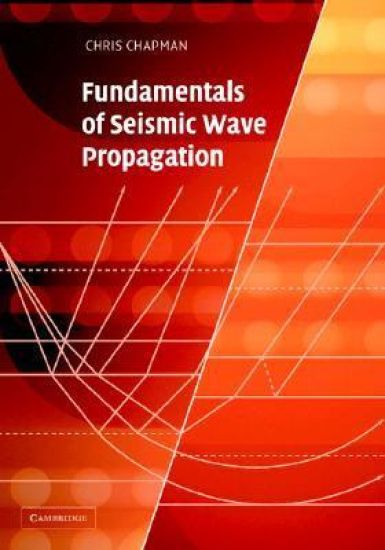
Fundamentals of Seismic Wave Propagation

Fundamentals of Seismic Wave Propagation

Chris Chapman

Cambridge University Press
2010
pokkari
Fundamentals of Seismic Wave Propagation, published in 2004, presents a comprehensive introduction to the propagation of high-frequency body-waves in elastodynamics. The theory of seismic wave propagation in acoustic, elastic and anisotropic media is developed to allow seismic waves to be modelled in complex, realistic three-dimensional Earth models. This book provides a consistent and thorough development of modelling methods widely used in elastic wave propagation ranging from the whole Earth, through regional and crustal seismology, exploration seismics to borehole seismics, sonics and ultrasonics. Particular emphasis is placed on developing a consistent notation and approach throughout, which highlights similarities and allows more complicated methods and extensions to be developed without difficulty. This book is intended as a text for graduate courses in theoretical seismology, and as a reference for all academic and industrial seismologists using numerical modelling methods. Exercises and suggestions for further reading are included in each chapter.
Fundamentals of Seismic Wave Propagation

Fundamentals of Seismic Wave Propagation

Chris Chapman

Cambridge University Press
2004
sidottu
Fundamentals of Seismic Wave Propagation presents a comprehensive introduction to the propagation of high-frequency body-waves in elastodynamics. The theory of seismic wave propagation in acoustic, elastic and anisotropic media is developed to allow seismic waves to be modelled in complex, realistic three-dimensional Earth models. This book provides a consistent and thorough development of modelling methods widely used in elastic wave propagation ranging from the whole Earth, through regional and crustal seismology, exploration seismics to borehole seismics, sonics and ultrasonics. Particular emphasis is placed on developing a consistent notation and approach throughout, which highlights similarities and allows more complicated methods and extensions to be developed without difficulty. This book is intended as a text for graduate courses in theoretical seismology, and as a reference for all academic and industrial seismologists using numerical modelling methods. Exercises and suggestions for further reading are included in each chapter.
ADR in Employment Law

ADR in Employment Law

Stephen Hardy; Jerry Gibson; Chris Chapman

Birkbeck Law Press
2003
nidottu
The 1998 Employment Rights (Dispute Resolution) Act and the 2002 Employment Act seek to change the existing face of UK employment law dispute resolution. Conciliation via in-house disciplinary and appeal procedures must now be followed before resorting to a tribunal hearing. Alternatively,in dismissal cases, employers and employees can both agree to go to arbitration. This book will assist the parties involved to equip themselves with knowledge of these new procedures and processes.
Managing Project Risk and Uncertainty

Managing Project Risk and Uncertainty

Chris Chapman; Stephen Ward

John Wiley Sons Inc
2002
sidottu
Rigorously grounded conceptually but developed to meet practical concerns, this book underpins and extends the scope and power of current approaches to the management of risk and uncertainty in projects and related operational and strategic management decision making. Ten tales, based on real cases, explore a range of project related problems, including: cost estimation, pricing competitive bids, risk allocation and incentive contract design, evaluation of threats and opportunities, buffer management in a supply chain, investment appraisal, portfolio management, and strategy formulation. Each tale provides practical guidance on achieving effective and efficient uncertainty management through simple analysis and discussion of emergent issues. Using a 'constructively simple' approach to model building and the associated decision support processes, the authors show the reader how to take the guesswork out of managing risk and uncertainty. Keeping formal analysis simple, without being simplistic, and adding complexity only when it facilitates additional insights, they provide a framework for 'constructive simplicity' which can be used to enhance risk and uncertainty management in any area of managerial decision making, whether in a project, operational, or strategic context. "This is not just another book about risk. Chapman and Ward focus on decision-making in a holistic way, based on the analysis of uncertainty. The concepts are illustrated by "ten tales about uncertainty management". These are short stories based on case studies in which the authors have been involved. They believe in KISS - not the usual definition but 'keep it simple systematically." —Professor Tony M. Ridley, Imperial College, London "Abundantly illustrated with case studies, this interesting book rightly highlights the need for simple, flexible models to manage risk and uncertainty. The author was associated with development of the PRAM model, which gives a rich variety of practical techniques for risk appraisal. The RAMP model provides a broad strategic framework, giving decision-makers an overall picture of the risks and rewards in a project. This book takes the discussion a stage further and provides many useful insights into the issues that arise in practice." —C G Lewin, Chairman, Risk Management Steering Group, Institute of Actuaries "This book presents a holistic and comprehensive approach to management decision making. Whilst the concepts are readily understood, they are used to provide a thorough background to the management of uncertainty. This is an invaluable book for anyone facing decision-making and uncertainty in either management or programme and project environments." —Alan R Walker, Cabinet Office, Improving Programme and Project Delivery team "Chris Chapman and Stephen Ward, through their constructively simple approach, and using Ockham's razor, show how simple models can be constructed that capture the essentials of any business and project scenario. By interpreting the problems as short stories, they are brought to life, showing that the decision is not just based on the quantitative and qualitative analysis of the risk, but also on the human condition, people's motivations, right down to whether they like the cup of tea." —Rodney Turner, Director of Erasmus University, Rotterdam, and Director of EuroProjex "In this well written book the reader is drawn from simple to advanced concepts of risk management by stories that reflect situations we all recognize. Chapman and Ward continually test the robustness of their conclusions by exercising the assumptions against reality and common sense, and they remind us about the importance of understanding the quality of the data being used. By the end of the book, the reader will have experienced a rather concentrated journey through many sophisticated analytical concepts and have shared in exercises in mature professional judgement. This book will well reward careful study by beginners and practitioners alike." —David T. Hulett Ph. D., Hulett & Associates LLC, Project Management Consultants "Many organizations, particularly in hi-tech businesses, are organized around a changing portfolio of projects. These can only be managed properly if there is a proper understanding of project risks and uncertainties and, sadly, this is an area in which there is considerable room for improvement. Chapman and Ward's book has a pleasing blend of quantitative and qualitative insights and will help train a generation of managers who are better equipped to manage successful projects." —Mike Pidd, Professor of Management Science, Lancaster University