
Kirjojen hintavertailu – 12 903 725 kirjaa ja 27 kauppaa

Kirjailija

Chris Fern

Kirjat ja teokset yhdessä paikassa: 2 kirjaa, julkaisuja vuosilta 2022–2026, suosituimpiin kuuluu Burnt Mounds and the Bronze Age Exploitation of the Suffolk Claylands. Vertaile teosten hintoja ja tarkista saatavuus suomalaisista kirjakaupoista.

2 kirjaa

Kirjojen julkaisuvuodet: 2022–2026.

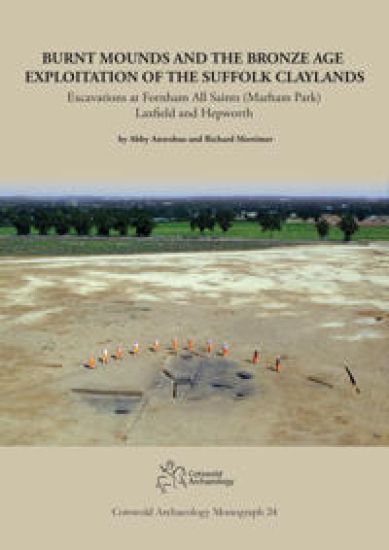
Burnt Mounds and the Bronze Age Exploitation of the Suffolk Claylands

Burnt Mounds and the Bronze Age Exploitation of the Suffolk Claylands

Abbey Antrobus; Richard Mortimer; Michael Green; Chris Fern; Rebecca Smart

Cotswold Archaeology
2026
nidottu
This volume focuses on remains of the Beaker period to Late Bronze Age/Early Iron Age (c. 2400–350 BC) from three multi-period developer-funded excavations on the clay uplands of Suffolk, within which four burnt mounds were investigated. The sites were excavated by Cotswold Archaeology (CA) and Suffolk Archaeology Community Interest Company (CIC) (now Cotswold Archaeology). At Marham Park (Fornham All Saints), overlooking the valley of the River Lark, features included a Beaker period burnt mound complex, a Beaker roundhouse, Beaker pits, an Early Bronze Age burnt mound complex, Middle Bronze Age field systems/enclosures and probable Late Bronze Age/Early Iron Age land division boundaries. At Laxfield, above a tributary of the River Blyth, a burnt mound site of earlier Bronze Age date was located in the vicinity of subsequent Middle Bronze Age enclosures. At Hepworth, a fragmentary Beaker period/Early Bronze Age burnt mound site was recorded on higher land above tributaries of the River Dove.
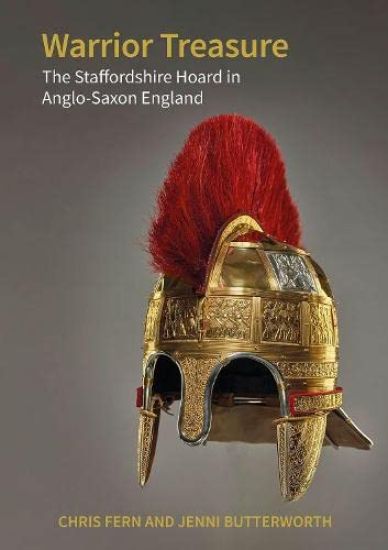
Warrior Treasure

Warrior Treasure

Chris Fern; Jenni Butterworth

LIVERPOOL UNIVERSITY PRESS
2022
nidottu
The Staffordshire Hoard is one of the great discoveries of British archaeology, an unparalleled treasure of the early Anglo-Saxon period. Chanced upon in summer 2009, in an ordinary field north of Birmingham, its hundreds of objects of the 6th to 7th centuries AD amount to a total of 4kg of gold and 1.7kg of silver. An archaeological excavation at the site was followed by a dedicated research project to understand why this trove of warriors and kings was buried, and what part it had played in the bloody cauldron of conflict that shaped early England. This book is an accessible account of the Staffordshire Hoard project and its findings. It tells of the discovery of the Hoard, the fundraising campaign to save it for the nation, and the scientific methods used to study it. Its many extraordinary objects are described in detail and lavishly illustrated: hundreds of gold, garnet and silver weapon fittings, unique sacred objects, Christian crosses, one magnificent helmet and more. The book also provides information on the places, people and events that place this remarkable find in context, with sections on the kingdom of Mercia and its neighbours, Anglo-Saxon warfare, religion, craft techniques and comparable archaeological sites.