Kirjojen hintavertailu – 12 903 725 kirjaa ja 27 kauppaa

Kirjailija

Chris Goertzen

Kirjat ja teokset yhdessä paikassa: 13 kirjaa, julkaisuja vuosilta 1997–2025, suosituimpiin kuuluu Good Medicine and Good Music. Vertaile teosten hintoja ja tarkista saatavuus suomalaisista kirjakaupoista.

13 kirjaa

Kirjojen julkaisuvuodet: 1997–2025.

Good Medicine and Good Music

Good Medicine and Good Music

David Hursh; Chris Goertzen

McFarland Co Inc
2009
pokkari
Alice Morgan Person (1840-1913) was a colorful North Carolinian. Born wealthy and married well, she fell into hardship after the Civil War but remarkably overcame it by marketing her own patent medicine and playing and sharing her arrangements of folk tunes. Presented here is her previously unpublished autobiography as well as a detailed account of her life based on new research and first-hand accounts. Her place in the histories of American patent medicine and southern folk music are discussed.
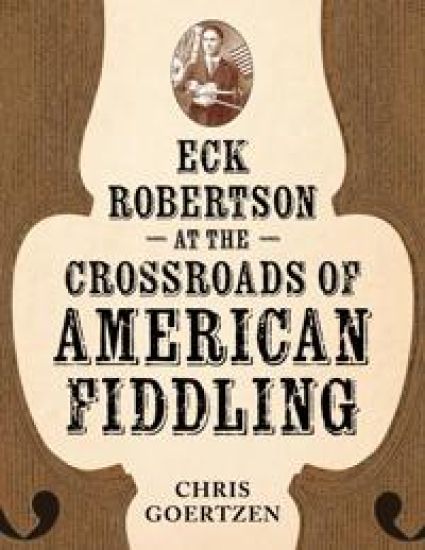
Eck Robertson at the Crossroads of American Fiddling

Eck Robertson at the Crossroads of American Fiddling

Chris Goertzen

UNIVERSITY PRESS OF MISSISSIPPI
2025
pokkari

Halvin toimitettuna 33,40 €

The Texas Panhandle’s frontier days were fresh in memory when fiddler Eck Robertson (1887-1975) arrived. Cowboys still worked on ranches in the 1910s but barbed-wire fences abounded too. Robertson pursued a continually evolving strategy to profit from the feverish transformation of living history into marketable nostalgia. He adopted cowboy dress clothes for his first recording session in New York in 1922 and became known as a "Famous Cowboy Fiddler." His stubborn vision spawned traditional-yet-transformed Texas fiddling. Robertson criticized other fiddlers because their playing was "just the same thing over and over." Robertson insisted that his fiddling—his balance of cleaving to tradition while adding new content—was the way of the future. Author Chris Goertzen traces Robertson’s story through detailed biography, music transcriptions, and careful musical analysis. Though Robertson struggled to attain consistent financial success as a performer, he cultivated a varied repertoire which allowed him to balance offering the comfort of shared recollection with fresh excitement. His biggest hit, "Sally Goodin," was a game changer, both as played live and as the very first country music recording. With his undeniable talent and forward thinking, Robertson took a musical practice that already had a broad reach and a distinguished history in a direction that would guarantee a niche in modern American culture.
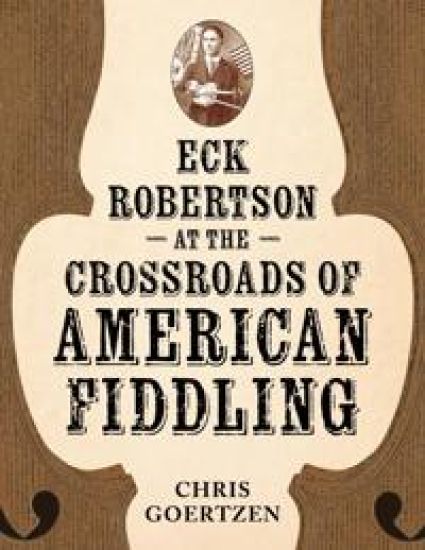
Eck Robertson at the Crossroads of American Fiddling

Eck Robertson at the Crossroads of American Fiddling

Chris Goertzen

UNIVERSITY PRESS OF MISSISSIPPI
2025
sidottu
The Texas Panhandle’s frontier days were fresh in memory when fiddler Eck Robertson (1887-1975) arrived. Cowboys still worked on ranches in the 1910s but barbed-wire fences abounded too. Robertson pursued a continually evolving strategy to profit from the feverish transformation of living history into marketable nostalgia. He adopted cowboy dress clothes for his first recording session in New York in 1922 and became known as a "Famous Cowboy Fiddler." His stubborn vision spawned traditional-yet-transformed Texas fiddling. Robertson criticized other fiddlers because their playing was "just the same thing over and over." Robertson insisted that his fiddling—his balance of cleaving to tradition while adding new content—was the way of the future. Author Chris Goertzen traces Robertson’s story through detailed biography, music transcriptions, and careful musical analysis. Though Robertson struggled to attain consistent financial success as a performer, he cultivated a varied repertoire which allowed him to balance offering the comfort of shared recollection with fresh excitement. His biggest hit, "Sally Goodin," was a game changer, both as played live and as the very first country music recording. With his undeniable talent and forward thinking, Robertson took a musical practice that already had a broad reach and a distinguished history in a direction that would guarantee a niche in modern American culture.
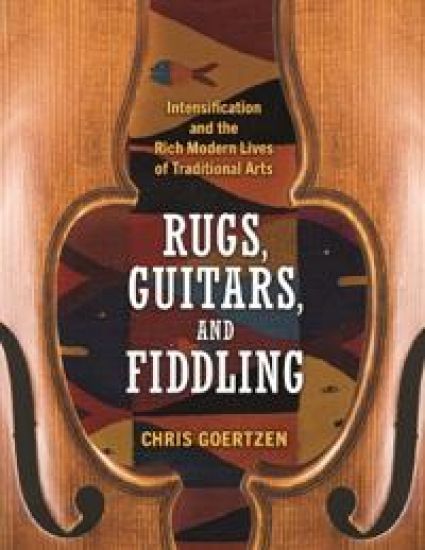
Rugs, Guitars, and Fiddling

Rugs, Guitars, and Fiddling

Chris Goertzen

UNIVERSITY PRESS OF MISSISSIPPI
2022
sidottu
What do exotic area rugs, handcrafted steel-string guitars, and fiddling have in common today? Many contemporary tradition bearers embrace complexity in form and content. They construct objects and performances that draw on the past and evoke nostalgia effectively but also reward close attention. In Rugs, Guitars, and Fiddling: Intensification and the Rich Modern Lives of Traditional Arts, author Chris Goertzen argues that this entails three types of change that can be grouped under an umbrella term: intensification. First, traditional creativity can be intensified through virtuosity, through doing hard things extra fluently. Second, performances can be intensified through addition, by packing increased amounts of traditional materials into the conventionally sized packages. Third, in intensification through selection, artistic impact can grow even if amount of information recedes by emphasizing compelling ideas—e.g., crafting a red and black viper poised to strike rather than a pretty duck decoy featuring more colors and contours. Rugs handwoven in southern Mexico, luthier-made guitars, and southern US fiddle styles experience parallel changes, all absorbing just enough of the complex flavors, dynamics, and rhythms of modern life to translate inherited folklore into traditions that can be widely celebrated today. New mosaics of details and skeins of nuances don’t transform craft into esoteric fine art, but rather enlist the twists and turns and endless variety of the contemporary world therapeutically, helping transform our daily chaos into parades of negotiable jigsaw puzzles. Intensification helps make crafts and traditional performances more accessible and understandable and thus more effective, bringing past and present closer together, helping folk arts continue to perform their magic today.

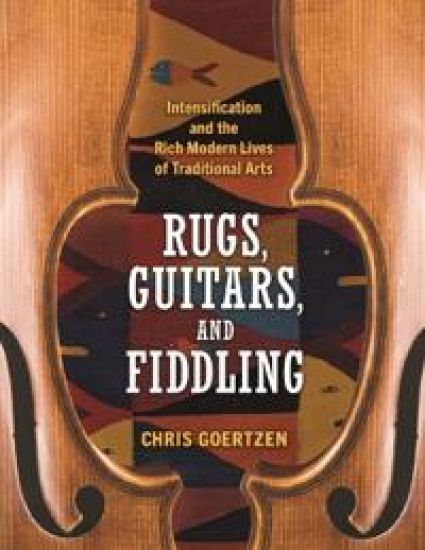
Rugs, Guitars, and Fiddling

Rugs, Guitars, and Fiddling

Chris Goertzen

UNIVERSITY PRESS OF MISSISSIPPI
2022
pokkari
What do exotic area rugs, handcrafted steel-string guitars, and fiddling have in common today? Many contemporary tradition bearers embrace complexity in form and content. They construct objects and performances that draw on the past and evoke nostalgia effectively but also reward close attention. In Rugs, Guitars, and Fiddling: Intensification and the Rich Modern Lives of Traditional Arts, author Chris Goertzen argues that this entails three types of change that can be grouped under an umbrella term: intensification. First, traditional creativity can be intensified through virtuosity, through doing hard things extra fluently. Second, performances can be intensified through addition, by packing increased amounts of traditional materials into the conventionally sized packages. Third, in intensification through selection, artistic impact can grow even if amount of information recedes by emphasizing compelling ideas—e.g., crafting a red and black viper poised to strike rather than a pretty duck decoy featuring more colors and contours. Rugs handwoven in southern Mexico, luthier-made guitars, and southern US fiddle styles experience parallel changes, all absorbing just enough of the complex flavors, dynamics, and rhythms of modern life to translate inherited folklore into traditions that can be widely celebrated today. New mosaics of details and skeins of nuances don’t transform craft into esoteric fine art, but rather enlist the twists and turns and endless variety of the contemporary world therapeutically, helping transform our daily chaos into parades of negotiable jigsaw puzzles. Intensification helps make crafts and traditional performances more accessible and understandable and thus more effective, bringing past and present closer together, helping folk arts continue to perform their magic today.

American Antebellum Fiddling

American Antebellum Fiddling

Chris Goertzen

University Press of Mississippi
2020
sidottu
This unique volume is the only book solely about antebellum American fiddling. It includes more than 250 easy-to-read and clearly notated fiddle tunes alongside biographies of fiddlers and careful analysis of their personal tune collections. The reader learns what the tunes of the day were, what the fiddlers' lives were like, and as much as can be discovered about how fiddling sounded then. Personal histories and tunes' biographies offer an accessible window on a fascinating period, on decades of growth and change, and on rich cultural history made audible. In the decades before the Civil War, American fiddling thrived mostly in oral tradition, but some fiddlers also wrote down versions of their tunes. This overlap between oral and written traditions reveals much about the sounds and social contexts of fiddling at that time. In the early 1800s, aspiring young violinists maintained manuscript collections of tunes they intended to learn. These books contained notations of oral-tradition dance tunes - many of them melodies that predated and would survive this era - plus plenty of song melodies and marches. Chris Goertzen takes us into the lives and repertoires of two such young men, Arthur McArthur and Philander Seward. Later, in the 1830s to 1850s, music publications grew in size and shrunk in cost, so fewer musicians kept personal manuscript collections. But a pair of energetic musicians did. Goertzen tells the stories of two remarkable violinist/fiddlers who wrote down many hundreds of tunes and whose notations of those tunes are wonderfully detailed, Charles M. Cobb and William Sidney Mount. Goertzen closes by examining particularly problematic collections. He takes a fresh look at George Knauff's Virginia Reels and presents and analyzes an amateur musician's own questionable but valuable transcriptions of his grandfather's fiddling, which reaches back to antebellum western Virginia.
American Antebellum Fiddling

American Antebellum Fiddling

Chris Goertzen

University Press of Mississippi
2020
pokkari
This unique volume is the only book solely about antebellum American fiddling. It includes more than 250 easy-to-read and clearly notated fiddle tunes alongside biographies of fiddlers and careful analysis of their personal tune collections. The reader learns what the tunes of the day were, what the fiddlers' lives were like, and as much as can be discovered about how fiddling sounded then. Personal histories and tunes' biographies offer an accessible window on a fascinating period, on decades of growth and change, and on rich cultural history made audible. In the decades before the Civil War, American fiddling thrived mostly in oral tradition, but some fiddlers also wrote down versions of their tunes. This overlap between oral and written traditions reveals much about the sounds and social contexts of fiddling at that time. In the early 1800s, aspiring young violinists maintained manuscript collections of tunes they intended to learn. These books contained notations of oral-tradition dance tunes - many of them melodies that predated and would survive this era - plus plenty of song melodies and marches. Chris Goertzen takes us into the lives and repertoires of two such young men, Arthur McArthur and Philander Seward. Later, in the 1830s to 1850s, music publications grew in size and shrunk in cost, so fewer musicians kept personal manuscript collections. But a pair of energetic musicians did. Goertzen tells the stories of two remarkable violinist/fiddlers who wrote down many hundreds of tunes and whose notations of those tunes are wonderfully detailed, Charles M. Cobb and William Sidney Mount. Goertzen closes by examining particularly problematic collections. He takes a fresh look at George Knauff's Virginia Reels and presents and analyzes an amateur musician's own questionable but valuable transcriptions of his grandfather's fiddling, which reaches back to antebellum western Virginia.
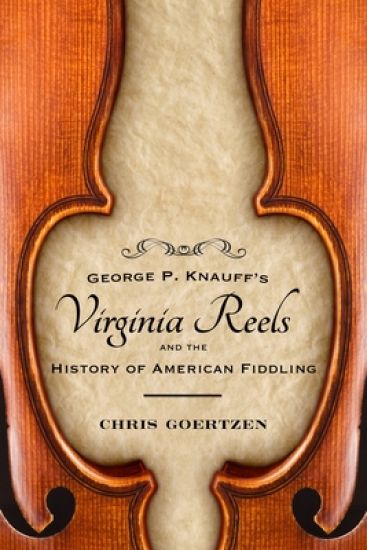
George P. Knauff's Virginia Reels and the History of American Fiddling
George P. Knauff's Virginia Reels (1839) was the first collection of southern fiddle tunes and the only substantial one published in the nineteenth century. Knauff's activity could not anticipate our modern contest-driven fiddle subcultures. But the fate of the Virginia Reels pointed in that direction, suggesting that southern fiddling, after his time, would happen outside of commercial popular culture even though it would sporadically engage that culture. Chris Goertzen uses this seminal collection as the springboard for a fresh exploration of fiddling in America, past and present. He first discusses the life of the arranger. Then he explains how this collection was meant to fit into the broad stream of early nineteenth-century music publishing. Goertzen describes the character of these fiddle tunes' names (and such titles in general), what we can learn about antebellum oral tradition from this collection, and how fiddling relates to blackface minstrelsy. Throughout the book, the author connects the evidence concerning both repertoire and practice found in the Virginia Reels with current southern fiddling, encompassing styles ranging from straightforward to fancy old-time styles of the Upper South, exuberant West Virginia styles, and the melodic improvisations of modern contest fiddling. Twenty-six song sheets assist in this discovery. Goertzen incorporates performance descriptions and music terminology into his accessible, engaging prose. Unlike the vast majority of books on American fiddling regional tune collections or histories this book presents an extended look at the history of southern fiddling and a close examination of current practices.
George P. Knauff's Virginia Reels and the History of American Fiddling
George P. Knauff’s Virginia Reels (1839) was the first collection of southern fiddle tunes and the only substantial one published in the nineteenth century. Knauff’s activity could not anticipate our modern contest-driven fiddle subcultures. But the fate of the Virginia Reels pointed in that direction, suggesting that southern fiddling, after his time, would happen outside of commercial popular culture even though it would sporadically engage that culture. Chris Goertzen uses this seminal collection as the springboard for a fresh exploration of fiddling in America, past and present. He first discusses the life of the arranger. Then he explains how this collection was meant to fit into the broad stream of early nineteenth-century music publishing. Goertzen describes the character of these fiddle tunes’ names (and such titles in general), what we can learn about antebellum oral tradition from this collection, and how fiddling relates to blackface minstrelsy. Throughout the book, the author connects the evidence concerning both repertoire and practice found in the Virginia Reels with current southern fiddling, encompassing styles ranging from straightforward to fancy—old-time styles of the Upper South, exuberant West Virginia styles, and the melodic improvisations of modern contest fiddling. Twenty-six song sheets assist in this discovery. Goertzen incorporates performance descriptions and music terminology into his accessible, engaging prose. Unlike the vast majority of books on American fiddling—regional tune collections or histories—this book presents an extended look at the history of southern fiddling and a close examination of current practices.
Made in Mexico

Made in Mexico

Chris Goertzen

University Press of Mississippi
2013
nidottu
Made in Mexico examines the aesthetic, political, and sociopolitical aspects of tourism in southern Mexico, particularly in the state of Oaxaca. Tourists seeking ""authenticity"" buy crafts and festival tickets and spend even more on travel expenses. What does a craft object or a festival moment need to look like or sound like to please both tradition bearers and tourists in terms of aesthetics? Under what conditions are transactions between these parties psychologically healthy and sustainable? What political factors can interfere with the success of this negotiation, and what happens when the process breaks down? With Subcommandante Marcos and the Zapatistas still operating in neighboring Chiapas and unrest on the rise in Oaxaca itself, these are not merely theoretical problems. Chris Goertzen analyzes the nature and meaning of a single craft object, a woven pillowcase from Chiapas, thus previewing what the book will accomplish in greater depth in Oaxaca. He introduces the book's guiding concepts, especially concerning the types of aesthetic intensification that have replaced fading cultural contexts, and the tragic partnership between ethnic distinctiveness and oppressive politics. He then brings these concepts to bear on crafts in Oaxaca and on Oaxaca's Guelaguetza, the anchor for tourism in the state and a festival with an increasingly contested meaning.
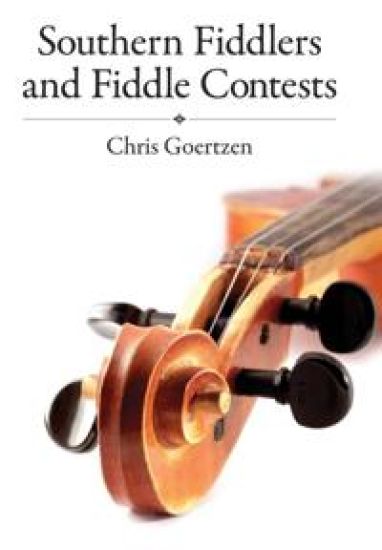
Southern Fiddlers and Fiddle Contests

Southern Fiddlers and Fiddle Contests

Chris Goertzen

University Press of Mississippi
2011
nidottu
Southern Fiddlers and Fiddle Contests explores the phenomenon of American fiddle contests, which now have replaced dances as the main public event where American fiddlers get together. Chris Goertzen studies this change and what it means for audiences, musicians, traditions, and the future of southern fiddle music. Goertzen traces fiddling and fiddle contests from mid-eighteenth-century Scotland to the modern United States. He takes the reader on journeys to the important large contests, such as those in Hallettville, Texas; Galax, Virginia; Weiser, Idaho; and also to smaller ones, including his favorite in Athens, Alabama. He reveals what happens on stage and during such off-stage activities as camping, jamming, and socializing, which many fiddlers consider much more important than the competition. Through multiple interviews, Goertzen also reveals the fiddlers' lives as told in their own words. The reader learns how and in what environments these fiddlers started playing, where they perform today, how they teach, what they think of contests, and what values they believe fiddling supports. Southern Fiddlers and Fiddle Contests shows how such contests have become living embodiments of American nostalgia.
Fiddling for Norway

Fiddling for Norway

Chris Goertzen

University of Chicago Press
1997
nidottu
This is a portrait of a fiddle-based folk revival in Norway, one that in many ways parallels contemporary folk institutions and festivals throughout the world, including American fiddling. It is a detailed case study in the politics of culture, the causes and purposes of folk revivals, and the cultivation of music to define identity. The book begins with an investigation of the people and events important to Norwegian folk fiddling, tracing the history of Norwegian folk music and the growth and diversification of the folk music revival. The narrative takes us to local fiddle clubs, concerts and competitions on the local, regional, and national levels, and shows how conflicting emphases - local versus national identity, tradition versus aesthetic qualities - continue to transform Norwegian folk music. Goertzen utilizes a large anthology of meticulously-transcribed tunes to illustrate personal and regional repertoires, aspects of performance practice, melodic gesture and form, and tune relationships.
Fiddling for Norway

Fiddling for Norway

Chris Goertzen

University of Chicago Press
1997
sidottu
This is a portrait of a fiddle-based folk revival in Norway, one that in many ways parallels contemporary folk institutions and festivals throughout the world, including American fiddling. It is a detailed case study in the politics of culture, the causes and purposes of folk revivals, and the cultivation of music to define identity. The book begins with an investigation of the people and events important to Norwegian folk fiddling, tracing the history of Norwegian folk music and the growth and diversification of the folk music revival. The narrative takes us to local fiddle clubs, concerts and competitions on the local, regional, and national levels, and shows how conflicting emphases - local versus national identity, tradition versus aesthetic qualities - continue to transform Norwegian folk music. Goertzen utilizes a large anthology of meticulously-transcribed tunes to illustrate personal and regional repertoires, aspects of performance practice, melodic gesture and form, and tune relationships.