
Kirjailija
Chris Gosden
Kirjat ja teokset yhdessä paikassa: 16 kirjaa, julkaisuja vuosilta 1999–2027, suosituimpiin kuuluu Humans. Vertaile teosten hintoja ja tarkista saatavuus suomalaisista kirjakaupoista.
16 kirjaa
Kirjojen julkaisuvuodet: 1999–2027.

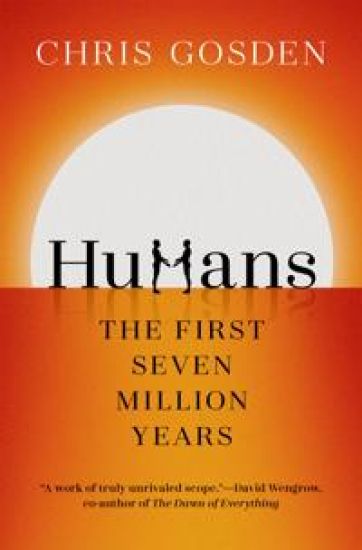
'Chris Gosden brings his encyclopaedic knowledge of world archaeology to bear on some of the most urgent issues of our time' David Wengrow, author of The Dawn of Everything What if everything you thought you knew about human history was only part of the story? Life for our earliest ancestors was demanding, dangerous and short, with only the fittest surviving. Homo sapiens triumphed over other related species, creating productive agricultural societies, which grew in scale and complexity until we reached our current state of civilisation. This human story is simple and well accepted. It is also wrong. Humans: Our Seven Million Year History challenges this linear narrative of inevitable human progress and offers a radical re-examination of our global past. Professor Chris Gosden reveals the sheer scale and depth of human difference, charting the alternative paths human societies have followed across time – exploring some of our ancestors' challenging rituals, collaborative communities, and rich emotional lives. And, by reinterpreting our deep past, Gosden radically reimagines our future, showing how modern issues like wealth inequality and environmental degradation weren't predetermined, and arguing that our current system of profit-driven capitalism may not always dominate. He uses a lifetime's research across archaeology, geology and anthropology, presenting ground-breaking discoveries, from the study of ancient tooth plaque to advanced climate models, and compelling storytelling, in a remarkably ambitious, one-of-a-kind journey through our collective human history.
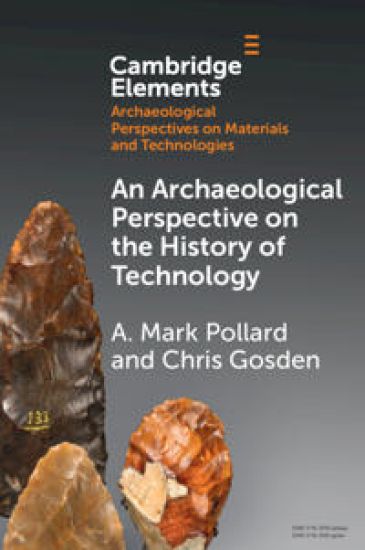
An Archaeological Perspective on the History of Technology
A. Mark Pollard; Chris Gosden
Cambridge University Press
2023
pokkari
This volume represents an introduction to a new world-wide attempt to review the history of technology, which is one of few since the pioneering publications of the 1960s. It takes an explicit archaeological focus to the study of the history of technology and adopts a more explicit socially-embedded view of technology than has commonly been the case in mainstream histories of technology. In doing so, it attempts to introduce a more radical element to explanations of technological change, involving magic, alchemy, animism – in other words, attempting to consider technological change in terms of the 'world view' of those involved in such change rather than from an exclusively western scientific perspective.
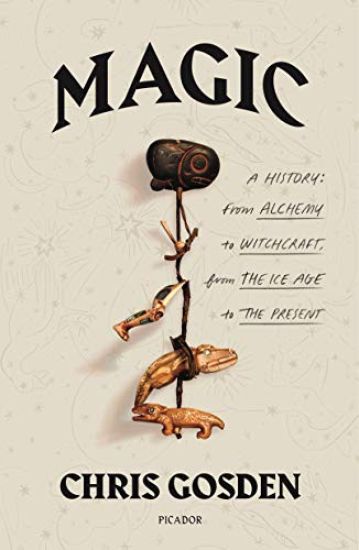
Magic: A History: From Alchemy to Witchcraft, from the Ice Age to the Present
Chris Gosden
Picador USA
2021
nidottu
An Oxford professor of archaeology explores the unique history of magic--the oldest and most neglected strand of human behavior and its resurgence today Three great strands of belief run through human history: Religion is the relationship with one god or many gods, masters of our lives and destinies. Science distances us from the world, turning us into observers and collectors of knowledge. And magic is direct human participation in the universe: we have influence on the world around us, and the world has influence on us. Over the last few centuries, magic has developed a bad reputation--thanks to the unsavory tactics of shady practitioners, and to a successful propaganda campaign on the part of religion and science, which denigrated magic as backward, irrational, and "primitive." In Magic, however, the Oxford professor of archaeology Chris Gosden restores magic to its essential place in the history of the world--revealing it to be an enduring element of human behavior that plays an important role for individuals and cultures. From the curses and charms of ancient Greek, Roman, and Jewish magic, to the shamanistic traditions of Eurasia, indigenous America, and Africa; from the alchemy of the Renaissance to the condemnation of magic in the colonial period and the mysteries of modern quantum physics--Gosden's startling, fun, and colorful history supplies a missing chapter of the story of our civilization. Drawing on decades of research around the world--touching on the first known horoscope, a statue ordered into exile, and the mystical power of tattoos--Gosden shows what magic can offer us today, and how we might use it to rethink our relationship with the world. Magic is an original, singular, and sweeping work of scholarship, and its revelations will leave a spell on the reader.
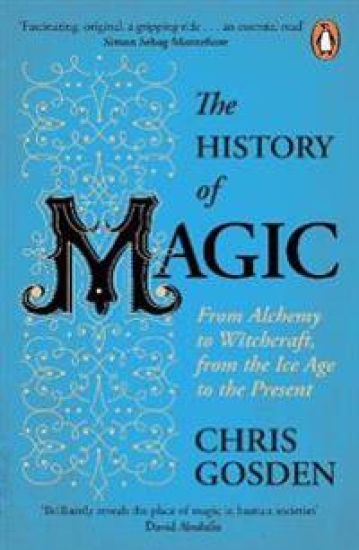
A Telegraph Book of the Year A remarkable, unprecedented account of the role of magic in cultures both ancient and modern -- from the first known horoscope to the power of tattoos.'Fascinating, original, excellent' Simon Sebag Montefiore______________________Three great strands of practice and belief run through human history: science, religion and magic. But magic - the idea that we have a connection with the universe - has developed a bad reputation. It has been with us for millennia - from the curses and charms of ancient Greek, Roman and Jewish magic, to the shamanistic traditions of Eurasia, indigenous America and Africa, and even quantum physics today. Even today seventy-five per cent of the Western world holds some belief in magic, whether snapping wishbones, buying lottery tickets or giving names to inanimate objects. Drawing on his decades of research, with incredible breadth and authority, Professor Chris Gosden provides a timely history of human thought and the role it has played in shaping civilization, and how we might use magic to rethink our understanding of the world.______________________'This is an extraordinary work of learning, written with an exhilarating lightness of touch . . . It is essential reading.' Francis Pryor, author of Britain BC, Britain AD and The Fens'Without an unfascinating page' Scotsman'Chris Gosden shows how magic explores the connections between human beings and the universe in ways different from religion or science, yet deserving of respect' Professor John Barton, author of A History of The Bible
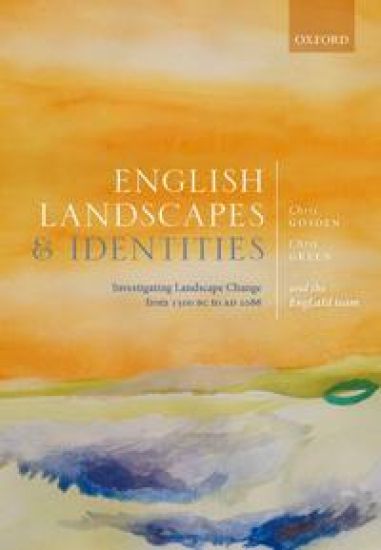
English Landscapes and Identities
Chris Gosden; Chris Green; Anwen Cooper; Miranda Creswell; Victoria Donnelly; Tyler Franconi; Roger Glyde; Zena Kamash; Sarah Mallet; Laura Morley; Daniel Stansbie; Letty ten Harkel
Oxford University Press
2021
sidottu
Long before the Norman Conquest of 1066, England saw periods of profound change that transformed the landscape and the identities of those who occupied it. The Bronze and Iron Ages saw the introduction of now-familiar animals and plants, such as sheep, horses, wheat, and oats, as well as new forms of production and exchange and the first laying out of substantial fields and trackways, which continued into the earliest Romano-British landscapes. The Anglo-Saxon period saw the creation of new villages based around church and manor, with ridge and furrow cultivation strips still preserved today. The basis for this volume is The English Landscapes and Identities project, which synthesised all the major available sources of information on English archaeology to examine this crucial period of landscape history from the middle Bronze Age (c. 1500 BC) to the Domesday survey (c. 1086 AD). It looks at the nature of archaeological work undertaken across England to assess its strengths and weaknesses when writing long-term histories. Among many other topics it examines the interaction of ecology and human action in shaping the landscape; issues of movement across the landscape in various periods; changing forms of food over time; an understanding of spatial scale; and questions of enclosing and naming the landscape, culminating in a discussion of the links between landscape and identity. The result is the first comprehensive account of the English landscape over a crucial 2500-year period. It also offers a celebration of many centuries of archaeological work, especially the intensive large-scale investigations that have taken place since the 1960s and transformed our understanding of England's past.
Prehistory covers the period of some 4 million years before the start of written history, when our earliest ancestors, the Australopithecines, existed in Africa. But this is relatively recent compared to whole history of the earth of some 4.5 billion years. A key aspect of prehistory is that it provides a sense of scale, throwing recent ways of life into perspective. Humans and their ancestors lived in many different ways and the cultural variety we see now is just a tiny fraction of that which has existed over millions of years. Humans are part of the broader evolution of landscapes and communities of plants and animals, but Homo sapiens is also the only species to have made a real impact on planetary systems. To understand such an impact, we need a grasp of our longest term development and ways of life. In this new edition of his Very Short Introduction, Chris Gosden invites us to think seriously about who we are by considering who we have been. As he explains, many new discoveries have been made in archaeology over the last ten years, and a new framework for prehistory is emerging. A greater understanding of Chinese and central Asian prehistory has thrown Eurasian prehistory in quite a different light, with flows of the influence of culture over large areas now evident. This has eaten away at the traditional view of human progress around the invention of agriculture, the development of cities and (much later) the industrial revolution, and given us new geographies to think about. Chris Gosden explores the new landscape of our prehistory, and considers the way the different geographical locations weave together. ABOUT THE SERIES: The Very Short Introductions series from Oxford University Press contains hundreds of titles in almost every subject area. These pocket-sized books are the perfect way to get ahead in a new subject quickly. Our expert authors combine facts, analysis, perspective, new ideas, and enthusiasm to make interesting and challenging topics highly readable.
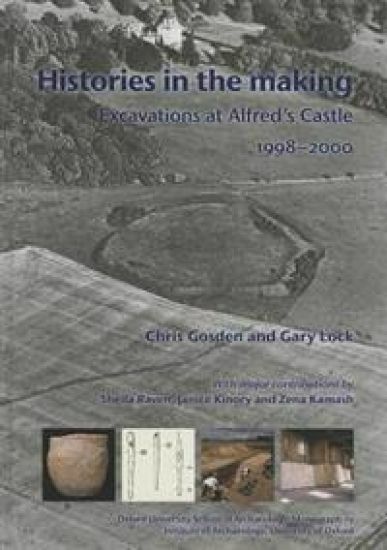
Histories in the Making
Chris Gosden; Gary Lock
Oxford University School of Archaeology
2014
sidottu
Alfred’s Castle is a small enclosed site south of the Ridgeway on the Berkshire Downs, excavated between 1998 and 2000 by a team from Oxford University. This was the third site excavated by the Hillforts of the Ridgeway project (after White Horse Hill and Segsbury). Although small, Alfred’s Castle displayed a long and complex history, starting with early Bronze Age round barrows on which later Bronze Age linear ditches were aligned, these in turn were used to form enclosures in the Iron Age. In the early Roman period a small villa house was built inside the smaller enclosure, which then shows some use in the early medieval period. The long use of the site raises questions of memory, history and continuity, leading us to wonder how earlier phases of use affected later ones. This volume contains the results of excavations at Alfred’s Castle and an account of an art project by Simon Callery. This is the third volume dedicated to our hillfort excavations on the Berkshire Downs and it ends with an account of the area more broadly, which sees complicated developments from the Bronze Age into the medieval period through the constructions of barrows, field systems, linear ditches and sites of various forms and sizes. How these combined into communities of the living and of the dead are considered using all the evidence currently available.
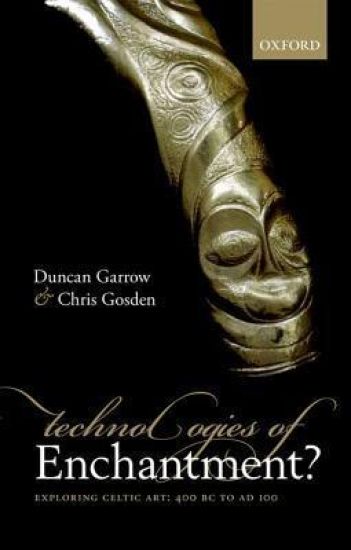
While Celtic art includes some of the most famous archaeological artefacts in the British Isles, such as the Battersea shield or the gold torcs from Snettisham, it has often been considered from an art historical point of view. Technologies of Enchantment? Exploring Celtic Art attempts to connect Celtic art to its archaeological context, looking at how it was made, used, and deposited. Based on the first comprehensive database of Celtic art, it brings together current theories concerning the links between people and artefacts found in many areas of the social sciences. The authors argue that Celtic art was deliberately complex and ambiguous so that it could be used to negotiate social position and relations in an inherently unstable Iron Age world, especially in developing new forms of identity with the coming of the Romans. Placing the decorated metalwork of the later Iron Age in a long-term perspective of metal objects from the Bronze Age onwards, the volume pays special attention to the nature of deposition and focuses on settlements, hoards, and burials -- including Celtic art objects' links with other artefact classes, such as iron objects and coins. A unique feature of the book is that it pursues trends beyond the Roman invasion, highlighting stylistic continuities and differences in the nature and use of fine metalwork.
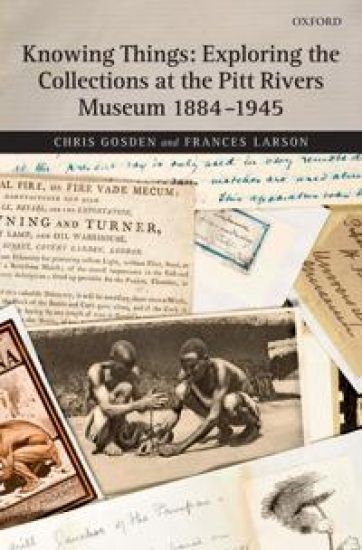
Knowing Things: Exploring the Collections at the Pitt Rivers Museum 1884-1945
Chris Gosden; Frances Larson
Oxford University Press
2007
sidottu
Halvin toimitettuna 177,80 €
This book explores the early history of the Pitt Rivers Museum and its collections. Many thousands of people collected objects for the Museum between its foundation in 1884 and 1945, and together they and the objects they collected provide a series of insights into the early history of archaeology and anthropology. The volume also includes individual biographies and group histories of the people originally making and using the objects, as well as a snapshot of the British Empire. The main focus for the book derives from the computerized catalogues of the Museum and attendant archival information. Together these provide a unique insight into the growth of a well-known institution and its place within broader intellectual frameworks of the Victorian period and early twentieth century. It also explores current ideas on the nature of relationships, particularly those between people and things.
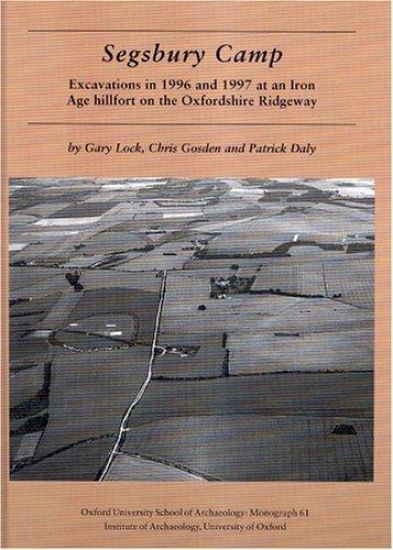
Segsbury Camp
Gary Lock; Chris Gosden; Patrick Daly
Oxford University School of Archaeology
2005
sidottu
This volume describes the two seasons of excavation at Segsbury Camp which form a part of Oxford University's Hillforts of the Ridgeway Project . It contains background material and a series of interpretations of the site at different scales finishing with a discussion of the Lambourn Downs landscape in later prehistoric and Romano-British times. The evidence suggests that the large hillfort of Segsbury was used during the period 6th to 2nd century BC but was not densely and permanently occupied. It also seems that Segsbury was constructed in a new and previously unused area of the Downs. Alternative interpretations are explored within a framework of trying to understand what is meant by 'community' and how Segsbury interacted with other hillforts in the area. The detail provided by the excavation of several hillforts on the Lambourn Downs suggests that they were different forms of monument and argues against trying to understand hillforts as a single category.
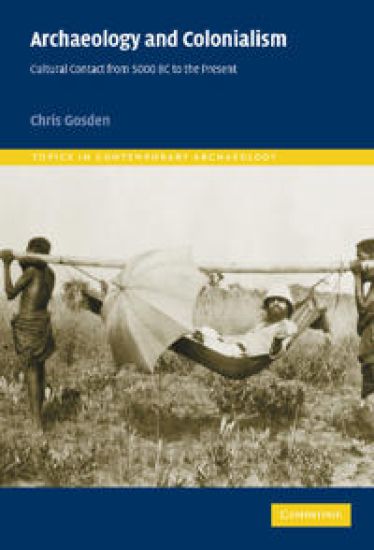
Archaeology is the only discipline that allows us to take a long-term view across all forms of colonialism, from the Uruk cities of early Mesopotamia, through the empires of the Romans and the Aztecs, to the colonies of modern European states. In this innovative study, Chris Gosden presents a comparative survey of 5000 years of colonialism. Defining colonialism as, crucially, a relationship with material culture, destabilising of older values, changing both incomers and natives, Gosden attempts to understand the history of power, how it is exercised through material culture and how this understanding can generate new notions of interaction and encounter. By defining colonialism through its relationship with material culture, Gosden argues that modern colonialism, giving rise to settler societies, is historically unusual. Synthesising theoretical approaches and evidence from a broad span of colonial regions, this book provides an important new field of enquiry connecting historic and prehistoric archaeology.
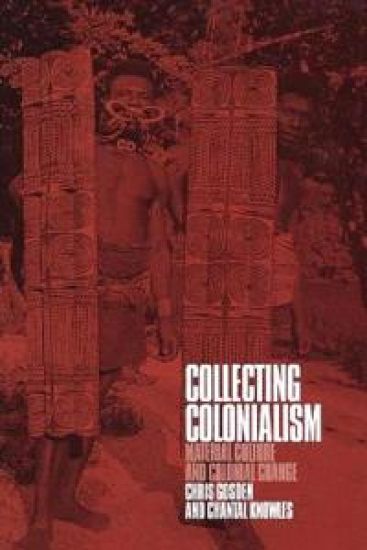
Colonialism has shaped the world we live in today and has often been studied at a global level, but there is less understanding of how colonial relations operated locally. This book takes twentieth-century Papua New Guinea as its focus, and charts the changes in colonial relationships as they were expressed through the flow of material culture. Exploring the links between colonialism and material culture in general, the authors focus on the particular insights that museum collections can provide into social relations. Collections made by anthropologists in New Britain in the first half of the century are compared with recent fieldwork in the area to provide a particularly in-depth picture of historical change. Museum collections can reveal how people dealt with changes in the nature of community, gender relations and notions of power through the shifting use of objects in ritual and exchange. Objects, photographs and archives bring to life both the individual characters of colonial New Britain and the longer-term patterns of history. Drawing on the related disciplines of archaeology, linguistics, history and anthropology, the authors provide fresh insights into the complexities of colonial life. In particular, they show how social relationships among Melanesians, whites and other communities helped to erode distinctions between colonizers and locals, distinctions that have been maintained by scholars of colonialism in the past. This book successfully combines a specific geographical focus with an interest in the broader questions that surround colonial relations, historical change and the history of anthropology.
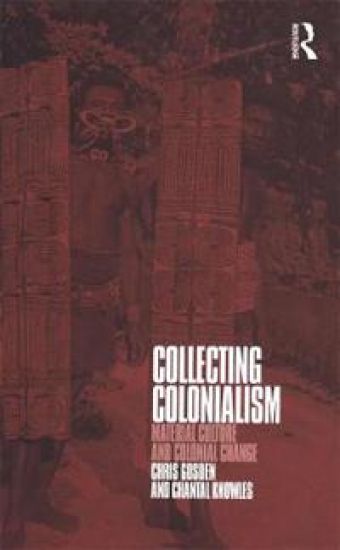
Colonialism has shaped the world we live in today and has often been studied at a global level, but there is less understanding of how colonial relations operated locally. This book takes twentieth-century Papua New Guinea as its focus, and charts the changes in colonial relationships as they were expressed through the flow of material culture. Exploring the links between colonialism and material culture in general, the authors focus on the particular insights that museum collections can provide into social relations. Collections made by anthropologists in New Britain in the first half of the century are compared with recent fieldwork in the area to provide a particularly in-depth picture of historical change. Museum collections can reveal how people dealt with changes in the nature of community, gender relations and notions of power through the shifting use of objects in ritual and exchange. Objects, photographs and archives bring to life both the individual characters of colonial New Britain and the longer-term patterns of history. Drawing on the related disciplines of archaeology, linguistics, history and anthropology, the authors provide fresh insights into the complexities of colonial life. In particular, they show how social relationships among Melanesians, whites and other communities helped to erode distinctions between colonizers and locals, distinctions that have been maintained by scholars of colonialism in the past. This book successfully combines a specific geographical focus with an interest in the broader questions that surround colonial relations, historical change and the history of anthropology.
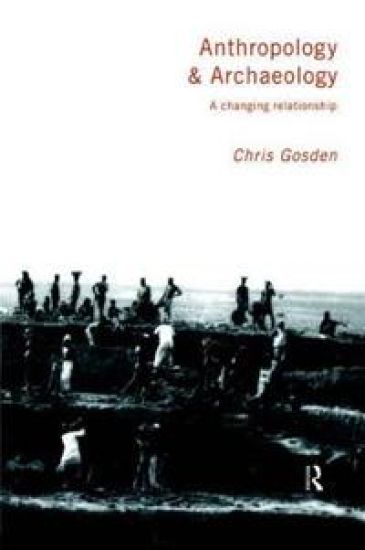
Anthropolgy and Archaeology provides a valuable and much-needed introduction to the theories and methods of these two inter-related subjects. This volume covers the historical relationship and contemporary interests of archaeology and anthropology. It takes a broad historical approach, setting the early history of the disciplines with the colonial period during which the Europeans encountered and attempted to make sense of many other peoples. It shows how the subjects are linked through their interest in kinship, economics and symbolism, and discusses what each contribute to debates about gender, material culture and globalism in the post-colonial world.
Anthropolgy and Archaeology provides a valuable and much-needed introduction to the theories and methods of these two inter-related subjects. This volume covers the historical relationship and contemporary interests of archaeology and anthropology. It takes a broad historical approach, setting the early history of the disciplines with the colonial period during which the Europeans encountered and attempted to make sense of many other peoples. It shows how the subjects are linked through their interest in kinship, economics and symbolism, and discusses what each contribute to debates about gender, material culture and globalism in the post-colonial world.