Kirjojen hintavertailu – 12 859 828 kirjaa ja 27 kauppaa

Kirjailija

Chris Trimble

Kirjat ja teokset yhdessä paikassa: 9 kirjaa, julkaisuja vuosilta 2005–2018, suosituimpiin kuuluu How Stella Saved the Farm: A Tale about Making Innovation Happen. Vertaile teosten hintoja ja tarkista saatavuus suomalaisista kirjakaupoista.

9 kirjaa

Kirjojen julkaisuvuodet: 2005–2018.

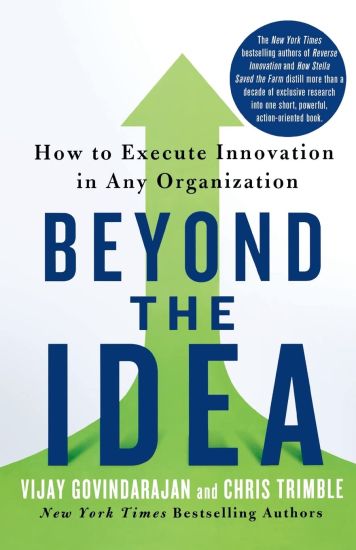
Beyond the Idea

Beyond the Idea

Vijay Govindarajan; Chris Trimble

Macmillan
2018
pokkari
Businesses stumble when they imagine that innovation is mostly about ideas. The reality is that ideas are only beginnings. Indeed, even a company with the world’s best idea still faces a devilish challenge: it must build the business of tomorrow without endangering the business of today. Vijay Govindarajan and Chris Trimble are the world’s leading authorities on the successful management of innovation. In Beyond the Idea, they distil more than a decade of research and insight into a practical, accessible, read-at-one-sitting handbook that offers invaluable guidance for anyone charged with making innovation happen: executives, managers, consultants, project leaders and teams. Beyond the Idea shows exactly how to: Build a team with a very particular structure, one that makes it possible to simultaneously build something new and sustain what exists. Manage any innovation initiative as a disciplined experiment. Implement three distinct models for moving from ideas to action. Beyond the Idea is an essential book for any business that recognizes that innovation always has been, and always will be, the key to long term growth and vitality.

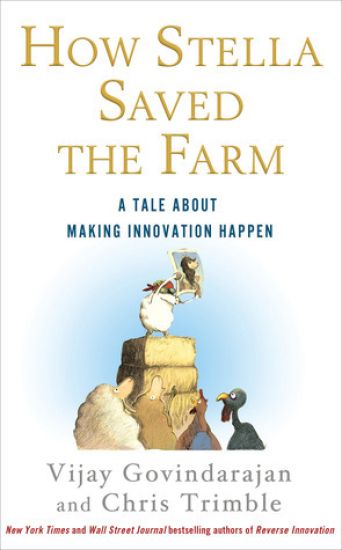
How Stella Saved the Farm: A Tale about Making Innovation Happen

How Stella Saved the Farm: A Tale about Making Innovation Happen

Vijay Govindarajan; Chris Trimble

St. Martin's Press
2013
sidottu
How Stella Saved the Farm is a simple parable about making innovation happen, written by the authors of the New York Times bestselling Reverse Innovation: Create Far From Home, Win Everywhere, Vijay Govindarajan and Chris Trimble. This story resonates in organizations of all types--public sector, private sector, and social sector, from mammoth corporations to small organizations employing just a few dozen people. The parable is about a farm in trouble. Bankruptcy, or the grim prospect of being acquired by a hostile competitor, threaten. The farm succeeds only if the team pulls together and innovates. The main characters in the story--Stella, Deirdre, Bull, Mav, Einstein, Rambo, Maisie, and Andrea--are all like people you know, maybe even yourself. The tale includes an unexpected leadership challenge, an ambitious call to action, a bold idea, countless internal obstacles and conflicts, fears, joys, triumphs, and even a love interest. It's a story that can be enjoyed by anyone. How Stella Saved the Farm delivers eight simple lessons to guide innovation initiatives to success. It prepares business leaders to avoid some of innovation's most toxic myths, teaches how to build the right kind of team, and shows how to learn quickly from experience.
Balancing Act

Balancing Act

Caterina Ruggeri Laderchi; Anne Olivier; Chris Trimble

World Bank Publications
2013
nidottu
In Eastern Europe and Central Asia there are significant pressures for residential energy tariffs to rise, as government budgets are increasingly stretched and cannot afford to pay large energy subsidies. Further pressures for tariffs to rise come from environmental concerns, as the tariff levels that households now face do not cover the social costs of energy production. Because reforms that would increase energy tariffs are likely to affect significantly the poor and the middle class, their political feasibility may be questioned unless appropriate ways of cushioning the impacts can be devised. Balancing these competing claims-fiscal and environmental concerns on the one hand, affordability and political economy concerns on the other-is a task that policy makers in the region are increasingly unable to put off. While challenging, the reforms needed for this balancing act can build on much that has been learned in the last decade in terms of improving the effectiveness of social assistance systems and increasing energy efficiency. This report suggests that a policy agenda that focuses on cutting subsidies to the energy sector, while investing in energy efficiency and supporting households at the bottom of the distribution, amounts to a new wave of policy reforms for the energy sector in transition countries. The feasibility of such an integrated policy agenda and the ability of these policies to balance the competing claims of fi scal responsibility and social concerns are explored through different policy scenarios, which, in their simplicity, help clarify the parameters of the policy choices many countries ECA are facing. This report is a part of a series of 3 regional reports. The series includes 'Growing green: The economic benefits of climate action in Europe and Central Asia', 'Balancing act: Cutting energy subsidies and protecting affordability' and 'Lessons learned from energy efficiency success cases'.
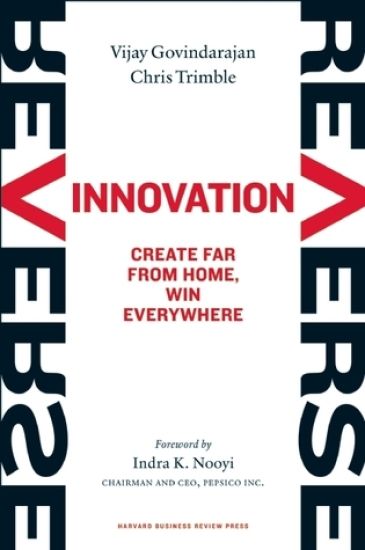
Reverse Innovation

Reverse Innovation

Vijay Govindarajan; Chris Trimble; Indra K. Nooyi

Harvard Business Review Press
2012
sidottu
A New York Times, Wall Street Journal, USA Today, Amazon Bestseller Reverse Innovation is the new business idea everyone is talking about. Why? Because it presents the blueprint for scaling growth in emerging markets, and importing low-cost and high impact innovations to mature ones. Innovation is no longer the exclusive domain of the Silicon Valley elite. Reverse Innovation will open your eyes to the fact that the dynamics of global innovation are changing--and if you want your firm to survive, you'd better pay attention. The gap between rich nations and emerging economies is closing. No longer will innovations travel the globe in only one direction, from developed to developing nations. They will also flow in reverse. CEOs of the world's most influential companies agree and have cited Reverse Innovation as their playbook for the next generation of global growth. Authors Vijay Govindarajan and Chris Trimble of the Tuck School of Business at Dartmouth explain where, when, and why reverse innovation is on the rise and why the implications are so profound. Learn how to make innovation in emerging markets happen and how such innovations can unlock even greater opportunity throughout the world. You'll follow some of the world's leading companies (including GE, Deere & Company, P&G, and PepsiCo) through stories that illustrate exactly what works and what doesn't. If you're in a Western economy, you need to accept that the future lies far from home. But the idea is not just for Western audiences. If innovation is at the heart of your company or your career, no matter where you practice business, Reverse Innovation is a phenomenon you need to understand. This book will help you do that.
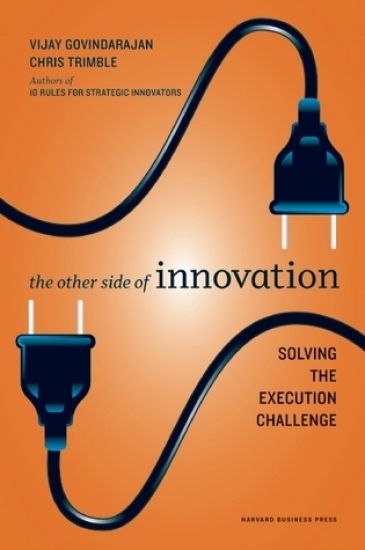
The Other Side of Innovation

The Other Side of Innovation

Vijay Govindarajan; Chris Trimble

Harvard Business Review Press
2010
sidottu

Halvin toimitettuna 35,80 €

Companies can't survive without innovating. But most put far more emphasis on generating Big Ideas than on executing them--turning ideas into actual breakthrough products, services, and process improvements. That's because "ideating" is energizing and glamorous. By contrast, execution seems like humdrum, behind-the-scenes dirty work. But without execution, Big Ideas go nowhere. In The Other Side of Innovation, Vijay Govindarajan and Chris Trimble reveal how to execute an innovation initiative--whether a simple project or a grand, gutsy gamble. Drawing on examples from innovators as diverse as Allstate, BMW, Timberland, and Nucor, the authors explain how to: * Build the Right Team: Determine who'll be on the team, where they'll come from, how they'll be organized, how much time they'll devote to the project, and how they'll navigate the delicate and conflict-rich partnership between innovation and ongoing operations. * Manage a Disciplined Experiment: Decide how team members can quickly test their assumptions , translate results into new knowledge, and measure progress. Give innovation leaders a tough but fair performance evaluation. Practical and provocative, this new book takes you step-by-step through the innovation execution process--so your Big Ideas deliver their full promise.
Ten Rules for Strategic Innovators

Ten Rules for Strategic Innovators

Vijay Govindarajan; Chris Trimble

Harvard Business Review Press
2005
sidottu
Even world-class companies, with powerful and proven business models, eventually discover limits to growth. That's what makes emerging high-growth industries so attractive. With no proven formula for making a profit, these industries represent huge opportunities for the companies that are fast enough and smart enough to capture them first. But building tomorrow's businesses while simultaneously sustaining excellence in today's demands a delicate balance. It is a mandatory quest, but one that is fraught with contradiction and paradox. Until now, there has been little practical guidance. Based on an in-depth, multiyear research study of innovative initiatives at ten large corporations, Vijay Govindarajan and Chris Trimble identify three central challenges: forgetting yesterday's successful processes and practices; borrowing selected resources from the core business; and learning how the new business can succeed. The authors make recommendations regarding staffing, leadership roles, reporting relationships, process design, planning, performance assessment, incentives, cultural norms, and much more. Breakthrough growth opportunities can make or break companies and careers. "Forget, Borrow, Learn" is every leader's guide to execution in unexplored territory.