Kirjojen hintavertailu – 12 903 725 kirjaa ja 27 kauppaa

Kirjailija

Chris Wild

Kirjat ja teokset yhdessä paikassa: 6 kirjaa, julkaisuja vuosilta 2008–2022, suosituimpiin kuuluu Textile Mills of Lancashire: The Legacy. Vertaile teosten hintoja ja tarkista saatavuus suomalaisista kirjakaupoista.

6 kirjaa

Kirjojen julkaisuvuodet: 2008–2022.

The State of It

The State of It

Chris Wild

John Blake Publishing Ltd
2022
nidottu

Halvin toimitettuna 17,90 €

'The authentic inside track... Gripping' Lemn Sissay'An important and hugely powerful book... So inspiring, I loved The State of It' Neil Morrissey'Incredibly compelling' Denise WelchCAN WE FIX HOW WE LOOK AFTER CHILDREN IN CARE? Government cuts, unregulated care homes, inadequate staff training - campaigner and care home consultant Chris Wild has seen it all. The low standards and frequent abuse of children in care has long been a focal point of his loud message: we are failing our young people and something needs to change. Chris delves deep into the lives of care home kids, from experiences with county lines, drugs, trafficking, knife crime, gang violence to child exploitation and sexual abuse. He tells the stories of the voiceless, the children who have been left behind, compounded by his own experiences of growing up in care. How is the care system failing our young people and controlling just who and what they can become? What help do we really give children after their time in care is over, left to fend for themselves? Is it too late to fix the state of it? URGENT AND CRITICAL, THE STATE OF IT WILL BE THE MOST IMPORTANT BOOK YOU READ THIS YEAR. In support of Become, the charity for children in care and young care leavers, a charity registered in England and Wales, charity number 1010518.
The State of It

The State of It

Chris Wild

John Blake Publishing Ltd
2021
sidottu
'The authentic inside track... Gripping' Lemn Sissay'An important and hugely powerful book... So inspiring, I loved The State of It' Neil Morrissey'Incredibly compelling' Denise WelchCAN WE FIX HOW WE LOOK AFTER CHILDREN IN CARE? Government cuts, unregulated care homes, inadequate staff training - campaigner and care home consultant Chris Wild has seen it all. The low standards and frequent abuse of children in care has long been a focal point of his loud message: we are failing our young people and something needs to change. Chris delves deep into the lives of care home kids, from experiences with county lines, drugs, trafficking, knife crime, gang violence to child exploitation and sexual abuse. He tells the stories of the voiceless, the children who have been left behind, compounded by his own experiences of growing up in care. How is the care system failing our young people and controlling just who and what they can become? What help do we really give children after their time in care is over, left to fend for themselves? Is it too late to fix the state of it? URGENT AND CRITICAL, THE STATE OF IT WILL BE THE MOST IMPORTANT BOOK YOU READ THIS YEAR. In support of Become, the charity for children in care and young care leavers, a charity registered in England and Wales, charity number 1010518.

Textile Mills of Lancashire: The Legacy

Textile Mills of Lancashire: The Legacy

Andy Phelps; Chris Wild; Ian Miller; Richard Gregory

Oxford Archaeology
2018
Nidottu
Lancashire’s historic textile industry holds a particular place in Britain’s history. Its success was a direct result of the Industrial Revolution, which resulted in the region blossoming into a leading economic force between the late eighteenth and early twentieth centuries. This was, important, essential to Britain’s place and dominance as the world’s first industrial nation. During this period, Lancashire’s textile industry was at the forefront of innovation, adopting both steal power and the factory-based system of production, which in turn greatly shaped the historic character of the region, and left an enduring legacy. Whilst this legacy is still deeply ingrained in Lancashire’s consciousness, its most graphic reflection lies in the textile mills, which were established across the historic county, man of which were directly responsible for the formation of the distinctive urban landscapes associated with the region’s mill towns. However, since the demise of the textile industry in the second half of the twentieth century, the loss of historic mills, through demolition, decay and fire, has been a cause of increasing concern amongst those who recognise their heritage value, and their importance in providing and enduring sense of place for the residents of the mill towns. This threat has been felt perhaps most keenly in Lancashire, a county in which history and identity were bound closely to the development of the industry, and this danger has prompted a recognition of the need for urgent action. This publication represents the culmination of a decade of research on the textile mills of Lancashire by Oxford Archaeology North, born out of two phases of survey funded by Historic England designed to assess the survival of, and threats to, modern Lancashire’s historic textile mills. It highlights the historic growth of the region’s textile industry, and also the architectural form and evolution of Lancashire’s textile mills and ancillary industries, such as bleaching, dyeing, and printing. Importantly, it also aims to show that such buildings can be readily adapted to modern use as viable spaces, which, significantly, allows each settlement actively to retain its ‘sense of place’.
Damaged

Damaged

Chris Wild

BLINK Publishing
2018
nidottu
'We were just sacks of flesh existing as punchbags for their rage, or toys for their entertainment'Chris Wild lost his dad aged 11, leaving him to grow up in the care system. There, he witnessed the incessant physical and sexual abuse of children, with the only escape leading to the streets. So many others like him, failed by the systems put in place to protect them, ended up with nothing but drink, drugs, prostitution and crime as their normality. Later, working in a care home himself became the only way Chris could help, but he was shocked to discover little had changed and vulnerable children were still being failed. In Damaged, he shares heartbreaking memories of the care system along with the stories of all the boys, girls, men and women he met along the way - exposing why we must take action now to protect all of Britain's forgotten children.
"Hell Upon Earth": The Archaeology of Angel Meadow

"Hell Upon Earth": The Archaeology of Angel Meadow

Chris Wild; Ian Miller

Oxford Archaeology
2015
Nidottu
Manchester''s phenomenal rise as the world''s leading manufacturing centre brought a new industrial townscape that was dominated by steam-powered cotton mills, associated factories, warehouses, and swathes of low-cost housing built for the workers that flocked to the burgeoning town. The rejuvenation of 20 acres of land on the western edge of the city centre as part of the NOMA regeneration project has enabled the evolution of this pioneering industrial townscape to be investigated archaeologically. In particular, excavations carried out by Oxford Archaeology North on behalf of The Co-Operative Group have provided a fascinating insight into the development of workers'' housing that once formed part of Angel Meadow, together with the remarkable remains of Manchester''s earliest steam-powered cotton mill.
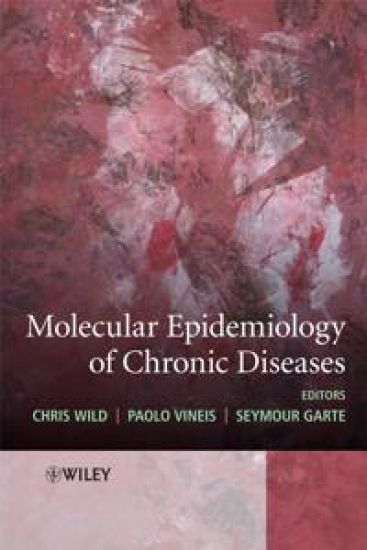
Molecular Epidemiology of Chronic Diseases

Molecular Epidemiology of Chronic Diseases

Chris Wild; Paolo Vineis; Seymour Garte

John Wiley Sons Inc
2008
sidottu
"I think this is an excellent book–I recommend it to anyone involved in molecular epidemiology... The 26 chapters are written by topic specialists, in an explanatory, east to read style." –BTS Newsletter, Summer 2009 "This text provides an accessible and useful handbook for the epidemiologist who wants to survey the field, to become better informed, to look at recent developments and get some background on these or simply to appreciate further the relatively rapid changes in informatic and analytical technologies which increasingly will serve and underpin future epidemiological studies. One of the strengths in this book is the extensive array of practical illustrative examples, and it would also in my opinion have useful potential as a teaching text." –American Journal of Human Biology, March 2009 With the sequencing of the human genome and the mapping of millions of single nucleotide polymorphisms, epidemiology has moved into the molecular domain. Scientists can now use molecular markers to track disease-associated genes in populations, enabling them to study complex chronic diseases that might result from the weak interactions of many genes with the environment. Use of these laboratory generated biomarker data and an understanding of disease mechanisms are increasingly important in elucidating disease aetiology. Molecular Epidemiology of Disease crosses the disciplinary boundaries between laboratory scientists, epidemiologists, clinical researchers and biostatisticians and is accessible to all these relevant research communities in focusing on practical issues of application, rather than reviews of current areas of research. Covers categories of biomarkers of exposure, susceptibility and diseaseIncludes chapters on novel technologies: genomics, transcriptomics, proteomics and metabonomics, which are increasingly finding application in population studiesEmphasizes new statistical and bioinformatics approaches necessitated by the large data sets generated using these new methodologiesDemonstrates the potential applications of laboratory techniques in tackling epidemiological problems while considering their limitations, including the sources of uncertainty and inaccuracyDiscusses issues such as reliability (compared to traditional epidemiological methods) and the timing of exposureExplores practical elements of conducting population studies, including biological repositories and ethics Molecular Epidemiology of Disease provides an easy-to-use, clearly presented handbook that allows epidemiologists to understand the specifics of research involving biomarkers, and laboratory scientists to understand the main issues of epidemiological study design and analysis. It also provides a useful tool for courses on molecular epidemiology, using many examples from population studies to illustrate key concepts and principles.