
Kirjojen hintavertailu – 12 859 827 kirjaa ja 27 kauppaa

Kirjailija

Christa Buschendorf

Kirjat ja teokset yhdessä paikassa: 3 kirjaa, julkaisuja vuosilta 2008–2021, suosituimpiin kuuluu The Highpriest of Pessimism: Zur Rezeption Schopenhauers in Den USA. Vertaile teosten hintoja ja tarkista saatavuus suomalaisista kirjakaupoista.

3 kirjaa

Kirjojen julkaisuvuodet: 2008–2021.

Power Relations in Black Lives – Reading African American Literature and Culture with Bourdieu and Elias
According to relational sociology, power imbalances are at the root of human conflicts and consequently shape the physical and symbolic struggles between interdependent groups or individuals. This volume highlights the role of power relations in the African American experience by applying key concepts of Pierre Bourdieu and Norbert Elias to black literature and culture. The authors offer new readings of power asymmetries as represented in works of canonical and contemporary black writers (Richard Wright, Ralph Ellison, Gwendolyn Brooks, Toni Morrison, Percival Everett, Colson Whitehead), rap music (e.g., Jay Z), images of black homelessness, and figurations of political activism (civil rights activist Bayard Rustin, #BlackLivesMatter in Ferguson).
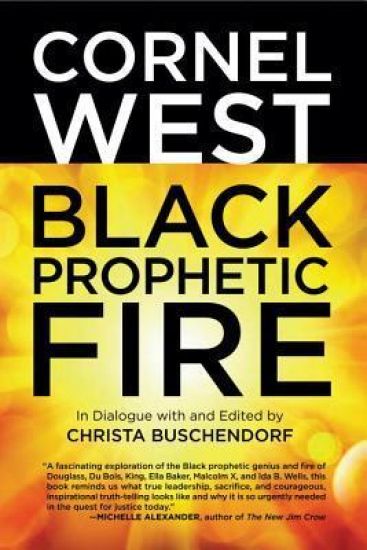
Black Prophetic Fire

Black Prophetic Fire

Cornel West; Christa Buschendorf

Beacon Press
2015
pokkari
An unflinching look at nineteenth- and twentieth-century African American leaders and their visionary legacies. In an accessible, conversational format, Cornel West, with distinguished scholar Christa Buschendorf, provides a fresh perspective on six revolutionary African American leaders: Frederick Douglass, W. E. B. Du Bois, Martin Luther King Jr., Ella Baker, Malcolm X, and Ida B. Wells. In dialogue with Buschendorf, West examines the impact of these men and women on their own eras and across the decades. He not only rediscovers the integrity and commitment within these passionate advocates but also their fault lines. West, in these illuminating conversations with the German scholar and thinker Christa Buschendorf, describes Douglass as a complex man who is both "the towering Black freedom fighter of the nineteenth century" and a product of his time who lost sight of the fight for civil rights after the emancipation. He calls Du Bois "undeniably the most important Black intellectual of the twentieth century" and explores the more radical aspects of his thinking in order to understand his uncompromising critique of the United States, which has been omitted from the American collective memory. West argues that our selective memory has sanitized and even "Santaclausified" Martin Luther King Jr., rendering him less radical, and has marginalized Ella Baker, who embodies the grassroots organizing of the civil rights movement. The controversial Malcolm X, who is often seen as a proponent of reverse racism, hatred, and violence, has been demonized in a false opposition with King, while the appeal of his rhetoric and sincerity to students has been sidelined. Ida B. Wells, West argues, shares Malcolm X's radical spirit and fearless speech, but has "often become the victim of public amnesia." By providing new insights that humanize all of these well-known figures, in the engrossing dialogue with Buschendorf, and in his insightful introduction and powerful closing essay, Cornel West takes an important step in rekindling the Black prophetic fire so essential in the age of Obama.
The Highpriest of Pessimism: Zur Rezeption Schopenhauers in Den USA

The Highpriest of Pessimism: Zur Rezeption Schopenhauers in Den USA

Christa Buschendorf

Universitatsverlag Winter
2008
sidottu
Wie die Bezeichnungen "New Buddha", "Prince of Atheists" oder "Highpriest of Pessimism" erkennen lassen, stellte Schopenhauer die christliche Weltsicht und den optimistischen Daseinsentwurf der Amerikaner auf eine harte Probe. In Interpretationen fiktionaler Texte, kulturkritischer Essays und philosophischer Schriften legt die sowohl literatur- und ideengeschichtlich als auch kulturhistorisch orientierte Studie dar, wie amerikanische Denker und Schriftsteller in der zweiten Halfte des 19. Jahrhunderts in Debatten uber die indische Weisheitslehre, die post-darwinistische Glaubenskrise, die Optimismus-Pessimismus-Kontroverse oder die eskapistische Buddhismus-Mode der Jahrhundertwende auf einen Philosophen reagierten, der die Realitat menschlichen Leidens schonungslos exponiert und zugleich mit seiner Mitleidsethik hohe moralische Standards setzt. In der Konfrontation mit dem Hauptvertreter des Pessimismus rangen die Amerikaner mit der von ihnen zwar immer wieder verdrangten, in Krisenzeiten aber um so dringlicher empfundenen Frage nach der existentiellen Bedeutung von Schmerz, Leid und Tod.