Kirjojen hintavertailu – 12 903 724 kirjaa ja 27 kauppaa

Kirjailija

Christian Abrahamsson

Kirjat ja teokset yhdessä paikassa: 4 kirjaa, julkaisuja vuosilta 2018–2022, suosituimpiin kuuluu Topoi/Graphein. Vertaile teosten hintoja ja tarkista saatavuus suomalaisista kirjakaupoista.

4 kirjaa

Kirjojen julkaisuvuodet: 2018–2022.

Radikalism och avantgarde : Sverige 1947-1967

Radikalism och avantgarde : Sverige 1947-1967

Edward Blom; Kalle Lind; Svante Nordin; Yvonne Hirdman; Torbjörn Elensky; Christian Abrahamsson; Birgitta Holm; Orvar Löfgren; David Thurfjell; Thomas Millroth; Johan Redin; Bengt G. Nilsson; Tobias Hûbinette; David Andersson; Oscar Swartz; Jepser Roine; Cilla Robach; Håkan Lindgren; Bo Wennström; Petra Werner; Gunilla Kinn Blom; Anna-Lena Lodenius; Karin Helander; Jan Lumholdt; Åsa Nilsonne

Timbro
2022
sidottu
Åren 1947 1967 förändrades Sverige i snabb takt. Den tekniska utvecklingen och den ekonomiska tillväxten saknade motstycke och lade grunden inte bara för ett ojämförligt välstånd utan också för djupa sociala och kulturella förskjutningar. Allt som hade tagits för givet utmanades. Radikalism fick ett egenvärde. Avantgardet blev mainstream. Med texter av bland andra Yvonne Hirdman, Kalle Lind, Birgitta Holm.

Radikalkonservatismens rötter : Rudolf Kjellén och 1914 års idéer
I Radikalkonservatismens rötter diskuterar Christian Abrahamsson Kjelléns historiska och nutida relevans. Christian Abrahamsson är fil. dr i kulturgeografi och kulturskribent. Han har varit verksam vid bland annat universiteten i Uppsala, Lund, Oxford, Berkeley och Oslo. Radikalkonservatismens rötter Rudolf Kjellén och 1914 års idéer ingår i Timbro förlags essäserie, och är en av en två essäer om den nya högerns idéhistoriska arv. Timbro förlags essäserie presenterar nya och gamla svar på eviga frågor om människan, samhället och politiken. Nya svenska originaltexter varvas med översättningar.
Topoi/Graphein

Topoi/Graphein

Christian Abrahamsson; Gunnar Olsson

University of Nebraska Press
2018
sidottu
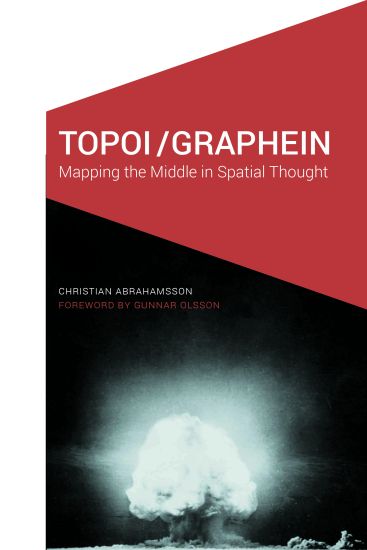
In Topoi/Graphein Christian Abrahamsson maps the paradoxical limit of the in-between to reveal that to be human is to know how to live with the difference between the known and the unknown. Using filmic case studies, including Code Inconnu, Lord of the Flies, and Apocalypse Now, and focusing on key concerns developed in the works of the philosophers Deleuze, Olsson, and Wittgenstein, Abrahamsson starts within the notion of fixed spatiality, in which human thought and action are anchored in the given of identity. He then moves through a social world in which spatiotemporal transformations are neither fixed nor taken for granted. Finally he edges into the pure temporality that lies beyond the maps of fixed points and social relations. Each chapter is organized into two subjects: topoi, or excerpts from the films, and graphein, the author’s interpretation of presented theories to mirror the displacements, transpositions, juxtapositions, fluctuations, and transformations between delimited categories. A landmark work in the study of human geography, Abrahamsson’s book proposes that academic and intellectual attention should focus on the spatialization between meaning and its materialization in everyday life.
Topoi/Graphein

Topoi/Graphein

Christian Abrahamsson; Gunnar Olsson

University of Nebraska Press
2018
pokkari
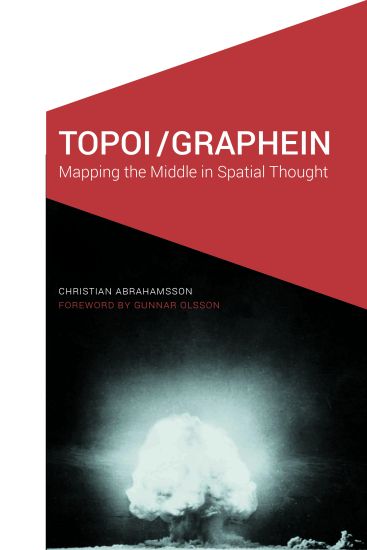
In Topoi/Graphein Christian Abrahamsson maps the paradoxical limit of the in-between to reveal that to be human is to know how to live with the difference between the known and the unknown. Using filmic case studies, including Code Inconnu, Lord of the Flies, and Apocalypse Now, and focusing on key concerns developed in the works of the philosophers Deleuze, Olsson, and Wittgenstein, Abrahamsson starts within the notion of fixed spatiality, in which human thought and action are anchored in the given of identity. He then moves through a social world in which spatiotemporal transformations are neither fixed nor taken for granted. Finally he edges into the pure temporality that lies beyond the maps of fixed points and social relations. Each chapter is organized into two subjects: topoi, or excerpts from the films, and graphein, the author’s interpretation of presented theories to mirror the displacements, transpositions, juxtapositions, fluctuations, and transformations between delimited categories. A landmark work in the study of human geography, Abrahamsson’s book proposes that academic and intellectual attention should focus on the spatialization between meaning and its materialization in everyday life.