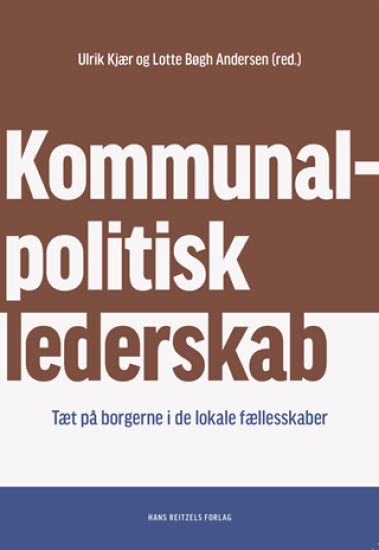
Kommunalpolitisk lederskab
Lotte Bøgh Andersen; Mads Leth Felsager Jakobsen; Lene Holm Pedersen; Eva Sørensen; Rasmus Tue Pedersen; Ulrik Kjær; Christian Bøtcher Jacobsen; Kurt Houlberg; Martin Bækgaard; Tina Øllgaard Bentzen; Asmus Jakob Leth Olsen; Julian Christensen; Christian Dindler; Niels Ejersbo; Pia Gjellerup; Lotte Rømer Grove; Ole Sejer Iversen; Cecilie Lindgaard Petersen; Mads Thau; Mette Kjærgaard Thomsen; Lene Krogh Jeppesen
Gyldendal
2021
nidottu
De kommunalt ansatte løfter rigtig mange opgaver, mens kommunalpolitikerne udstikker den politiske linje og foretager de politiske prioriteringer. Det handler om at udøve kommunalpolitisk lederskab. Heldigvis er landets knapt 2.500 kommunalpolitikere tæt på borgerne og brænder for det lokale demokrati og de lokale fællesskaber. Denne bog giver en række forskningsbaserede indspark til, hvordan det kommunalpolitiske lederskab kan udøves. Det handler om alt fra kommunestyret og økonomisk råderum til stående udvalg og bestyrelsesposter. Der er fokus på kommunalpolitikernes motivation, erfaringer og forståelse af informationer, og samspillet med ansatte, borgere og organisationer står centralt. Bogen sætter spot på arbejdet med innovation og teknologi samt på tilliden til og imellem kommunalpolitikerne. På den måde er det bogens mål at udruste både erfarne og nye kommunalpolitikere til at lykkes endnu bedre med deres kommunalpolitiske lederskab. Bogen er redigeret af professor Ulrik Kjær, Institut for Statskundskab, SDU og professor Lotte Bøgh Andersen, Institut for Statskundskab, AU.