Kirjailija
Christian Fuchs
Kirjat ja teokset yhdessä paikassa: 63 kirjaa, julkaisuja vuosilta 2001–2026, suosituimpiin kuuluu Feuerwanzen lügen nicht - Stefanie Höfler - Lehrerheft. Vertaile teosten hintoja ja tarkista saatavuus suomalaisista kirjakaupoista.
63 kirjaa
Kirjojen julkaisuvuodet: 2001–2026.
This fifth volume in Christian Fuchs’s Media, Communication and Society series presents foundations and applications of digital ethics based on critical theory. It applies a critical approach to ethics within the realm of digital technology. Based on the notions of alienation, communication (in)justice, media (in)justice, and digital (in)justice, it analyses ethics in the context of digital labour and the surveillance-industrial complex; social media research ethics; privacy on Facebook; participation, co-operation, and sustainability in the information society; the digital commons; the digital public sphere; and digital democracy. The book consists of three parts. Part I presents some of the philosophical foundations of critical, humanist digital ethics. Part II applies these foundations to concrete digital ethics case studies. Part III presents broad conclusions about how to advance the digital commons, the digital public sphere, and digital democracy, which is the ultimate goal of digital ethics. This book is essential reading for both students and researchers in media, culture, communication studies, and related disciplines.
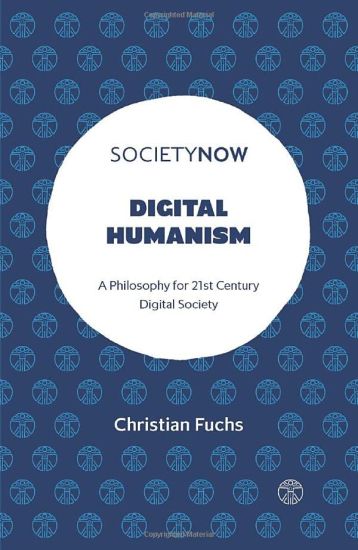
Our contemporary global digital society is not always a good place to live. Authoritarianism, hatred, false news, post-truth culture, the COVID-19 anti-vaccination movement, COVID-19 conspiracy theories, and political polarisation are organised via the Internet. The public sphere is highly polarised. Today, many humans tend to think of other humans mainly in terms of friends and enemies. Robots and Artificial Intelligence-based automation have created new challenges for the world of work. Decades of neoliberalism have increased inequalities. The COVID-19 pandemic has shown the vulnerability of humanity to viruses and health crises. Humanity and society are in a major crisis and digitalisation mediates this crisis. Digital Humanism explores how Humanism can help us to critically understand how digital technologies shape society and humanity, providing an introduction to Humanism in the digital age. Fuchs introduces the approach of Digital Humanism and outlines foundations of a Radical Digital Humanism, analysing what decolonisation of academia and the study of the digital, media and communication means; what the roles are of robots, automation, and Artificial Intelligence in digital capitalism, and how the communication of death and dying has been mediated by digital technologies, capitalist necropower, and digital capitalism. In order to save humanity and society, we need Radical Digital Humanism now.
This fourth volume in Christian Fuchs’s Media, Communication and Society book series outlines the theoretical foundations of digital fascism and presents case studies of how fascism is communicated online. Digital Fascism presents and engages with theoretical approaches and empirical studies that allow us to understand how fascism, right-wing authoritarianism, xenophobia, and nationalism are communicated on the Internet. The book builds on theoretical foundations from key theorists such as Theodor W. Adorno, Franz L. Neumann, Erich Fromm, Herbert Marcuse, Wilhelm Reich, Leo Löwenthal, Moishe Postone, Günther Anders, M. N. Roy, and Henry Giroux. The book draws on a range of case studies, including Nazi-celebrations of Hitler’s birthday on Twitter, the ‘red scare 2.0’ directed against Jeremy Corbyn, and political communication online (Donald Trump, Boris Johnson, the Austrian presidential election). These case studies analyse right-wing communication online and on social media. Fuchs argues for the safeguarding of the democratic public sphere and that slowing down and decommodifying the logic of the media can advance and renew debate culture in the age of digital authoritarianism, fake news, echo chambers, and filter bubbles. Each chapter focuses on a particular dimension of digital fascism or a critical theorist whose work helps us to illuminate how fascism and digital fascism work, making this book an essential reading for both undergraduate and postgraduate students of media and communication studies, sociology, politics, and political economy as well as anyone who wants to understand what digital fascism is and how it works.
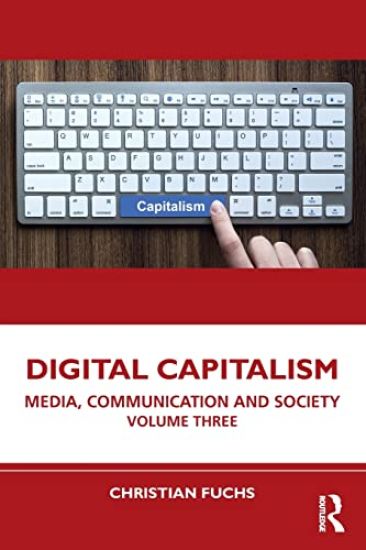
This third volume in Christian Fuchs’s Media, Communication and Society book series illuminates what it means to live in an age of digital capitalism, analysing its various aspects, and engaging with a variety of critical thinkers whose theories and approaches enable a critical understanding of digital capitalism for media and communication. Each chapter focuses on a particular dimension of digital capitalism or a critical theorist whose work helps us to illuminate how digital capitalism works. Subjects covered include: digital positivism; administrative big data analytics; the role and relations of patriarchy, slavery, and racism in the context of digital labour; digital alienation; the role of social media in the capitalist crisis; the relationship between imperialism and digital labour; alternatives such as trade unions and class struggles in the digital age; platform co-operatives; digital commons; and public service Internet platforms. It also considers specific examples, including the digital labour of Foxconn and Pegatron workers, software engineers at Google, and online freelancers, as well as considering the political economy of targeted-advertising-based Internet platforms such as Facebook, Google, YouTube, and Instagram. Digital Capitalism illuminates how a digital capitalist society’s economy, politics, and culture work and interact, making it essential reading for both students and researchers in media, culture, and communication studies, as well as related disciplines.
This second volume of Christian Fuchs’ Media, Communication and Society book series outlines key concepts and contemporary debates in critical theory. The book explores the foundations of a Marxist-Humanist critical theory of society, clarifying and updating key concepts in critical theory – such as the dialectic, critique, alienation, class, capitalism, ideology, and racial capitalism. In doing so, the book engages with and further develops elements from the works of Karl Marx, Friedrich Engels, Rosa Luxemburg, Max Horkheimer, Theodor W. Adorno, Herbert Marcuse, David Harvey, Michael Hardt, Antonio Negri, C. L. R. James, Adolph L. Reed Jr., and Cornel West. Written for a broad audience of students and scholars, this book is an essential guide for readers who are interested in how to think critically from perspectives such as media and communication studies, sociology, philosophy, political economy, and political science.
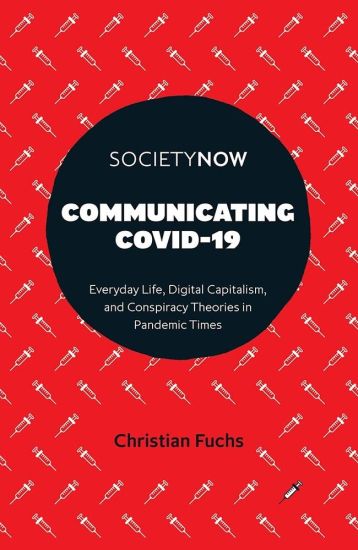
The COVID-19 pandemic crisis has changed the way we live and communicate. The phases of lockdown brought about by the pandemic fundamentally changed the way we work, lead our everyday lives, and how we communicate, resulting in Internet platforms becoming more important than ever before. Communicating COVID-19 explores the impact of these changes on society and the way we communicate, and the effect this has had on the spread of misinformation. Critical communication and Internet scholar Christian Fuchs analyses the changes of everyday communication in the COVID-19 crisis and how misinformation has spread online throughout the pandemic. He explores the foundations and rapid spread of conspiracy theories and anti-vaccination discourse on the Internet, paying particular attention to the vast amount of COVID-19 conspiracy theories about Bill Gates. He also interrogates Internet users' reactions to these COVID-19 conspiracy theories as well as how Donald Trump communicated about COVID-19 on Twitter during the final year of his Presidency. Communicating COVID-19 is an essential work for anyone seeking to understand the role of digital technologies, changes in communication and the Internet, and the spread of conspiracy theories in the context of COVID-19.
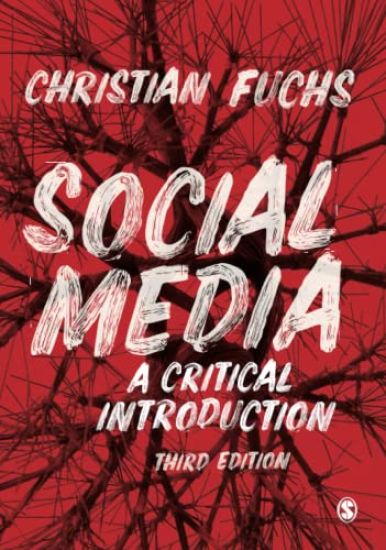
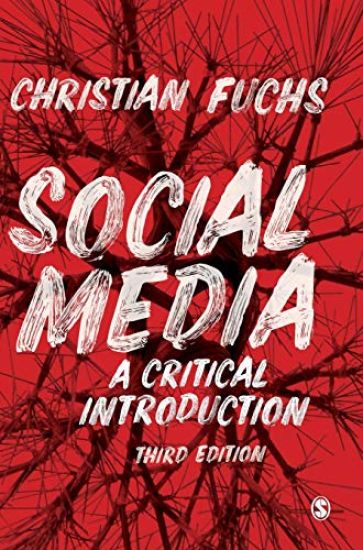
Never look at social media the same way again. Social media are an integral part of contemporary society. From news and politics to language and everyday life, they have changed the way we communicate, use information and understand the world. So we have to ask critical questions about social media. We have to dig deeper into issues of ownership, power, class and (in)justice. This book equips you with a critical understanding of the complexities and contradictions at the heart of social media’s relationship with society. The revised and expanded
This book outlines and contributes to the foundations of Marxist-humanist communication theory. It analyses the role of communication in capitalist society. Engaging with the works of critical thinkers such as Erich Fromm, E. P. Thompson, Raymond Williams, Henri Lefebvre, Georg Lukács, Lucien Goldmann, Günther Anders, M. N. Roy, Angela Davis, C. L. R. James, Rosa Luxemburg, Eve Mitchell, and Cedric J. Robinson, the book provides readings of works that inform our understanding of how to critically theorise communication in society. The topics covered include the relationship of capitalism, racism, and patriarchy; communication and alienation; the base/superstructure-problem; the question of how one should best define communication; the political economy of communication; ideology critique; the connection of communication and struggles for alternatives. Written for a broad audience of students and scholars interested in contemporary critical theory, this book will be useful for courses in media and communication studies, cultural studies, Internet research, sociology, philosophy, political science, and economics. This is the first of five Communication and Society volumes, each one outlining a particular aspect of the foundations of a critical theory of communication in society.
Communication and Capitalism
Christian Fuchs
University of Westminster Press
2020
nidottu
Halvin toimitettuna 46,20 €
‘An authoritative analysis of the role of communication in contemporary capitalism and an important contribution to debates about the forms of domination and potentials for liberation in today’s capitalist society.’ — Professor Michael Hardt, Duke University, co-author of the tetralogy Empire, Commonwealth, Multitude, and Assembly ‘A comprehensive approach to understanding and transcending the deepening crisis of communicative capitalism. It is a major work of synthesis and essential reading for anyone wanting to know what critical analysis is and why we need it now more than ever.’ — Professor Graham Murdock, Emeritus Professor, University of Loughborough and co-editor of The Handbook of Political Economy of CommunicationsCommunication and Capitalism outlines foundations of a critical theory of communication. Going beyond Jürgen Habermas’ theory of communicative action, Christian Fuchs outlines a communicative materialism that is a critical, dialectical, humanist approach to theorising communication in society and in capitalism. The book renews Marxist Humanism as a critical theory perspective on communication and society. The author theorises communication and society by engaging with the dialectic, materialism, society, work, labour, technology, the means of communication as means of production, capitalism, class, the public sphere, alienation, ideology, nationalism, racism, authoritarianism, fascism, patriarchy, globalisation, the new imperialism, the commons, love, death, metaphysics, religion, critique, social and class struggles, praxis, and socialism. Fuchs renews the engagement with the questions of what it means to be a human and a humanist today and what dangers humanity faces today.
This introductory text is a critical theory toolkit on how to how to make use of Karl Marx’s ideas in media, communication, and cultural studies. Karl Marx’s ideas remain of crucial relevance, and in this short, student-friendly book, leading expert Christian Fuchs introduces Marx to the reader by discussing 15 of his key concepts and showing how they matter for understanding the digital and communicative capitalism that shapes human life in twenty-first century society. Key concepts covered include: the dialectic, materialism, commodities, capital, capitalism, labour, surplus-value, the working class, alienation, means of communication, the general intellect, ideology, socialism, communism, and class struggles. Students taking courses in Media, Culture and Society; Communication Theory; Media Economics; Political Communication; and Cultural Studies will find Fuchs' concise introduction an essential guide to Marx.
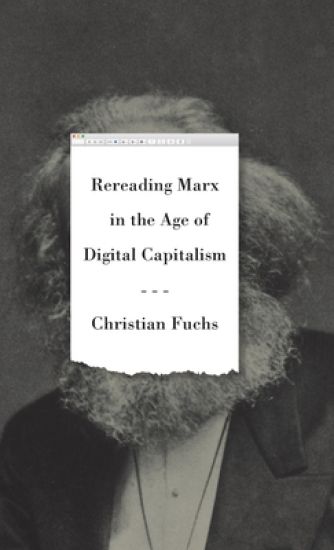
The 'end of history' has not taken place. Ideological and economic crisis and the status quo of neoliberal capitalism since 2008 demand a renewed engagement with Marx. But if we are to effectively resist capitalism we must truly understand Marx: Marxism today must theorise how communication technologies, media representation and digitalisation have come to define contemporary capitalism. There is an urgent need for critical, Marxian-inspired knowledge as a foundation for changing the world and the way we communicate from digital capitalism towards communicative socialism and digital communism. Rereading Marx in the Age of Digital Capitalism does exactly this. Delving into Marx's most influential works, such as Capital, The Grundrisse, Economic and Philosophic Manuscripts, The German Ideology and The Communist Manifesto, Christian Fuchs draws out Marx's concepts of machinery, technology, communication and ideology, all of which anticipate major themes of the digital age. A concise and coherent work of Marxist media and communication theory, the book ultimately demonstrates the relevance of Marx to an age of digital and communicative capitalism.