Kirjojen hintavertailu – 12 859 818 kirjaa ja 27 kauppaa

Kirjailija

Christian Gerlach

Kirjat ja teokset yhdessä paikassa: 18 kirjaa, julkaisuja vuosilta 2004–2026, suosituimpiin kuuluu Klassisk og moderne psykologisk teori. Vertaile teosten hintoja ja tarkista saatavuus suomalaisista kirjakaupoista.

18 kirjaa

Kirjojen julkaisuvuodet: 2004–2026.

Klassisk og moderne psykologisk teori

Klassisk og moderne psykologisk teori

Bo Jacobsen; Mimi Yung Mehlsen; Allan Holmgren; Benny Karpatschof; Bjarne Sode Funch; Boje Katzenelson; Carsten René Jørgensen; Christian Gerlach; Dan Zahavi; Henrik Høgh-Olesen; Henrik Skovlund; Ivy Schousboe; Jan Tønnesvang; Jens Rasmussen; Johs. Mørk Pedersen; Judy Gammelgaard; Klaus Nielsen; Lars Hem; Lisbeth Harms; Morten Overgaard; Nicole K. Rosenberg; Peter Krøjgaard; Peter la Cour; Pia Skogemann; Seth Chaiklin; Simo Køppe; Susan Hart; Svend Brinkmann; Thor Grünbaum; Randi Starrfelt; Søren Kyllingsbæk; Axel Larsen

Gyldendal
2011
muu
"Klassisk og moderne psykologisk teori" er en indføring i psykologiens centrale teorier, personer, temaer og begreber. Bogens første del er en kronologisk gennemgang af psykologiens udvikling fra 1879, hvor Wilhelm Wundt etablerede det første psykologiske laboratorium, til nutidens dominerende teorier og begreber. Bogens anden del er bygget op om centrale temaer i psykologien og her introduceres læseren til teorier om bl.a. tilknytning, bevidsthed og selvet. "Klassisk og moderne psykologisk teori" præsenterer og gennemgår de enkelte teoriers baggrund og grundideer. Hvert kapitel indeholder endvidere korte biografiske oplysninger om teoriernes ophavsmænd samt en oversigt over nøglebegreber og definitioner. En fyldig litteraturliste, der medtager både originalværker, skandinaviske oversættelser og den vigtigste sekundær litteratur på området, suppleret af omfattende navne- og emneindeks gør bogen anvendelig som opslagsværk og som redskab til litteratursøgning. Denne 2. udgave er udvidet med kapitler om: 'positiv psykologi', 'amerikansk funktionalisme','hukommelse, sprog og tænkning', 'socialkonstruktionisme og diskurspsykologi', 'neuroaffektiv udvikling', 'voksenudvikling', 'individ, organisation og samfund'.

How the World Hunger Problem Was not Solved

How the World Hunger Problem Was not Solved

Christian Gerlach

TAYLOR FRANCIS LTD
2025
nidottu
The world food crisis (1972–1975) gave rise to new development concepts. To eradicate world hunger, small peasants were supposed to use ‘modern’ inputs like high-yielding seeds, fertilizer, pesticides and irrigation. This would turn subsistence producers into business owners, transform rural areas, invigorate national economies and the crisis-stricken world economy and thus stabilize capitalism. Together with an in-depth account of the world food crisis, this book analyses how this global scheme largely failed. It shows its diverse initiators, their reasoning and motives, its political breakthrough, the degrees to which it was implemented globally and nationally in the following decades and its socioeconomic effects in rural areas. Despite internationally coordinated policies and coercive means, the scheme failed on all levels: situation analysis, design, policies, incapable institutions (including big business), implementation and peasants’ responses. Selective realization in certain regions and for certain crops and the appropriation of funds by local elites often aggravated inequality and hunger. Case studies are about Bangladesh, Indonesia, Tanzania and Mali. The book shows limits to global social engineering, imperialism and state control. It is aimed at students, scholars, activists and non-specialists interested in development and the world food problem. The Open Access version of this book, available at http://www.taylorfrancis.com, has been made available under a Creative Commons Attribution-Non Commercial-No Derivatives (CC-BY-NC-ND) 4.0 license.
Conditions of Violence

Conditions of Violence

Christian Gerlach

De Gruyter
2024
sidottu
Mass violence comes not only from states, but also from people. By analyzing mass violence as social interaction through survivor accounts and other sources, this book presents understudied agents, aims and practices of direct violence and ways of action of those under persecution. Sound history – examining the noises of mass violence and persecution – is particularly telling about such practices. This volume shows that violence can become socially hegemonic, and some people claim a freedom to kill as a political right. To scrutinize indirect violence, which is often imperialist in character and claims many victims, the book proposes the concept of conditions of violence. These conditions are produced by definable groups of actors and foreseeably harm definable groups (which differs from the anonymous and static ‘structural violence’). This is exemplified in a case study concerning famines in World War II and another on COVID-19 as mass violence. Less global in character, other case studies in this volume deal with Rwanda, Bangladesh/East Pakistan and the Soviet Union.
How the World Hunger Problem Was not Solved

How the World Hunger Problem Was not Solved

Christian Gerlach

TAYLOR FRANCIS LTD
2024
sidottu
The world food crisis (1972–1975) gave rise to new development concepts. To eradicate world hunger, small peasants were supposed to use ‘modern’ inputs like high-yielding seeds, fertilizer, pesticides and irrigation. This would turn subsistence producers into business owners, transform rural areas, invigorate national economies and the crisis-stricken world economy and thus stabilize capitalism. Together with an in-depth account of the world food crisis, this book analyses how this global scheme largely failed. It shows its diverse initiators, their reasoning and motives, its political breakthrough, the degrees to which it was implemented globally and nationally in the following decades and its socioeconomic effects in rural areas. Despite internationally coordinated policies and coercive means, the scheme failed on all levels: situation analysis, design, policies, incapable institutions (including big business), implementation and peasants’ responses. Selective realization in certain regions and for certain crops and the appropriation of funds by local elites often aggravated inequality and hunger. Case studies are about Bangladesh, Indonesia, Tanzania and Mali. The book shows limits to global social engineering, imperialism and state control. It is aimed at students, scholars, activists and non-specialists interested in development and the world food problem. The Open Access version of this book, available at http://www.taylorfrancis.com, has been made available under a Creative Commons Attribution-Non Commercial-No Derivatives (CC-BY-NC-ND) 4.0 license.
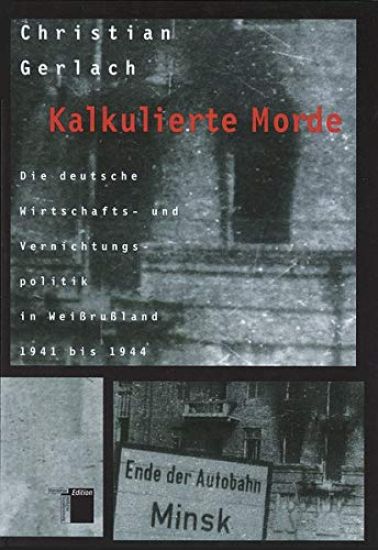
Kalkulierte Morde

Kalkulierte Morde

Christian Gerlach

Hamburger Edition
2021
nidottu
Nach drei Jahren deutscher Besatzung Weißrußlands (1941 bis 1944) war nichts mehr wie zuvor. Nahezu 1,7 von zehn Millionen Einwohnern waren ermordet, fast 400000 als Zwangsarbeiter verschleppt worden. Der Terror richtete sich gegen sowjetische Kriegsgefangene, Juden, ? Intelligenzler?, Bauern, Kinder, Geisteskranke, Sinti und Roma, vermeintliche Partisanen und Hungerflüchtlinge. Die Städte des Landes waren zum Großteil in Ruinenfelder verwandelt, drei Millionen Menschen waren obdachlos. Die industrielle Kapazität tendierte gegen Null, und der Viehbestand war um 80 Prozent gesunken. Weißrußland schien fast ausgelöscht. Der Historiker Christian Gerlach hat sich dieser bisher nur bruchstückhaft aufgearbeiteten Besatzungsgeschichte in einer monumentalen Studie angenommen. Auf breiter Quellenbasis gibt seine Darstellung tiefe Einblicke in die Praxis der Vernichtung. Erstmals wird in dieser Arbeit für ein Territorium die Vernichtungspolitik gegenüber allen betroffenen Bevölkerungsgruppen gleichermaßen untersucht und der Zusammenhang mit militärischen, wirtschaftlichen und politischen Zielen und Handlungen umfassend analysiert. Die praktische Zusammenarbeit zwischen Organen und Akteuren verschiedener Ebenen, von Reichsministerien, SS, Wehrmacht, Zivilverwaltungen, Wirtschaftsgesellschaften und einheimischer Hilfspolizei wird eindrucksvoll belegt. Trotz Rivalitäten unter den beteiligten Institutionen blieb eine gemeinsame Strategie des Terrors bestimmend, die vor allem auf der untersten Handlungsebene effektiv und in einer für die Opfer unheilvollen Weise funktionierte. Sie ging aus von der Umsetzung des Plans, Millionen Zivilisten und Kriegsgefangene in der Sowjetunion verhungern zu lassen. Dabei zeigt sich: Zwischen Wirtschaftsinteressen und Massenmord bestanden bisher unbekannte Verbindungen. Zum Autor: Christian Gerlach, geboren 1963, Historiker in Berlin, promovierte mit der vorliegenden Arbeit 1998 an der TU Berlin.
Explore

Explore

Christian Gerlach

tredition GmbH
2018
nidottu
Entdecken Sie mit dem Explore Reisef hrer die landschaftlich wundersch ne Provence, das mond ne Monaco und die Traumstr nde der C te d'Azur. Sie erhaltem zus tzlichen einen kostenlosen Zugang zum Explore-Onlineportal mit interaktiven Karten und vielen weiteren Informationen rund um S dfrankreich.
Explore: Provence Côte d'Azur Monaco

Explore: Provence Côte d'Azur Monaco

Christian Gerlach

tredition GmbH
2018
sidottu
Entdecken Sie mit dem Explore Reisef hrer die landschaftlich wundersch ne Provence, das mond ne Monaco und die Traumstr nde der C te d'Azur. Sie erhaltem zus tzlichen einen kostenlosen Zugang zum Explore-Onlineportal mit interaktiven Karten und vielen weiteren Informationen rund um S dfrankreich.
The Extermination of the European Jews

The Extermination of the European Jews

Christian Gerlach

Cambridge University Press
2016
sidottu
This major reinterpretation of the Holocaust surveys the destruction of the European Jews within the broader context of Nazi violence against other victim groups. Christian Gerlach offers a unique social history of mass violence which reveals why particular groups were persecuted and what it was that connected the fate of these groups and the policies against them. He explores the diverse ideological, political and economic motivations which lay behind the murder of the Jews and charts the changing dynamics of persecution during the course of the war. The book brings together both German actions and those of non-German states and societies, shedding new light on the different groups and vested interests involved and their role in the persecution of non-Jews as well. Ranging across continental Europe, it reveals that popular notions of race were often more important in shaping persecution than scientific racism or Nazi dogma.
The Extermination of the European Jews

The Extermination of the European Jews

Christian Gerlach

Cambridge University Press
2016
pokkari

Halvin toimitettuna 37,40 €

This major reinterpretation of the Holocaust surveys the destruction of the European Jews within the broader context of Nazi violence against other victim groups. Christian Gerlach offers a unique social history of mass violence which reveals why particular groups were persecuted and what it was that connected the fate of these groups and the policies against them. He explores the diverse ideological, political and economic motivations which lay behind the murder of the Jews and charts the changing dynamics of persecution during the course of the war. The book brings together both German actions and those of non-German states and societies, shedding new light on the different groups and vested interests involved and their role in the persecution of non-Jews as well. Ranging across continental Europe, it reveals that popular notions of race were often more important in shaping persecution than scientific racism or Nazi dogma.
Eliteninteressen und soziale Konflikte

Eliteninteressen und soziale Konflikte

Christian Gerlach

AV Akademikerverlag
2012
pokkari
Inhaltlich unver nderte Neuauflage. Die Lossagung der 13 nordamerikanischen Kolonien von England im Jahr 1776 stellte sowohl f r diese Kolonien als auch f r das Mutterland eine Z sur dar. Historiker haben seit Generationen damit zugebracht die Vorg nge, die sich in den Kolonien und im Mutterland abspielten und letztendlich zum Bruch zwischen beiden Seiten f hrten, zu rekonstruieren und zu interpretieren. Aufbauend auf diese Arbeiten wirft der Autor einen soziologischen Blick auf den turbulente Zeitraum zwischen 1764 und 1776. Insbesondere untersucht er die Rolle der kolonialen Eliten, ohne deren Zutun die Kolonien nicht den Schritt in die Unabh ngigkeit gegangen w ren. Wenn von Eliten die Rede ist, mu es also mehr als eine Elite gegeben haben. Was f r Eliten existierten damals, welche Interessen hatten sie und warum, wie verfolgten sie ihre Ziele und wie beeinflussten sie die Nichtelite, ohne deren Unterst tzung der Widerstand gegen England nicht m glich gewesen w re? Wer sich f r die Beantwortung dieser Fragen interessiert, sollte dieses Buch lesen. Soziologische Vorkenntnisse sind f r das Verst ndnis des Inhalts hilfreich, werden jedoch nicht unbedingt vorausgesetzt.
Extremely Violent Societies

Extremely Violent Societies

Christian Gerlach

Cambridge University Press
2010
sidottu
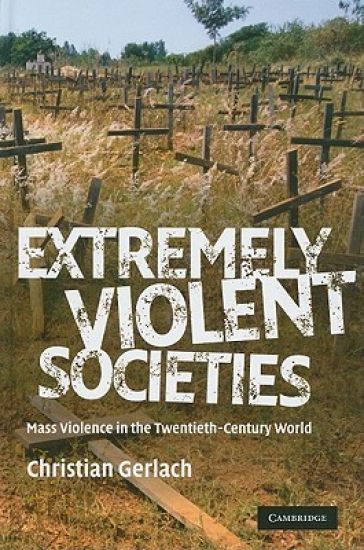
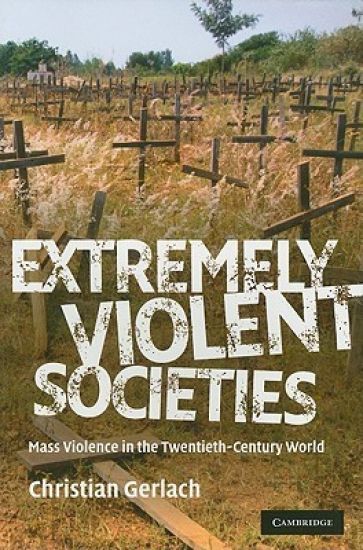
In this groundbreaking book Christian Gerlach traces the social roots of the extraordinary processes of human destruction involved in mass violence throughout the twentieth century. He argues that terms such as 'genocide' and 'ethnic cleansing' are too narrow to explain the diverse motives and interests that cause violence to spread in varying forms and intensities. From killings and expulsions to enforced hunger, collective rape, strategic bombing, forced labour and imprisonment he explores what happened before, during, and after periods of widespread bloodshed in countries such as Armenia, Indonesia, Bangladesh, Nazi-occupied Greece and in anti-guerilla wars worldwide in order to highlight the crucial role of socio-economic pressures in the generation of group conflicts. By focussing on why so many different people participated in or supported mass violence, and why different groups were victimized, he offers us a new way of understanding one of the most disturbing phenomena of our times.
Extremely Violent Societies

Extremely Violent Societies

Christian Gerlach

Cambridge University Press
2010
pokkari

Halvin toimitettuna 42,00 €

In this groundbreaking book Christian Gerlach traces the social roots of the extraordinary processes of human destruction involved in mass violence throughout the twentieth century. He argues that terms such as 'genocide' and 'ethnic cleansing' are too narrow to explain the diverse motives and interests that cause violence to spread in varying forms and intensities. From killings and expulsions to enforced hunger, collective rape, strategic bombing, forced labour and imprisonment he explores what happened before, during, and after periods of widespread bloodshed in countries such as Armenia, Indonesia, Bangladesh, Nazi-occupied Greece and in anti-guerilla wars worldwide in order to highlight the crucial role of socio-economic pressures in the generation of group conflicts. By focussing on why so many different people participated in or supported mass violence, and why different groups were victimized, he offers us a new way of understanding one of the most disturbing phenomena of our times.
Gehaltsstrukturen in Deutschland

Gehaltsstrukturen in Deutschland

Christian Gerlach

Igel Verlag
2008
nidottu
Das eigene Einkommen ist für viele Menschen ein bedeutendes Thema. So bedeutend, dass die Auseinandersetzung mit Löhnen und Gehältern in den vergangenen Jahren schon häufig diskutiert worden ist und zur Entwicklung von Lohntheorien geführt hat. Die Einkommensentwicklung in Deutschland stellt die Basis für die vorliegende Studie dar, wobei die Entstehung von Lohn- bzw. Gehaltsstrukturen in den Jahren nach der Wiedervereinigung 1990 bis 2006 analysiert und mit Daten aus dem sozioökonomischen Panel empirisch überprüft werden soll. Neben den Gehaltsstrukturen wird auch die Entstehung von geschlechtsspezifischen Einkommensunterschieden näher betrachtet.
Das letzte Kapitel

Das letzte Kapitel

Christian Gerlach; Götz Aly

FISCHER Taschenbuch
2004
pokkari
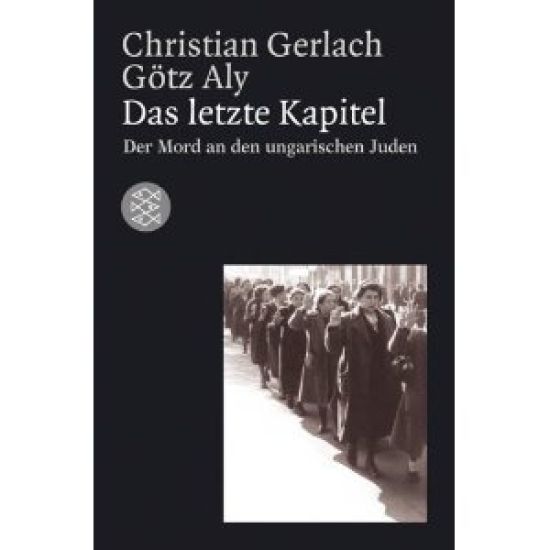
Bis zur Besetzung Ungarns durch die Deutschen im Jahre 1944 konnten die ca. 800.000 ungarischen Juden einigermaßen sicher leben. Mit den deutschen Truppen rückte das :Kommando Eichmann9 in Budapest ein. Binnen sieben Wochen deportierte diese Gruppe in Zusammenarbeit mit ungarischen Behörden 440.000 Juden nach Auschwitz.