Kirjojen hintavertailu – 12 859 824 kirjaa ja 27 kauppaa

Kirjailija

Christian M.I.M. Matthiessen

Kirjat ja teokset yhdessä paikassa: 11 kirjaa, julkaisuja vuosilta 2013–2025, suosituimpiin kuuluu Halliday's Introduction to Functional Grammar. Vertaile teosten hintoja ja tarkista saatavuus suomalaisista kirjakaupoista.

Nimi esiintyy myös muodoissa: Christian M I M Matthiessen

11 kirjaa

Kirjojen julkaisuvuodet: 2013–2025.

Halliday's Introduction to Functional Grammar

Halliday's Introduction to Functional Grammar

M.A.K. Halliday; Christian M.I.M. Matthiessen

Routledge
2013
nidottu
Fully updated and revised, this fourth edition of Halliday's Introduction to Functional Grammar explains the principles of systemic functional grammar, enabling the reader to understand and apply them in any context. Halliday's innovative approach of engaging with grammar through discourse has become a worldwide phenomenon in linguistics. Updates to the new edition include: Recent uses of systemic functional linguistics to provide further guidance for students, scholars and researchersMore on the ecology of grammar, illustrating how each major system serves to realise a semantic systemA systematic indexing and classification of examplesMore from corpora, thus allowing for easy access to dataHalliday's Introduction to Functional Grammar, Fourth Edition, is the standard reference text for systemic functional linguistics and an ideal introduction for students and scholars interested in the relation between grammar, meaning and discourse.

Systemic Functional Linguistics

Systemic Functional Linguistics

Christian M I M Matthiessen

EQUINOX PUBLISHING LTD
2025
sidottu
Volume 2 builds on the foundation developed in Volume 1, focussing on theoretically guided modelling of language in computational linguistic systems and on key aspects of the theory such as metafunction, rank (the conception of "morphology"), indeterminacy and probability. This volume also includes a treatment of systemic functional meta-theory - the theory of the nature and appliability of theory. The new chapter written for Volume 2 extends the discussion of the challenge of theorizing language to the challenge of modelling language for neurosemiotics, thus paying attention to the appliability of systemic functional linguistics.
Systemic Functional Linguistics

Systemic Functional Linguistics

Christian M.I.M. Matthiessen; Kazuhiro Teruya

Routledge
2025
nidottu
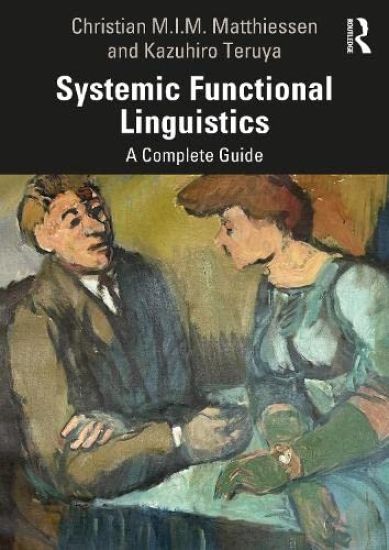
This user-friendly student guide is the essential resource for all those engaged in studying systemic functional linguistics (SFL). Assuming no prior knowledge, this guide is divided into nine chapters which can be read independently of one another and used for purposes of reference. The reading section maps out and mediates the key SFL literature. The application guides show how SFL has been and can be applied to various domains, from translation to healthcare communication. The term guides demystify the core terminology and the vocabulary guides aid readers in dealing with the most commonly used terms in text analysis. Systemic Functional Linguistics is an invaluable guidebook for all those studying functional grammar and SFL within linguistics, applied linguistics and related courses.
System in Systemic Functional Linguistics

System in Systemic Functional Linguistics

Christian M I M Matthiessen

EQUINOX PUBLISHING LTD
2023
sidottu
Systemic Functional Linguistics is unique among linguistic theories in treating the concept of system as the central organising principle of language (and also of other semiotic systems, including context), most theories being focussed on syntagmatic structure. This book introduces the notion of system as the foundation of the systemic functional architecture of language, relating the general notion of system in systems thinking (holistic approaches) to the principle that language is organised as a system of systems (the polysystemic principle) and, by another step, to the technical sense of system in SFL as the basic category of paradigmatic patterning – i.e. the organisation of language as a resource for making meaning. The concept of system is then used to explore the emergence of complexity in language (within different semogenetic timeframes), to show how it is manifested in the organisation of all subsystems of language (the fractal principle), to illustrate the system at work in the development of language descriptions and in the process of text analysis, to reveal the power of the system in different areas of application, e.g. in computational modelling, in educational analysis and curriculum development, in multilingual and multimodal studies. Finally, challenges are identified e.g. in the relationship between the paradigmatic axis and the syntagmatic one, in the representation of logical iteration and interpersonal continua; and current and new opportunities are suggested.
System in Systemic Functional Linguistics

System in Systemic Functional Linguistics

Christian M I M Matthiessen

EQUINOX PUBLISHING LTD
2023
pokkari

Halvin toimitettuna 55,90 €

Systemic Functional Linguistics is unique among linguistic theories in treating the concept of system as the central organising principle of language (and also of other semiotic systems, including context), most theories being focussed on syntagmatic structure. This book introduces the notion of system as the foundation of the systemic functional architecture of language, relating the general notion of system in systems thinking (holistic approaches) to the principle that language is organised as a system of systems (the polysystemic principle) and, by another step, to the technical sense of system in SFL as the basic category of paradigmatic patterning – i.e. the organisation of language as a resource for making meaning. The concept of system is then used to explore the emergence of complexity in language (within different semogenetic timeframes), to show how it is manifested in the organisation of all subsystems of language (the fractal principle), to illustrate the system at work in the development of language descriptions and in the process of text analysis, to reveal the power of the system in different areas of application, e.g. in computational modelling, in educational analysis and curriculum development, in multilingual and multimodal studies. Finally, challenges are identified e.g. in the relationship between the paradigmatic axis and the syntagmatic one, in the representation of logical iteration and interpersonal continua; and current and new opportunities are suggested.
Systemic Functional Linguistics

Systemic Functional Linguistics

Christian M.I.M. Matthiessen; Kazuhiro Teruya

Routledge
2023
sidottu
This user-friendly student guide is the essential resource for all those engaged in studying systemic functional linguistics (SFL). Assuming no prior knowledge, this guide is divided into nine chapters which can be read independently of one another and used for purposes of reference. The reading section maps out and mediates the key SFL literature. The application guides show how SFL has been and can be applied to various domains, from translation to healthcare communication. The term guides demystify the core terminology and the vocabulary guides aid readers in dealing with the most commonly used terms in text analysis. Systemic Functional Linguistics is an invaluable guidebook for all those studying functional grammar and SFL within linguistics, applied linguistics and related courses.
Systemic Functional Insights on Language and Linguistics

Systemic Functional Insights on Language and Linguistics

Christian M.I.M. Matthiessen; Bo Wang; Yuanyi Ma; Isaac N. Mwinlaaru

SPRINGER VERLAG, SINGAPORE
2023
nidottu
This book features a collection of 10 interviews with Christian M. I. M. Matthiessen, who is a key figure in Systemic Functional Linguistics (SFL) and has collaborated closely with M. A. K. Halliday since the 1980s. As noted by Professor Chang Chenguang, Editor of the M. A. K. Halliday Library Functional Linguistics Series, “this collection of interviews serves as an important reference for scholars and students of SFL. It provides a unique perspective on the theoretical development and future outlooks of SFL, as well as Matthiessen’s own interpretations of the theory. It also enriches our understanding of SFL and is a very useful addition to the series.” Written in an engaging dialogic format, the book paints a vivid picture of SFL thriving among the landscape of general linguistics and of SFL as an important tool now being applied in various areas.
Systemic Functional Insights on Language and Linguistics

Systemic Functional Insights on Language and Linguistics

Christian M.I.M. Matthiessen; Bo Wang; Yuanyi Ma; Isaac N. Mwinlaaru

SPRINGER VERLAG, SINGAPORE
2022
sidottu
This book features a collection of 10 interviews with Christian M. I. M. Matthiessen, who is a key figure in Systemic Functional Linguistics (SFL) and has collaborated closely with M. A. K. Halliday since the 1980s. As noted by Professor Chang Chenguang, Editor of the M. A. K. Halliday Library Functional Linguistics Series, “this collection of interviews serves as an important reference for scholars and students of SFL. It provides a unique perspective on the theoretical development and future outlooks of SFL, as well as Matthiessen’s own interpretations of the theory. It also enriches our understanding of SFL and is a very useful addition to the series.” Written in an engaging dialogic format, the book paints a vivid picture of SFL thriving among the landscape of general linguistics and of SFL as an important tool now being applied in various areas.
Communicating in Hospital Emergency Departments

Communicating in Hospital Emergency Departments

Diana Slade; Marie Manidis; Jeannette McGregor; Hermine Scheeres; Eloise Chandler; Jane Stein-Parbury; Roger Dunston; Maria Herke; Christian M.I.M. Matthiessen

Springer-Verlag Berlin and Heidelberg GmbH Co. K
2016
nidottu
This book was conceived in response to the increasing recognition of the central role of communication in effective healthcare delivery, particularly in high-stress contexts. Over a three-year period, the research team investigated communication between patients and clinicians in five representative emergency departments (EDs). The book describes the communicative complexity and intensity of work in the ED and identifies the features of successful patient-clinician interactions. Drawing on authentic examples of communication within the ED, the book provides comprehensive communication strategies for healthcare professionals that can be readily integrated into everyday practice. ‘Professor Diana Slade and her colleagues have written an innovative and practical book on communication and relationships in emergency departments and their effects on the patient experience. Rarely does one find a book that so seamlessly translates research findings into practical action strategies. The book is an invaluable resource for the training of physicians, nurses, hospital administrators and others in healthcare.’ - Elizabeth A. Rider, MSW, MD, FAAP, Department of Pediatrics, Harvard Medical School ‘My participation in the UTS Emergency Communication project provided extraordinary insights into the complexities and subtleties of communication encounters during a patient’s emergency department journey. This project has made a lasting impact on my daily work, and I hope will improve emergency patient care into the future.’ - Dr Nick Taylor, Emergency Medicine Specialist, The Canberra Hospital ‘The captured clinical conversations between doctors, nurses and patients are fascinating... The discussion and conclusions provide a rare insight into an integral and critical component of Emergency Medicine practice. The team, led by Professor Slade, wastruly unobtrusive, professional and personable.’ - Dr Marian Lee, Emergency Physician, Director of Emergency Medicine Training
Communicating in Hospital Emergency Departments

Communicating in Hospital Emergency Departments

Diana Slade; Marie Manidis; Jeannette McGregor; Hermine Scheeres; Eloise Chandler; Jane Stein-Parbury; Roger Dunston; Maria Herke; Christian M.I.M. Matthiessen

Springer-Verlag Berlin and Heidelberg GmbH Co. K
2015
sidottu
This book was conceived in response to the increasing recognition of the central role of communication in effective healthcare delivery, particularly in high-stress contexts. Over a three-year period, the research team investigated communication between patients and clinicians in five representative emergency departments (EDs). The book describes the communicative complexity and intensity of work in the ED and identifies the features of successful patient-clinician interactions. Drawing on authentic examples of communication within the ED, the book provides comprehensive communication strategies for healthcare professionals that can be readily integrated into everyday practice. ‘Professor Diana Slade and her colleagues have written an innovative and practical book on communication and relationships in emergency departments and their effects on the patient experience. Rarely does one find a book that so seamlessly translates research findings into practical action strategies. The book is an invaluable resource for the training of physicians, nurses, hospital administrators and others in healthcare.’ - Elizabeth A. Rider, MSW, MD, FAAP, Department of Pediatrics, Harvard Medical School ‘My participation in the UTS Emergency Communication project provided extraordinary insights into the complexities and subtleties of communication encounters during a patient’s emergency department journey. This project has made a lasting impact on my daily work, and I hope will improve emergency patient care into the future.’ - Dr Nick Taylor, Emergency Medicine Specialist, The Canberra Hospital ‘The captured clinical conversations between doctors, nurses and patients are fascinating... The discussion and conclusions provide a rare insight into an integral and critical component of Emergency Medicine practice. The team, led by Professor Slade, wastruly unobtrusive, professional and personable.’ - Dr Marian Lee, Emergency Physician, Director of Emergency Medicine Training
Halliday's Introduction to Functional Grammar

Halliday's Introduction to Functional Grammar

M.A.K. Halliday; Christian M.I.M. Matthiessen

Routledge
2013
sidottu
Fully updated and revised, this fourth edition of Halliday's Introduction to Functional Grammar explains the principles of systemic functional grammar, enabling the reader to understand and apply them in any context. Halliday's innovative approach of engaging with grammar through discourse has become a worldwide phenomenon in linguistics. Updates to the new edition include: Recent uses of systemic functional linguistics to provide further guidance for students, scholars and researchersMore on the ecology of grammar, illustrating how each major system serves to realise a semantic systemA systematic indexing and classification of examplesMore from corpora, thus allowing for easy access to dataHalliday's Introduction to Functional Grammar, Fourth Edition, is the standard reference text for systemic functional linguistics and an ideal introduction for students and scholars interested in the relation between grammar, meaning and discourse.