Kirjojen hintavertailu – 12 903 724 kirjaa ja 27 kauppaa

Kirjailija

Christian Raffensperger

Kirjat ja teokset yhdessä paikassa: 14 kirjaa, julkaisuja vuosilta 2012–2025, suosituimpiin kuuluu Ties of Kinship. Vertaile teosten hintoja ja tarkista saatavuus suomalaisista kirjakaupoista.

14 kirjaa

Kirjojen julkaisuvuodet: 2012–2025.

Medieval Europe 250-1450

Medieval Europe 250-1450

Christian Raffensperger; Florin Curta

TAYLOR FRANCIS LTD
2025
nidottu

Halvin toimitettuna 58,10 €

Providing an inclusive history of the entire territory and people of medieval Europe from 250-1450, this volume examines not just the political history but the rich social and cultural history, too. European history has functioned as a defining force in the modern worldview of many countries and their citizens. Whether viewed positively or negatively, that history has shaped the world in many ways. To understand Europe, it is essential to have a clear view of its medieval history. Proceeding from the decline of the Roman Empire, with the arrival of Germanic and Turkic peoples, through the development of polities in medieval Europe from Iberia to Ireland, Scandinavia to Sicily, and all the way to the taiga, European history grows and changes over the medieval period which we bring to a close with the final fall of Rome, the capture of Constantinople by the Ottomans in 1453. Traditional histories of medieval Europe focus primarily on the West. This history attempts to include the breadth of the continent, from Scandinavia to the Mediterranean and from the Atlantic to the Urals, from the nomads of the steppe to the Sami herders in the north and from the vernacular literacies of Alfred the Great of Wessex to Boris’s kingdom in Bulgaria. The chapters pair eastern and western elements to help make the point that all of Europe was undergoing changes, not only the west, who then pushed those changes onto the east which has been the common narrative. Medieval Europe 250-1450 is essential reading for all students of Medieval Europe and, in particular, those who wish to understand the interactions and parallels between east and west, north and south.
Medieval Europe 250-1450

Medieval Europe 250-1450

Christian Raffensperger; Florin Curta

TAYLOR FRANCIS LTD
2025
sidottu
Providing an inclusive history of the entire territory and people of medieval Europe from 250-1450, this volume examines not just the political history but the rich social and cultural history, too. European history has functioned as a defining force in the modern worldview of many countries and their citizens. Whether viewed positively or negatively, that history has shaped the world in many ways. To understand Europe, it is essential to have a clear view of its medieval history. Proceeding from the decline of the Roman Empire, with the arrival of Germanic and Turkic peoples, through the development of polities in medieval Europe from Iberia to Ireland, Scandinavia to Sicily, and all the way to the taiga, European history grows and changes over the medieval period which we bring to a close with the final fall of Rome, the capture of Constantinople by the Ottomans in 1453. Traditional histories of medieval Europe focus primarily on the West. This history attempts to include the breadth of the continent, from Scandinavia to the Mediterranean and from the Atlantic to the Urals, from the nomads of the steppe to the Sami herders in the north and from the vernacular literacies of Alfred the Great of Wessex to Boris’s kingdom in Bulgaria. The chapters pair eastern and western elements to help make the point that all of Europe was undergoing changes, not only the west, who then pushed those changes onto the east which has been the common narrative. Medieval Europe 250-1450 is essential reading for all students of Medieval Europe and, in particular, those who wish to understand the interactions and parallels between east and west, north and south.
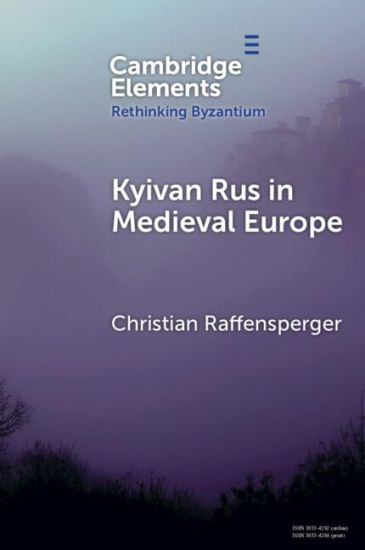
Kyivan Rus in Medieval Europe

Kyivan Rus in Medieval Europe

Christian Raffensperger

Cambridge University Press
2025
sidottu
While there has been a great deal (comparatively) written about Rus as part of medieval Europe in the last twenty years, the popular perception of it remains a part of the so-called 'Byzantine Commonwealth.' This traditional framing discounts Rusian ties to the west and exaggerates those to 'Byzantium,' elevating the rhetoric used by Russian nationalists to separate Russia from Europe. This Element provides an accurate historical account of medieval Rus that corrects the modern misuse of medieval history: a resource for academics interested in the results of current research on the place of the Kingdom of Rus in the medieval world. It brings together and synthesizes existing scholarship on Rus to present a complete picture of the kingdom of Rus, and its orientation within the wider medieval world, with a particular focus on the eleventh and twelfth centuries.
Kyivan Rus in Medieval Europe

Kyivan Rus in Medieval Europe

Christian Raffensperger

Cambridge University Press
2025
pokkari
While there has been a great deal (comparatively) written about Rus as part of medieval Europe in the last twenty years, the popular perception of it remains a part of the so-called 'Byzantine Commonwealth.' This traditional framing discounts Rusian ties to the west and exaggerates those to 'Byzantium,' elevating the rhetoric used by Russian nationalists to separate Russia from Europe. This Element provides an accurate historical account of medieval Rus that corrects the modern misuse of medieval history: a resource for academics interested in the results of current research on the place of the Kingdom of Rus in the medieval world. It brings together and synthesizes existing scholarship on Rus to present a complete picture of the kingdom of Rus, and its orientation within the wider medieval world, with a particular focus on the eleventh and twelfth centuries.
Izyaslav and Gertrude

Izyaslav and Gertrude

Christian Raffensperger

HARVARD UNIVERSITY PRESS
2024
nidottu
Rus’ is traditionally seen as part of Ukrainian or Russian history, and rarely part of medieval European history. This work focuses on two well-known Rusian rulers, King Izyaslav and Queen Gertrude, and situates them in a larger medieval context. Their story progresses from their dynastic marriage, as part of an agreement between the rulers of Rus’ and Poland; to their rule in Rus’, including the power that Gertrude and Rusian women were able to wield and their cultural contributions; to their travels in Europe during exile, including to Gertrude’s family in Poland and the German Empire, as well as to the pope himself; and, finally, their ultimate fates and their impact on their descendants. Through Izyaslav and Gertrude, readers will see the Rusian royalty as not an eastern Other, but part of the broader complex of medieval European royalty.
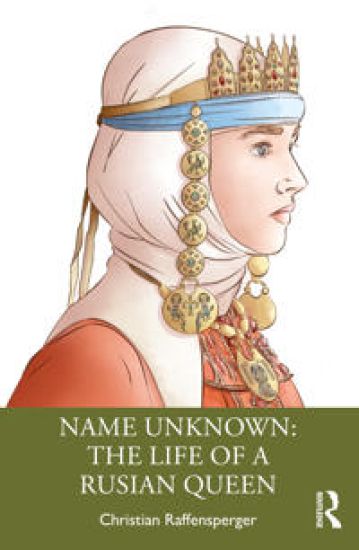
Name Unknown: The Life of a Rusian Queen

Name Unknown: The Life of a Rusian Queen

Christian Raffensperger

TAYLOR FRANCIS LTD
2024
sidottu
Name Unknown: The Life of a Rusian Queen offers an example of an eastern European queen as a corrective to the western European focus of medieval queenship studies. Through a chronological approach, this book looks beyond the popular biographies of royal women such as Eleanor of Aquitaine and Berengaria of Castile and gathers material from sources throughout Europe. It engages with modern queenship studies literature to create a collective biography of a Rusian queen through the various cycles of her life from the marriage of eight-year-old Verkhuslava to the death of the ruler of Minsk whose generosity is recorded, but not her name. For medievalists interested in women and queens, Name Unknown: The Life of a Rusian Queen provides an entry point to an area of Europe rarely studied in that literature. For Slavists, it presents a way of looking at medieval Rusian women that has not yet appeared in this scholarly tradition. Ultimately, this biography integrates Rus, and eastern Europe, into the medieval world and acts as an important reminder that women are essential to our history and thus to our overall understanding of the past. This book is of great use to students and scholars interested in the history of women, queenship, and medieval Europe.
Name Unknown: The Life of a Rusian Queen

Name Unknown: The Life of a Rusian Queen

Christian Raffensperger

TAYLOR FRANCIS LTD
2024
nidottu
Name Unknown: The Life of a Rusian Queen offers an example of an eastern European queen as a corrective to the western European focus of medieval queenship studies. Through a chronological approach, this book looks beyond the popular biographies of royal women such as Eleanor of Aquitaine and Berengaria of Castile and gathers material from sources throughout Europe. It engages with modern queenship studies literature to create a collective biography of a Rusian queen through the various cycles of her life from the marriage of eight-year-old Verkhuslava to the death of the ruler of Minsk whose generosity is recorded, but not her name. For medievalists interested in women and queens, Name Unknown: The Life of a Rusian Queen provides an entry point to an area of Europe rarely studied in that literature. For Slavists, it presents a way of looking at medieval Rusian women that has not yet appeared in this scholarly tradition. Ultimately, this biography integrates Rus, and eastern Europe, into the medieval world and acts as an important reminder that women are essential to our history and thus to our overall understanding of the past. This book is of great use to students and scholars interested in the history of women, queenship, and medieval Europe.
Rulers and Rulership in the Arc of Medieval Europe, 1000-1200

Rulers and Rulership in the Arc of Medieval Europe, 1000-1200

Christian Raffensperger

TAYLOR FRANCIS LTD
2023
sidottu
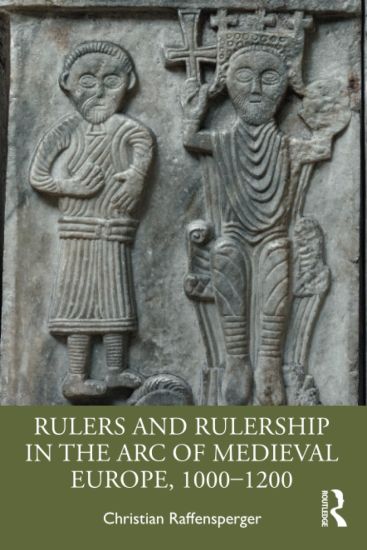
Rulers and Rulership in the Arc of Medieval Europe challenges the dominant paradigm of what rulership is and who rulers are by decentering the narrative and providing a broad swath of examples from throughout medieval Europe. Within that territory, the prevalent idea of monarchy and kingship is overturned in favor of a broad definition of rulership. This book will demonstrate to the reader that the way in which medieval Europe has been constructed in both the popular and scholarly imaginations is incorrect. Instead of a king we have multiple rulers, male and female, ruling concurrently. Instead of an independent church or a church striving for supremacy under the Gregorian Reform, we have a pope and ecclesiastical leaders making deals with secular rulers and an in-depth interconnection between the two. Finally, instead of a strong centralizing polity growing into statehood we see weak rulers working hand in glove with weak subordinates to make the polity as a whole function. Medievalists, Byzantinists, and Slavists typically operate in isolation from one another. They do not read each other’s books, or engage with each other’s work. This book requires engagement from all of them to point out that the medieval Europe that they work in is one and the same and demands collaboration to best understand it.
Rulers and Rulership in the Arc of Medieval Europe, 1000-1200

Rulers and Rulership in the Arc of Medieval Europe, 1000-1200

Christian Raffensperger

TAYLOR FRANCIS LTD
2023
nidottu
Rulers and Rulership in the Arc of Medieval Europe challenges the dominant paradigm of what rulership is and who rulers are by decentering the narrative and providing a broad swath of examples from throughout medieval Europe. Within that territory, the prevalent idea of monarchy and kingship is overturned in favor of a broad definition of rulership. This book will demonstrate to the reader that the way in which medieval Europe has been constructed in both the popular and scholarly imaginations is incorrect. Instead of a king we have multiple rulers, male and female, ruling concurrently. Instead of an independent church or a church striving for supremacy under the Gregorian Reform, we have a pope and ecclesiastical leaders making deals with secular rulers and an in-depth interconnection between the two. Finally, instead of a strong centralizing polity growing into statehood we see weak rulers working hand in glove with weak subordinates to make the polity as a whole function. Medievalists, Byzantinists, and Slavists typically operate in isolation from one another. They do not read each other’s books, or engage with each other’s work. This book requires engagement from all of them to point out that the medieval Europe that they work in is one and the same and demands collaboration to best understand it.
The Ruling Families of Rus

The Ruling Families of Rus

Christian Raffensperger; Donald Ostrowski

REAKTION BOOKS
2023
sidottu

Halvin toimitettuna 31,00 €

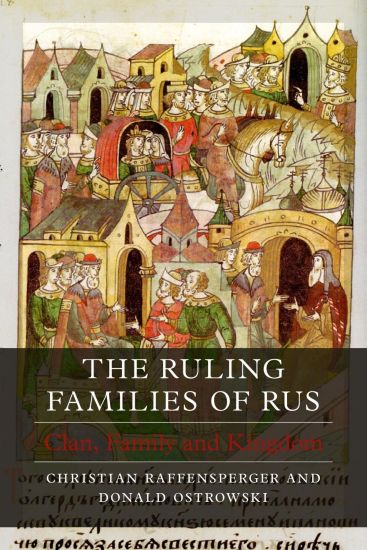
This is a new history of the region known as Kyivan Rus’, a state in eastern and northern Europe from the late ninth to the mid-sixteenth century that encompassed a variety of polities and peoples, including Lithuanian, Polish, Ottoman and others. This account for the first time focuses on the history of the region via families, which allows the discussion of a wider region and a larger group of people than has been possible before. The book examines the development of Rus, Lithuania, Muscovy and Tver, and their relations and interconnections with the Mongols, Byzantines and many other peoples. This readable yet thoroughly scholarly book will appeal to anyone with an interest in the history of eastern Europe, a region that is crucial in world politics today.
Conflict, Bargaining, and Kinship Networks in Medieval Eastern Europe
Conflict, Bargaining, and Kinship Networks in Medieval Eastern Europe takes the familiar view of Eastern Europe, families, and conflicts and stands it on its head. Instead of a world rife with civil war and killing, this book presents a relatively structured environment where conflict is engaged in for the purposes of advancing one’s position, and where death among the royal families is relatively rare. At the heart of this analysis is the use of situational kinship networks—relationships created by elites for the purposes of engaging in conflict with their own kin, but only for the duration of a particular conflict. A new image of medieval Eastern Europe, less consumed by civil war and mass death, will change the perception of medieval Eastern Europe in the minds of readers. This new perception is essential to not only present the past more accurately, but also to allow for medieval Eastern Europe’s integration into the larger medieval world as something other than an aberrant other.
The Kingdom of Rus'

The Kingdom of Rus'

Christian Raffensperger

Arc Medieval Press
2017
nidottu
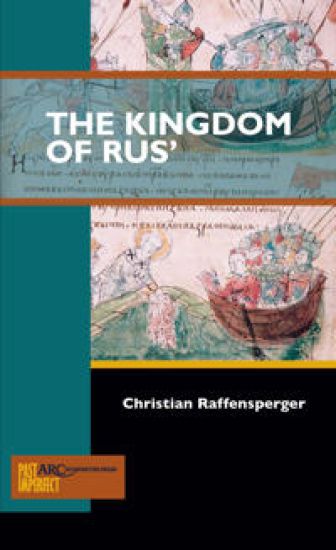
As scholarship continues to expand the idea of medieval Europe beyond "the West," the Rus' remain the final frontier relegated to the European periphery. The Kingdom of Rus' challenges the perception of Rus' as an eastern "other" – advancing the idea of the Rus' as a kingdom deeply integrated with medieval Europe, through an innovative analysis of medieval titles. Examining a wide range of medieval sources, this book exposes the common practice in scholarship of referring to Rusian rulers as princes as a relic of early modern attempts to diminish the Rus'. Not only was Rus' part and parcel of medieval Europe, but in the eleventh and twelfth centuries Rus' was the largest kingdom in Christendom.
Ties of Kinship

Ties of Kinship

Christian Raffensperger

Harvard Ukrainian Research Institute,U.S.
2016
sidottu
The warp and weft of political and social relationships among the medieval elite were formed by marriages made between royal families. Ties of Kinship establishes a new standard for tracking the dynastic marriages of the ruling family of Rus´—the descendants of Volodimer (Volodimerovici). Utilizing a modern scholarly approach and a broad range of primary sources from inside and outside Rus´, Christian Raffensperger has created a fully realized picture of the Volodimerovici from the tenth through the twelfth centuries and the first comprehensive, scholarly treatment of the subject in English. Alongside more than twenty-two genealogical charts with accompanying bibliographic information, this work presents an analysis of the Volodimerovici dynastic marriages with modern interpretations and historical contextualization that highlights the importance of Rus´ in a medieval European framework. This study will be used by Slavists, Byzantinists, and West European medievalists as the new baseline for research on the Volodimerovici and their complex web of relationships with the world beyond.
Reimagining Europe

Reimagining Europe

Christian Raffensperger

Harvard University Press
2012
sidottu
An overriding assumption has long directed scholarship in both European and Slavic history: that Kievan Rus' in the tenth through twelfth centuries was part of a Byzantine commonwealth separate from Europe. Christian Raffensperger refutes this conception and offers a new frame for two hundred years of history, one in which Rus' is understood as part of medieval Europe and East is not so neatly divided from West. With the aid of Latin sources, the author brings to light the considerable political, religious, marital, and economic ties among European kingdoms, including Rus', restoring a historical record rendered blank by Russian monastic chroniclers as well as modern scholars ideologically motivated to build barriers between East and West. Further, Raffensperger revises the concept of a Byzantine commonwealth that stood in opposition to Europe-and under which Rus' was subsumed-toward that of a Byzantine Ideal esteemed and emulated by all the states of Europe. In this new context, appropriation of Byzantine customs, law, coinage, art, and architecture in both Rus' and Europe can be understood as an attempt to gain legitimacy and prestige by association with the surviving remnant of the Roman Empire. Reimagining Europe initiates an expansion of history that is sure to challenge ideas of Russian exceptionalism and influence the course of European medieval studies.