Kirjojen hintavertailu – 12 859 819 kirjaa ja 27 kauppaa

Kirjailija

Christian Salas

Kirjat ja teokset yhdessä paikassa: 4 kirjaa, julkaisuja vuosilta 2017–2023, suosituimpiin kuuluu Addressing Brain Injury in Under-Resourced Settings. Vertaile teosten hintoja ja tarkista saatavuus suomalaisista kirjakaupoista.

4 kirjaa

Kirjojen julkaisuvuodet: 2017–2023.

Mistakes in Clinical Neuropsychology

Mistakes in Clinical Neuropsychology

Oliver Turnbull; Rudi Coetzer; Christian Salas

TAYLOR FRANCIS LTD
2023
sidottu
This innovative book uses a case-based approach to discuss mistakes made in the practice of clinical neuropsychology to form a helpful tool in the training of early career clinicians. By allowing readers space for critical reflection during clinical practice, the book teaches competency in clinical neuropsychology, through the examination of errors as a central part of the learning process. The core of this book is a diverse series of mistakes, each embedded as a patient narrative. Each chapter is based around an example error, typically one that was made, by the authors, as early career clinicians. Early chapters focus on mistakes in neuropsychological assessment, and the diagnostic process. Later chapters focus on errors in rehabilitation and management. Each chapter is framed to reflect the situational context, for example the role of history, what constitutes normal performance, the way that complex tasks rely on foundational skills, or the treatment of patients with dysexecutive impairment. Towards the end of each chapter there is reflection on the nature of each error type. As such, each chapter follows the structure SEER (Situation, Example, Error, Reflection), helping the reader to imagine the situation around the mistake, its nature and relevance. The book especially emphasises small phrases of insight (axioms, or gnomes) that are widely used by experienced clinicians. This is valuable reading for students of clinical neuropsychology, occupational therapy and speech and language therapy as well as professionals in these fields such as neurologists, psychiatrists and other rehabilitation therapists. It is especially appropriate for those in the earlier stages of their career in clinical neuropsychology, or in related disciplines which involve the assessment and treatment of patients with neurological disorders that impair cognition or disrupt the regulation of emotion. However, experienced clinicians will also find it includes interesting insights to improve their practice.
Mistakes in Clinical Neuropsychology

Mistakes in Clinical Neuropsychology

Oliver Turnbull; Rudi Coetzer; Christian Salas

TAYLOR FRANCIS LTD
2023
nidottu

Halvin toimitettuna 46,30 €

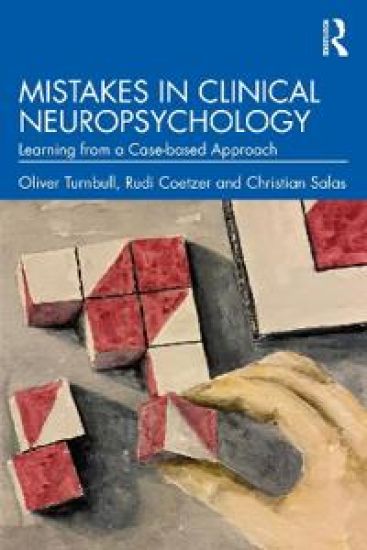
This innovative book uses a case-based approach to discuss mistakes made in the practice of clinical neuropsychology to form a helpful tool in the training of early career clinicians. By allowing readers space for critical reflection during clinical practice, the book teaches competency in clinical neuropsychology, through the examination of errors as a central part of the learning process. The core of this book is a diverse series of mistakes, each embedded as a patient narrative. Each chapter is based around an example error, typically one that was made, by the authors, as early career clinicians. Early chapters focus on mistakes in neuropsychological assessment, and the diagnostic process. Later chapters focus on errors in rehabilitation and management. Each chapter is framed to reflect the situational context, for example the role of history, what constitutes normal performance, the way that complex tasks rely on foundational skills, or the treatment of patients with dysexecutive impairment. Towards the end of each chapter there is reflection on the nature of each error type. As such, each chapter follows the structure SEER (Situation, Example, Error, Reflection), helping the reader to imagine the situation around the mistake, its nature and relevance. The book especially emphasises small phrases of insight (axioms, or gnomes) that are widely used by experienced clinicians. This is valuable reading for students of clinical neuropsychology, occupational therapy and speech and language therapy as well as professionals in these fields such as neurologists, psychiatrists and other rehabilitation therapists. It is especially appropriate for those in the earlier stages of their career in clinical neuropsychology, or in related disciplines which involve the assessment and treatment of patients with neurological disorders that impair cognition or disrupt the regulation of emotion. However, experienced clinicians will also find it includes interesting insights to improve their practice.
Addressing Brain Injury in Under-Resourced Settings

Addressing Brain Injury in Under-Resourced Settings

Ross Balchin; Rudi Coetzer; Christian Salas; Janice Webster

Psychology Press Ltd
2017
nidottu
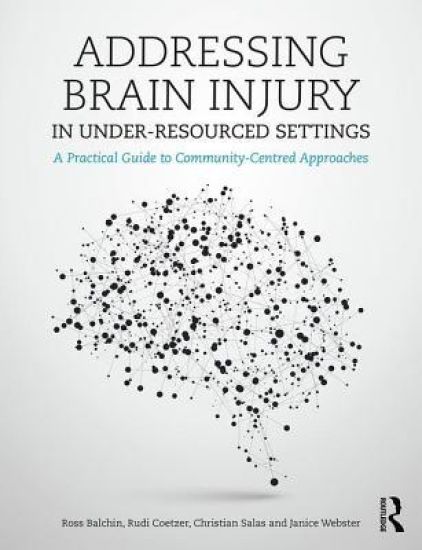
Many of the world’s population have no access to appropriate diagnostic, neurorehabilitative or support services following brain injury. Addressing Brain Injury in Under-Resourced Settings: A Practical Guide to Community-Centred Approaches tackles this unacceptable gap in service provision by empowering the reader to provide basic care, education and support for patients with brain injuries and their families. Written for an audience which does not necessarily have any prior knowledge of the brain, neurorehabilitation or brain injuries/pathologies, this practical guide first examines the global context of brain injury, considering the cross-cultural realities across communities worldwide. The book goes on to explore the reality of brain injury and how to work with its consequences, offering practical knowledge and advice in a user-friendly, richly illustrated format. It provides easily digestible information about the brain, including its normal functioning and the ways in which it can be damaged through injury and disease. The book also covers the basic skills needed to identify neurological difficulties and provides guidance on basic rehabilitation input and support. The final section of the book covers how to provide services, including working with organisations and communities, volunteering, initiating and developing community-based projects and programmes, and caring for patients and their families from emergency to recovery to rehabilitation. This book is an invaluable resource for community health workers, voluntary sector workers and all professional healthcare providers who work with brain-injured patients around the world. It will also be important reading for policy developers, fundraising organisations and those who work with global humanitarian initiatives.
Addressing Brain Injury in Under-Resourced Settings

Addressing Brain Injury in Under-Resourced Settings

Ross Balchin; Rudi Coetzer; Christian Salas; Janice Webster

Psychology Press Ltd
2017
sidottu
Many of the world’s population have no access to appropriate diagnostic, neurorehabilitative or support services following brain injury. Addressing Brain Injury in Under-Resourced Settings: A Practical Guide to Community-Centred Approaches tackles this unacceptable gap in service provision by empowering the reader to provide basic care, education and support for patients with brain injuries and their families. Written for an audience which does not necessarily have any prior knowledge of the brain, neurorehabilitation or brain injuries/pathologies, this practical guide first examines the global context of brain injury, considering the cross-cultural realities across communities worldwide. The book goes on to explore the reality of brain injury and how to work with its consequences, offering practical knowledge and advice in a user-friendly, richly illustrated format. It provides easily digestible information about the brain, including its normal functioning and the ways in which it can be damaged through injury and disease. The book also covers the basic skills needed to identify neurological difficulties and provides guidance on basic rehabilitation input and support. The final section of the book covers how to provide services, including working with organisations and communities, volunteering, initiating and developing community-based projects and programmes, and caring for patients and their families from emergency to recovery to rehabilitation. This book is an invaluable resource for community health workers, voluntary sector workers and all professional healthcare providers who work with brain-injured patients around the world. It will also be important reading for policy developers, fundraising organisations and those who work with global humanitarian initiatives.