Kirjojen hintavertailu – 12 859 828 kirjaa ja 27 kauppaa

Kirjailija

Christian Schittich

Kirjat ja teokset yhdessä paikassa: 9 kirjaa, julkaisuja vuosilta 2006–2020, suosituimpiin kuuluu Architektur Auf Den Zweiten Blick / Architecture and the Test of Time. Vertaile teosten hintoja ja tarkista saatavuus suomalaisista kirjakaupoista.

9 kirjaa

Kirjojen julkaisuvuodet: 2006–2020.

Architektur Auf Den Zweiten Blick / Architecture and the Test of Time

Architektur Auf Den Zweiten Blick / Architecture and the Test of Time

Keiko Arima; Oliver Herwig; Frank Kaltenbach; Julia Liese; Roland Pawlitschko; Christian Schittich; Heide Wessely

Edition Detail
2012
sidottu
• Wegweisende Projekte aus fünf Jahrzehnten erneut betrachtet • Entwicklung außergewöhnlicher Bauten über die Jahre • Konzepte und Konstruktionen aus heutiger Sicht hinterfragt DETAIL hat in den letzten 5 Jahren zahlreiche Architektur-Highlights vorgestellt, die seinerzeit durch experimentelle Konstruktionen oder ungewöhnlichen Materialeinsatz Entwicklungen vorangetrieben hatten. Doch wie haben sich die damals innovativen Konzepte bewährt? Welche Erfahrungswerte liegen inzwischen vor? Und haben sich die Gebäude über die Jahrzehnte verändert? Basierend auf der Rubrik »Auf den zweiten Blick« im Rahmen des 5 -jährigen Jubiläums von DETAIL stellt diese Publikation ausgewählte Bauten aus den vergangenen fünf Jahrzehnten erneut vor. Dazu ist Material aus den früheren Veröffentlichungen mit aktuellen Informationen kombiniert und mit kritischem Blick werden die damaligen Tendenzen dem heutigen Stand gegenüber gestellt. Was wurde aus den Entwicklungen, die diese Bauten seinerzeit angestoßen haben? Welche Rückschlüsse lassen sich daraus auf den ursprünglichen Entwurf ziehen? Der Titel stellt sowohl Gebäude vor, die im Lauf der Zeit stark verändert wurden, als auch Bauten, deren Konstruktionen selbst nach einer gewissen Zeitspanne der Nutzung an Aktualität und Innovation nichts eingebüßt haben.

Markus Heinsdorff: static + dynamic

Markus Heinsdorff: static + dynamic

Manfred Baur; Rasmus Kleine; Gottfried Knapp; Michael Müller-Verweyen; Christian Schittich

Hirmer Verlag
2020
nidottu
The book presents the installation artist Markus Heinsdorff’scontinuing study of the topics of space, the forces of nature and upcyclingby means of over40 works. The overview is completed by text contributions by famous authors who interpret Heinsdorff’s internationalcreative works from a variety of perspectives. Anyone wishing to understand the comprehensive work of Markus Heinsdorffwill have to embark on a voyage around the world: from the depths of the Amazonto the vast cities of India and the small villages of Africa. The projects presented here are subject to a wide range of influences which the artist approaches with imagination and engineering precision. The volume introduces an impressive oeuvre through sketchesandphotos of models and realisations which hover atthe interface between architecture and sustainable art.
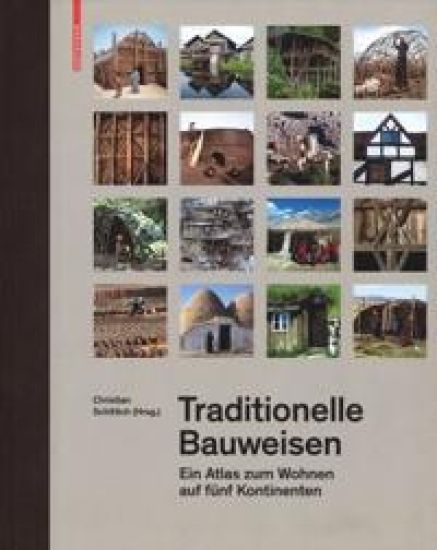
Traditionelle Bauweisen

Traditionelle Bauweisen

Christian Schittich

Birkhauser
2019
sidottu
A comprehensive reference work on vernacular architecture Traditional building methods – such as those used in pueblos, timbered houses, or the Japanese minka – exist in fascinating diversity and create the face of a region. However, as a result of globalization they have been marginalized in many places. In the fastest developing countries in particular, a wealth of experience that goes back hundreds of years is being irretrievably lost, even though valuable insights can be gained for modern building. Using the examples of selected domestic buildings from all continents, 30 international experts demonstrate why we can still learn from vernacular architecture; they analyze the cultural context and the adaptation to topographic/climactic conditions, and focus on the local materials used as well as on the construction, the building process, and the necessary maintenance. A comprehensive reference work covering traditional building methods Numerous examples of vernacular domestic architecture from all five continents More than 1000 impressive color photographs and detailed drawings Also available in German
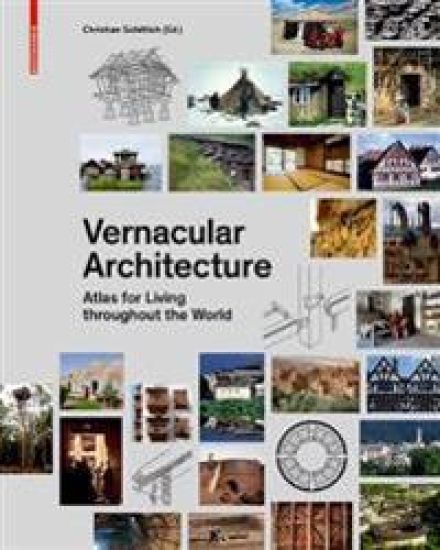
Vernacular Architecture

Vernacular Architecture

Christian Schittich

Birkhauser
2019
sidottu
A comprehensive reference work on vernacular architecture Traditional building methods – such as those used in pueblos, timbered houses, or the Japanese minka – exist in fascinating diversity and create the face of a region. However, as a result of globalization they have been marginalized in many places. In the fastest developing countries in particular, a wealth of experience that goes back hundreds of years is being irretrievably lost, even though valuable insights can be gained for modern building. Using the examples of selected domestic buildings from all continents, 30 international experts demonstrate why we can still learn from vernacular architecture; they analyze the cultural context and the adaptation to topographic/climactic conditions, and focus on the local materials used as well as on the construction, the building process, and the necessary maintenance. A comprehensive reference work covering traditional building methods Numerous examples of vernacular domestic architecture from all five continents More than 1000 impressive color photographs and detailed drawings Also available in German
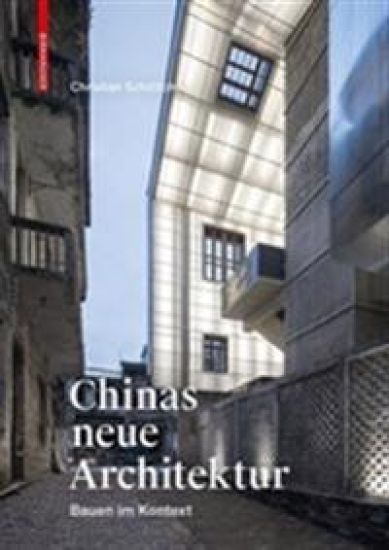
Chinas neue Architektur

Chinas neue Architektur

Christian Schittich

Birkhauser
2019
sidottu
A new generation is shaping China's architecture In recent years, a refreshingly unconventional architectural scene – outside the mainstream – has established itself in China. Its representatives, many of whom were trained in the West, are known for their sensitive handling of space, light, and material, and by their engagement with context and their own tradition. Since Wang Shu, one of the most important representatives of the profession, won the Pritzker Prize, international professionals have become more aware of China’s new architecture. Twenty fascinating examples of different building typologies—many with social relevance – as well as an introductory essay illustrate current building activities and provide an insight into the cultural and architectonic influences. An introduction to China’s current architectural scene Conversation with Pritzker Prize winner Wang Shu 20 fascinating projects by about 15 leading architects Also availabel in German
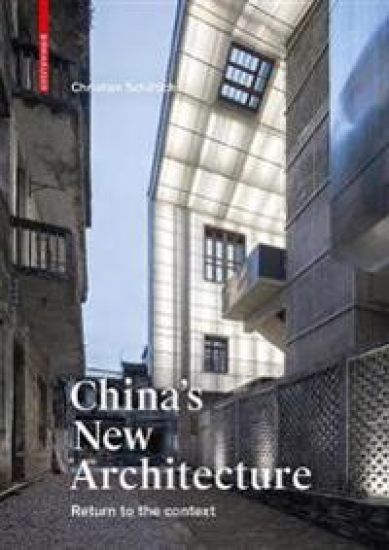
China's New Architecture

China's New Architecture

Christian Schittich

Birkhauser
2019
sidottu
A new generation is shaping China's architecture In recent years, a refreshingly unconventional architectural scene – outside the mainstream – has established itself in China. Its representatives, many of whom were trained in the West, are known for their sensitive handling of space, light, and material, and by their engagement with context and their own tradition. Since Wang Shu, one of the most important representatives of the profession, won the Pritzker Prize, international professionals have become more aware of China’s new architecture. Twenty fascinating examples of different building typologies—many with social relevance – as well as an introductory essay illustrate current building activities and provide an insight into the cultural and architectonic influences. An introduction to China’s current architectural scene Conversation with Pritzker Prize winner Wang Shu 20 fascinating projects by about 15 leading architects Also availabel in German
Arbeitswelten

Arbeitswelten

Christian Schittich

Edition Detail
2013
sidottu
The requirements confronting our workplaces have recently undergone a dramatic transformation. Constantly shifting workspace populations and varying uses of workspace call for flexible spatial structures, and so do new professions and innovative working methods. The plannung of workspaces is influenced by the digitalization of our storage media as well as by new materials and building technologies. And yet for all the importance of flexibility and technology, the ultimate focus is still on human beings. How, then can the multilayered concepts of indoor climate, lighting, acoustics, and ergonomics be reconciled with spatial structures that lend themselves to a variety of uses? In keeping with the typological approach of the series, this volume of the series In Detail presents the various work environments organized according to use. The focus throughout is on the successful interplay between technical standards, organizational structures, and human needs.
In Detail, Exhibitions and Displays

In Detail, Exhibitions and Displays

Christian Schittich

Birkhauser
2009
sidottu
From trade fair stands to museum concepts, the successful transfer of information to a wide public audience relies on effective staging and appropriate architectural design. While museum exhibitions focus on the art of communicating content, with commercial aspects tending to play a more subordinate role, the goal of trade fair stands and showrooms is to convey a brand image. And at least since large companies like BMW and Mercedes began introducing commercialized museum concepts designed to stage their brands, the phenomenon has come full circle. Not infrequently, planners today must not only accomplish the demanding task of designing an exhibition; they must also meet full service demands, from briefings and CI design to realization. How to do this successfully is the subject of short articles by authors from the relevant fields. With extensively documented project examples organized by presentation or exhibition type, these valuable technical articles offer a detailed roadmap to practical success.
Glasbau Atlas

Glasbau Atlas

Christian Schittich; Gerald Staib; Dieter Balkow; Matthias Schuler; Werner Sobek

Birkhauser
2006
sidottu
Kaum eine Idee bleibt unrealisiert, kaum eine Utopie ungebaut: Glas bietet vielfältige Anwendungsmöglichkeiten in der Architektur – und wie kein anderer erlebte dieser Baustoff in den vergangenen zwei Jahrzehnten einen enormen Innovationsschub. Für den Planer bedeutet dies die kontinuierliche Auseinandersetzung mit dem Hochleistungsmaterial: Der komplett überarbeitete Glasbau Atlas vermittelt in kompakter ansprechender Form die aktuellen Kenntnisse zum Planen und Konstruieren mit Glas, von der Geschichte über die technischen Grundlagen bis hin zu den innovativsten Einsatzmöglichkeiten. Erstaunliche Aspekte zum Wärme- und Sonnenschutz sowie eine sinnvolle Ergänzung der Beispiele aus der Praxis runden das umfassende Nachschlagewerk ab.